

Be prepared with our plumbing emergency checklist for San Antonio homes. Act fast to minimize damage and repair costs—download now!
TL;DR:
- Preparing a plumbing emergency checklist, including shutoff locations and contact info, helps homeowners respond quickly. In an emergency, shutting off water immediately, containing leaks, and shutting off electricity are essential first steps. Regular maintenance and updates to your plan can prevent costly damage and ensure swift, effective action when emergencies occur.
A plumbing emergency hits fast and punishes the unprepared. Water pouring through a ceiling, a toilet overflowing onto the floor, or a burst pipe soaking your walls can cause thousands of dollars in structural damage within minutes. Having a solid plumbing emergency checklist is the difference between a controlled response and a full-blown crisis. At Stultz Plumbing, we have helped countless San Antonio homeowners navigate urgent plumbing problems, and we know firsthand that preparation cuts both damage and repair costs significantly. This guide gives you every step you need, from the moment something goes wrong to the follow-up that protects your home long-term. Read through this now, before you need it.
Table of Contents
- Key Takeaways
- 1. Build your plumbing emergency checklist before trouble starts
- 2. Shut off the water supply immediately
- 3. Contain leaks and protect your property
- 4. Turn off electricity in affected areas
- 5. Document the problem thoroughly before calling
- 6. Apply temporary fixes only when it is safe
- 7. How the checklist applies to specific urgent plumbing problems
- 8. After the emergency: choosing the right plumber
- 9. Document repairs and update your checklist
- 10. Build a prevention layer into your checklist
- My honest take on plumbing emergencies
- Stultz Plumbing is ready when San Antonio homeowners need us most
- FAQ
Key Takeaways
| Point | Details |
|---|---|
| Know your shutoffs | Locate your main water shutoff valve before an emergency happens so you can cut flow in seconds. |
| Document everything fast | Record fixture location, onset time, and water flow status before calling a plumber to speed up dispatch. |
| Act on electrical safety | Turn off electricity to affected areas immediately when water intrudes near outlets or panels. |
| Communicate clearly with plumbers | Providing triage details like odors and overflow status helps send the right technician the first time. |
| Prepare and update regularly | Review your plumbing emergency plan every six months and add new fixtures or shutoff locations as your home changes. |
1. Build your plumbing emergency checklist before trouble starts
The phrase “plumbing emergency checklist” sounds like something you only think about after a crisis. Professional plumbers call it an emergency response plan, and the homeowners who have one ready always come out ahead. Building yours now takes less than an hour and can save you a very expensive afternoon.
Here is what your checklist needs to cover from day one:
- Main water shutoff location. Find it now. In most San Antonio homes it sits near the front of the house, close to the street, or inside a utility closet. Write the exact location down and share it with every adult in your household.
- Individual fixture shutoffs. Every toilet, sink, and appliance with a water line has its own shutoff valve nearby. Confirm each one turns freely. Valves that have not moved in years can seize.
- Local emergency plumber contact. Save the number in your phone and post it on your refrigerator. Searching for a plumber while water floods your kitchen wastes critical minutes.
- Insurance and home warranty info. Keep your policy number and claims hotline accessible. You may need it within the first hour of a serious leak.
- Basic plumbing repair toolkit. Stock a pipe wrench, plumber’s tape, a plunger, a wet/dry vacuum, and waterproof towels or absorbent pads.
- Key symptom notes template. Have a simple notepad or phone note ready to log fixture location, when the problem started, whether water is actively flowing, and any unusual odors.
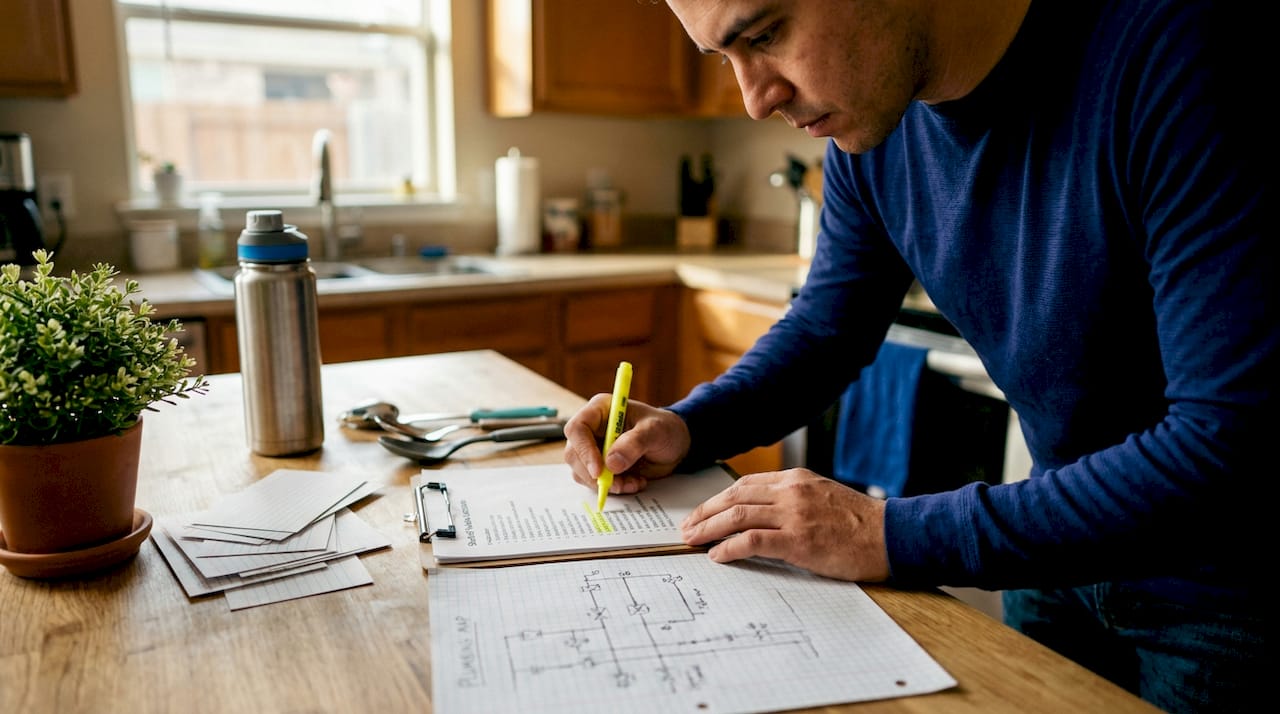
A well-prepared homeowner with a plumbing map and shutoff list can significantly reduce the duration and cost of emergency repairs.
Pro Tip: Take a quick photo tour of every shutoff valve in your home and save the images in a dedicated phone album labeled “Plumbing Emergency.” When stress hits, you will find that album faster than any written note.
2. Shut off the water supply immediately
When water starts going somewhere it should not, your first job is to stop the source. Every second of active flow adds to the damage. This step belongs at the top of every emergency plumbing guide.
- Go to the affected fixture first. Most leaks come from one location. Turn the individual shutoff valve clockwise until it stops.
- If the individual valve fails or you cannot locate it, go to the main shutoff. Turn it fully clockwise to cut water to the entire house.
- Open a faucet on the lowest floor. This releases pressure from the pipes and drains residual water out of the line instead of your wall.
- Check that flow has actually stopped. Look at the leak point. If water continues, the shutoff did not work fully and you need to call for help immediately.
Burst pipes can release gallons of water rapidly, compromising ceilings and walls within minutes, so speed here is not optional.
Pro Tip: If your main shutoff valve is stiff or partially corroded, do not force it hard or you may break it. Call Stultz Plumbing and we will replace it before it becomes a bigger problem.
3. Contain leaks and protect your property
Once the water supply is off, your next priority is limiting the spread. Water moves fast and finds every gap in flooring, drywall, and subfloor. Dealing with plumbing issues at this stage means acting like a first responder, not a plumber.
- Lay towels, absorbent pads, or old blankets around the affected area to soak up standing water.
- Place buckets under any drips still coming from pipes or fixtures.
- Move furniture, rugs, electronics, and valuables out of the wet zone.
- If water has reached a ceiling from above, poke a small hole at the lowest sag point to drain it in a controlled stream into a bucket. This sounds counterintuitive but prevents the ceiling from collapsing under the weight.
A wet/dry vacuum speeds this process dramatically if you have one. Every gallon you remove manually is one less gallon soaking into your structure.
4. Turn off electricity in affected areas
Water and electricity are a dangerous combination. This step is non-negotiable when water has reached flooring near outlets, walls with wiring, or a basement with an electrical panel.
Go to your breaker box and shut off circuits serving the flooded area. If the panel itself has water near it, do not touch it. Leave the house and call your utility provider first.
Handling plumbing emergencies effectively includes electrical safety as a required step, not an optional one. Document where you cut power so the plumber and electrician you call know the full picture.
5. Document the problem thoroughly before calling
This step separates homeowners who get fast, accurate service from those who wait longer and pay more for repeat visits. Emergency dispatch triage involves questions about active water flow and sewage odors to send the right technician efficiently.
Before you dial, write down or voice-record the following:
- Which fixture or area is affected
- Exactly when you noticed the problem
- Whether water is still flowing or has stopped
- Any sewage smell, gas odor, or discoloration
- Whether drains are backing up
- What, if anything, you have already done to contain it
A phone-ready log of these details reduces back-and-forth questions and gets the right equipment dispatched the first time.
6. Apply temporary fixes only when it is safe
A full plumbing repair checklist includes short-term measures you can apply before a plumber arrives. These do not replace professional work. They buy time and reduce further damage.
For small pipe leaks: Wrap the leaking section tightly with plumber’s tape or a rubber patch clamp if you have one in your kit. These hold pressure temporarily and can stop a trickle from becoming a flood.
For overflowing toilets: Remove the tank lid and push the flapper down manually. This stops the fill cycle. Then turn off the shutoff valve at the base of the toilet.
For slow or blocked drains: Do not pour chemical drain cleaners into a fully blocked line. They can damage older pipes and create a hazardous situation for the plumber. Use a manual plunger with firm, consistent pressure instead.
These temporary measures are part of a sound home plumbing emergency plan. They are not a substitute for calling a professional, but they give you control while you wait.
7. How the checklist applies to specific urgent plumbing problems
Different emergencies call for slight variations in approach. Here is how your plumbing emergency checklist maps onto the most common urgent situations San Antonio homeowners face.
| Emergency Type | Immediate Action | Key Checklist Step |
|---|---|---|
| Burst pipe | Shut main valve immediately | Check for ceiling/wall damage and document |
| Overflowing toilet | Close tank flapper, shut fixture valve | Contain water on floor, check for sewage odor |
| Clogged drain with backup | Avoid using other fixtures | Plunger first, call if drain backs up elsewhere |
| Frozen pipe | Turn off supply, apply warm towels | Do not use open flame; call plumber for thaw |
| Water heater leak | Shut cold supply to heater, cut power | Check floor drain, document water heater model |
A few specifics worth noting:
- Frozen pipes rarely occur in San Antonio, but cold snaps do hit. When a pipe freezes, the water inside expands and can crack the pipe wall. The real damage happens when it thaws. Shut the supply off before that happens.
- Sewage backups require a different response than clear-water leaks. Sewage carries bacteria and pathogens. Avoid direct contact, ventilate the space, and call a plumber with drain cleaning capability immediately. Our drain clearing services handle exactly these situations.
- Gas odors with water issues are a different emergency entirely. Leave the home, avoid switches, and call your gas utility before calling a plumber.
For a clear breakdown of what qualifies as a true emergency versus a manageable repair, the San Antonio homeowner’s guide to plumbing emergencies covers that distinction well.
8. After the emergency: choosing the right plumber
Once the immediate crisis is contained, you need a reliable professional to make the proper repair. This part of the process matters more than most homeowners realize. A bad repair costs more in the long run than the emergency itself.
Here is what to look for when selecting an emergency plumber:
- Local coverage and response time. Local plumbers recognize common home layouts and stock parts suited for regional systems. Quick response limits water damage, odor, and contamination risk.
- Clear communication at the door. A reliable plumber explains the process before starting and asks permission before inspection. Pressure tactics or vague answers about the work are warning signs.
- Upfront estimates. Cost clarity via written estimates listing labor, parts, and permits reduces surprises. Ask whether billing is flat-rate or time-based before authorizing work.
- License and insurance verification. Texas requires plumbers to hold a valid license. Ask to see it.
Emergency plumber costs vary by region. National data shows typical costs ranging from $265 to $1,800 depending on the market and repair type, so knowing what to expect financially is part of your emergency plan.
Pro Tip: Add your verified plumber’s contact to your plumbing emergency checklist the moment a repair is complete. You already know they do good work, which is exactly who you want on speed dial next time.
9. Document repairs and update your checklist
After the repair is done, your job is not over. This is where most homeowners drop the ball, and it costs them later.
- Keep all repair invoices with fixture details, parts replaced, and labor completed.
- Note any warranty terms the plumber provides on parts or labor.
- Update your home’s plumbing map to reflect any new valves, replaced sections, or changed fixture locations.
- Add a reminder to your calendar to review your plumbing maintenance checklist every six months.
Regular maintenance prevents the next emergency. Checking supply lines under sinks, testing shutoff valves, inspecting water heater connections, and clearing slow drains before they back up completely are all tasks that cost almost nothing compared to a flooded kitchen.
If a septic system is part of your home’s waste management, keep an eye on signs of backup well before they reach indoor fixtures. Resources on emergency septic repair can help you understand warning signs specific to septic-connected homes.
10. Build a prevention layer into your checklist
The best plumbing emergency guide is one that helps you avoid the emergency entirely. Building a prevention layer into your checklist means catching problems early, before they become middle-of-the-night disasters.
Add these tasks to your regular plumbing maintenance routine:
- Inspect visible supply lines and drain connections under every sink twice a year.
- Flush your water heater annually to remove sediment buildup, which causes early failure and efficiency loss.
- Test every shutoff valve by turning it and then turning it back. A valve that moves freely will work when you need it.
- Watch your water bill. An unexplained spike often signals a slow leak you have not found yet, and that leak is often the preview to a bigger problem.
- Know the age of your pipes. Homes in San Antonio with original galvanized or polybutylene plumbing are candidates for repiping before a burst becomes inevitable.
Staying proactive with these steps is the real long-term answer to preventing plumbing emergencies.
My honest take on plumbing emergencies
I have seen what happens when homeowners wing it during a plumbing crisis. Water damage spreads fast and punishes every minute of hesitation. What I have learned over years of working through these situations is that preparation is not about knowing how to fix plumbing leaks yourself. It is about knowing exactly what to do in the first five minutes, communicating clearly with a plumber, and not letting panic drive your decisions.
The homeowners who come out of an emergency with the least damage and the lowest final bill are almost always the ones who already knew where their shutoff was, had a number to call, and could describe the problem without guessing. That kind of preparation is a ten-minute exercise that pays off every single time.
Keep your checklist somewhere physical, not just digital. A laminated sheet inside a kitchen cabinet door works better than a phone app you cannot find under stress. Update it any time your home changes. And if a repair reveals that your home has aging infrastructure, address it now while it is a choice, not an emergency.
— Jean
Stultz Plumbing is ready when San Antonio homeowners need us most
When a plumbing emergency does strike, you should not have to search for help. Stultz Plumbing provides fast, reliable emergency plumbing in San Antonio with transparent pricing and experienced technicians who know local homes inside and out. We show up, explain the work clearly, and get it done right the first time.

Whether you are dealing with a burst pipe, sewage backup, or a water heater failure, our team responds quickly across San Antonio and surrounding communities. We also offer full plumbing services including drain cleaning, repiping, and preventive maintenance to keep emergencies from happening in the first place. Call Stultz Plumbing now and have a trusted name in your contact list before you ever need it.
FAQ
What should be on a plumbing emergency checklist?
A plumbing emergency checklist should include your main water shutoff location, individual fixture valve locations, a local plumber’s contact number, basic repair tools, insurance details, and a template for documenting symptoms before you call for help.
What is the first thing to do during a plumbing emergency?
Shut off the water supply to the affected fixture immediately, or cut the main shutoff if you cannot isolate the source. Stopping active water flow is the single most important step to limit damage.
How do I communicate with a plumber during an emergency?
Before calling, log the fixture location, when the problem started, whether water is still flowing, any odors, and what you have already done. Clear triage details help dispatch the right technician with the right equipment the first time.
How much does an emergency plumber cost in San Antonio?
Costs vary based on the repair type and timing. National ranges show emergency plumber visits typically running from $265 to $1,800. Always ask for a written estimate before authorizing work.
How can I prevent plumbing emergencies at home?
Test shutoff valves twice a year, inspect supply lines under sinks, flush your water heater annually, and monitor your water bill for unexplained increases. Regular maintenance catches small issues before they become urgent plumbing problems.
Recommended
- When to Call an Emergency Plumber: San Antonio Guide
- Emergency Plumbing Guide for Fast Home Solutions
- Plumbing emergencies defined: San Antonio homeowner’s guide
- Emergency Plumber San Antonio | What to Do Before we Arrives
Jean runs growth strategy at AimSetWin, a performance marketing agency specializing in local service businesses across Texas. he's helped plumbers, HVAC companies, pest control operators, and home service brands build predictable revenue systems using data-driven advertising and conversion optimization.


