Looking for 'water softener installation near me'? Discover how to combat hard water in San Antonio with our comprehensive guide to smooth, hassle-free...
TL;DR:
- San Antonio’s groundwater causes hard water issues affecting appliances and home surfaces.
- Proper softener sizing and professional installation ensure effective, long-lasting water treatment.
- Regular testing and maintenance are essential for optimal softener performance and water quality.
White mineral crust around your faucets. Cloudy film on your glasses straight from the dishwasher. That stubborn soap scum that just won’t rinse clean. If you live in San Antonio, these are not signs of poor housekeeping. They are signs your water is working against you. San Antonio sits above some of the most mineral-rich groundwater in Texas, and without the right protection in place, your pipes, water heater, and appliances quietly pay the price every single day. This guide walks you through everything you need to know about addressing hard water, from recognizing the symptoms to planning and securing a professional installation that actually lasts.
Table of Contents
- Understanding hard water in San Antonio
- Preparing for water softener installation: Sizing, placement, and prerequisites
- Step-by-step installation process for homeowners
- Testing, troubleshooting, and maintenance after installation
- Why working with local professionals matters more than you think
- Get expert help for your water softener installation
- Frequently asked questions
Key Takeaways
| Point | Details |
|---|---|
| Know your water | Testing for hardness and understanding San Antonio’s mineral-heavy water is the first step to protecting your plumbing. |
| Choose the right size | A properly sized softener saves money and ensures optimal performance for your household’s needs. |
| Professional makes perfect | Hiring experienced local installers helps you avoid costly mistakes and ensures long-term system health. |
| Maintenance matters | Ongoing care and occasional troubleshooting protect your investment and keep water soft. |
Understanding hard water in San Antonio
San Antonio draws the majority of its water from the Edwards Aquifer, a massive underground limestone formation that supplies most of the region. As groundwater filters through limestone, it picks up calcium and magnesium. By the time that water reaches your tap, it carries a heavy mineral load that causes scale deposits to build up inside pipes, on fixture surfaces, and inside appliances like water heaters and dishwashers. This is what the industry calls hard water, and it is one of the most common plumbing concerns we encounter across the San Antonio area.
Hard water creates a surprisingly wide range of frustrations around the home. Scale buildup is the most damaging long-term problem, but homeowners notice other signs first. Soap and shampoo don’t lather the way they should, leaving skin feeling dry and hair looking dull. Dishes come out of the dishwasher with a white haze that won’t wipe off. Laundry feels stiff even after washing. These are not cosmetic nuisances. They are indicators that your water chemistry is working against every system in your home.
Here’s what to watch for if you suspect hard water is affecting your property:
- White or yellowish mineral buildup around faucets, showerheads, and drains
- Reduced water pressure from scale narrowing pipe interiors over time
- Soap scum that doesn’t rinse away, even with extra scrubbing
- Spotty glassware and dishes after every dishwasher cycle
- Water heater running less efficiently or consuming more energy than expected
- Short lifespan on appliances like coffee makers, washing machines, and ice makers
Understanding hard water and your plumbing helps you make informed decisions about when to act and what solutions are worth investing in.
It’s important to be clear about what a water softener actually does. As Penn State Extension notes, hardness softening is mainly about removing calcium and magnesium minerals and does not automatically address more serious drinking-water contaminants. The decision to soften is largely about scale and nuisance impacts. A softener is not a substitute for broader water quality testing if you have concerns about contaminants beyond hardness.
“Hard water is one of the leading contributors to premature appliance failure and reduced plumbing efficiency in mineral-heavy regions like San Antonio. Addressing it early protects your long-term investment in your home.”
For practical guidance on managing hard water before and after installation, knowing your local water conditions is the right starting point.
Preparing for water softener installation: Sizing, placement, and prerequisites
With a clear understanding of local water challenges, it’s time to plan how to address them effectively.
Sizing is the single most critical decision you’ll make before buying a water softener. A system that’s too small will burn through salt quickly because it regenerates too often. A system that’s too large won’t cycle frequently enough, which can allow water to stagnate inside the resin tank. Neither scenario protects your home the way it should.
The right approach is to measure your water hardness in grains per gallon (GPG) and then multiply that figure by your daily household water use. Most San Antonio homes test at 15 to 25 GPG, which is considered very hard to extremely hard on the standard scale. A family of four using roughly 300 gallons per day in a 20 GPG area needs a system capable of treating around 6,000 grains between regeneration cycles. Sizing depends on measured water hardness in GPG or ppm, household water use, and regeneration interval, and getting this calculation wrong leads to either frequent salt waste or stagnation risks from underuse.
| System size | Pros | Cons |
|---|---|---|
| Undersized | Lower upfront cost | Regenerates too often, wastes salt, wears out faster |
| Right-sized | Efficient salt use, consistent protection | Requires accurate hardness/usage measurement |
| Oversized | Rarely runs out of capacity | Higher cost, risk of resin stagnation from infrequent regeneration |
Where you install the softener matters almost as much as which unit you choose. Water softeners work best when installed at the point of entry, meaning right where the main water line enters your home. This ensures every tap, shower, and appliance downstream receives treated water. Typical installation locations include the garage, utility room, or basement, depending on your home’s layout.
Before installation day, make sure these prerequisites are in place:
- Adequate space: The unit needs clearance for access, salt refills, and service
- Electrical outlet nearby: Most modern softeners require a standard 120V outlet for the control head
- Floor drain or utility sink: The softener’s regeneration process flushes brine, which needs a proper drain point
- Shutoff valve access: A bypass valve allows the softener to be serviced without interrupting your home’s water supply
- Plumbing connection type: Know whether your supply lines are copper, PEX, or CPVC before installation day
Pro Tip: If you’re working from our softener installation guide, print the checklist and walk through your utility area before the technician arrives. It speeds up the job and can save you a service visit.
Reviewing San Antonio water softener systems options with a local professional ensures the unit you select matches both the water chemistry and the physical layout of your home.
Step-by-step installation process for homeowners
Once you’re ready with the right system and setup, here’s what installation actually looks like.
A professional installation follows a reliable sequence, and understanding each phase helps you feel confident throughout the process rather than wondering what’s happening behind the walls.
- Water shutoff and pressure release. The technician shuts off your main water supply and releases pressure from the lines before any cuts are made. This protects your plumbing and prevents water damage during the connection process.
- Cutting into the main supply line. A section of pipe near the point of entry is cut and a bypass valve assembly is fitted. This valve is essential because it lets you isolate the softener for maintenance without cutting water to the entire house.
- Connecting the softener unit. The main tank and brine tank are connected to the bypass valve using appropriate fittings. The technician verifies flow direction, which is a surprisingly common error in DIY installs that causes the system to fail silently.
- Drain line routing. The brine discharge line is routed to the nearest floor drain or utility sink. Proper air gap installation here is required by most local codes to prevent backflow contamination.
- Electrical connection. The control head is plugged in and programmed with your water hardness level and regeneration schedule.
- System startup and testing. Water is slowly restored, the softener is manually regenerated once to flush the resin bed, and the output is tested to confirm hardness is reduced.
One nuanced decision during installation is deciding which lines to soften and which to bypass. As Penn State Extension points out, not every hookup necessarily needs soft water, and bypassing toilets, outdoor spigots, and basement sinks is common practice. Softening water for toilets or irrigation serves no useful purpose and simply burns through salt faster.
| Factor | DIY installation | Professional installation |
|---|---|---|
| Time to complete | 4 to 8 hours | 2 to 3 hours |
| Disruption to household | High (risk of leaks, incorrect setup) | Low (controlled, code-compliant) |
| Risk of error | Moderate to high | Very low |
| Warranty protection | May be voided | Preserved |
| Code compliance | Uncertain | Confirmed |
Pro Tip: Ask your installer specifically about bypassing your outdoor hose bibs. Softened water is not ideal for landscaping and skips that portion means your salt lasts significantly longer.
Partnering with professional water softener installers in San Antonio gives you access to technicians who understand local building codes, humidity conditions in crawl spaces and garages, and the specific water chemistry coming through your neighborhood lines.
Testing, troubleshooting, and maintenance after installation
After installation, it’s crucial to make sure your system is running smoothly and protecting your home as intended.
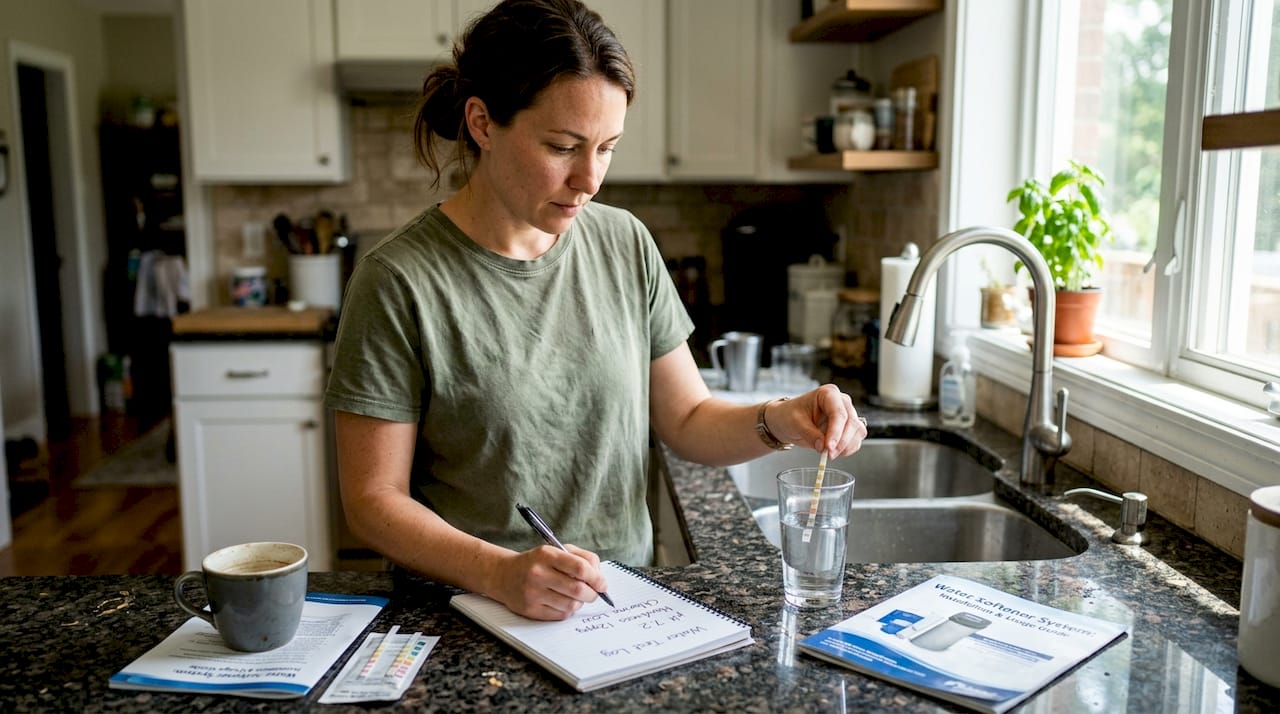
Your first step should be testing the water within 24 to 48 hours after the softener goes live. Simple test strips are available at hardware stores and online, and they give you a fast reading of water hardness in GPG. You want to see a reading at or near zero for treated water at an indoor tap. Visual signs of success include better lather from soap, clearer water in a white bowl, and a noticeably softer feel on your skin after a shower.
Here are the most common issues homeowners encounter in the first few months after installation and how to address them:
- Salt bridging: A hard crust forms across the top of the brine tank, leaving an air gap above the water. The system thinks it has salt when the water can’t actually reach it. Break the bridge carefully with a broom handle and confirm salt levels are normal below it.
- Resin exhaustion: Over many years, the resin beads inside the tank lose their ability to exchange ions. Signs include hardness returning even though salt levels look fine. Resin replacement or full unit replacement is the solution.
- Iron fouling: San Antonio water sometimes carries dissolved iron. Iron above 0.3 ppm can foul the resin bed over time and require periodic resin cleaning with a dedicated iron-out cleaner.
- Low salt efficiency: If you’re refilling the brine tank more often than expected, check that the regeneration cycle frequency matches your actual usage. Over-regenerating is a common programming error.
- Water with a salty taste: This usually means the brine rinse cycle isn’t completing properly. It’s worth having a technician check the control settings.
For routine maintenance, follow this schedule:
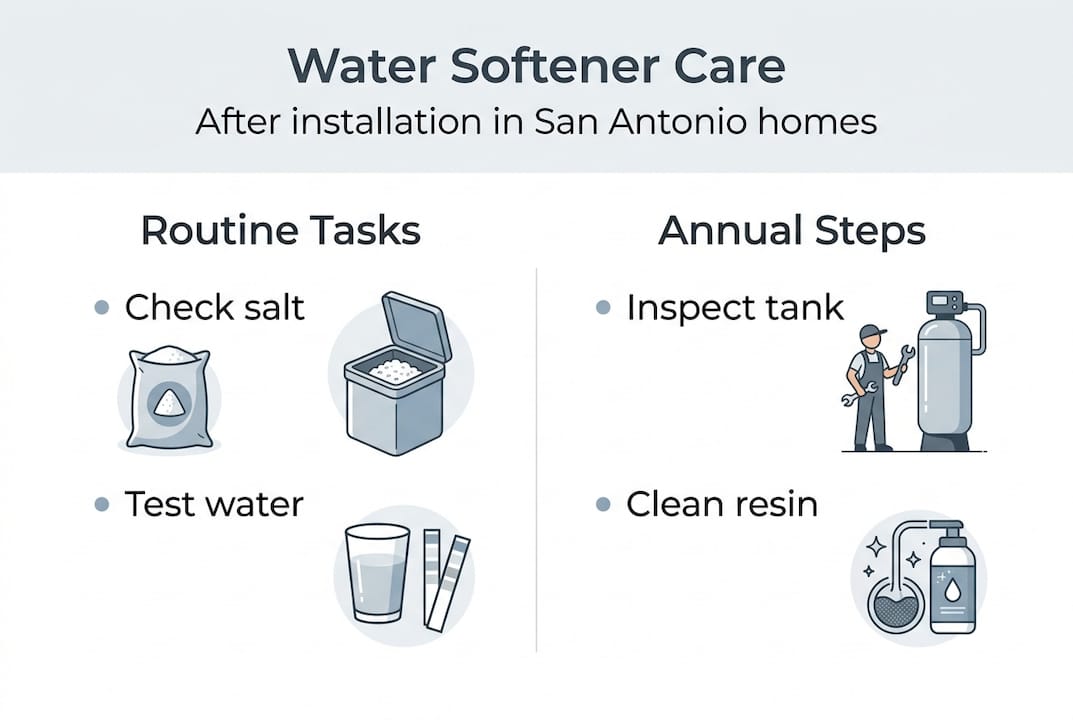
- Check salt levels monthly and refill before the tank drops below one-quarter full
- Clean the brine tank once a year to remove sediment and residue
- Run a resin cleaner every three to six months if your water contains iron
- Have the system professionally serviced every two to three years for a full inspection
“If your main concern is hard-water scale, softening is typically a nuisance and scale solution. For concerns about taste, odors, or health-related contaminants, request broader water-quality testing beyond hardness.”
Penn State Extension
That distinction matters. Maintaining your softener properly extends its lifespan significantly, typically from 10 to 15 years for quality units. But if you notice persistent taste or odor issues after softening, do not assume the softener is malfunctioning. Those concerns warrant a separate water quality test that checks for bacteria, nitrates, or other contaminants a softener was never designed to remove.
Why working with local professionals matters more than you think
There’s a version of this story we hear fairly often. A homeowner buys a unit from a big-box retailer, watches a few installation videos, and spends a weekend trying to make it work. The system runs, technically, but the sizing is off because the water hardness wasn’t properly measured beforehand. The drain line isn’t air-gapped correctly. The regeneration schedule is set to a default that doesn’t match actual household usage. Two years later, the unit fails early and the manufacturer’s warranty is voided because installation wasn’t performed by a licensed plumber.
San Antonio’s water chemistry is specific. The combination of very high hardness, occasional dissolved iron, and seasonal pressure variation from the Edwards Aquifer creates conditions that generic installation guides don’t fully account for. Local San Antonio installers know which brands hold up in this climate, how humidity in garages affects electronic control heads, and which city code requirements apply to your specific installation setup.
The true value of a local professional is not just technical skill. It’s accountability. When a trusted San Antonio plumbing company installs your softener, you have someone to call when questions arise, someone who understands your specific home, and someone whose reputation in the community depends on the quality of their work. That peace of mind is not available at a checkout counter.
Get expert help for your water softener installation
Ready for softer, cleaner water? Here’s how to get expert support locally.
At Stultz Plumbing, we install water softeners across San Antonio and the surrounding communities with the kind of precision and accountability that protects your home long after the job is done. Our technicians measure your actual water hardness, recommend the right-sized system for your household, and handle every step of the installation to code. We offer transparent pricing, fast scheduling, and ongoing support so your investment keeps working the way it should. Explore our full range of affordable plumbing services or go ahead and request a free water softener installation quote today. We’re ready when you are.
Frequently asked questions
What size water softener do I need for my home?
The correct size depends on your home’s measured water hardness, daily water use, and how often you want the system to regenerate. Sizing depends on hardness in GPG or ppm, household water use, and regeneration interval, so a professional measurement ensures you get the right fit from day one.
Can a water softener remove bad taste or odors from water?
No. Water softeners are designed to remove hardness minerals like calcium and magnesium, not to address taste or odor problems. As Penn State Extension confirms, softeners are not intended to address more serious drinking-water contamination, so additional filtration is typically required for those concerns.
Is it necessary to soften all water lines in my house?
Not always, and in most cases it’s actually wasteful to do so. Lines to toilets and outdoor spigots are commonly bypassed because those fixtures gain nothing from soft water, and skipping them preserves your salt supply for the areas that matter.
How often should my water softener regenerate?
Most systems are programmed to regenerate every five to seven days, but actual frequency depends on your water hardness level and how much water your household uses each day. Regeneration cycles are commonly designed around this interval, but a properly sized unit matched to your specific conditions will run most efficiently.
Recommended
- Water softener installation San Antonio: homeowner guide
- Water Softener Installation in San Antonio | Stultz Plumbing
- Water Softener Installation San Antonio | Stultz Plumbing
- Get Water Softener Installation In San Antonio With Free Quote
Jean runs growth strategy at AimSetWin, a performance marketing agency specializing in local service businesses across Texas. he's helped plumbers, HVAC companies, pest control operators, and home service brands build predictable revenue systems using data-driven advertising and conversion optimization.