

Discover why water heaters fail and how San Antonio homeowners can prevent costly repairs. Stay informed and ensure hot water with our expert guide!
TL;DR:
- Sediment buildup and anode rod depletion are the primary and preventable causes of water heater failure, especially in San Antonio’s hard water. Regular maintenance, including annual flushing and anode rod inspection, extends lifespan and avoids costly emergency replacements. Early detection through common signs like rumbling sounds and rusty water helps homeowners act before damage becomes severe.
Sediment buildup and sacrificial anode rod depletion are the two leading causes of why water heaters fail, and both are entirely preventable with the right maintenance schedule. For San Antonio homeowners, the city’s notoriously hard water accelerates both problems faster than the national average. A neglected water heater doesn’t just stop producing hot water. It wastes energy, risks flooding your home, and forces you into a costly emergency replacement. Understanding these failure mechanisms gives you the power to act before a cold shower becomes the least of your worries. At Stultz Plumbing, we see these preventable failures every week across San Antonio, and we want you to know exactly what to watch for.
Why water heaters fail: the root causes explained
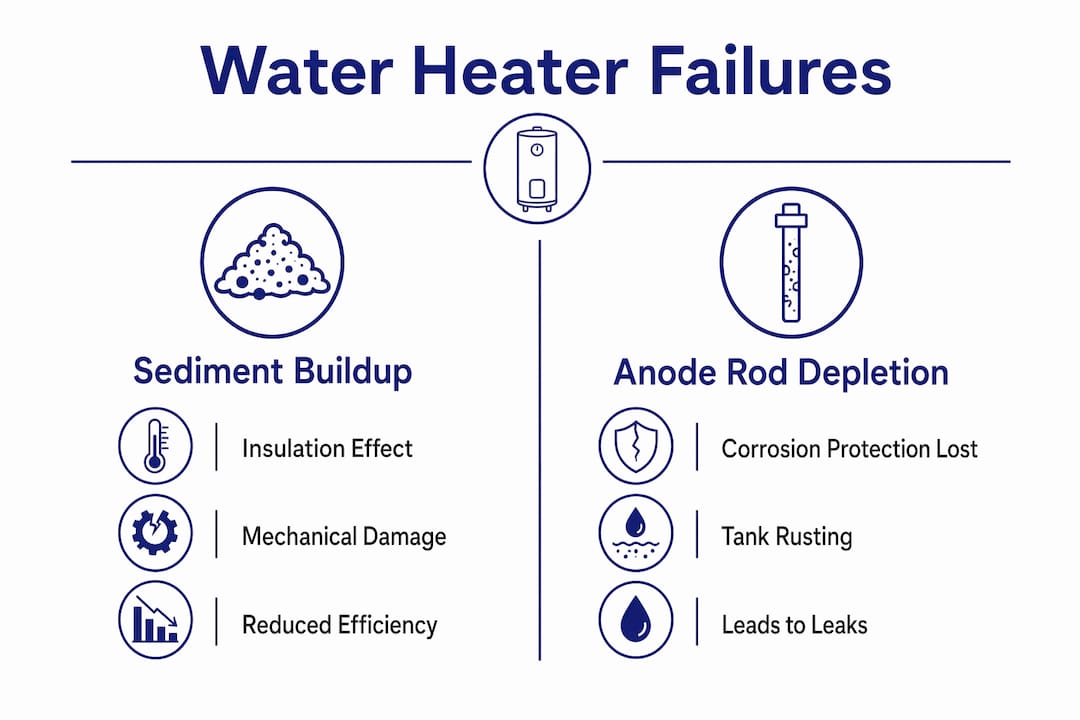
The industry term for the most common failure mechanism is thermal degradation through mineral scale accumulation, but most plumbers simply call it sediment damage. Sediment and anode depletion work together to accelerate water heater failure more rapidly than either cause alone. That combination is what turns a 12-year appliance into a 7-year emergency.
San Antonio’s water supply carries high concentrations of calcium and magnesium. Every time your water heater heats water, those minerals precipitate out and sink to the bottom of the tank. Over 3 to 5 years, sediment layers of 1 to 3 inches can build up inside the tank. That’s not a minor inconvenience. That’s a layer of insulation sitting between your burner and your water.
At the same time, the anode rod, a magnesium or aluminum rod suspended inside the tank, is quietly corroding so the steel tank doesn’t have to. Once that rod depletes, the tank steel becomes the target. The result is corrosion, rust, and eventually perforation, often before any visible leak appears.
How does sediment buildup damage your water heater?
Sediment acts as an insulator, and not in a helpful way. Sediment insulation forces your heating element to work harder and longer to heat the same volume of water, raising your energy bill and putting thermal stress on the element itself. Over time, that stress cracks or burns out the element entirely.
The mechanical effects go further. As sediment hardens and shifts with temperature changes, it creates micro-abrasions on the tank lining. Those abrasions expose bare steel to water, giving corrosion a foothold even when the anode rod is still partially active. In San Antonio, where hard water increases sediment buildup, this process moves faster than in softer-water cities.
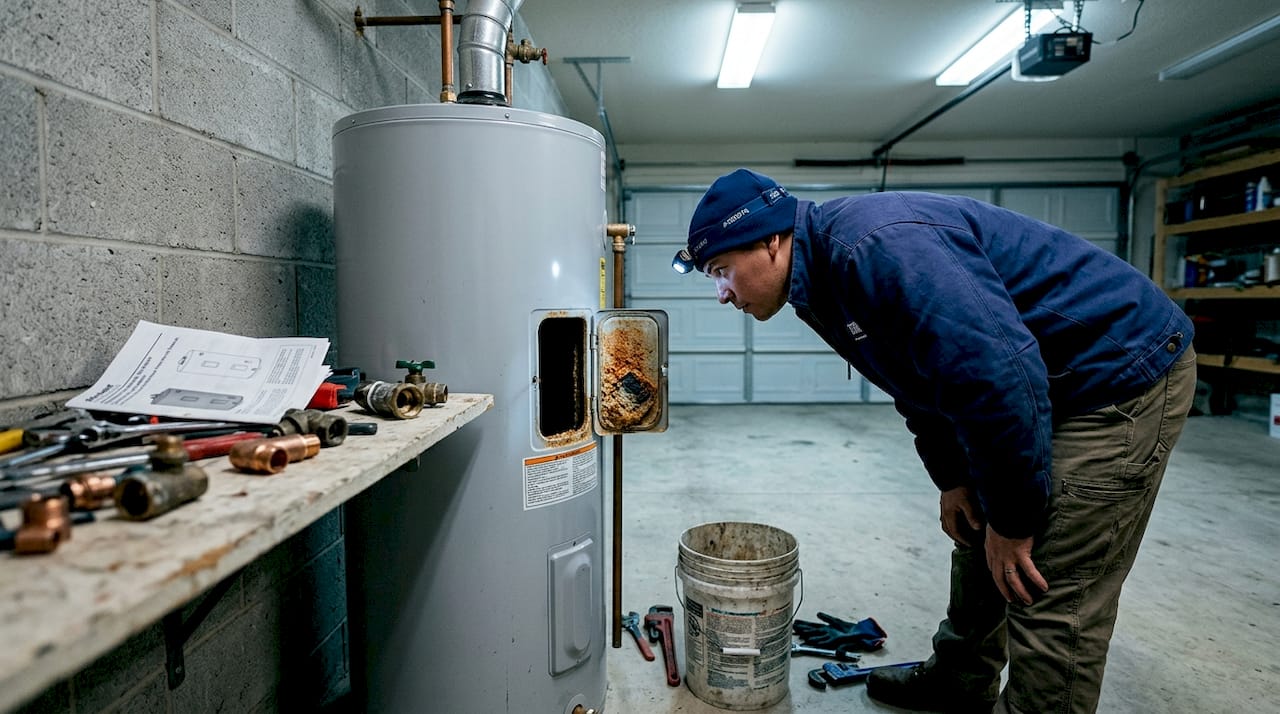
You can hear sediment damage before you see it. A rumbling, popping, or cracking sound during heating cycles is sediment being disturbed by expanding steam trapped beneath the layer. That sound is your water heater telling you it’s under stress.
Signs of sediment buildup to watch for:
- Rumbling or popping sounds during the heating cycle
- Longer wait times for hot water at the tap
- Noticeably higher energy bills without a change in usage
- Discolored or gritty water from hot taps
- Reduced hot water volume or inconsistent temperatures
Pro Tip: Flush your water heater tank at least once a year in San Antonio. If your home has a water softener, flush every six months. Connect a garden hose to the drain valve, run it to a floor drain or outside, and let the tank drain until the water runs clear. Check our guide on how often to flush your water heater in San Antonio for local-specific timing.
What happens when the anode rod depletes?
The anode rod is the unsung hero of your water heater’s lifespan. Made from magnesium, aluminum, or a zinc-aluminum alloy, it corrodes preferentially, meaning it sacrifices itself so the steel tank wall stays intact. This process is called galvanic corrosion protection, and it’s the primary reason tank water heaters can last a decade or more.
The problem is that most homeowners never inspect it. Replacement is recommended every 2 to 3 years, but the majority of units we service at Stultz Plumbing have rods that haven’t been touched since installation. Once the rod is fully depleted, corrosion migrates directly to the tank steel, risking perforations even before any external leak appears. By the time you see rust-colored water or a puddle under the tank, the damage is already advanced.
Water softeners make this worse, not better. Softened water is more aggressive toward anode rods because the ion-exchange process replaces calcium and magnesium with sodium, which accelerates rod corrosion. If your San Antonio home uses a water softener, annual anode rod inspection is not optional. It’s the difference between a $30 rod replacement and a $1,200 tank replacement.
What to check during an anode rod inspection:
- Rod diameter reduced to less than half an inch signals full depletion
- Heavy calcium coating on the rod surface indicates hard water stress
- A sulfur or rotten egg smell in hot water often means a depleted magnesium rod reacting with bacteria
- Visible pitting or holes in the rod mean immediate replacement is needed
- Any rod older than three years in a softened-water home needs replacement regardless of appearance
Pro Tip: Anode rod replacement requires draining part of the tank and using a 1 1/16-inch socket wrench. If the rod is seized, do not force it. Forcing a corroded rod can crack the tank fitting. Call a licensed plumber, especially on units older than five years.
For a deeper look at common water heater problems related to anode failure, Stultz Plumbing has a dedicated resource that walks through each scenario.
What are the signs of water heater failure?
Catching failure early is the difference between a repair and a replacement. Unusual noises, rusty water, and inconsistent heating are the three most common early warning signs, and each points to a specific underlying problem. Knowing which symptom maps to which cause helps you describe the issue accurately when you call a plumber, and it helps you decide how urgent the situation is.
The temperature-pressure relief valve, known as the TPR valve, deserves special attention. A faulty TPR valve can cause overpressure conditions that risk a tank burst. If you see water dripping from the discharge pipe connected to the TPR valve, that’s not a minor drip. It’s a safety signal that the valve is either releasing excess pressure or failing to seal properly.
Use the table below as a quick water heater troubleshooting guide when you notice something off:
| Symptom | Likely cause | Urgency |
|---|---|---|
| Rumbling or popping sounds | Sediment buildup on tank floor | Moderate. Schedule a flush soon. |
| Rusty or brown hot water | Corroded tank or depleted anode rod | High. Inspect anode rod immediately. |
| Water pooling under the tank | Tank perforation or fitting leak | Critical. Shut off and call a plumber. |
| Inconsistent hot water temperature | Failing heating element or thermostat | Moderate. Test thermostat settings first. |
| TPR valve dripping | Overpressure or faulty valve | High. Do not ignore. Call a plumber. |
| Running out of hot water quickly | Sediment reducing tank capacity | Moderate. Flush and inspect element. |
When repairs are feasible versus when replacement is the smarter call depends largely on the unit’s age and the nature of the damage. A tank older than 10 years with active corrosion is almost always better replaced than repaired. Our repair vs. replace guide for San Antonio homeowners walks through that decision in detail.
How regular maintenance prevents premature water heater failure
Regular maintenance can extend water heater life from 8 to 10 years up to 12 to 15 years and cut energy bills by up to 30%. That’s not a minor benefit. That’s potentially five additional years of service from an appliance you’ve already paid for. The key is following a consistent schedule rather than waiting for a symptom to appear.
San Antonio’s hard water means your maintenance schedule should be more aggressive than what the manufacturer’s manual recommends. Those manuals are written for average water conditions. San Antonio is not average. The following numbered list gives you a practical maintenance schedule built for local conditions.
-
Flush the tank annually. Connect a garden hose to the drain valve and flush until the water runs clear. In homes with hard water or a water softener, flush every six months. This removes sediment before it hardens into a damaging layer.
-
Inspect the anode rod every two years. Pull the rod and measure its diameter. Replace it if it’s less than half an inch thick or heavily coated. Homes with water softeners should inspect annually.
-
Test the TPR valve once a year. Lift the lever briefly to confirm it opens and reseats properly. Forcing a faulty valve can cause leaks or pressure issues, so if it doesn’t reseat cleanly, replace it before the next heating cycle.
-
Set the thermostat to 120°F. Lowering the temperature from 140°F to 120°F reduces mineral precipitation, slows sediment formation, and cuts standby energy loss. It also reduces scalding risk.
-
Inspect all fittings and connections annually. Look for moisture, white mineral deposits, or corrosion around the cold inlet, hot outlet, and pressure relief discharge pipe. Catching a slow drip early costs far less than addressing water damage later.
-
Schedule a professional inspection every three years. A licensed plumber can assess internal corrosion, test the dip tube, check the gas valve or electric connections, and identify issues that aren’t visible from the outside. Older units with heavy sediment may require professional intervention to avoid damage during DIY maintenance.
For San Antonio homeowners who want a local-specific maintenance plan, our resource on maintenance tips for San Antonio homes covers the full schedule with local water quality context.
As part of a broader home winterization checklist, water heater inspection fits naturally into an annual home systems review, even in warmer climates like San Antonio where freezing is rare but temperature swings still stress plumbing.
Key takeaways
Water heaters fail primarily because of sediment buildup and anode rod depletion, and both causes are preventable with a consistent annual maintenance schedule.
| Point | Details |
|---|---|
| Sediment is the top threat | Layers of 1 to 3 inches build within 3 to 5 years and force heating elements to overwork. |
| Anode rods need regular replacement | Replace every 2 to 3 years, or annually in homes with water softeners, to protect the tank steel. |
| Early symptoms save money | Rumbling sounds, rusty water, and TPR valve drips are repair signals, not cosmetic issues. |
| Maintenance extends lifespan | Consistent care can add 4 to 5 years of service life and cut energy bills by up to 30%. |
| San Antonio water demands more | Hard water accelerates sediment and anode depletion, requiring a more aggressive local schedule. |
What I’ve learned from years of water heater calls in San Antonio
Every week, we get calls from homeowners who say the same thing: “It just stopped working out of nowhere.” But when we open the unit, nothing about the failure is sudden. The sediment layer is an inch thick. The anode rod corroded away years ago. The TPR valve hasn’t been tested since the unit was installed.
The honest truth is that most homeowners delay maintenance until an emergency forces their hand. That delay is expensive. A $30 anode rod and an hour of your time every two years is the entire cost of prevention. The alternative is a $1,200 to $3,000 emergency replacement, often on a weekend when rates are higher.
What I’ve also noticed is that San Antonio homeowners underestimate how much local water quality matters. The same unit that lasts 14 years in a soft-water city might fail at 8 years here without proper care. That’s not a manufacturer defect. That’s chemistry. Understanding your local water conditions and adjusting your maintenance schedule accordingly is the single most underrated move a homeowner can make.
My recommendation is simple. Don’t wait for a symptom. Schedule a professional inspection every three years, flush the tank yourself every year, and replace the anode rod on schedule. Those three habits alone will keep most water heaters running well past their expected lifespan. And if you’re not sure where to start, call a licensed plumber who knows San Antonio’s water. The investment is small. The payoff is years of reliable hot water without the stress of an emergency.
— Jean
Get expert water heater service from Stultz Plumbing in San Antonio
If your water heater is showing any of the warning signs covered in this article, or if it’s been more than two years since its last inspection, now is the right time to act.

Stultz Plumbing provides professional water heater services in San Antonio including tank flushing, anode rod replacement, TPR valve testing, and full system inspections. We also offer fast emergency response across San Antonio and surrounding communities when urgent failures occur. Our team understands local water conditions and builds maintenance plans around what San Antonio homes actually need, not generic manufacturer guidelines. Schedule your inspection today and protect your home from an avoidable breakdown.
FAQ
What is the most common reason water heaters fail?
Sediment buildup and anode rod depletion are the most common causes of water heater failure. Both problems develop gradually and are fully preventable with annual maintenance.
How do I know if my water heater is failing?
Rumbling or popping sounds, rusty or discolored hot water, inconsistent temperatures, and water pooling under the tank are the clearest signs of water heater failure. A dripping TPR valve is also a serious warning that needs immediate attention.
How long should a water heater last in San Antonio?
A properly maintained water heater lasts 12 to 15 years. Without regular flushing and anode rod replacement, San Antonio’s hard water can shorten that lifespan to 7 to 8 years.
Can I flush my water heater myself?
Yes. Attach a garden hose to the drain valve, run it to a safe drainage point, and flush until the water runs clear. If the unit is older than 10 years or has never been flushed, call a plumber first. Heavy sediment can clog the drain valve during a DIY flush.
When should I replace instead of repair my water heater?
Replace your water heater if it’s older than 10 years and showing signs of internal corrosion, active tank leaks, or repeated element failures. Repairs make sense on newer units with isolated component issues. Our repair vs. replace guide covers the full decision framework for San Antonio homeowners.
Recommended
- Why water heaters fail early and how to prevent it
- Water Heater Repair Guide: DIY Fixes for San Antonio
- Essential Water Heater Basics for San Antonio Homeowners
Jean runs growth strategy at AimSetWin, a performance marketing agency specializing in local service businesses across Texas. he's helped plumbers, HVAC companies, pest control operators, and home service brands build predictable revenue systems using data-driven advertising and conversion optimization.


