

Discover crucial insights in this residential plumbing overview for San Antonio homeowners. Save money and stress by knowing when to act!
TL;DR:
- Most plumbing issues stem from early warning signs in two distinct systems: water supply and drain-waste-vent (DWV). Recognizing problems like pressure drops or slow drains allows homeowners to address issues proactively, preventing costly emergencies and damage. Routine maintenance and prompt professional help when needed are essential to preserving plumbing health and avoiding extensive repairs.
Most homeowners only think about their plumbing when something goes wrong. A burst pipe under the kitchen sink or a backed-up toilet at midnight suddenly makes plumbing feel very important. But here’s the reality: your home’s plumbing system sends clear warning signals well before it reaches a crisis point. Understanding how your system works, what those signals mean, and when to act can save you thousands of dollars and a lot of stress. This guide walks you through everything you need to know, from the basics of how water moves through your home to the smart decisions that keep repairs small and manageable.
Table of Contents
- Understanding your home’s plumbing system
- Key signs of plumbing problems: What to watch for
- Plumbing maintenance: Prevention is better than repair
- When to DIY and when to call a pro
- A plumber’s perspective: What most homeowners overlook
- Get help from trusted San Antonio plumbers
- Frequently asked questions
Key Takeaways
| Point | Details |
|---|---|
| Know your systems | Understanding water supply versus drain and vent systems helps you spot issues early. |
| Watch for warning signs | Slow drains, clogs, and changes in water pressure or smell signal problems you should investigate. |
| Prioritize maintenance | Regular checks and preventative steps save money and prevent emergencies. |
| DIY with caution | Simple fixes are safe, but call a pro for persistent or complex plumbing problems. |
| Be proactive | Act quickly when signs appear to avoid costly repairs and water damage. |
Understanding your home’s plumbing system
Your home has two distinct plumbing systems working at the same time, and most homeowners have no idea they are separate. Mixing up which one is failing is a common reason repairs get delayed or mishandled. Systems-level thinking helps distinguish failures in water supply versus drainage and vent systems, and that distinction is the foundation of smart plumbing awareness.
The water supply system delivers fresh water under pressure from the municipal main or your well directly to every faucet, toilet, and appliance in your home. Pressure is what makes it work. Without adequate pressure, water simply cannot reach the second floor or flow at a usable rate through your shower. This system includes the main shutoff valve, supply lines, branch lines, and individual fixture shutoffs.
The drain-waste-vent (DWV) system does the opposite job. It removes used water and waste from your home entirely by gravity. Every drain in your house slopes downward toward larger pipes that lead to the sewer or septic system. The vent portion of the DWV system is the part homeowners overlook most. Vent pipes extend through your roof to allow air into the drain lines, which is essential for water to flow freely and for sewer gases to escape outside rather than into your living space.
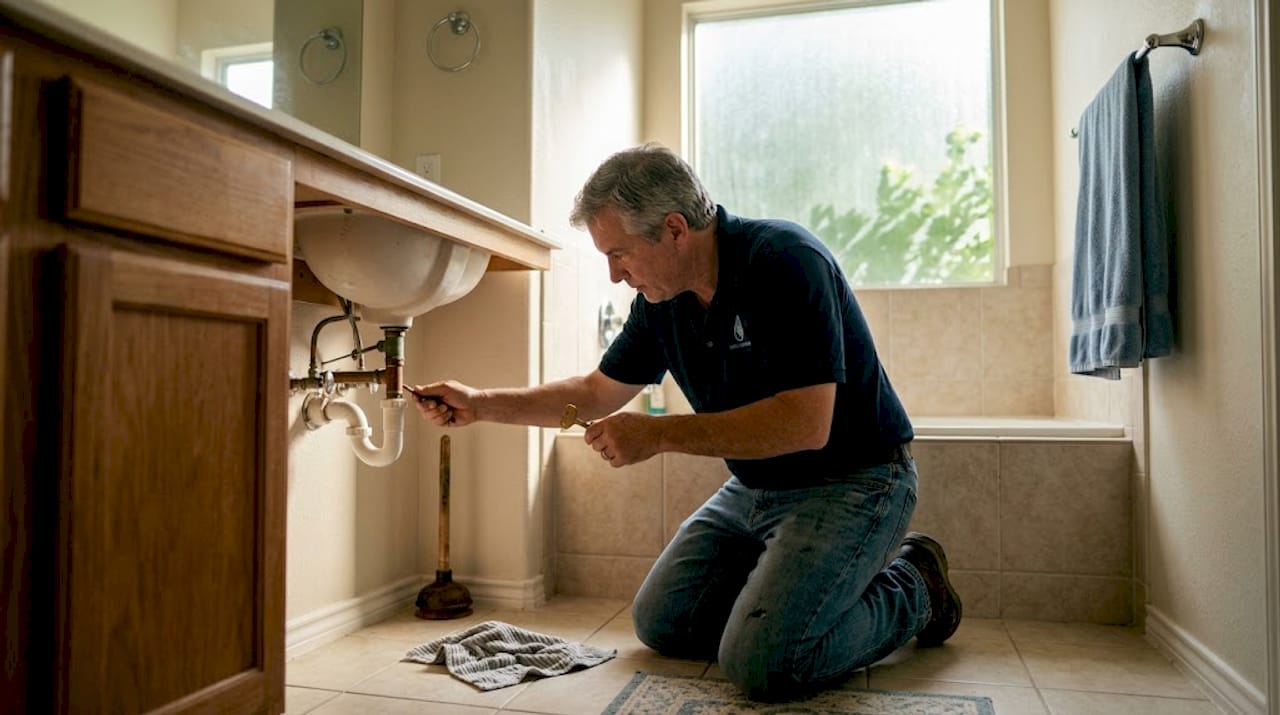
Here is a quick comparison to keep these systems clear in your mind:
| Feature | Water supply system | DWV system |
|---|---|---|
| How it moves water | Pressure-driven | Gravity-driven |
| Common problems | Low pressure, leaks, temperature swings | Clogs, odors, slow drains, backups |
| Where issues show up | Faucets, water meter, supply lines | Drains, toilets, vent pipes |
| Emergency risk | Burst pipe, flooding | Sewer backup, gas infiltration |
| DIY-friendly repairs | Minor leaks, shutoff valve | Minor clogs only |
Common supply system warning signs include:
- Unexplained drop in water pressure at one or more fixtures
- Hot water taking unusually long to arrive at the tap
- Discolored water, particularly rust-colored or brown
- Visible moisture or corrosion around pipe connections
- An unexplained spike in your monthly water bill
Common DWV warning signs include:
- Drains that empty slowly or make gurgling sounds
- Foul odors near drains or in bathrooms with limited use
- Multiple fixtures backing up at the same time
- Toilets that bubble when you run a nearby sink
“Your plumbing system is not one thing. It is two separate systems that each fail in different ways. Recognizing which system is struggling cuts your response time in half and often prevents minor issues from turning into major water damage.”
For routine plumbing maintenance to be effective, you need to know which system needs attention. That clarity starts here.
Key signs of plumbing problems: What to watch for
Once you understand how your system is built, spotting trouble becomes much easier. The trick is learning to notice the quiet, early signs before they escalate into something that requires emergency service.
Supply problems show as pressure or temperature issues, while DWV problems often show as slow drains, clogs, gurgling, or odors. That framework alone can help you describe your problem clearly when you call a plumber, which saves time and often reduces service costs.
Supply line warning signs to watch for:
- Water pressure feels weaker than usual, especially in the morning
- Temperature at the shower suddenly fluctuates without any change in usage
- You hear banging or knocking sounds inside walls when water turns off (water hammer)
- A hissing sound near the water heater or behind walls
- Your water meter keeps moving even when no fixtures are in use
DWV warning signs to watch for:
- Water pools in the shower floor before slowly draining
- A sulfur or rotten egg smell near any drain or floor drain
- You hear a distinct gurgling from your toilet after using the washing machine
- The toilet water level rises and falls on its own
- Drains in the basement back up when you flush upstairs
These common San Antonio plumbing issues are not random. They follow patterns, and those patterns point to specific causes. A complete step-by-step plumbing troubleshooting process can help you narrow down the cause before a plumber arrives.
Understanding bathroom plumbing problem indicators is especially important because the bathroom is where both systems intersect most frequently. A slow tub drain combined with a gurgling toilet is almost always a DWV issue, not a supply problem.
Pro Tip: A persistent gurgling sound after flushing, even when drains appear to be working, usually indicates a partially blocked or fully obstructed vent pipe. This is not a fix most homeowners can tackle safely on their own, but catching it early prevents sewer gas from entering your home.
One important statistic worth knowing: the EPA estimates that household leaks waste nearly 1 trillion gallons of water nationally each year. For San Antonio homeowners, where water rates and conservation are ongoing concerns, even a small drip adds up fast. Catching early supply leaks is money literally saved.
Plumbing maintenance: Prevention is better than repair
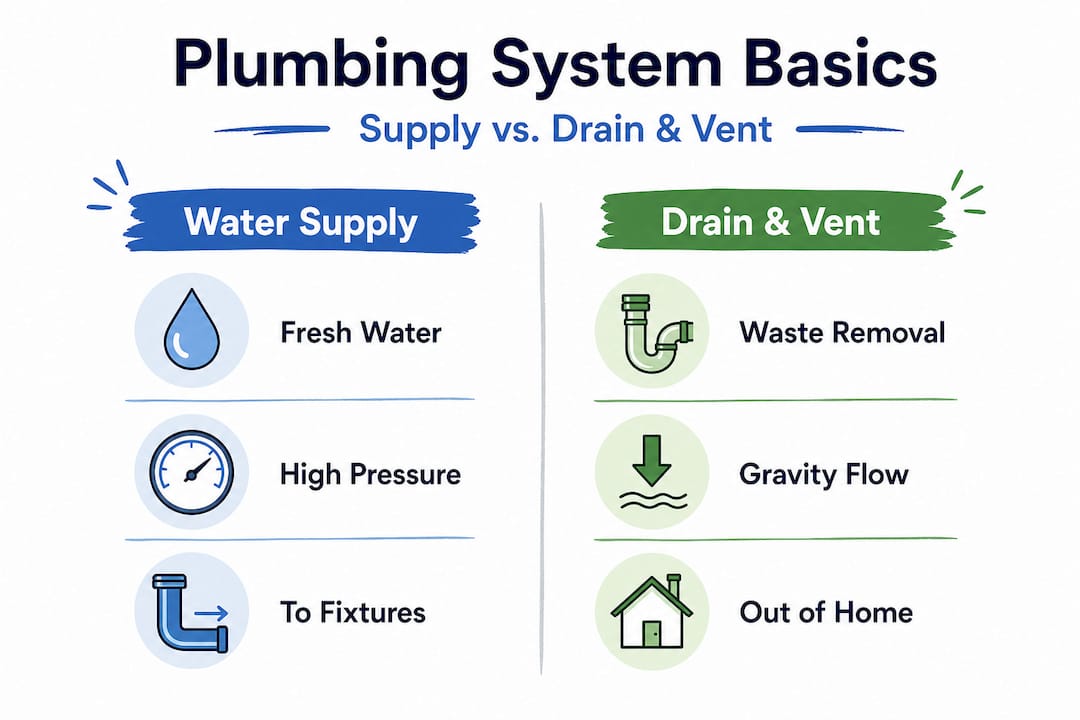
Knowing the warning signs is only useful if you act on them regularly. Routine maintenance reduces the risk and cost of repairs, and most of it takes less than 30 minutes a month. Here is a practical approach to keeping your plumbing in good shape.
Monthly maintenance steps:
- Check under all sinks for moisture, soft cabinet floors, or visible drips around the P-trap and supply lines.
- Run water in guest bathrooms or rarely used fixtures to keep drain traps full and prevent sewer gas entry.
- Look at your water meter before and after a two-hour period of zero water use. Movement indicates a leak somewhere in the system.
- Flush floor drains in the basement or laundry room to keep traps from drying out.
- Inspect the area around the base of toilets for soft flooring, staining, or moisture, which can signal a failing wax ring.
Seasonal maintenance priorities:
- Before summer: Check outdoor hose bibs for leaks and test irrigation connections.
- Before winter: Insulate exposed pipes in unheated areas like garages or crawl spaces.
- Annually: Have your water heater flushed to remove sediment buildup, which reduces efficiency and shortens its lifespan.
- Every 2 years: Consider a camera inspection of main drain lines, particularly if you have mature trees in your yard.
The best plumbing maintenance tips address both systems simultaneously. Your San Antonio plumbing maintenance guide for 2026 covers local-specific concerns like hard water and extreme summer heat that accelerate pipe wear. Ignoring these tasks is not a neutral choice. The plumbing maintenance pitfalls that cost homeowners the most are almost always the result of deferred action, not bad luck.
Pro Tip: Know exactly where your water main shutoff is located before you ever need it. Walk every member of your household to that valve and make sure they can turn it off quickly. In a pipe burst situation, every second counts, and fumbling in a flooded utility room is not the time to be searching.
A few other habits that make a big difference:
- Never pour grease or cooking oil down the kitchen drain. It solidifies in cooler pipe sections and creates blockages that grow over time.
- Use a hair catcher in every shower and clean it weekly.
- Avoid chemical drain cleaners for recurring clogs. They damage pipe interiors over time and often do not solve the underlying issue.
- Know the age and material of your pipes. Galvanized steel pipes older than 40 years are a recipe for leaks and reduced flow.
When to DIY and when to call a pro
There is a clear line between what a motivated homeowner can handle and what requires a licensed plumber. Crossing that line costs money and can void home insurance coverage in some cases. Here is a straightforward guide.
Reasonable DIY tasks:
- Replacing a faucet washer or cartridge to fix a dripping faucet
- Clearing a minor sink or tub clog with a plunger or drain snake
- Replacing a toilet flapper or fill valve
- Tightening a loose supply line connection under a sink
- Installing a new showerhead or faucet aerator
Situations that require a professional:
- Any clog that returns within a few days of clearing
- Water heater issues including insufficient hot water, rust-colored water, or unusual noises
- Low pressure affecting the whole house rather than a single fixture
- Sewer odors throughout the home or multiple drains backing up at once
- Any suspected gas line involvement
- Visible pipe corrosion or pinhole leaks in walls or the slab
DWV problems often show up as slow drains, recurring clogs, gurgling, odors, or backups that require professional help if persistent. Recurring issues are not a DIY problem. They are a symptom of a deeper issue that only a camera inspection or professional diagnosis will reveal.
| Problem type | DIY possible? | Call a pro? |
|---|---|---|
| Minor sink clog | Yes | Only if it returns |
| Dripping faucet | Yes | If cartridge replacement fails |
| Running toilet | Yes | If problem persists |
| Low whole-house pressure | No | Yes |
| Sewer smell or backup | No | Yes, immediately |
| Water heater malfunction | No | Yes |
| Pipe corrosion or slab leak | No | Yes, urgently |
| Recurring drain blockage | No | Yes |
Delaying a professional call when symptoms point to a sewer line or slab issue is one of the most expensive decisions a homeowner can make. What costs a few hundred dollars to diagnose early can easily climb to several thousand once water damage sets into walls, floors, or the foundation.
For urgent situations, having emergency plumbing tips at your fingertips can prevent panic and reduce damage while you wait for help to arrive.
A plumber’s perspective: What most homeowners overlook
After years of responding to plumbing calls across San Antonio, we have seen a clear pattern. The most expensive repairs almost never happen without warning. The warning was there. It was ignored.
Slow drains are the most underestimated problem in residential plumbing. Homeowners tolerate them for months because water still goes down eventually. But a slow drain is often the first stage of a full blockage or a developing sewer line problem. Tree root infiltration is especially common in older San Antonio neighborhoods where mature oak and pecan trees line the streets. Roots are drawn to moisture and crack into sewer lines through the smallest weak point. By the time a homeowner notices a recurring clog or a backup, the root mass inside the pipe can already span several feet.
San Antonio’s water is notoriously hard. Mineral deposits from calcium and magnesium build up inside supply lines and reduce flow over time. Hard water accelerates the failure of water heater heating elements, corrodes fittings, and shortens the lifespan of appliances connected to the water supply. Homeowners who invest in a water softener see fewer service calls overall. It is a proactive move that protects every part of the system.
We have also seen how often homeowners miss the signs you need new pipes until a leak forces the issue. If your home was built before 1985 and still has original plumbing, the pipe material alone is worth a professional assessment. Galvanized steel corrodes from the inside out. Polybutylene, used in many homes built in the 1970s through 1990s, is known to fail without warning.
Pro Tip: Act before you smell or see the symptoms. The most expensive repairs happen after water damage has already started. A proactive inspection every two to three years costs far less than emergency restoration work after a slab leak or sewer backup soaks your subfloor.
The homeowners who spend the least on plumbing over time are not lucky. They are attentive. They check under their sinks. They notice when the shower takes longer to drain. They call us when something seems slightly off, not when it becomes a crisis.
Get help from trusted San Antonio plumbers
Understanding your plumbing system is a real advantage, but having a reliable local team behind you is what truly protects your home.
At Stultz Plumbing, we provide the full range of plumbing services in San Antonio that homeowners depend on, from routine maintenance and drain cleaning to water softener installation and full repiping. When something goes wrong at midnight or over a holiday weekend, our emergency plumbing solutions are available when you need them most. We also handle water heater services, including repair and full replacement, to make sure your family always has reliable hot water. Scheduling is straightforward, pricing is transparent, and our technicians know San Antonio homes inside and out. Do not wait for a small issue to become a major one.
Frequently asked questions
What are the main parts of a home plumbing system?
Your home’s plumbing includes water supply, fixtures, and a DWV system that removes wastewater through a network of drain, waste, and vent pipes.
What’s the difference between a water supply problem and a drain problem?
Water supply affects pressure or temperature, while drain problems cause slow emptying, clogs, backups, or foul odors near fixtures.
What plumbing maintenance should I do regularly?
Inspect visible pipes for moisture, check all drains for slowdowns, and test your water meter for movement during zero-use periods. Routine homeowner inspections catch problems early and significantly reduce repair costs.
When should I call a professional plumber instead of trying to fix it myself?
Call a pro for recurring clogs, major or unexplained leaks, sewer odors, water heater malfunctions, or any issue involving gas lines. DWV problems and water heater issues almost always require licensed expertise to resolve correctly.
What’s the most overlooked cause of expensive plumbing emergencies?
Slow drains and small ignored leaks are the most common culprits. DWV problems can escalate quickly from a minor nuisance into a full sewer backup or water damage event when left unaddressed.
Recommended
- San Antonio home plumbing maintenance: prevent costly repairs
- Plumbing maintenance: prevent costly repairs in San Antonio
- Home plumbing maintenance guide for San Antonio 2026
- Common emergency plumbing issues every San Antonio homeowner must know
Jean runs growth strategy at AimSetWin, a performance marketing agency specializing in local service businesses across Texas. he's helped plumbers, HVAC companies, pest control operators, and home service brands build predictable revenue systems using data-driven advertising and conversion optimization.


