

Learn what drain cleaning is, why it matters for San Antonio homes, and when to call a professional. Prevent costly clogs with this practical homeowner's guide.
TL;DR:
- Proactive drain cleaning prevents water damage, mold, and costly repairs in homes.
- Common causes of clogs include grease, hair, soap scum, and mineral buildup from hard water.
- Regular professional services and maintenance habits save homeowners money and protect plumbing systems.
Many San Antonio homeowners accept slow drains as an unavoidable fact of life, something that just happens as a house ages. That thinking is costing people real money. Clogged and neglected pipes don’t just slow down your morning routine; they quietly cause water damage, mold growth, and expensive emergency repairs. The good news is that proactive drain cleaning can prevent most of those problems entirely. In this guide, we’ll explain exactly what drain cleaning is, what causes blockages in local homes, how professionals handle the job, and when it’s time to stop relying on DIY fixes and call an expert.
Table of Contents
- What is drain cleaning?
- Common causes of clogged drains
- How professional drain cleaning works
- Signs you need professional drain cleaning
- Preventive tips for maintaining clear drains
- Why most homeowners overlook drain cleaning—and what it’s really costing you
- Get expert drain cleaning services in San Antonio
- Frequently asked questions
Key Takeaways
| Point | Details |
|---|---|
| Drain cleaning basics | Professional drain cleaning removes buildup and keeps your home’s plumbing flowing smoothly. |
| Common clog causes | Grease, hair, soap, and foreign debris are the main reasons drains get blocked in local homes. |
| When to call experts | Persistent slow drainage, foul odors, and frequent backups signal it’s time for a professional cleaning. |
| Prevention tips | Simple habits and regular maintenance can significantly reduce the risk of costly plumbing emergencies. |
What is drain cleaning?
Now that you know those slow drains are not “just aging,” let’s define exactly what drain cleaning means and why it belongs in your regular home maintenance plan.
Drain cleaning removes buildup and obstructions in pipes to ensure smooth water flow. That definition sounds simple, but the process covers everything from clearing a single slow sink to flushing an entire home’s plumbing network. At its core, drain cleaning is about restoring proper flow and removing the material that restricts it, whether that’s grease, hair, soap scum, mineral deposits, or tree roots.
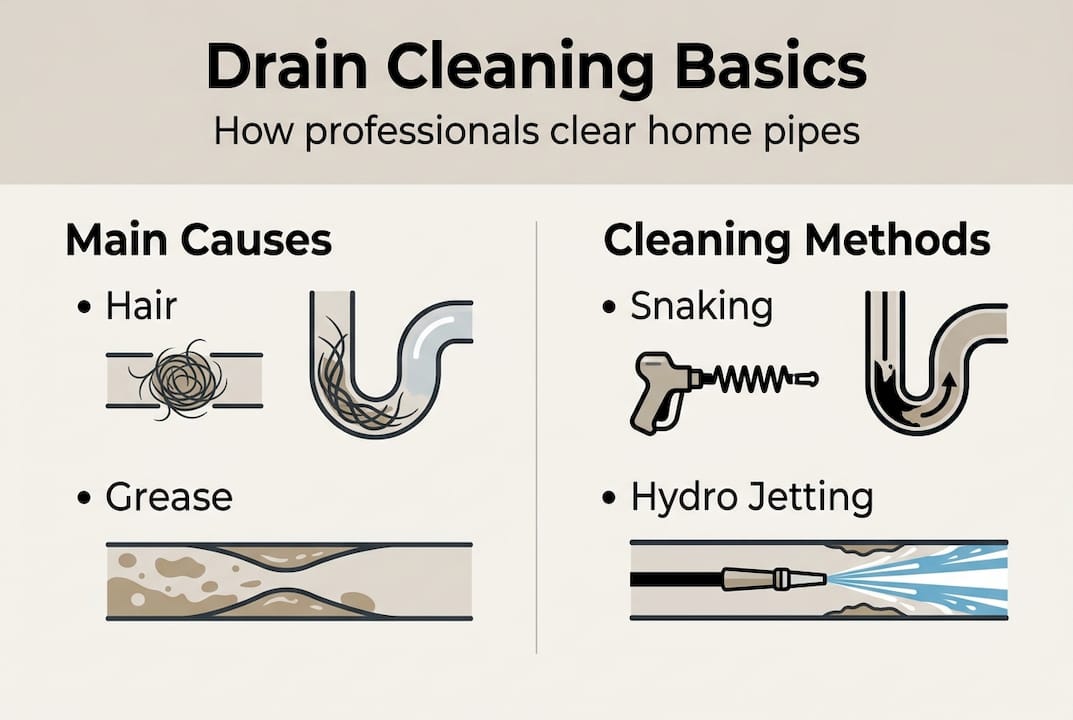
It’s worth separating two things that often get confused: drain clearing and drain cleaning. Drain clearing removes a specific blockage so water flows again. Drain cleaning goes further, treating the full length of the pipe to remove buildup before it becomes a blockage. Think of it like the difference between wiping a counter and actually scrubbing it clean.
Here’s what professional drain cleaning typically addresses:
- Grease and fat deposits along kitchen drain walls
- Hair and soap residue in bathroom sink and shower drains
- Mineral scale from San Antonio’s notoriously hard water
- Food particles and debris in garbage disposal lines
- Tree root intrusion in outdoor sewer lines
- Sediment accumulation in main sewer connections
“A clean drain system is one of the simplest ways to protect your home’s plumbing health. Consistent maintenance prevents the slow buildup that leads to major failures.”
Understanding plumbing health basics helps you see why clean pipes matter beyond just convenience. When drains run freely, you avoid foul odors, reduce the risk of pipe corrosion, and protect your home’s overall plumbing investment. Staying on top of this is one of the most effective ways of preventing costly plumbing repairs down the road.
Common causes of clogged drains
With a clear definition in mind, it’s important to know what causes those stubborn blockages in the first place.
Most clogs don’t happen overnight. They build up gradually, layer by layer, until water has nowhere to go. Grease, hair, soap scum, and foreign objects are the top reasons for home drain clogs, and San Antonio homes face an additional challenge: hard water. The city’s water supply carries high levels of dissolved minerals, particularly calcium and magnesium, which deposit inside pipes over time and narrow the passage for water flow.
Here are the main causes of clogged drains in residential properties:
- Kitchen grease and cooking oils: These coat pipe walls and harden as they cool, trapping food particles
- Hair: The single most common bathroom drain clogger, especially when combined with soap residue
- Soap scum: Traditional bar soaps contain fat that bonds with minerals in hard water to create a thick residue
- Food scraps: Even with a garbage disposal, small particles accumulate in the drain line
- Foreign objects: Wipes labeled “flushable,” cotton balls, and small toys are frequent offenders in toilet drains
- Tree roots: Older San Antonio neighborhoods often have mature trees whose roots seek out moisture in sewer lines
- Mineral buildup: Hard water scale narrows pipes gradually, reducing flow even without a single large blockage
According to a drain cleaning guide from Home Depot, American households deal with clogged drains more frequently than almost any other plumbing issue, making it one of the top reasons people call a plumber each year.
Pro Tip: Install mesh drain screens in every shower, tub, and kitchen sink. This one simple habit catches hair and debris before it enters the pipe, cutting down on the drain cleaning tips you’ll need to follow later.
How professional drain cleaning works
Once you know what typically causes drain issues, understanding how professionals solve these problems can help you make informed decisions about your home’s plumbing.
A professional drain cleaning visit is more structured than most homeowners expect. Here’s what a typical appointment looks like:
- Initial assessment: The plumber inspects the affected drain, asks about symptoms, and identifies the likely location and nature of the blockage.
- Camera inspection: In many cases, a small video camera is inserted into the pipe to see exactly what’s causing the problem and where it sits.
- Method selection: Based on the inspection, the technician chooses the right tool, whether that’s a snake, an auger, or a hydro jet.
- Clearing and cleaning: The selected method is used to break up, remove, or flush out the obstruction and any surrounding buildup.
- Post-cleaning check: The plumber runs water and may re-inspect with the camera to confirm the pipe is fully clear.
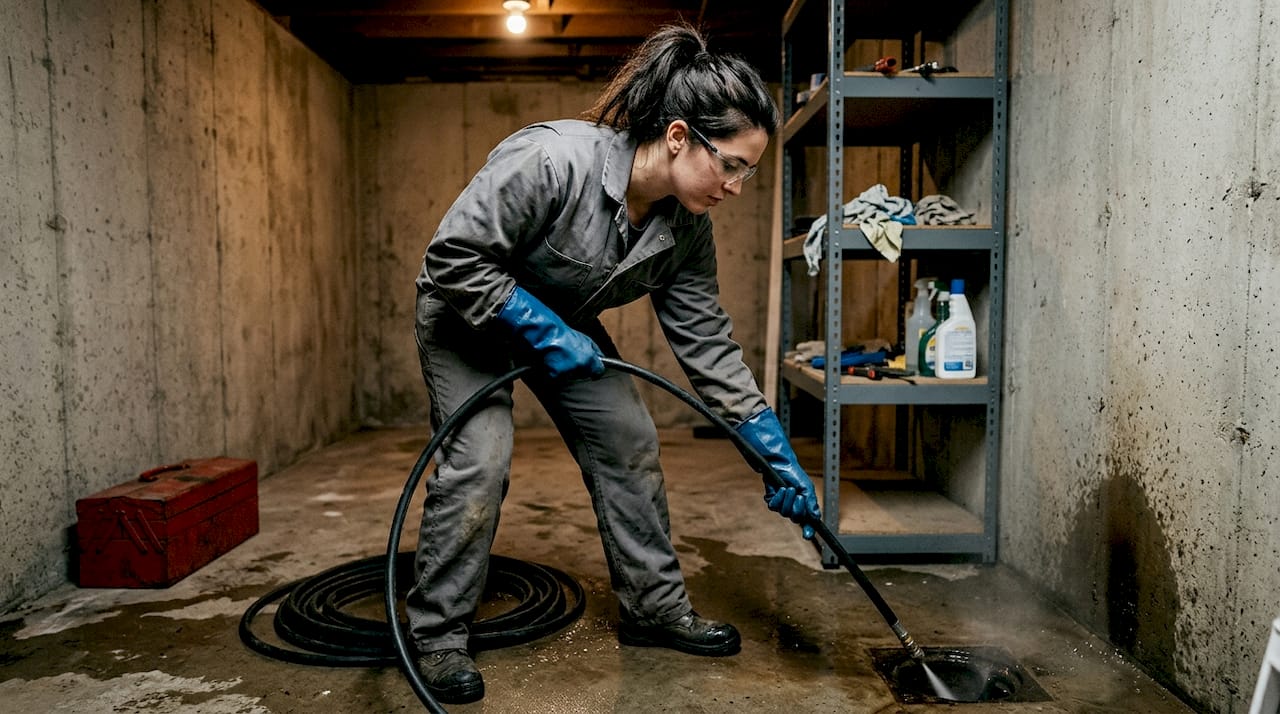
Professionals use augers, snakes, and hydro jetting to thoroughly remove clogs and buildup. Each method has its strengths, and knowing the difference helps you understand why one job might cost more than another.
| Method | Best for | Limitations |
|---|---|---|
| Drain snake/auger | Single clogs, hair, soft blockages | Doesn’t clean pipe walls |
| Hydro jetting | Grease, scale, root intrusion | Requires professional equipment |
| Video inspection | Diagnosing hidden or recurring issues | Adds to service time and cost |
For a deeper look at how professional drain cleaning works, the process is more thorough than most people realize. Our hydro jet drain cleaning service, for example, uses pressurized water to scour the inside of pipes, removing years of grease and mineral scale that a snake simply can’t reach. You can explore our full range of drain cleaning services to see which option fits your situation.
Pro Tip: If you’ve had the same drain clog more than twice in a year, a camera inspection is worth the investment. It often reveals a structural issue or root intrusion that repeated snaking will never fully fix.
Signs you need professional drain cleaning
Knowing how drain cleaning works is only half the story; you also need to spot trouble before it escalates into something far more expensive.
Recurring clogs, foul odors, slow draining, and water backups signal the need for professional drain cleaning. These symptoms are your plumbing system telling you something is wrong deeper in the line.
Watch for these warning signs:
- Slow drains in one or multiple fixtures, even after basic cleaning
- Gurgling sounds coming from drains or toilets when water is running elsewhere
- Foul odors rising from drains, especially in the kitchen or bathroom
- Frequent clogs that keep returning within weeks of clearing
- Water backing up into sinks, tubs, or floor drains
- Multiple slow drains at once, which often points to a main sewer line issue
| Symptom | Likely cause | Recommended action |
|---|---|---|
| Single slow drain | Local hair or soap buildup | DIY screen cleaning or professional snake |
| Gurgling noises | Partial blockage or venting issue | Call a plumber for inspection |
| Foul drain odors | Grease or organic buildup | Professional cleaning |
| Multiple drains slow | Main sewer line blockage | Urgent professional service |
| Water backup | Severe blockage or root intrusion | Emergency plumber call |
“Persistent symptoms like recurring clogs or sewage odors should never be ignored. Waiting only allows the problem to worsen, often turning a straightforward cleaning into a major repair.”
Neglecting these signs creates compounding problems. Water that backs up can damage flooring, walls, and cabinetry. Moisture trapped in walls is a recipe for mold, which carries its own health and remediation costs. Understanding the sewer line repair warning signs early is one of the best ways of protecting your home from plumbing damage. When in doubt, when to call a plumber is sooner rather than later.
Preventive tips for maintaining clear drains
After identifying the warning signs, homeowners often ask: what can I do to keep drains running smoothly every day?
Routine preventive practices reduce the need for costly emergency drain cleanings. The steps below are simple, affordable, and genuinely effective.
- Never pour grease down the drain. Let cooking fat cool in a container and dispose of it in the trash. Even small amounts accumulate fast inside pipes.
- Use drain strainers on every fixture. Mesh screens in showers, tubs, and kitchen sinks catch debris before it enters the line.
- Flush drains weekly with hot water. Running hot water for 30 to 60 seconds after each use helps dissolve minor grease and soap residue before it hardens.
- Avoid chemical drain cleaners. These products can corrode older pipes and rarely address the root cause of recurring clogs.
- Schedule annual professional cleaning. Even when drains seem fine, a yearly service removes the slow buildup that causes problems later.
- Check outdoor drains seasonally. Leaves, debris, and root growth can affect yard drains and outdoor connections, especially after San Antonio’s storm seasons.
For more drain clearing tips and guidance on building a consistent drain cleaning routine, small habits make a measurable difference. A resource from This Old House on maintaining your drain system confirms that consistent upkeep significantly extends the life of residential plumbing.
Pro Tip: Set a calendar reminder every three months to do a quick drain check throughout your home. Run water in every fixture, listen for gurgling, and check for slow drainage. Catching a problem early is always cheaper than fixing a full blockage.
Why most homeowners overlook drain cleaning—and what it’s really costing you
We see a consistent pattern in San Antonio: homeowners delay drain maintenance because life is busy, or because spending money on something that seems “fine” feels unnecessary. We understand that thinking. But here’s the uncomfortable reality.
A single emergency drain call or pipe repair after a major clog can run anywhere from several hundred to several thousand dollars. A routine professional cleaning costs a fraction of that. The math isn’t complicated. Yet most people wait until water is backing up into their kitchen sink before picking up the phone.
San Antonio’s climate adds another layer of risk. Heat accelerates grease hardening inside pipes, and the city’s hard water deposits scale faster than in softer-water regions. Ignoring drains here isn’t just inconvenient; it’s genuinely costly.
The benefits of regular cleaning go beyond avoiding clogs. You’re also protecting against mold, water damage, and the kind of structural pipe deterioration that turns a cleaning job into a full repipe. Shifting from a “fix it when it breaks” mindset to proactive maintenance is one of the most financially sound decisions a homeowner can make.
Get expert drain cleaning services in San Antonio
Convinced it’s time to protect your plumbing? Here’s how you can get top-rated drain cleaning help right in San Antonio.
At Stultz Plumbing, we respond quickly, diagnose accurately, and clear drains thoroughly using the right tools for the job. Whether you need a routine cleaning or you’re dealing with a stubborn recurring clog, our team covers San Antonio and the surrounding communities. You can get a drain cleaning estimate online or call us directly to schedule service. For homeowners who need help now, our fast, local drain cleaning team is ready to respond. We also handle all your all local plumbing needs, from water heaters to repiping, so you have one trusted team for everything.
Frequently asked questions
How often should I schedule professional drain cleaning?
Routine cleaning prevents unexpected clogs and lowers long-term costs, and most homes benefit from professional service once a year. Homes with older pipes, heavy use, or hard water may need it more frequently.
What’s the difference between drain cleaning and clog removal?
Clog removal clears a single blockage so water flows again, while drain cleaning thoroughly removes buildup throughout your pipes to prevent future problems. Cleaning is more preventive; clog removal is reactive.
Are chemical drain cleaners safe for home pipes?
Chemical cleaners may corrode pipes and are less effective than professional methods, making them a poor long-term solution. They can also damage older pipe materials like cast iron and PVC with repeated use.
Can I prevent all clogs with at-home methods?
Good habits reduce clogs significantly, but professionals have proper equipment for deep issues that DIY tools simply cannot reach. Some blockages, especially root intrusion or heavy scale, always require professional intervention.
Recommended
- Hydro Jet Drain Cleaning? A Complete Guide To Get Started
- Why Regular Drain Cleaning Matters | Stultz Plumbing Guide
- Effective drain cleaning tips to prevent clogs
- Why Regular Drain Cleaning Prevents Costly Repairs
Jean runs growth strategy at AimSetWin, a performance marketing agency specializing in local service businesses across Texas. he's helped plumbers, HVAC companies, pest control operators, and home service brands build predictable revenue systems using data-driven advertising and conversion optimization.


