

Discover the essential types of residential plumbing in our 2026 guide. Learn how to protect your home and make informed upgrades today!
TL;DR:
- Knowing your home’s pipe types helps prevent costly repairs and ensures code compliance.
- Common materials include copper, PEX, PVC, CPVC, ABS, galvanized steel, and cast iron, each suited for specific applications.
Most homeowners never think about their plumbing until something goes wrong. But knowing the types of residential plumbing in your home puts you ahead of expensive repairs and bad upgrade decisions. Whether you are dealing with old galvanized pipes, planning a repipe, or just trying to understand what is behind your walls, this guide covers everything you need. We break down every major pipe type, explain how your drain system actually works, and show you how to match the right material to the right job.
Table of Contents
- Key takeaways
- 1. How to evaluate residential plumbing types before you buy or upgrade
- 2. Common types of residential plumbing pipes and their applications
- 3. Understanding the drain, waste, and vent (DWV) system
- 4. Plumbing installation types: water supply system basics
- 5. Types of plumbing fixtures and their connection requirements
- 6. Comparison of residential plumbing pipe types
- My honest take on residential plumbing choices
- How Stultz Plumbing helps San Antonio homeowners get it right
- FAQ
Key takeaways
| Point | Details |
|---|---|
| Pipe material matters | Match pipe material to its application — water supply and DWV pipes have different requirements. |
| PEX dominates modern retrofits | PEX is flexible, cost-effective, and faster to install than copper in most residential settings. |
| DWV venting is often overlooked | Blocked vents cause odors and slow drains, not just physical clogs. |
| Code compliance protects you | Always verify local code acceptance before selecting any pipe material for your home. |
| Older homes carry hidden risks | Galvanized and cast iron pipes degrade over time and signal when a full repipe is due. |
1. How to evaluate residential plumbing types before you buy or upgrade
Before you pick a pipe or call a plumber, you need a clear framework for evaluating your options. Not every material works in every situation, and making the wrong call is a recipe for leaks, code violations, and premature failures.
Here are the core criteria to run every plumbing decision through:
- Material durability and corrosion resistance. Some materials corrode in acidic water conditions common in San Antonio. Copper and PEX both handle this well. Galvanized steel does not.
- Intended use. Water supply pipes differ fundamentally from drain, waste, and vent (DWV) pipes. Using PVC on a hot water supply line, for example, is a code violation and a failure waiting to happen.
- Temperature and pressure tolerances. Standard PVC handles cold water and drain applications only. CPVC and copper manage hot water. PEX handles both, within rated pressure limits.
- Local code compliance. Texas plumbing codes specify which materials are acceptable in which applications. Before any installation, verify what is approved for your municipality. See this Texas plumbing compliance guide for a detailed breakdown.
- Maintenance and repairability. Copper requires soldering for repairs. PEX uses push-fit or crimp fittings that most homeowners can handle temporarily. Think long-term when choosing.
Pro Tip: When evaluating pipe materials for an upgrade, pull your home’s water quality report from your utility provider. High chloramine levels degrade certain elastomers in PEX fittings over time, which affects which fittings you should spec.
The goal is not to find the “best” pipe material. It is to find the right one for each specific application in your home.
2. Common types of residential plumbing pipes and their applications
This is where most homeowners need the most clarity. Residential plumbing systems use several different pipe materials, and each one has a specific role. Here is what you are likely to find behind your walls and under your slab.
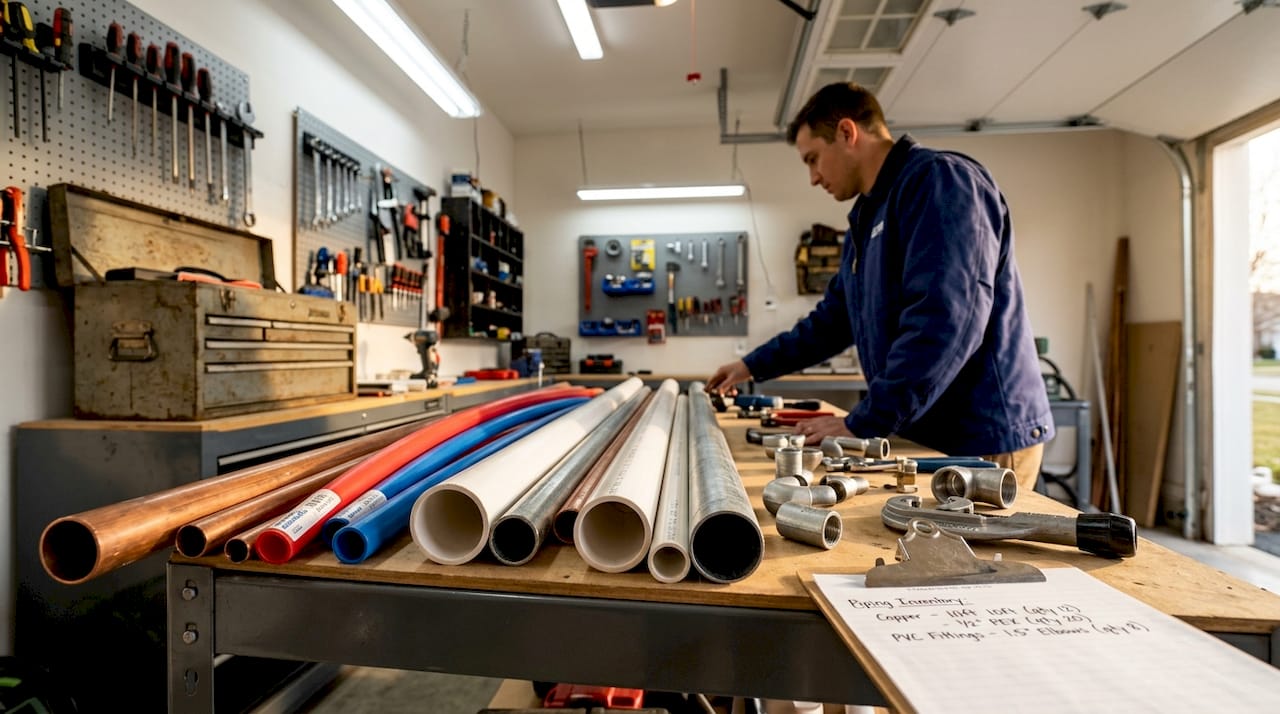
Copper pipes
Copper has been the gold standard for water supply lines for decades. It is durable, heat resistant, and antimicrobial by nature. The downsides are real though. Copper is expensive, it requires soldering to join (which demands skill and a torch), and it can develop pinhole leaks in homes with aggressive water chemistry. In San Antonio, homes built before 1990 often have copper throughout.
PEX pipes
PEX (cross-linked polyethylene) is the material of choice in most new residential construction today. It is flexible enough to route through walls without as many fittings, handles both hot and cold water, and costs significantly less than copper. The trade-off: PEX degrades under UV exposure, so it cannot be used outdoors or in exposed sunny areas. It also cannot be recycled easily. Our PEX repiping guide walks through why many San Antonio homeowners are making the switch.
PVC pipes
PVC (polyvinyl chloride) is rigid, white or cream-colored pipe used almost exclusively in DWV systems and cold water applications. You will find it under sinks, running to toilets, and in drain lines. Never use standard PVC for hot water supply. It warps and fails under sustained heat.
CPVC pipes
CPVC (chlorinated polyvinyl chloride) is chemically altered PVC that tolerates higher temperatures. It handles both hot and cold water supply lines inside homes and is a common choice in older retrofits where copper was cost-prohibitive. It is more brittle than PEX and can crack during hard freezes, which is worth noting even in San Antonio where freezes are infrequent but do happen.
ABS pipes
ABS (acrylonitrile butadiene styrene) is the black rigid pipe you see in drain and vent systems. It was more common in homes built before the 1990s and is still code-accepted in many jurisdictions for DWV use. ABS is slightly more flexible than PVC and installs faster, but the two materials should not be mixed without a special transition coupling.
Galvanized steel and cast iron
Galvanized steel was the standard water supply pipe through the mid-20th century. It corrodes from the inside out, restricting water flow and eventually failing. If your home has galvanized supply pipes, that is one of the clearest signs to replace your plumbing. Cast iron is still found in drain and vent stacks of older homes. It is heavy, durable, and surprisingly good at dampening drain noise, but it does corrode and crack over decades.
Flexible braided pipes
These are the short connector lines you see behind toilets, under sink supply stops, and connecting washing machines. They are not structural supply lines. They are designed for short appliance connections only and fail if stretched, kinked, or left unchecked for years. A burst braided connector under a sink can cause significant water damage.
3. Understanding the drain, waste, and vent (DWV) system
Your home’s DWV system is the half of residential plumbing most homeowners know the least about, and the half that causes the most complaints when it is not working properly.
Here is how it works, step by step:
- Drain pipes collect used water directly from fixtures like sinks, tubs, and showers and carry it away from the fixture.
- Waste pipes carry solid and liquid waste from toilets and larger fixtures toward the main sewer line.
- Vent pipes run up through your roof to balance air pressure inside the drain lines. Without proper venting, the water in your traps gets siphoned out.
That last point is critical. Trap seals prevent sewer gases from entering your living space. Every fixture in your home has a trap, that curved section of pipe that holds a small amount of water at all times. When venting fails, negative pressure pulls that water out of the trap. Suddenly, sewer gas has a direct path into your bathroom or kitchen.
Blocked vents cause gurgling and slow drainage by disrupting air pressure balance throughout the entire system. Many homeowners mistake this for a clog and reach for drain cleaner, which does nothing to fix a pressure problem.
Pro Tip: If multiple fixtures drain slowly at the same time, especially ones on different floors, suspect a venting issue before assuming a blockage. A licensed plumber can camera-inspect the vent stack from the roof to confirm.
Proper pipe slope also matters. DWV pipes require specific slope ratios to move waste by gravity, typically one-quarter inch of drop per horizontal foot of pipe. Too flat and solids accumulate. Too steep and liquids outrun solids, leaving deposits behind.
Regular DWV maintenance includes checking for slow drains, unusual gurgling sounds, and sewer odors near floor drains or infrequently used fixtures. These are early warnings, not minor annoyances.
For a deeper look at sewer odor sources and how to address them, the sewer odor prevention guide from Stultz Plumbing covers the most common causes in San Antonio homes.
4. Plumbing installation types: water supply system basics
Beyond pipes and drains, the water supply side of your home operates as its own pressurized system. Water enters your home from the municipal supply or a private well, passes through a main shutoff valve, and branches to cold water lines throughout the house. Hot water lines branch off from your water heater.
Modern homes often use a manifold system, where a central distribution point sends individual dedicated lines to each fixture. This is common in PEX installations and makes it possible to shut off water to a single fixture without cutting supply to the rest of the house.
Older homes use a trunk-and-branch layout, where one large main line runs the length of the home and smaller branch lines tap off to each fixture. This system works, but pressure drops at the end of long runs are common, especially in larger homes.
San Antonio’s water supply carries minerals that contribute to scale buildup in both pipe types over time. A water softener installation can extend the life of your pipes and fixtures significantly by reducing mineral deposits.
5. Types of plumbing fixtures and their connection requirements
The pipes behind your walls only matter because of what they connect to. Types of plumbing fixtures in a typical home include sinks, toilets, bathtubs, showers, dishwashers, washing machines, water heaters, and outdoor hose bibs. Each one has specific connection requirements.
Toilets connect to a 3-inch or 4-inch waste line and a 3/8-inch cold supply stop. Sinks use 1.5-inch drain connections and 3/8-inch supply stops for both hot and cold. Showers typically drain through a 2-inch line. These sizes are not arbitrary. They are sized based on fixture units, a calculation that reflects the flow demand of each fixture.
When you add a fixture or move one during a remodel, the entire branch line serving that area may need to be resized. This is where many DIY plumbing projects go wrong. Adding a second sink to a bathroom sounds simple until you realize the existing drain line is already at maximum fixture unit capacity.
Outdated fixture connections are also a common source of bathroom plumbing problems. Corroded shutoff valves, cracked braided connectors, and worn toilet supply lines fail quietly until they do not.
6. Comparison of residential plumbing pipe types
Here is a side-by-side look at the major pipe materials to help you understand the trade-offs at a glance.
| Pipe Type | Best Use | Lifespan | Heat Tolerance | Cost | Installation |
|---|---|---|---|---|---|
| Copper | Hot/cold supply | 50+ years | High | High | Moderate (soldering) |
| PEX | Hot/cold supply | 25-50 years | Moderate | Low | Easy (crimp/push-fit) |
| PVC | DWV, cold supply | 25-40 years | Low | Low | Easy (solvent weld) |
| CPVC | Hot/cold supply | 25-40 years | Moderate | Low-Moderate | Moderate |
| ABS | DWV only | 25-40 years | Low | Low | Easy (solvent weld) |
| Galvanized Steel | Legacy supply | 20-50 years | Moderate | N/A (legacy) | Difficult |
| Cast Iron | DWV (legacy) | 50-100 years | Moderate | High | Difficult |
Pipe installation complexity influences homeowner decisions significantly. PEX cuts labor time because it bends around corners without fittings and uses simple mechanical connections. Copper requires more skill and time, which drives up labor costs on any repipe project.
One thing the table does not show: matching material to application and local code is non-negotiable. A cheap pipe in the wrong application will fail faster than a premium pipe in the right one.
If you suspect your home has aging or incompatible pipe materials, a residential plumbing troubleshooting checklist can help you identify where to start.
My honest take on residential plumbing choices
By Jean
I’ve worked on hundreds of San Antonio homes over the years, and the same misconception shows up constantly. Homeowners assume that upgrading to copper means they are getting the best. Copper is excellent pipe. But in 2026, PEX delivers comparable performance for water supply at a fraction of the cost and installation time. For most retrofits, I reach for PEX without hesitation.
The bigger issue I see is that homeowners focus almost entirely on supply pipes and completely ignore the DWV side. Venting is the most overlooked part of residential plumbing systems, and it causes more unexplained symptoms than any other single failure point. Gurgling toilets, slow sinks, random sewer smells. Nine times out of ten, that is a venting problem, not a clog.
My practical advice: if your home was built before 1985 and still has original supply pipes, get them inspected. Not replaced necessarily, but inspected. And if you are remodeling any part of your home, map the fixture branches and vent stacks before you finalize your plans. Ignoring that step creates problems that are much more expensive to fix after the walls are closed.
Plumbing is not glamorous, but getting it right protects your home’s value and your family’s health.
— Jean
How Stultz Plumbing helps San Antonio homeowners get it right
Whether you are dealing with old galvanized pipes, a slow-draining bathroom, or planning a full home repipe, Stultz Plumbing has you covered across San Antonio and the surrounding area.

We specialize in home plumbing services that cover everything from pipe material assessments to full repiping projects. Our team works with copper, PEX, PVC, CPVC, and ABS, and we know exactly which material fits which application under Texas code. If you are considering a repipe, our repiping service in Shavano Park and surrounding communities delivers professional results with transparent pricing. We do not guess. We inspect, diagnose, and give you a clear plan before any work begins. Call Stultz Plumbing today and let us take the guesswork out of your home’s plumbing system.
FAQ
What are the main types of residential plumbing pipes?
The main types are copper, PEX, PVC, CPVC, ABS, galvanized steel, and cast iron. Each serves a specific application, either water supply or drain, waste, and vent systems.
Which pipe is best for home water supply lines?
PEX is the most popular choice in new construction and retrofits due to its flexibility, lower cost, and ease of installation. Copper remains an excellent option where budget allows and UV exposure is not a concern.
What causes slow drains and gurgling in residential plumbing?
Blocked vents disrupt air pressure throughout the DWV system, causing slow drains and gurgling even when there is no physical clog. A plumber should inspect the vent stack before assuming a blockage.
How long do residential plumbing pipes last?
Copper can last over 50 years. PEX and PVC typically last 25 to 50 years depending on water quality and conditions. Galvanized steel often begins failing after 20 to 40 years and should be inspected in any older home.
When should I replace my home’s plumbing system?
If you have galvanized steel supply pipes, frequent leaks, discolored water, or low pressure throughout the house, it is time for a professional inspection. See the full list of warning signs for sewer line repair to know what to watch for.
Recommended
- Commercial vs. residential plumbing: make the right choice in San Antonio
- Residential plumbers: Essential partners for San Antonio homes
- Residential plumbing troubleshooting: a step-by-step guide
Jean runs growth strategy at AimSetWin, a performance marketing agency specializing in local service businesses across Texas. he's helped plumbers, HVAC companies, pest control operators, and home service brands build predictable revenue systems using data-driven advertising and conversion optimization.


