

Explore the types of drain cleaning methods in our 2026 guide. Learn the best techniques to tackle clogs effectively and save money!
TL;DR:
- Drain cleaning methods include mechanical, hydraulic, chemical, and biological approaches, each suited to specific clogs and pipe materials. Mechanical tools physically remove obstructions, while hydro-jetting cleans pipe walls, and enzymes provide eco-friendly maintenance; chemical cleaners pose risks if misused. Proper assessment and professional guidance ensure effective, damage-free drainage solutions tailored to your plumbing needs.
Drain cleaning methods fall into four main categories: mechanical, hydraulic, chemical, and biological. Each category targets a different type of clog, works with specific pipe materials, and carries its own set of risks and benefits. Choosing the wrong method can damage your pipes or leave the blockage untouched. Whether you are dealing with a slow bathroom sink in San Antonio or a completely blocked kitchen drain, knowing which approach fits your situation saves you time, money, and frustration. This guide breaks down every major drain cleaning technique so you can make a confident, informed decision before picking up a bottle or calling a plumber.
1. Types of drain cleaning methods: the four core categories
Drain cleaning methods are categorized as mechanical, hydraulic, chemical, and biological based on blockage type and pipe material compatibility. This matters because a method that works perfectly on a grease clog in a kitchen drain can crack an aging cast iron pipe or leave a root intrusion completely untouched.
The four categories break down like this:
- Mechanical: Physical tools like drain snakes and augers that break apart or retrieve obstructions
- Hydraulic: High-pressure water systems like hydro-jetters that scour pipe walls
- Chemical: Caustic, oxidizing, acidic, or enzymatic formulations that dissolve organic matter
- Biological/Enzymatic: Live bacterial cultures or enzyme blends that digest buildup over time
Choosing the right method is a technical decision based on blockage composition and pipe material, not just personal preference. A professional assessment before you start the drain cleaning process saves you from making an expensive mistake.
2. Mechanical drain cleaning: snakes, augers, and cables
Mechanical drain cleaning is the most direct approach. You insert a tool into the pipe, push it through the clog, and either break the blockage apart or pull it out. This category covers hand augers, drum augers, and cable augers, each suited to different pipe sizes and clog types.
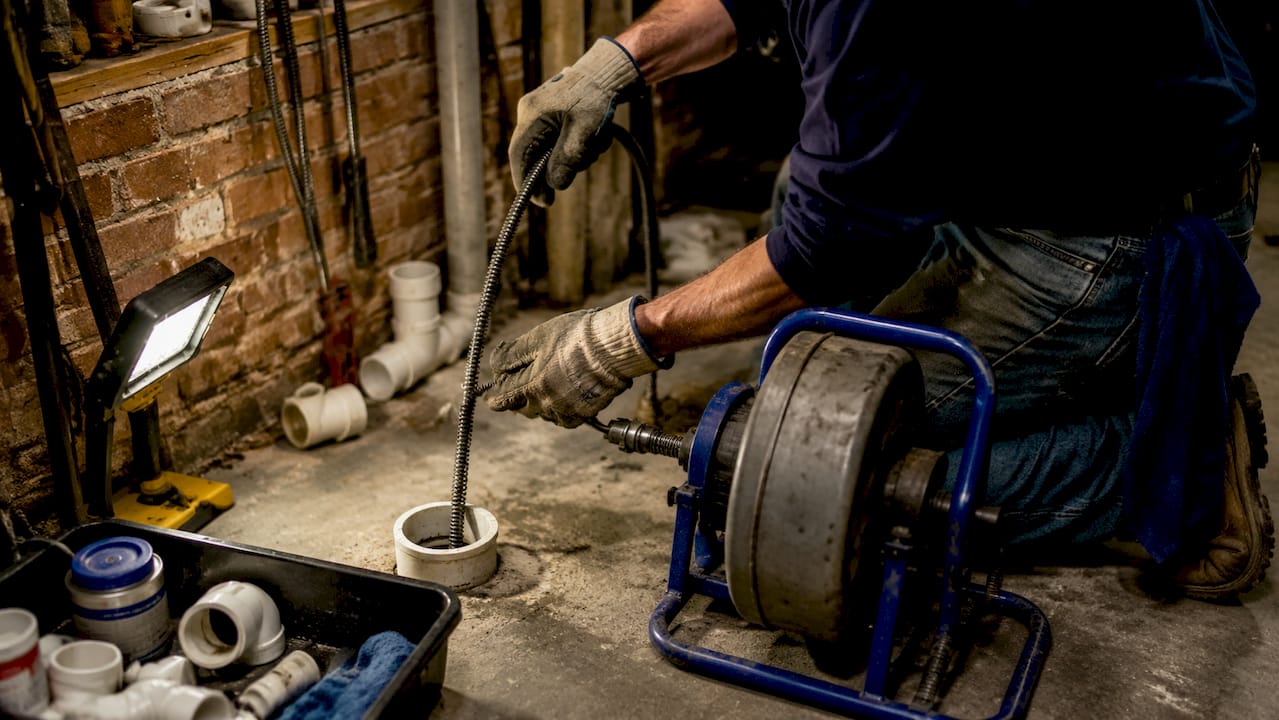
Cable augers use a rotating steel cable ranging from one-quarter inch for fixture lines to one-and-a-half inches for main sewer lines. The rotating action breaks apart blockages and can navigate bends and standard pipe fittings without losing effectiveness. For most household clogs caused by hair, soap scum, or small debris, a hand auger handles the job without professional equipment.
Here is what you need to know before you start:
- Hand augers work on sink and tub drains up to 25 feet
- Drum augers handle longer runs and tougher clogs in floor drains
- Cable augers are the professional standard for main line blockages
- Pipe compatibility: Mechanical tools work safely on PVC, copper, and cast iron when used correctly
- Avoid: Forcing a cable through a corroded or fragile pipe, which can cause punctures
Pro Tip: When using a machine auger, keep cable support within about 6 inches of the drain opening to avoid twisting or kinking. A kinked cable loses torque and can snap inside the pipe, turning a simple clog into a costly repair.
The main limitation of mechanical methods is that they punch a hole through the clog rather than cleaning the pipe wall. Residue left behind becomes the foundation for the next blockage. For recurring clogs, mechanical cleaning is a short-term fix.
3. Hydraulic method: how hydro-jetting works for homeowners
Hydro-jetting is the most thorough drain cleaning technique available for residential properties. It uses pressurized water to scour the interior walls of pipes rather than simply breaking through a blockage. This distinction matters enormously for homeowners dealing with repeated slow drains.
Hydro-jetting operates at around 1,500 to 2,500 PSI for residential drain work. At that pressure, the water does not just push debris downstream. It strips grease, mineral scale, and biofilm from the pipe walls, leaving a clean surface that resists future buildup. That is why hydro-jetting prevents recurring clogs that snaking misses entirely.
Key facts about hydro-jetting for homeowners:
- Best for: Grease buildup, scale, recurring slow drains, and pre-inspection cleaning
- Not ideal for: Severely corroded pipes or pipes with existing cracks, where the pressure can cause further damage
- Pipe compatibility: Safe for PVC, ABS, and newer cast iron; requires professional assessment for older clay or deteriorated pipes
- Cost: Higher than snaking but more cost-effective when clogs recur every few months
- Access: Requires a professional with the right equipment and camera inspection capability
Pro Tip: In San Antonio, hard water mineral deposits accelerate scale buildup inside pipes. Scheduling a professional hydro-jetting service every one to two years keeps your lines clear and extends pipe life. Stultz Plumbing’s team can assess whether your pipes are good candidates before applying pressure.
You can learn more about the full process in this hydro-jetting guide from Stultz Plumbing. For most homeowners with recurring kitchen or main line clogs, hydro-jetting is the best drain cleaning technique available.
4. Chemical drain cleaners: types, uses, and real risks
Chemical drain cleaners are the most accessible option at any hardware store, but they carry the highest risk of pipe damage and personal injury when misused. Understanding the four chemical categories helps you choose the right product and avoid the wrong one.
Chemical drain cleaners break into four types based on their active chemistry:
- Caustic/alkaline cleaners: Contain sodium hydroxide (lye). Generate heat to dissolve grease and hair. Fast-acting but harsh on older pipes and seals.
- Oxidizing cleaners: Use bleach, peroxides, or nitrates to break down organic matter. Effective on hair and food debris. Safer than caustic formulas for most PVC pipes.
- Acidic cleaners: Contain sulfuric or hydrochloric acid. The most aggressive option, typically reserved for professional use. Can damage plumbing over time, especially with repeated use.
- Enzymatic cleaners: Use biological enzymes to digest organic matter. Slow-acting but the safest chemical option for pipes and the environment.
For mild buildup and odor control, baking soda and vinegar with dwell times of 3 to 5 minutes for baking soda and 5 to 10 minutes for vinegar, followed by a hot water flush, is a practical DIY maintenance approach. This combination does not dissolve solid blockages, but it manages light organic buildup and keeps drains smelling clean between professional visits.
Safety is non-negotiable with chemical cleaners. OSHA’s Hazard Communication Standard requires Safety Data Sheets and proper labeling for chemical drain cleaning agents. This means the products you buy at the store carry real hazards that demand gloves, eye protection, and ventilation. Never mix chemical cleaners. The reaction between an acidic and an alkaline cleaner produces toxic gas.
5. Biological and enzymatic cleaners: the slow and steady option
Biological and enzymatic drain cleaners represent the most eco-friendly drain cleaning option available to homeowners. They work by introducing live bacterial cultures or concentrated enzyme blends into your drain, where they digest organic grease, soap scum, and biofilm over several hours or days.
Enzymatic cleaners need appropriate dwell times, often hours to days, to be effective. Homeowners who pour them in and expect immediate results will be disappointed. The perceived failure is almost always a timing issue, not a product failure.
Here is where enzymatic cleaners fit best:
- Routine maintenance: Monthly use keeps organic buildup from accumulating in kitchen and bathroom drains
- After professional cleaning: Applied after a hydro-jet or snake service, they slow the return of buildup
- Septic-safe homes: Unlike caustic cleaners, enzymatic products do not kill the beneficial bacteria in septic tanks
- Older pipes: Safe for cast iron, clay, and PVC because they produce no heat and no chemical reaction
The clear limitation is that enzymatic cleaners do not work on solid obstructions. A toy, a grease plug, or a root intrusion will not respond to enzymes. For those situations, you need mechanical or hydraulic methods first.
Dish soap mixed with hot water is a plumber-recommended home remedy that complements enzymatic maintenance. Pouring a few tablespoons of dish soap followed by a kettle of hot water down the kitchen drain once a week breaks up greasy deposits before they harden into a clog. It is simple, cheap, and genuinely effective for maintenance.
6. Comparing drain cleaning methods: effectiveness and suitability
Choosing between methods comes down to three factors: what is causing the clog, what material your pipes are made from, and how severe the blockage is. This comparison table gives you a clear side-by-side view.
| Method | Best clog type | Pipe compatibility | Speed | DIY-friendly | Cost range |
|---|---|---|---|---|---|
| Mechanical (snake/auger) | Hair, debris, soft blockages | PVC, copper, cast iron | Fast | Yes, with care | Low |
| Hydraulic (hydro-jetting) | Grease, scale, recurring buildup | PVC, ABS, newer cast iron | Fast | No, professional only | Medium to high |
| Chemical (caustic/oxidizing) | Grease, hair, organic matter | PVC, some copper | Fast | Yes, with PPE | Low to medium |
| Biological/Enzymatic | Organic buildup, biofilm | All pipe types | Slow (hours to days) | Yes | Low |
For a first-time clog in a bathroom sink, a hand auger or an oxidizing chemical cleaner is the right starting point. For a kitchen drain that clogs every two months, hydro-jetting addresses the root cause rather than the symptom. For ongoing maintenance in a home with a septic system, enzymatic cleaners are the safest and most effective drain cleaning solution.
Proper technique before you start any method matters as much as the method itself. Preparation and correct technique before plunging or snaking prevents leaks, spills, and secondary damage. Review your DIY drain cleaning guide before you start any hands-on work.
One caution worth repeating: chemical drain cleaners can damage plumbing over time, particularly formulations containing hydrochloric acid or strong caustic agents. Plumbers consistently recommend minimal and careful use. If you reach for a chemical cleaner more than twice for the same drain, the underlying problem is structural, not chemical.
Key takeaways
The most effective drain cleaning method depends on clog type, pipe material, and severity, with mechanical tools for physical blockages, hydro-jetting for recurring buildup, and enzymatic cleaners for routine maintenance.
| Point | Details |
|---|---|
| Match method to clog type | Use mechanical tools for solid blockages, hydro-jetting for grease and scale, and enzymes for maintenance. |
| Chemical cleaners carry real risks | Caustic and acidic formulas damage pipes over time; use sparingly and always with PPE. |
| Hydro-jetting prevents recurrence | Operating at 1,500 to 2,500 PSI, it scours pipe walls that snaking leaves coated with residue. |
| Enzymatic cleaners need time | Allow hours to days of dwell time for biological products to digest organic buildup effectively. |
| DIY has limits | Recurring clogs, main line blockages, and root intrusions require professional assessment and equipment. |
What 15 years of drain calls taught me about choosing the right method
After working on residential plumbing across San Antonio for years, the pattern I see most often is homeowners reaching for a chemical cleaner first, every time, regardless of what is actually causing the clog. A bottle of drain cleaner is convenient. It feels like a solution. But when that same drain clogs again six weeks later, the chemical did not fix anything. It just bought time.
The diagnostic step is the one most people skip. Before you choose a method, ask yourself what is actually in the pipe. Hair and soap scum in a bathroom drain respond well to a hand auger or an oxidizing cleaner. Grease in a kitchen drain that has been building for years needs hydro-jetting, not a bottle of lye. A slow drain in an older San Antonio home with galvanized steel pipes needs a camera inspection before any aggressive treatment, because the pipe walls may already be compromised.
I have also seen homeowners damage perfectly good pipes by using acidic cleaners on older cast iron or by forcing a cable auger through a corroded section. The repair cost always exceeds what a professional service call would have cost upfront.
San Antonio’s hard water adds another layer of complexity. Mineral scale builds up faster here than in softer water markets, which means enzymatic maintenance alone is rarely enough for kitchen lines. A combination approach works best: annual hydro-jetting to clear the walls, monthly enzymatic treatment to slow buildup, and a strainer on every drain to catch debris before it enters the pipe.
The most honest advice I can give you is this: use DIY methods for minor, first-time clogs in fixture lines. Call a professional the second time the same drain clogs. The money you spend on a professional service call is almost always less than the cost of a pipe repair caused by repeated chemical treatment or an aggressive DIY attempt.
— Jean
Get professional drain cleaning in San Antonio from Stultz Plumbing
When a clog comes back or a drain stops responding to DIY methods, you need a team that knows the difference between a surface blockage and a systemic pipe problem.

Stultz Plumbing provides professional drain cleaning services across San Antonio, Boerne, and Fair Oaks, including mechanical snaking for physical blockages and high-pressure hydro-jetting for grease and scale buildup. Our technicians assess your pipe material and clog type before recommending a method, so you get a real fix rather than a temporary patch. We handle residential and commercial properties with transparent pricing and fast response times. If your drain is slow, backing up, or repeatedly clogging, contact Stultz Plumbing today to schedule an inspection and get your lines cleared correctly the first time.
FAQ
What are the main types of drain cleaning methods?
The four main types are mechanical (snakes and augers), hydraulic (hydro-jetting), chemical (caustic, oxidizing, acidic, and enzymatic formulas), and biological/enzymatic cleaners. Each targets different clog types and works with specific pipe materials.
When should I use hydro-jetting instead of a drain snake?
Use hydro-jetting when a drain clogs repeatedly or when grease and mineral scale are the cause. Hydro-jetting scours pipe walls at 1,500 to 2,500 PSI, removing residue that snaking leaves behind and preventing the clog from returning.
Are chemical drain cleaners safe for all pipes?
No. Caustic and acidic chemical cleaners can damage older pipes, particularly cast iron and galvanized steel, with repeated use. Enzymatic cleaners are the safest chemical option for all pipe materials and are the only type recommended for septic systems.
How often should I clean my drains for maintenance?
For most households, a monthly enzymatic treatment combined with a weekly hot water and dish soap flush keeps drains clear. Annual professional hydro-jetting is recommended for kitchen lines, especially in hard water areas like San Antonio.
Can I use baking soda and vinegar to unclog a drain?
Baking soda and vinegar work for mild organic buildup and odor control, not solid blockages. Apply baking soda first with a 3 to 5 minute dwell time, follow with vinegar for 5 to 10 minutes, then flush with hot water for best results.
Recommended
- Drain Cleaning Step by Step: Your DIY Home Guide
- What is drain cleaning? A homeowner’s guide to clear pipes
Jean runs growth strategy at AimSetWin, a performance marketing agency specializing in local service businesses across Texas. he's helped plumbers, HVAC companies, pest control operators, and home service brands build predictable revenue systems using data-driven advertising and conversion optimization.


