

Learn the exact tools and methods professional plumbers use to diagnose and clear drain clogs, from hand snakes to hydro-jetting, for San Antonio homeowners.
TL;DR:
- Professional plumbers use diagnostic steps like camera inspections to identify the true cause of clogs.
- They prefer manual tools and advanced equipment over chemical cleaners to protect pipes and ensure lasting solutions.
- Matching the right tool and approach to the specific clog type ensures effective and long-term drain clearing.
Most homeowners reach for a plunger or a bottle of chemical cleaner when a drain backs up. Those are reasonable first moves, but they often fall short when the real problem sits deeper in your plumbing system. Professional plumbers don’t guess. They follow a structured diagnostic process and select from a set of specialized tools built for the actual clog at hand. Understanding what those tools are and how pros decide to use them can save you time, money, and a lot of frustration. This article walks you through exactly how experienced plumbers approach drain clogs from start to finish.
Table of Contents
- How professional plumbers diagnose drain clogs
- Common tools: Plungers, hand snakes, and why pros rarely use chemicals
- Advanced methods: Motorized drain augers and hydro-jetting
- Matching the method to the problem: Specialty techniques for different clogs
- What most guides miss: Why diagnosis trumps brute force
- Get expert drain clearing in San Antonio
- Frequently asked questions
Key Takeaways
| Point | Details |
|---|---|
| Diagnosis comes first | Professionals use careful inspection and cameras to pinpoint the real problem before choosing a tool. |
| Tools match the job | Plumbers select from plungers, augers, or hydro-jetting based on clog type, depth, and location. |
| Chemicals aren’t the answer | Experts avoid corrosive drain cleaners due to limited success and pipe damage risks. |
| Hydro-jetting clears tough clogs | High-pressure water jets are ideal for grease, hard water, and main line backups common in San Antonio. |
How professional plumbers diagnose drain clogs
Before any tool touches your pipes, a skilled plumber does something most homeowners skip entirely: they gather information. Diagnosis is not a formality. It is the step that determines whether the job takes 20 minutes or 3 hours, and whether the fix lasts or the clog comes back in two weeks.
The process typically follows a clear sequence:
- Symptom mapping. The plumber asks which fixtures are affected, how long the problem has been happening, and whether it came on suddenly or gradually. A single slow sink tells a different story than three backed-up drains across the house.
- Visual inspection. The technician checks accessible cleanouts, drain openings, and any visible pipe sections for obvious signs of damage, buildup, or blockage.
- Probing and testing. Running water through affected lines and observing how quickly it drains helps narrow down whether the blockage is at the fixture trap, a branch line, or the main sewer line.
- Video camera inspection. For recurring clogs or suspected main line issues, a camera is fed into the drain to see exactly what’s inside. Video camera inspections diagnose clogs, roots, or pipe damage before treatment, and they are now standard practice for recurring or main line issues.
This last step is where many homeowners are surprised. A small waterproof camera on a flexible cable transmits live footage from inside your pipes directly to a monitor. The plumber can see root intrusions, grease buildup, collapsed sections, or even foreign objects lodged deep in the line. No guessing. No trial and error.
Skipping diagnosis and going straight to a power tool is like a doctor prescribing surgery without an exam. You might fix the symptom and miss the real problem entirely.
Thorough diagnosis also protects your pipes. Using the wrong tool on an already weakened pipe section can cause cracks or collapse. Our drain and toilet cleaning guide covers what homeowners should know before any work begins.
Pro Tip: Ask your plumber upfront whether they use a camera for diagnosis. A yes is a strong signal that you’re working with someone who prioritizes doing the job right the first time.
With the problem clearly defined, the next step is selecting the right tool and method for the clog at hand.
Common tools: Plungers, hand snakes, and why pros rarely use chemicals
Not every clog requires heavy machinery. For shallow blockages located at or near a fixture trap, plumbers often start simple. But even simple tools in professional hands are different from what you find at a hardware store.
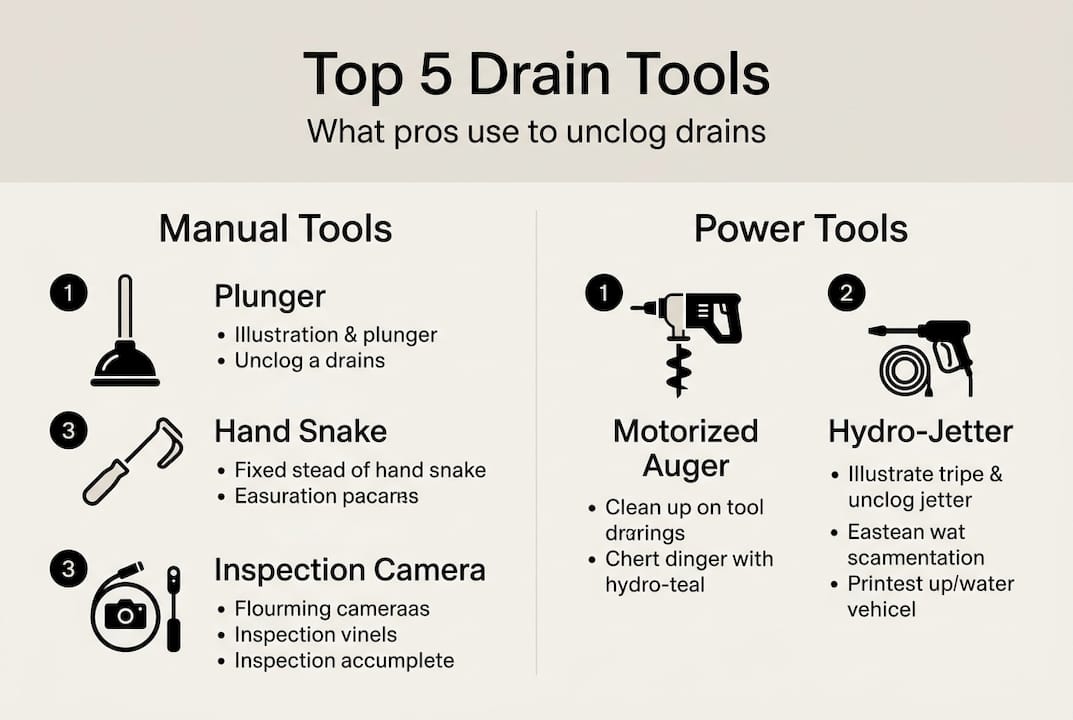
Plungers work by creating alternating pressure and suction in the drain line. Plungers create pressure and suction that dislodges minor clogs, though their reach is limited to the immediate trap area. Professional plungers are heavier, better sealed, and designed for specific drain types. A cup plunger works for sinks; a flange plunger is built for toilets. Using the wrong type reduces effectiveness significantly.
Hand snakes, also called drain augers, extend the reach to roughly 15 to 25 feet. They are manually cranked cables with a coiled tip that breaks apart or retrieves hair, soap scum, and small debris. Pros use commercial-grade versions with reinforced cables that resist kinking and are less likely to scratch pipe interiors.
Here is what professionals consistently rely on for minor clogs:
- Cup plungers for sink and tub drains with shallow blockages
- Flange plungers for toilet clogs
- Hand augers for hair and debris clogs within 25 feet of the fixture
- Closet augers specifically designed to navigate toilet traps without causing damage
Now, about chemical drain cleaners. Most professional plumbers avoid them almost entirely, and for good reason. These products use caustic chemicals that generate heat to dissolve organic material. They can soften or warp PVC pipes, corrode older metal pipes, and if the clog doesn’t clear, you now have a pipe full of toxic liquid that’s dangerous to work around. Worse, they rarely address the root cause. They might thin a grease clog temporarily, but the buildup returns quickly.
Our drain cleaning tips explain what actually works for keeping lines clear between professional visits.
Pro Tip: For a slow drain, a quality plunger is a reasonable first try. But if the problem persists after two or three attempts, or if multiple fixtures are affected, stop and call a professional. You’re likely dealing with something deeper.
While manual tools are effective for small blockages, professionals turn to motorized machines for deeper, tougher clogs.
Advanced methods: Motorized drain augers and hydro-jetting
When a clog sits deep in the system or involves something a hand snake can’t break through, plumbers bring out powered equipment. These tools operate on a different level entirely.
Motorized drain augers, sometimes called drum machines or sectional machines, use an electric motor to drive a steel cable through the drain line. Powered drain augers can reach 50 to 100 feet into drain lines, making them effective for blockages that are completely out of reach for hand tools. The rotating cable breaks apart obstructions or pulls them back out. Different cable tips attach for different clog types, including blades for roots and spirals for grease.
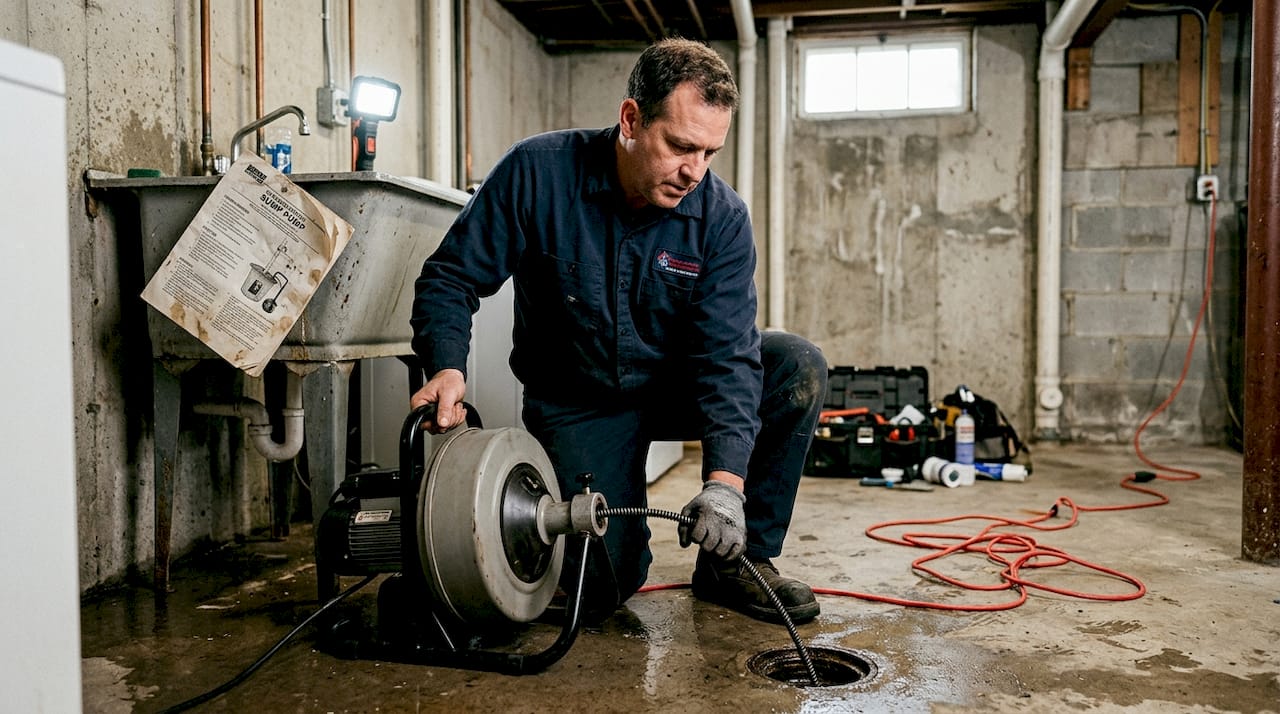
Hydro-jetting is a different approach altogether. A specialized nozzle attached to a high-pressure hose is inserted into the drain. Water is then forced through at pressures typically ranging from 1,500 to 4,000 PSI. This doesn’t just poke a hole through the clog. It scours the interior walls of the pipe, removing years of accumulated grease, mineral deposits, and debris. Local plumbers use motorized snakes and hydro-jetting for residential clogs throughout San Antonio, where hard water mineral buildup is a persistent issue.
| Feature | Motorized auger | Hydro-jetting |
|---|---|---|
| Reach | Up to 100 feet | Up to 400 feet with right setup |
| Best for | Root intrusions, solid blockages | Grease, scale, mineral buildup |
| Pipe cleaning | Punches through clog | Cleans entire pipe interior |
| Risk level | Low to moderate | Low (with camera pre-check) |
| Ideal clog type | Tree roots, debris | Hard water residue, grease layers |
For San Antonio homeowners specifically, hydro-jetting is particularly valuable. The city’s notoriously hard water leaves calcium and magnesium deposits inside pipes over time. These deposits narrow the pipe diameter gradually, making slow drains feel like recurring clogs. A motorized auger might clear a blockage, but hydro-jetting restores the pipe’s full flow capacity. Our San Antonio drain cleaning services include both methods, matched to what each situation actually needs.
With an array of specialty methods available, plumbers tailor their approach to the nature and context of each clog.
Matching the method to the problem: Specialty techniques for different clogs
Even with the best tools available, results depend on choosing the right one. Professional plumbers develop a decision-making process that factors in clog type, location, pipe material, and the home’s overall plumbing layout.
Here is how that process works in practice:
- Identify signs. Is the clog isolated to one fixture or affecting multiple drains? Is there gurgling, odor, or slow drainage throughout the house?
- Diagnose location and type. Camera inspection or probing confirms whether the blockage is at a fixture trap, a branch line, or the main sewer line.
- Select the appropriate tool. Roots need cutting heads, grease responds better to jetting than snaking, and main line clogs require cleanout access and often a combination of methods.
- Test for recurrence. After clearing, the plumber runs water through the system and may re-camera the line to confirm the blockage is fully gone.
| Clog type | Recommended tool | Risk if untreated |
|---|---|---|
| Tree roots | Motorized auger with cutting head | Pipe collapse, sewage backup |
| Grease buildup | Hydro-jetting | Slow drain worsening over time |
| Soap and hair | Hand snake or plunger | Fixture backup |
| Main line blockage | Camera + sectional auger or jetting | Whole-home sewage backup |
| Mineral scale | Hydro-jetting | Pipe narrowing, reduced flow |
DIY approaches are reasonable for surface-level clogs at a single fixture. A plunger or hand snake can handle most hair and soap blockages in a bathroom sink or tub. But when the clog is in the main line, or when chemical cleaners have already been used, the situation becomes risky for an untrained person. You can push a clog deeper, damage pipe joints, or expose yourself to sewage without the right equipment.
Our resources on common San Antonio plumbing problems and DIY shower drain tips can help you decide when to act and when to call.
Pro Tip: If more than one fixture is draining slowly or backing up at the same time, that is almost never a coincidence. It points to a main line issue. A bottle of drain cleaner will not fix it. A professional with a camera will.
Now that you know how pros decide on methods, let’s clarify what homeowners should expect and watch for during a plumbing service call.
What most guides miss: Why diagnosis trumps brute force
Here is something we’ve learned after years of clearing drains across San Antonio: the most powerful tool a plumber carries is not the auger or the hydro-jet. It is the ability to ask the right questions and interpret what the answers mean.
We’ve seen cases where homeowners paid for multiple service calls because each technician went straight to snaking without understanding why the clog kept coming back. The real culprit was a partial root intrusion that a camera would have caught on the first visit. Running an auger through it repeatedly just bought a few weeks of relief each time.
Diagnosis is an undervalued skill. It takes experience to recognize that a gurgling toilet combined with a slow kitchen drain means something very different from a single slow bathroom sink. The guide to smart drain clearing we’ve put together reflects this philosophy. Knowing what you’re dealing with before you act is what separates a permanent fix from a temporary patch.
When you hire a plumber, ask about their diagnostic process first. The answer tells you more about their quality than any equipment list.
Get expert drain clearing in San Antonio
If you’re dealing with a stubborn or recurring drain clog, Stultz Plumbing has the tools and experience to solve it correctly the first time. We use advanced camera inspections, motorized augers, and hydro-jetting systems specifically suited for San Antonio’s hard water conditions and older residential plumbing. Our drain unclogging services are built around accurate diagnosis, not guesswork. Skipping professional service often leads to bigger repairs down the road. Let us clear your lines properly and protect your home’s plumbing long term. Schedule San Antonio drain cleaning today and stop the cycle of temporary fixes.
Frequently asked questions
What is the safest way for homeowners to try unclogging a drain before calling a pro?
Use a quality plunger for fixture clogs since plungers create pressure and suction that can dislodge minor blockages, and avoid chemical cleaners that can damage your pipes.
How far can professional drain augers reach in a residential plumbing system?
Motorized augers reach 50 to 100 feet into drain lines, making them effective for blockages well beyond what any hand tool can access.
When do plumbers recommend hydro-jetting over snaking?
Hydro-jetting is preferred for grease blockages, severe scale buildup, and when hard water deposits have narrowed the pipe, as it cleans the entire interior wall rather than just punching through a clog.
Why do plumbers avoid chemical drain cleaners?
Chemical cleaners can corrode pipes and rarely solve deep or main line clogs, and they leave behind hazardous residue that makes professional work more dangerous.
What signs mean I need a plumber and not a DIY fix?
When multiple fixtures back up or drain slowly at the same time, that signals a main line problem that requires a professional camera inspection and proper clearing tools.
Recommended
- Common Reasons for Clogged Drains & Fixes | Stultz Plumbing
- How to Unclog a Shower Drain: 9 DIY Methods Tested by Plumbers
- Effective drain cleaning tips to prevent clogs
- How Professional Hydro Jetting Clears Stubborn Drain Clogs
Jean runs growth strategy at AimSetWin, a performance marketing agency specializing in local service businesses across Texas. he's helped plumbers, HVAC companies, pest control operators, and home service brands build predictable revenue systems using data-driven advertising and conversion optimization.


