

Discover the crucial role of preventive plumbing for San Antonio homeowners. Protect your home and save on costly repairs today!
TL;DR:
- Preventive plumbing maintenance in San Antonio helps homeowners identify leaks and issues early, saving money and preventing damage. Regular inspections and DIY tasks protect home value, insurance coverage, and health while addressing region-specific risks like hard water and slab leaks. Consistent care ensures peace of mind, environmental conservation, and cost-effective plumbing system longevity.
Most homeowners don’t think about their plumbing until something goes wrong. By then, the damage is already done and the repair bill is waiting. The truth is, average household leaks waste nearly 10,000 gallons of water every year, and fixing them can cut your water bill by 10%. That’s money literally going down the drain. Understanding the role of preventive plumbing is what separates homeowners who stay ahead of problems from those who get blindsided by them. This guide gives you everything you need to protect your home, your wallet, and your peace of mind.
Table of Contents
- Why preventive plumbing matters for San Antonio homeowners
- Common plumbing issues prevented by routine care
- How to perform effective preventive plumbing maintenance
- San Antonio-specific plumbing challenges and preventive strategies
- Health, safety, and insurance benefits of preventive plumbing
- Why preventive plumbing is more than just maintenance — it’s peace of mind
- Get affordable preventive plumbing services in San Antonio today
- Frequently asked questions
Key Takeaways
| Point | Details |
|---|---|
| Prevent costly repairs | Regular preventive plumbing inspections and maintenance save you thousands by avoiding emergencies. |
| Save water and money | Fixing leaks prevents wastage of up to 10,000 gallons annually, reducing your water bills. |
| Protect health and home | Routine checks prevent sewer gas hazards and structural damage from hidden leaks. |
| DIY and professional balance | Simple monthly tasks combined with annual professional inspections keep plumbing reliable. |
| San Antonio risks matter | Hard water and slab leaks require specialized preventive care unique to the local area. |
Why preventive plumbing matters for San Antonio homeowners
The cost difference between routine maintenance and emergency repair is not subtle. Emergency plumbing repairs cost 3 to 10 times more than annual preventive maintenance. A professional plumbing inspection typically runs $100 to $200. A burst pipe, on the other hand, can cost upward of $5,000 once you factor in water extraction, drywall repair, and flooring replacement.
That gap should alarm you. And yet most homeowners only call a plumber when something fails visibly. The role of preventive plumbing is to close that gap before a small drip becomes a structural disaster.
Here’s what’s actually at risk when plumbing maintenance gets skipped:
- Structural damage from slow leaks soaking into subflooring, wall cavities, and insulation
- Mold growth that begins within 24 to 48 hours of moisture exposure
- Higher utility bills from undetected leaks running constantly
- Voided insurance claims when insurers determine damage resulted from long-term neglect
- Reduced home resale value when inspectors flag deferred maintenance
Stat worth noting: A single annual inspection protects you from the kinds of gradual failures that cost San Antonio homeowners thousands more than necessary each year. Learning how to prevent costly plumbing repairs starts with simply scheduling that appointment.
Preventive plumbing maintenance also protects your home’s insurance coverage. Insurers increasingly require documented maintenance histories, especially for older homes. Skipping annual checks isn’t just a financial risk. It’s a coverage risk too.
Common plumbing issues prevented by routine care
The good news is that most plumbing failures aren’t random. They follow predictable patterns, and preventive plumbing practices catch them early. A dripping faucet wastes 3,000 gallons yearly, and a leaky toilet can waste 200 gallons every single day. Routine checks prevent roughly 80% of clogs before they become blockages requiring professional intervention.
Here are the most common issues that preventive care stops in its tracks:
- Leaky faucets and valves. Even a slow drip compounds into thousands of gallons and adds meaningfully to your water bill. Checking washers, O-rings, and valve seats every six months costs almost nothing.
- Running or leaking toilets. A worn flapper valve is a five-dollar fix. Left alone, it becomes a $50-a-month water waste problem. Listen for the sound of water running after the tank fills.
- Slow or blocked drains. Hair, grease, and soap buildup accumulate gradually. Monthly baking soda and vinegar flushes break down that buildup before it hardens into a full blockage.
- Pipe corrosion and mineral deposits. San Antonio’s hard water is a direct contributor here. Sediment builds inside pipes and fixture aerators, restricting flow and accelerating wear.
- Water heater inefficiency. Sediment collects at the bottom of the tank, forcing the unit to work harder. An annual flush keeps it running efficiently and extends its lifespan.
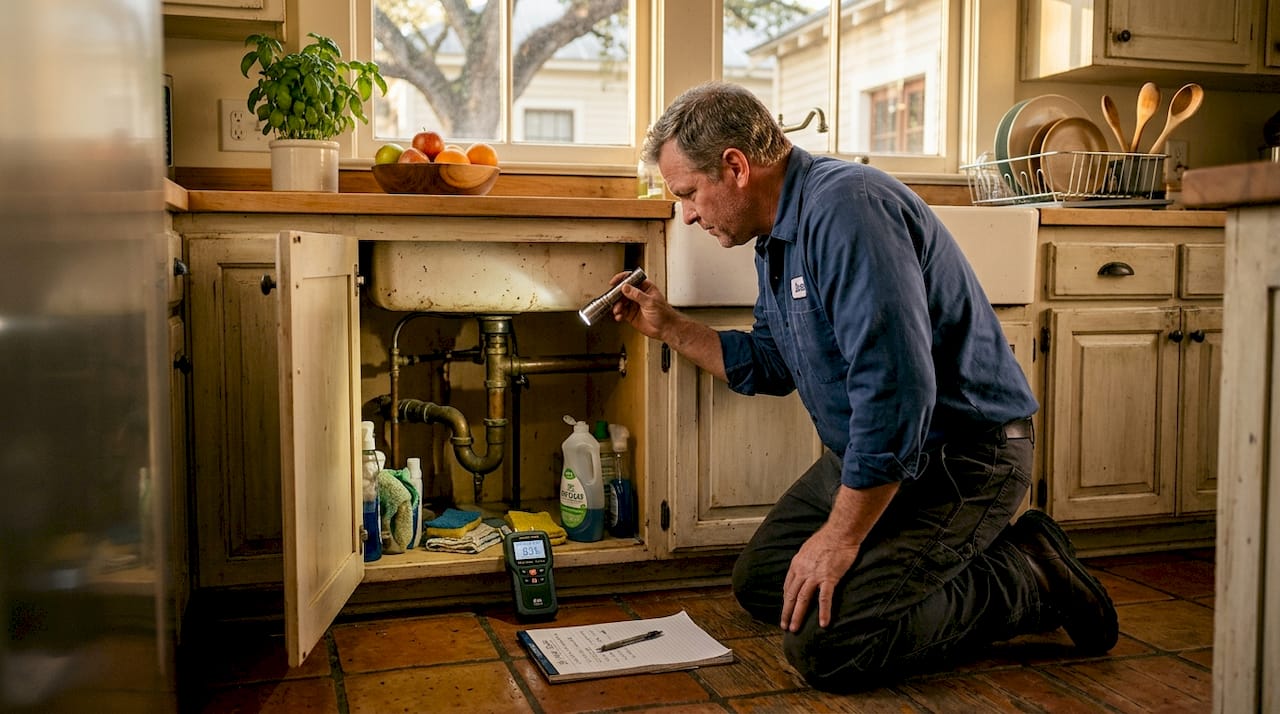
Pro Tip: Check under every sink in your home once a month. Look for moisture on the cabinet floor, rust staining around supply lines, or any soft spots in the wood. These are early signs of a slow leak that prompt plumbing repairs can resolve before mold sets in.
Understanding these common problems leads directly into knowing what to actually do about them.
How to perform effective preventive plumbing maintenance
Homeowners who perform monthly plumbing checks identify problems an average of four months earlier than those who wait for visible signs of failure. Four months is the difference between a $12 washer replacement and a $3,000 water damage claim.
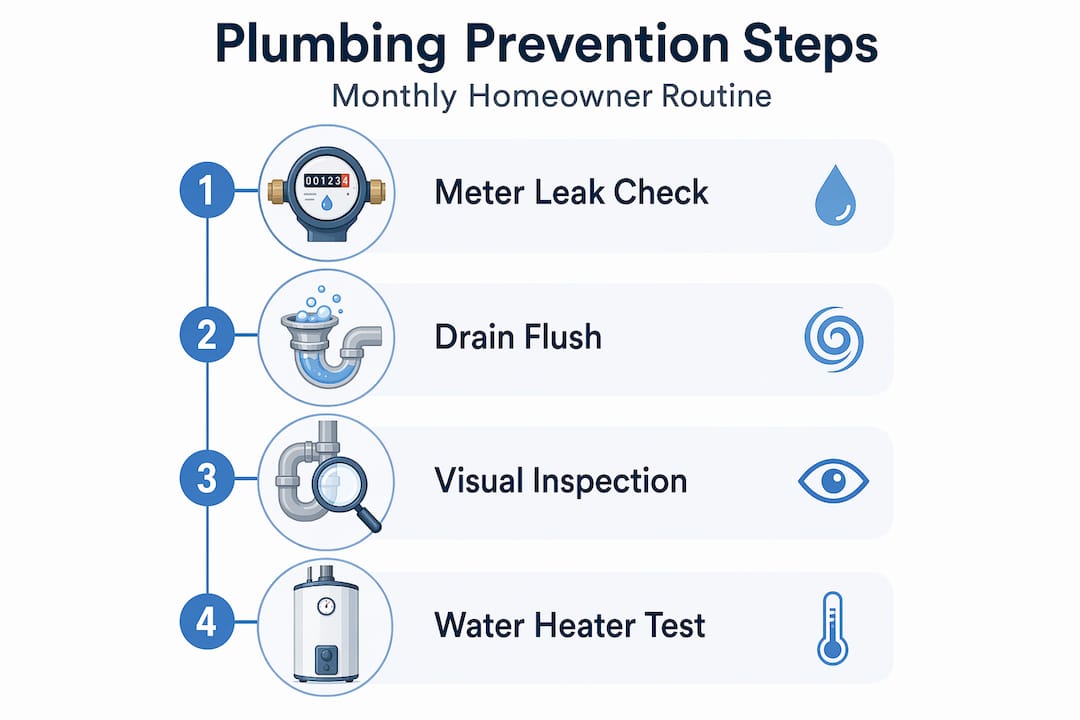
Follow this sequence to build a reliable maintenance routine:
- Check your water meter for hidden leaks. Turn off every fixture and appliance in your home. Note the meter reading, wait 30 minutes, and check again. Any movement confirms a hidden leak somewhere in the system.
- Flush drains monthly. Pour boiling water down kitchen drains to dissolve grease. Follow with a baking soda and vinegar treatment in bathroom drains to break down soap scum and hair.
- Inspect faucet aerators every six months. Unscrew the aerator tip from each faucet and rinse out mineral deposits. This keeps water pressure consistent and extends valve life.
- Test your toilet flapper annually. Drop food coloring into the tank. If color appears in the bowl within 10 minutes without flushing, the flapper is leaking and needs replacement.
- Flush your water heater once a year. Connect a garden hose to the drain valve, run it to a floor drain, and flush until the water runs clear. This removes sediment and protects the heating element.
- Replace the water heater anode rod every 3 to 5 years. This sacrificial rod prevents tank corrosion. Neglecting it is one of the most common reasons water heaters fail prematurely.
- Schedule a professional inspection annually. A licensed plumber uses tools and experience to catch what you can’t see. Use our homeowner’s plumbing checklist to prepare and our annual plumbing inspection checklist to know what to expect.
Here’s a reference table to keep your maintenance on track:
| Task | Frequency | Estimated cost |
|---|---|---|
| Water meter leak check | Monthly | Free |
| Drain flush (baking soda/vinegar) | Monthly | Under $5 |
| Faucet aerator cleaning | Every 6 months | Free |
| Toilet flapper inspection | Annually | $5 to $15 |
| Water heater flush | Annually | Free (DIY) |
| Anode rod replacement | Every 3 to 5 years | $20 to $50 |
| Professional plumbing inspection | Annually | $100 to $200 |
Pro Tip: Set a recurring calendar reminder on the first of every month as your “plumbing check day.” It takes less than 15 minutes and builds the habit that keeps major repairs at bay year after year.
San Antonio-specific plumbing challenges and preventive strategies
San Antonio homeowners face plumbing risks that don’t exist everywhere. Knowing what they are makes preventive plumbing maintenance sharper and more effective.
Hard water is the most pervasive issue. The San Antonio area is known for water with high mineral content, particularly calcium and magnesium. Over time, these minerals form scale inside pipes, water heaters, and fixtures, restricting flow and accelerating corrosion. A water softener installation addresses this at the source and dramatically extends pipe life.
Slab leaks are a serious local threat. San Antonio homes are frequently built on concrete slabs, and pipes running beneath those slabs are vulnerable to soil movement and corrosion. The unsettling part? Slab leaks can mimic normal water bills and quietly cause over $5,000 in foundation damage before you ever notice. They require professional acoustic detection or thermal imaging to identify accurately.
Here are the warning signs that point to a slab leak:
- Warm or hot spots on bare floors, even when the heat is off
- The sound of running water when all fixtures are turned off
- Cracks appearing in walls or flooring with no apparent cause
- Unexplained spikes in your water bill
- Wet or damp spots on carpets near exterior walls
Soil conditions in the San Antonio region can also accelerate pipe wear. Expansive clay soils shift with moisture changes and can stress underground lines over time, creating micro-fractures that worsen with each season.
“Preventive plumbing in San Antonio isn’t optional. It’s a response to the specific environment your home is built in.”
Pro Tip: If you notice any warm floor spots or hear water moving through walls at odd times, don’t wait. Schedule a regular plumbing maintenance visit in San Antonio before a suspected slab leak becomes a foundation emergency.
Health, safety, and insurance benefits of preventive plumbing
Preventive plumbing isn’t only about money. It protects the people living in your home.
Sewer gases, including hydrogen sulfide and methane, are toxic and odorless in low concentrations. The International Plumbing Code requires trap seals with devices to prevent these gases from entering living spaces, which is precisely why routine fixture checks matter. Dry traps in infrequently used drains and deteriorated wax rings under toilets are both failure points that regular inspections catch.
Here’s how preventive plumbing practices protect your family and your home’s insurability:
- Prevents sewer gas exposure by keeping trap seals intact in all floor drains, laundry tubs, and guest bathrooms
- Reduces mold risk by catching moisture intrusion early before it becomes an air quality problem
- Documents your maintenance history in case you ever need to file a water damage claim
- Supports your insurability by showing insurers the damage didn’t result from negligence
Regular maintenance prevents denied insurance claims that result from gradual neglect, like a slow drip under the sink that was visible for months.
This last point deserves emphasis. Insurance companies distinguish between sudden damage (typically covered) and gradual damage from a known, unaddressed issue (frequently denied). If an adjuster determines you ignored a slow leak for months, they have grounds to deny the claim entirely. Scheduling regular plumbing inspections creates a paper trail that protects you in exactly that scenario.
Why preventive plumbing is more than just maintenance — it’s peace of mind
We’ve seen every type of plumbing disaster this city throws at homeowners, and here’s the honest truth: the ones that hurt the most aren’t the dramatic pipe bursts. They’re the slow, quiet failures. The leaky toilet that ran for six months. The corroded supply line nobody checked. The slab leak that went undetected under a spare bedroom for two years.
Most homeowners treat plumbing the way people treat their car’s oil. They know they should address it, but life gets busy. Then one day the engine seizes. In plumbing terms, that looks like a flooded kitchen or a cracked foundation.
What we’ve learned over years of working in San Antonio homes is that preventive plumbing isn’t really about the tasks themselves. It’s about control. When you know your system has been inspected, your water heater is flushed, and your drains are clear, you’re not waiting for the other shoe to drop. That mental shift is undervalued.
There’s also an environmental dimension that rarely gets mentioned. Fixing the leaks that waste 10,000 gallons a year isn’t just good for your bill. In a region where water conservation is a genuine civic concern, it’s responsible ownership. The regular plumbing maintenance benefits extend well beyond your own property line.
The homeowners who feel most confident in their homes are the ones who’ve adopted small, consistent habits: a monthly meter check, a biannual fixture inspection, one annual professional visit. None of it is complicated. But collectively, it’s the difference between a home that costs you money and one that protects it.
Get affordable preventive plumbing services in San Antonio today
Protecting your home starts with one call. At Stultz Plumbing, we know San Antonio plumbing inside and out — the hard water, the slab risks, the aging pipes in established neighborhoods. Our team provides the kind of thorough, honest preventive care that keeps small issues from becoming expensive emergencies.

Whether you need a full annual inspection, a water heater flush, professional drain cleaning, or a leak detection visit, we’re ready to help. Our affordable plumbing services cover everything San Antonio homeowners need to stay protected all year. Use our home plumbing maintenance guide to see what your home needs, then let us handle the rest. Transparent pricing, experienced technicians, and rapid response — that’s the Stultz Plumbing standard.
Frequently asked questions
What is the role of preventive plumbing in avoiding costly repairs?
Preventive plumbing involves routine inspections and maintenance that catch leaks and failures early, well before they cause major damage. Emergency repairs cost 3 to 10 times more than the preventive care that could have stopped them.
How often should I have my plumbing inspected to stay ahead of problems?
For most San Antonio homes, an annual professional inspection is the right baseline. A professional inspection once a year is especially important for homes older than 10 years, where pipes and fixtures are more likely to show wear.
Can I do any preventive plumbing tasks myself?
Absolutely. Monthly tasks like checking your water meter for hidden leaks, flushing drains with baking soda and vinegar to prevent 80% of clogs, and inspecting aerators are all DIY-friendly and genuinely effective.
How does preventive plumbing affect my home insurance?
It directly affects your ability to file a successful claim. Regular maintenance prevents denied claims caused by gradual neglect, and documenting your maintenance history gives you protection if damage ever does occur.
Why is preventive plumbing especially important in San Antonio?
San Antonio’s hard water, expansive clay soils, and prevalence of slab construction create localized risks that most regions don’t face. Slab leaks in San Antonio can quietly cause $5,000 or more in foundation damage while barely showing up on your water bill, making early detection a financial necessity.
Recommended
- Plumbing maintenance: prevent costly repairs in San Antonio
- San Antonio home plumbing maintenance: prevent costly repairs
- Residential plumbers: Essential partners for San Antonio homes
- Home plumbing maintenance guide for San Antonio 2026
Jean runs growth strategy at AimSetWin, a performance marketing agency specializing in local service businesses across Texas. he's helped plumbers, HVAC companies, pest control operators, and home service brands build predictable revenue systems using data-driven advertising and conversion optimization.


