

Discover the crucial role of plumbers in home safety. Learn how they prevent water contamination and protect your property in our 2026 guide!
TL;DR:
- Plumbers safeguard home safety by controlling water contamination, responding swiftly to emergencies, and performing preventative maintenance. They install and test backflow prevention devices at cross-connection points to prevent drinking water contamination and respond immediately to burst pipes or sewer backups to minimize damage. Regular inspections and certified testing ensure ongoing system integrity, reducing costly emergencies and protecting residents’ health and property.
Plumbers are the frontline defenders of home safety, preventing water contamination, managing plumbing emergencies, and performing the preventative maintenance that protects your health and property. The role of plumbers in home safety goes far beyond fixing a dripping faucet. Licensed plumbers control cross-connection hazards, install backflow prevention devices, and respond to burst pipes before they become disasters. Organizations like IAPMO BPI set the certification standards that ensure these professionals have the skills to protect your drinking water and your home’s structural integrity. If you want to keep your San Antonio home safe, understanding what your plumber actually does is the first step toward making smarter decisions about maintenance and emergency response. Contact Stultz Plumbing today to schedule a safety inspection.
How do plumbers prevent water contamination through cross-connection control?
Plumbing and home safety start with one of the least visible threats inside your home: cross-connections. A cross-connection is any point in your plumbing where potable water can come into contact with a non-potable source. Think of your garden hose submerged in a bucket of fertilizer, or your irrigation system inlet sitting near a chemical feeder. If water pressure drops suddenly, contaminated water can flow backward into your drinking supply through a process called backsiphonage or backpressure backflow.
Internal cross-connections are a hidden vulnerability that can compromise your tap water without any visible warning signs. This is exactly why licensed plumbers conduct cross-connection surveys before selecting a protection device. They do not apply a one-size-fits-all fix.
What backflow prevention devices do plumbers install?
Plumbers select devices based on the hazard class of each cross-connection point. The hazard class determines whether a low-risk device like a vacuum breaker is sufficient, or whether a high-risk point demands a Reduced Pressure Zone (RPZ) assembly or a double-check valve. Here is how each device works in practice:
- Vacuum breakers: Installed on hose bibs and laundry connections. They break the siphon by allowing air into the line when pressure drops.
- Double-check valve assemblies: Used at moderate-hazard points like irrigation systems. They contain two independently operating check valves.
- RPZ assemblies: Required at high-hazard cross-connections such as chemical feed systems or fire suppression lines. They include a relief valve that opens if either check valve fails.
- Atmospheric vacuum breakers: Common on dishwashers and utility sinks. They prevent backflow at the appliance level.
The 2024 International Residential Code requires ASSE-listed devices at all cross-connection points, and check valves alone do not meet this standard. That code requirement exists because improperly protected connections have caused documented contamination events in residential plumbing systems across the country.
RPZ installation and testing require certified professionals. Improper installation creates liability exposure and, more critically, leaves your family’s drinking water unprotected. Annual certified testing is not optional. It is the only way to confirm the device is still functioning as designed.
Pro Tip: Ask your plumber to walk you through every cross-connection point in your home during their next visit. Hose bibs, irrigation inlets, pool fill lines, and boiler connections are the most common hazard points that homeowners overlook.
Why is immediate plumbing emergency response vital for home safety?
A burst pipe does not wait for business hours. Emergency plumbing services provide immediate solutions for burst pipes, sewer backups, and overflowing toilets to protect home safety around the clock. The difference between calling a plumber within the first hour versus waiting until morning can mean the difference between a repair bill and a full remediation project.
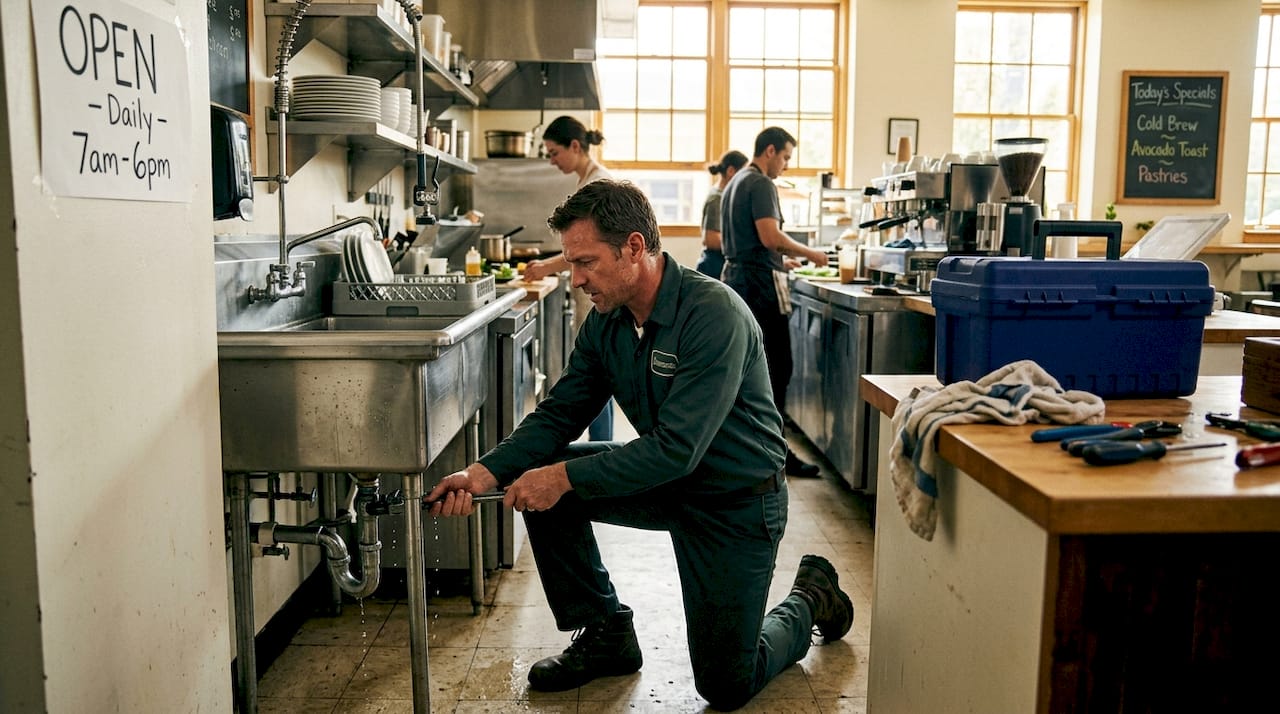
How plumbers ensure safety during emergencies comes down to speed and diagnosis. A trained emergency plumber arrives with the tools to locate the source, shut off the right valves, and contain the damage before it spreads to walls, flooring, and electrical systems. Water intrusion that sits for more than 24 hours creates conditions for mold growth, which introduces a separate health hazard on top of the structural damage.
Signs that you need an emergency plumber right now
Knowing when to call is half the battle. Here are the situations that warrant an immediate call rather than a scheduled appointment:
- Burst or ruptured pipe: Water spraying or pooling rapidly inside the home. Shut off the main water supply and call immediately.
- Sewer backup: Sewage coming up through floor drains or multiple fixtures backing up simultaneously. This is a health hazard, not just an inconvenience.
- Gas line smell near plumbing fixtures: Some plumbers are licensed to handle gas lines. If you smell gas, evacuate and call both your gas provider and an emergency plumber.
- No water to the entire house: This can signal a main line break or a failed pressure regulator, both of which need urgent diagnosis.
- Overflowing toilet that cannot be stopped: If shutting off the toilet’s supply valve does not stop the overflow, the blockage is deeper in the drain line.
For a detailed breakdown of what to do before the plumber arrives, the emergency plumbing tips from Stultz Plumbing cover the exact steps to minimize damage in those critical first minutes.
Pro Tip: Locate your home’s main water shut-off valve before an emergency happens. In San Antonio homes, it is typically near the water meter at the front of the property or inside a utility closet. Label it clearly so every household member knows where it is.
What preventative maintenance practices do plumbers recommend for home safety?
Preventative maintenance is where plumbers and risk management intersect most directly. Routine inspections and maintenance help avoid plumbing emergencies and control the health risks associated with leaks and device failures. A single undetected slow leak inside a wall can cause thousands of dollars in structural damage and create the moisture conditions that mold needs to thrive.
The importance of plumbing maintenance is not just financial. It is a direct health and safety issue. Here is what a thorough preventative maintenance visit from a licensed plumber covers:
- Leak inspection: Checking supply lines, shut-off valves, and visible pipe connections for drips, corrosion, or mineral buildup that signals a failing joint.
- Backflow device testing: Annual testing of backflow assemblies is required for code compliance and confirms the device is still protecting your water supply.
- Drain cleaning: Clearing partial blockages before they become full clogs. Slow drains are a warning sign, not just an annoyance.
- Water heater inspection: Checking the anode rod, pressure relief valve, and sediment buildup. A failing pressure relief valve on a water heater is a genuine safety hazard.
- Fixture and supply line checks: Braided stainless supply lines under sinks have a lifespan of about five to eight years. Plumbers identify lines that are due for replacement before they fail.
- Pipe integrity assessment: In older San Antonio homes with galvanized steel or polybutylene pipes, plumbers check for corrosion, pinhole leaks, and pressure loss that signals the need for repiping.
The role of preventive plumbing for San Antonio homeowners is especially significant given the region’s hard water. High mineral content accelerates scale buildup inside pipes and water heaters, shortening their functional lifespan and reducing water quality.
Preventative maintenance vs. reactive repairs: a direct comparison
| Maintenance type | Timing | Average cost impact | Safety benefit |
|---|---|---|---|
| Preventative inspection | Scheduled annually | Low, predictable | Catches hazards before failure |
| Reactive repair | After failure occurs | High, often unexpected | Addresses damage already done |
| Emergency repair | Immediate response required | Highest, includes after-hours fees | Stops active hazard |
The pattern is clear. Scheduled maintenance costs less and catches problems before they become emergencies. Reactive repairs address damage that has already happened. Emergency repairs are the most expensive option and the one that preventative care is specifically designed to avoid.
How do emergency and standard plumbing services differ in maintaining home safety?
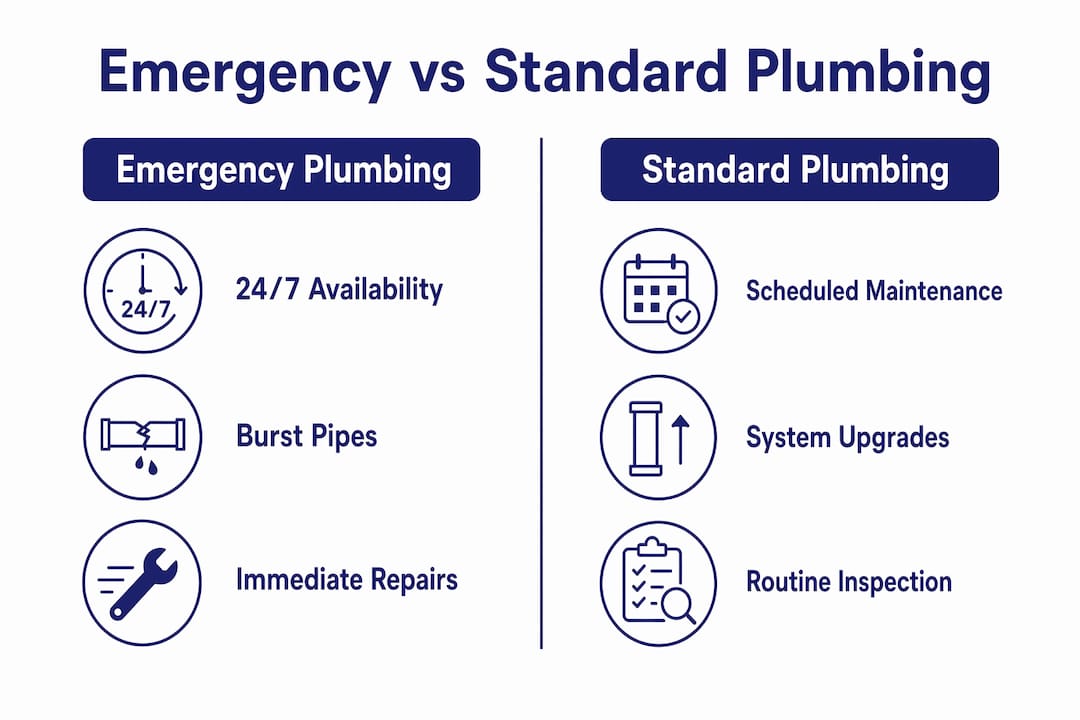
Emergency plumbing covers burst pipes and urgent repairs, while standard plumbing involves routine maintenance and system upgrades. Understanding this distinction helps you make faster decisions when something goes wrong, and it helps you budget appropriately for the services your home actually needs.
Standard plumbing services handle the planned work: installing a new water heater, replacing aging supply lines, upgrading fixtures, or adding a water softener. These appointments are scheduled in advance, priced at standard rates, and completed without the pressure of an active water emergency. The plumber has time to assess options, source parts, and complete the work methodically.
Emergency plumbing operates under completely different conditions. The plumber arrives at any hour, often without advance knowledge of what they will find. They carry a broader inventory of parts because they cannot make a return trip for supplies. The priority is containment and safety, not optimization. Premium pricing for after-hours availability reflects the real cost of maintaining a 24/7 response capability.
| Service type | Availability | Primary focus | Typical tasks | Cost structure |
|---|---|---|---|---|
| Standard plumbing | Business hours | Planned upgrades and maintenance | Water heater install, repiping, fixture replacement | Standard hourly or flat rate |
| Emergency plumbing | 24/7, including holidays | Immediate hazard containment | Burst pipes, sewer backups, gas line issues | Premium rate plus after-hours fee |
Some modern San Antonio homes are integrating smart home safety systems that include water leak sensors, automatic shut-off valves, and pressure monitors. Devices like Flo by Moen and Phyn Plus connect to your main water line and alert you to abnormal flow patterns that indicate a leak. A licensed plumber installs and calibrates these systems so they work accurately with your specific pipe configuration. This is where standard plumbing services and home safety technology meet directly.
For homeowners who want to understand the broader scope of what professional plumbers protect, the role in commercial safety article from Stultz Plumbing shows how the same principles scale up to larger buildings.
Key takeaways
Plumbers protect home safety through three interconnected functions: contamination control, emergency response, and scheduled preventative maintenance.
| Point | Details |
|---|---|
| Cross-connection control | Licensed plumbers install and test RPZ assemblies, double-check valves, and vacuum breakers to prevent drinking water contamination. |
| Emergency response speed | Calling an emergency plumber within the first hour of a burst pipe or sewer backup prevents mold, structural damage, and health hazards. |
| Annual backflow testing | Code-required annual testing of backflow prevention assemblies is the only way to confirm devices are still protecting your water supply. |
| Preventative maintenance value | Scheduled inspections catch failing supply lines, corroded pipes, and water heater hazards before they become expensive emergencies. |
| Know your service type | Standard plumbing handles planned work at standard rates; emergency plumbing handles active hazards at premium rates around the clock. |
What I’ve learned after years of watching homeowners skip the basics
I have seen the same pattern repeat itself more times than I can count. A homeowner skips the annual plumbing inspection because nothing seems wrong. Then a braided supply line under the bathroom sink fails on a Sunday night, and by Monday morning the subfloor is saturated. The repair bill is five times what the inspection would have cost.
The part that frustrates me most is that the risks are not mysterious. Cross-connections at hose bibs and irrigation systems are textbook hazards. Backflow prevention devices certified by IAPMO BPI standards exist specifically to address them. The technology is proven. The codes are clear. What is missing is homeowner awareness.
I also think the industry does a poor job of explaining why certification matters. When a plumber holds a backflow prevention certification, it means they have been trained to assess hazard class, select the right device for the specific risk level, and test it correctly after installation. A general handyman installing a check valve and calling it done is not the same thing. The difference shows up in water quality tests, not in how the pipe looks from the outside.
My honest advice: treat your plumbing system the way you treat your car. You would not skip oil changes and wait for the engine to seize. Do not skip plumbing inspections and wait for a pipe to burst. Schedule a plumbing safety check once a year, know where your main shut-off valve is, and call a licensed professional the moment something seems off. That is not overcaution. That is how you protect your home.
— Jean
Protect your San Antonio home with Stultz Plumbing
At Stultz Plumbing, we have built our reputation in San Antonio on exactly the services this article covers: backflow prevention, emergency response, and scheduled maintenance that keeps your plumbing system safe year-round.
Our licensed technicians are available 24/7 for emergency plumbing in San Antonio when urgent issues arise. We also perform annual backflow device testing, full plumbing inspections, water heater safety checks, and drain cleaning across San Antonio, Boerne, and surrounding communities. Whether you need a scheduled safety inspection or an immediate response to a plumbing crisis, our team arrives prepared and ready to protect your home. Explore our full range of plumbing services in San Antonio or call us today to schedule your next inspection.
FAQ
What is the role of plumbers in home safety?
Plumbers protect home safety by preventing water contamination through cross-connection control, responding to emergencies like burst pipes and sewer backups, and performing preventative maintenance that catches hazards before they cause damage.
How do plumbers prevent drinking water contamination?
Licensed plumbers install and annually test backflow prevention devices such as RPZ assemblies, double-check valves, and vacuum breakers at cross-connection points throughout your home’s plumbing system.
When should I call an emergency plumber instead of a standard plumber?
Call an emergency plumber immediately for burst pipes, sewer backups, overflowing toilets that cannot be stopped, or any situation where active water or sewage is threatening your home’s structure or your family’s health.
How often should a plumber inspect my home’s plumbing system?
A licensed plumber should inspect your home’s plumbing system at least once a year. Annual visits cover leak checks, backflow device testing, water heater safety, and pipe integrity assessments that prevent costly failures.
Are backflow prevention devices required by code in San Antonio?
Yes. The 2024 International Residential Code requires ASSE-listed backflow prevention devices at all cross-connection points, and annual certified testing is required to maintain code compliance and protect your water supply.
Recommended
- The Role of Plumbers in Commercial Safety Explained
- Plumbing Safety Tips Every San Antonio Homeowner Needs
- Handle plumbing emergencies: step-by-step guide 2026
Jean runs growth strategy at AimSetWin, a performance marketing agency specializing in local service businesses across Texas. he's helped plumbers, HVAC companies, pest control operators, and home service brands build predictable revenue systems using data-driven advertising and conversion optimization.


