

Discover the vital role of plumbers in commercial safety. Learn how they ensure code compliance and protect your business's water supply. Read more!
TL;DR:
- Plumbers play a crucial role in commercial safety by maintaining backflow devices, fire suppression systems, and sewer gas controls. They ensure code compliance through regular inspections, proper documentation, and proactive maintenance to prevent costly failures. Building safety depends on licensed plumbers working proactively, not just reacting to emergencies.
Most business owners think of plumbers as the people you call when a pipe bursts or a drain backs up. The reality is far more demanding than that. The role of plumbers in commercial safety covers everything from protecting your water supply to keeping your building compliant with health and fire codes. If you manage a commercial property in San Antonio and you have not thought about plumbing as a safety system, this article will change that. Here is what you need to know, and why it matters for your business right now. Call Stultz Plumbing today to schedule a commercial safety inspection.
Table of Contents
- Key takeaways
- The role of plumbers in commercial safety
- Plumbing codes and standards your plumber enforces
- Common commercial plumbing challenges and how plumbers solve them
- How to work with commercial plumbers effectively
- My take on what most facility managers get wrong
- Protect your business with Stultz Plumbing’s commercial services
- FAQ
Key takeaways
| Point | Details |
|---|---|
| Plumbers do far more than repairs | Licensed plumbers maintain backflow devices, fire suppression plumbing, and water quality systems in commercial buildings. |
| Code compliance is a plumber’s job | Plumbers enforce critical standards like trap seal depth and annual backflow testing to protect occupants and avoid fines. |
| Documentation protects your business | Grease trap manifests and inspection records must stay on-site and accessible to pass regulatory audits. |
| Proactive maintenance prevents emergencies | Scheduled plumbing inspections catch dry trap risks, grease buildup, and corroded lines before they become shutdowns. |
| Choosing the right plumber matters | Commercial plumbing requires licensed pros with specific endorsements — not every plumber is qualified for every system. |
The role of plumbers in commercial safety
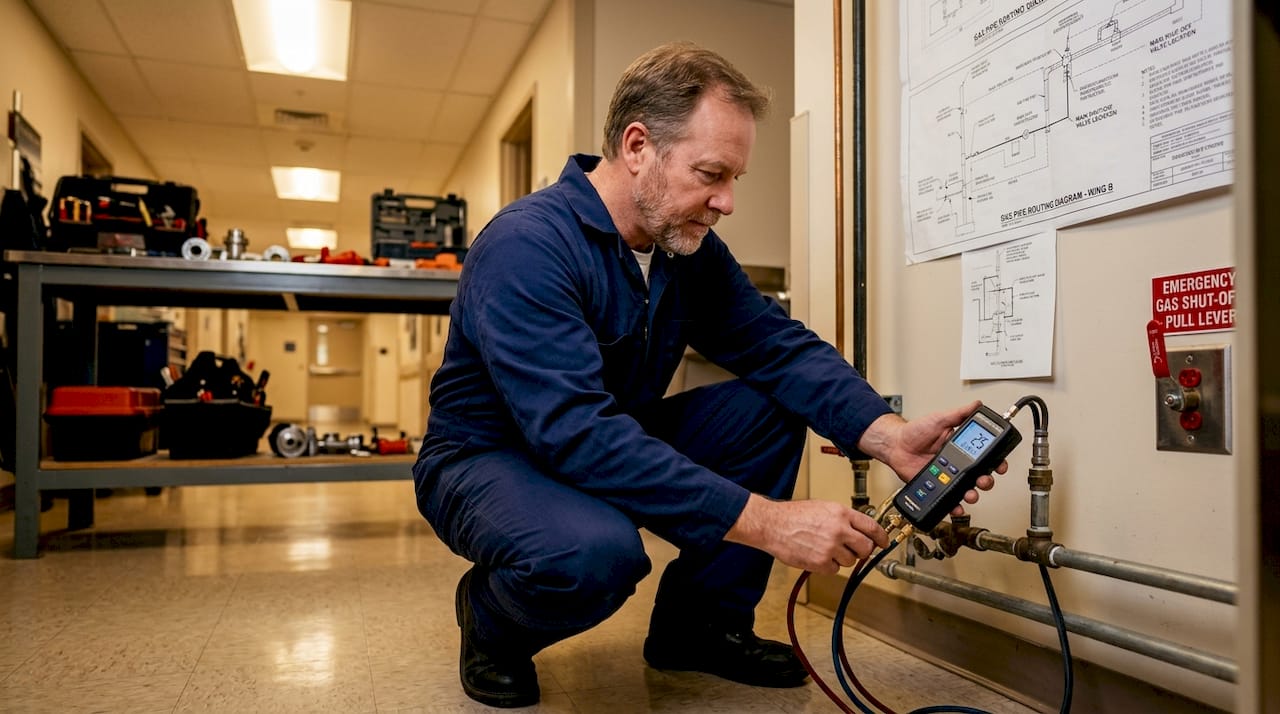
When you think about safety in a commercial building, you probably think about fire alarms, security cameras, or electrical systems. Plumbing rarely makes that list. But a licensed commercial plumber is one of the most important safety professionals your building will ever work with.
Here is what a qualified commercial plumber actually handles on a safety level:
- Water supply protection: Plumbers install and service backflow prevention devices that stop contaminated water from flowing back into your clean water supply. Without these devices, a cross-connection in your building could send chemicals or bacteria straight to your taps.
- Fire suppression plumbing: The pipes that feed sprinkler systems are plumbing. Plumbers install, inspect, and repair those lines to make sure they hold pressure and respond correctly in an emergency.
- Sewer gas control: Properly installed traps and venting systems keep toxic sewer gases like hydrogen sulfide from entering your building. This is not just a comfort issue. It is a health code requirement.
- Grease management: In commercial kitchens, plumbers maintain grease traps that prevent fats and oils from clogging the municipal sewer system. Failure here leads to backups, fines, and potential health violations.
- Hot water safety: Plumbers set and maintain water heater temperatures to prevent Legionella bacteria growth, which thrives in stagnant warm water systems.
Facility managers often underestimate how deeply plumbers are involved in systems like medical gas lines, fire suppression, and backflow preventers. These are not optional systems. They are required for occupancy and health code compliance.
Pro Tip: Ask your commercial plumber for a written safety checklist after every service visit. That document is your paper trail if a code inspector or insurance adjuster ever comes knocking.
Plumbing codes and standards your plumber enforces
Understanding the specific codes your plumber works within helps you see why their job is so technical. In Texas, commercial buildings follow the International Plumbing Code as adopted by the state, along with local San Antonio amendments. Your plumber knows these codes. You should understand the basics.
Here are the key regulatory areas commercial plumbers manage on your behalf:
- Trap seal requirements: The 2024 International Plumbing Code mandates that plumbing traps maintain a liquid seal depth of 2 to 4 inches to block sewer gases, with trap outlet height not exceeding 24 inches to prevent siphoning.
- Backflow preventer testing: Annual backflow testing is required in commercial buildings to verify potable water is protected from contamination. Only certified testers can conduct these tests, and repairs require licensed plumbers with specialized endorsements.
- Grease trap service thresholds: The 25% combined depth rule for fats, oils, grease, and solids triggers mandatory service. Many jurisdictions require at minimum quarterly cleaning for high-volume operations.
- Manifest documentation: After every grease trap service, the hauler and plumber must produce a manifest record on site. A clean trap with no paperwork can still earn you a regulatory citation.
- Venting standards: Proper drain venting prevents siphoning of trap seals and allows sewer gases to exit safely above the roofline. Code specifies pipe diameter, length, and placement for every fixture type.
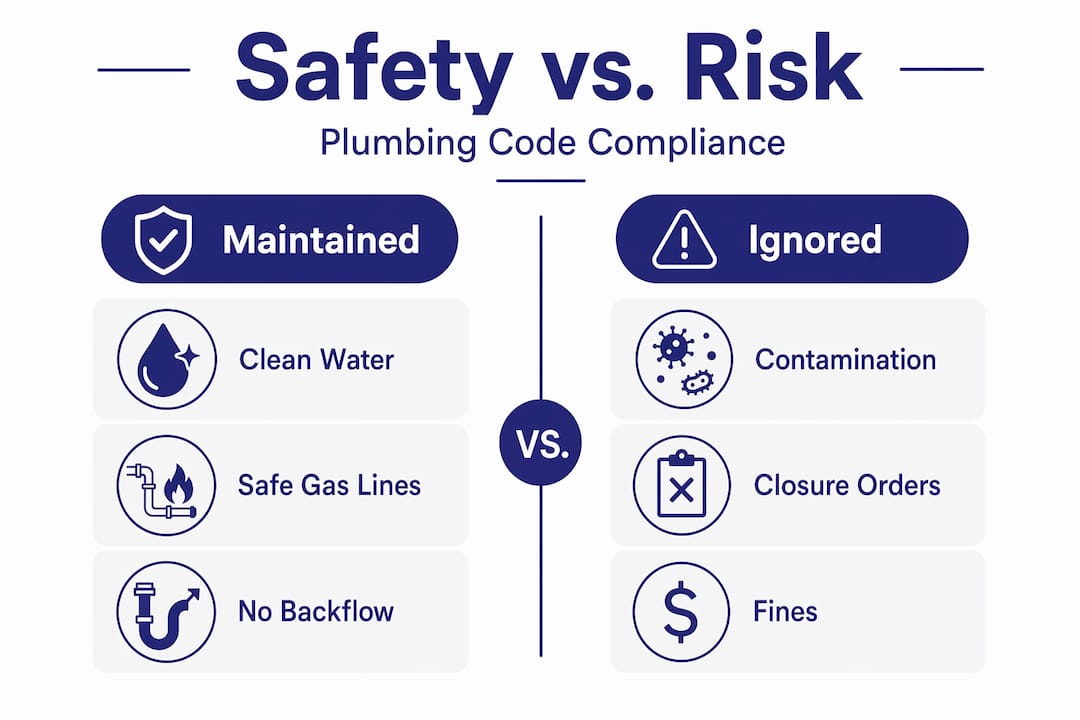
Here is a quick comparison of what happens when these standards are maintained versus ignored:
| Standard | When maintained | When ignored |
|---|---|---|
| Backflow prevention | Potable water stays uncontaminated | Chemical or biological contamination of supply |
| Trap seal integrity | Sewer gases blocked from occupied spaces | Health code violations, odor complaints, illness risk |
| Grease trap service | Sewer system protected, no fines | Backups, regulatory penalties, kitchen shutdowns |
| Manifest documentation | Passes inspections with no citations | Fines even when the physical trap looks clean |
Non-compliance is not just a fine risk. It can trigger a temporary closure order from your local health department. That is a disruption your business cannot afford.
Common commercial plumbing challenges and how plumbers solve them
Most plumbing failures in commercial buildings do not happen overnight. They build slowly, and a trained plumber spots them before they become emergencies. Here are the most common challenges and what a skilled plumber does about each one.
Grease buildup and trap failure
Grease buildup is among the leading causes of sewer overflows in commercial districts. When grease traps are not serviced correctly, settled solids get left behind. That reduces trap capacity permanently, causing rapid re-clogging and regulatory failures. A proper service includes full removal of floating and settled solids, baffle inspection, sample well cleaning, and manifest documentation — not just pumping out the liquid layer.
Dry trap infiltration
Infrequently used floor drains are a hidden hazard. When a trap dries out, the water seal evaporates and sewer gases flow freely into the building. Evaporation can happen within weeks in a heated environment. Plumbers address this by installing trap primers or sediment buckets that automatically maintain the water seal. It is a small fix with a big safety payoff.
Biological and chemical exposure during service
Commercial plumbing repairs involve real hazards. Drain cleaning chemicals, raw sewage, and biofilm are all part of the job. OSHA requires that plumbers use chemical-resistant PPE such as gloves and respiratory protection under 29 CFR 1910.132. When you hire a licensed commercial plumber, you are hiring someone trained to handle those hazards without spreading contamination into your facility.
- Emergency preparedness: A qualified commercial plumber does not just show up for scheduled service. They help you build a response plan for plumbing emergencies — knowing where your main shutoffs are, which fixtures share supply lines, and how to isolate a failure fast.
- Rapid response value: Timely plumber intervention can prevent small issues from escalating into costly failures or safety violations. A slow drain today can become a sewage backup that closes your kitchen tomorrow.
Pro Tip: Walk your facility with your plumber at least once a year. Ask them to flag any deferred maintenance items and rank them by safety risk. That one conversation can prevent the kind of emergency that shuts your business down on a Friday afternoon.
How to work with commercial plumbers effectively
Knowing what commercial plumbers do is one thing. Knowing how to work with them as a business owner or facility manager is where the real value lives. Here is a practical guide to building a productive plumbing safety partnership.
- Verify license and endorsements. In Texas, commercial plumbing requires a licensed master plumber. For backflow work specifically, specialized endorsements are required beyond the general license. Always confirm credentials before you sign a contract.
- Schedule regular inspections, not just emergency calls. The most effective commercial plumbing practices include a scheduled maintenance calendar with quarterly checks on grease traps, annual backflow tests, and semiannual drain inspections.
- Require written service reports. Every visit should produce documentation. This includes what was inspected, what was found, what was repaired, and any items flagged for follow-up. These records protect you during health department audits and insurance claims.
- Ask about safety certifications. A reputable commercial plumber will carry liability insurance, workers’ compensation coverage, and PPE compliance documentation. If they hesitate to share those, walk away.
- Train your staff on plumbing basics. Your team does not need to fix anything. But they should know where the main water shutoff is, how to identify a visible leak, and who to call immediately. A property safety awareness program that includes plumbing basics reduces response time dramatically when something goes wrong.
- Plan upgrades with plumbing safety in mind. If you are expanding your kitchen, adding restrooms, or renovating, involve your plumber in the planning phase. Retrofitting plumbing safety into a finished build costs significantly more than designing it in from the start.
For more on how these responsibilities connect to broader plumbing risk in San Antonio, it is worth reviewing the specific challenges commercial properties face in Texas’s climate and infrastructure environment.
My take on what most facility managers get wrong
I have worked with commercial properties across San Antonio long enough to see one pattern repeat itself. Facility managers treat plumbing as a reactive expense. Something breaks, they call. Nothing breaks, they forget about it.
That approach is expensive. The most serious plumbing failures I have seen were all predictable. Dry traps that had been ignored for months. Grease traps that were “cleaned” but never fully serviced. Backflow preventers that had not been tested in years. None of those were surprises to a trained eye. They were surprises to the people paying the bills.
The facility managers who handle plumbing well do one thing differently. They treat their licensed plumber as a partner in safety audits, not just a vendor who shows up when something leaks. They ask questions. They request documentation. They schedule proactively.
The importance of plumbing to your building’s occupant safety is not abstract. When a sewer gas leak sends your employees home sick, or a backflow event contaminates your water supply, the cost is immediate and real. The good news is that consistent plumbing maintenance is one of the most cost-effective safety investments a commercial building can make. You do not need a big budget. You need a consistent schedule and a plumber you trust.
— Jean
Protect your business with Stultz Plumbing’s commercial services
At Stultz Plumbing, we work with San Antonio business owners and facility managers who take commercial safety seriously. Our licensed team handles everything from commercial plumbing inspections and backflow testing to grease trap maintenance and emergency response across San Antonio and surrounding areas.
We provide written service reports, transparent pricing, and maintenance programs designed to keep your building compliant year-round. When something urgent comes up, our emergency plumbing team responds fast because waiting is not an option when building safety is on the line. Contact Stultz Plumbing today to schedule your commercial safety assessment and find out where your building stands.
FAQ
What is the role of plumbers in commercial safety?
Commercial plumbers protect building occupants by maintaining backflow prevention devices, ensuring sewer gas containment, servicing grease traps, and keeping systems compliant with health and building codes. Their work goes far beyond repairs.
How often should commercial plumbing be inspected?
Most commercial buildings require at minimum annual backflow testing, quarterly grease trap service for high-volume kitchens, and regular drain and trap inspections to meet local plumbing safety standards.
What happens if a business fails plumbing inspections?
Non-compliance with plumbing codes can result in regulatory citations, fines, and temporary closure orders from local health departments, even if the physical system looks functional but lacks proper documentation.
Do commercial plumbers need special certifications?
Yes. In Texas, commercial plumbing requires a licensed master plumber, and specific work like backflow preventer testing requires additional specialized endorsements beyond the standard license.
How do dry traps become a safety hazard?
When plumbing traps in infrequently used drains lose their water seal through evaporation, sewer gases can enter the building freely. Trap primers or sediment buckets installed by a licensed plumber prevent this from happening.
Recommended
- San Antonio business plumbing: Risk, value, and strategy
- Commercial plumbing facts San Antonio businesses need in 2026
- The Real Role of Plumbing Inspections for Homeowners
Jean runs growth strategy at AimSetWin, a performance marketing agency specializing in local service businesses across Texas. he's helped plumbers, HVAC companies, pest control operators, and home service brands build predictable revenue systems using data-driven advertising and conversion optimization.


