

Discover the crucial role of plumbing inspections for homeowners. Prevent costly emergencies and protect your property with proactive checks!
TL;DR:
- Regular plumbing inspections in San Antonio help detect leaks, corrosion, and safety issues before costly damage occurs. They ensure systems hold pressure properly, verify safety devices like TPR valves, and prevent legal violations from unnoticed problems. Proactive checks protect homes’ structural integrity, safety, and save property owners significant repair costs over time.
Most homeowners don’t think about plumbing until something breaks. A slow drain, a damp spot on the ceiling, a water bill that suddenly doubled. By then, the damage is already done. The role of plumbing inspections is to catch those problems before they become emergencies, not after. Proactive inspections prevent costly surprises and the kind of extensive damage that turns a minor fix into a major renovation. If you own a home or manage a property in San Antonio, this guide will show you exactly what inspections involve, what they catch, and why scheduling one is one of the smarter decisions you can make.
Table of Contents
- Key Takeaways
- What the plumbing inspection process actually covers
- Key benefits of plumbing inspections for safety and savings
- Common mistakes that put your plumbing at risk
- When and how to schedule inspections in San Antonio
- My honest take on why inspections get skipped
- Protect your San Antonio home with Stultzplumbing
- FAQ
Key Takeaways
| Point | Details |
|---|---|
| Inspections prevent emergencies | Regular checks catch leaks, corrosion, and blockages before they cause serious damage. |
| Pressure tests are legally required | Water supply systems must hold 100 psi for 15 minutes before pipes can be concealed. |
| TPR valve safety is non-negotiable | A blocked or ignored TPR valve on a water heater can lead to a dangerous tank explosion. |
| Skipping rough-in inspections is costly | Covering pipes before inspection can legally require demolition of finished walls or floors. |
| Schedule inspections proactively | Annual inspections and inspections before buying, selling, or remodeling protect your investment. |
What the plumbing inspection process actually covers
A plumbing inspection is a thorough evaluation of your entire water and drainage system. It goes well beyond checking for drips under the sink. A qualified inspector or licensed plumber examines your supply lines, drain lines, fixtures, water heater, pressure levels, and any accessible pipes throughout the property.
Here is what a typical plumbing system evaluation includes:
- Pipe condition: Checking for corrosion, rust, leaks, or deteriorating joints in supply and drain lines
- Water pressure: Testing for high or low pressure that stresses pipes and fixtures
- Drain performance: Running water through multiple fixtures to test drain speed and identify blockages
- Water heater: Inspecting the tank, connections, and safety features including the temperature and pressure relief valve
- Fixtures and valves: Examining faucets, shut-off valves, toilets, and supply connections for wear or failure
- Visible pipe materials: Identifying older materials like galvanized steel or polybutylene that may need replacement
Inspectors use specialized tools depending on the scope of work. Camera inspections send a small video probe through drain lines to spot cracks, root intrusion, or buildup that no one can see from the outside. Pressure gauges measure whether your system holds steady under load. Hydrostatic testing is the preferred method for code compliance because water is non-compressible and safer to test than air.
Under the International Plumbing Code, water systems must hold 100 psi for a minimum of 15 minutes before any pipes are concealed behind walls or under slabs. That is not a suggestion. It is a code requirement with legal consequences if skipped.
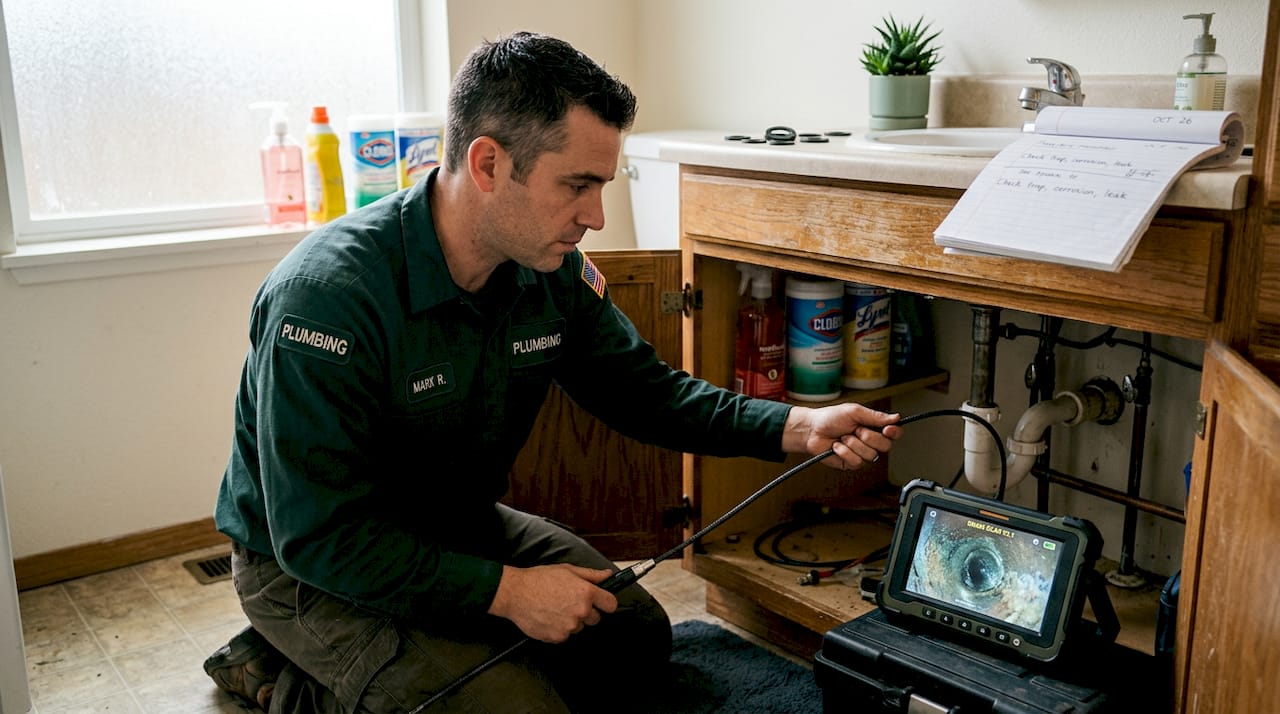
Standard inspections take 1 to 3 hours for most homes, while advanced inspections using cameras and more detailed pressure testing can extend to 4 hours or more. Larger properties and older homes naturally take longer.
Pro Tip: Before your inspector arrives, locate your main water shut-off valve and test it to confirm it actually turns. Many San Antonio homeowners discover on inspection day that their shut-off has seized from years of disuse, which complicates the entire process.
Key benefits of plumbing inspections for safety and savings
The benefits of plumbing inspections extend far beyond the obvious. Yes, inspections find leaks. But what they really do is protect your home’s structural integrity, your family’s safety, and your long-term budget.
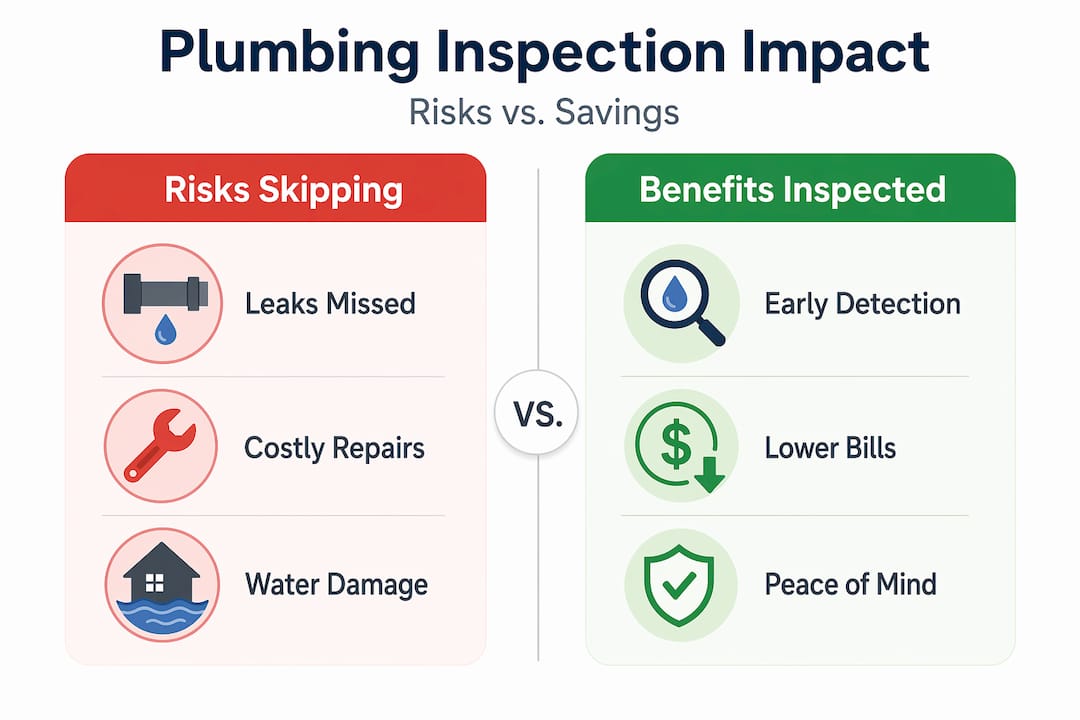
Regular inspections detect small leaks, corrosion, weak joints, and blockages while they are still manageable. Left alone, a small pinhole leak inside a wall becomes water damage, mold growth, and potentially tens of thousands of dollars in remediation costs. Water is patient. It will do its work whether you notice it or not.
Here is what plumbing safety inspections specifically protect against:
- Water damage and mold: Catching hidden leaks before moisture accumulates behind walls or under floors
- Pipe failure: Identifying corrosion or weakened sections before a pipe bursts and floods a room
- Code violations: Confirming your system meets local San Antonio codes, which avoids fines and complications when selling
- Water heater hazards: The TPR valve prevents tank explosions by releasing water when pressure exceeds 150 psi or temperature exceeds 210°F. A failed or ignored TPR valve is a serious safety risk.
A single undetected slab leak under a San Antonio home can waste thousands of gallons of water monthly and silently erode the foundation. That is money literally going down the drain, and structural damage that compounds with every passing week.
The financial case for routine plumbing checks is straightforward. A professional inspection in San Antonio typically costs a fraction of what one burst pipe repair costs. When you factor in emergency service fees, water extraction, drywall repair, flooring replacement, and mold remediation, skipping a $150 to $300 inspection to save money is a recipe for a $5,000 to $15,000 disaster.
Property managers benefit especially from regular plumbing system evaluations because tenant turnover, aging fixtures, and heavy usage accelerate wear. Catching problems between tenants, or on an annual maintenance schedule, protects the property value and prevents liability from health and safety issues linked to plumbing failures.
Our San Antonio plumbing maintenance checklist gives property owners a clear starting point for building an ongoing care routine that goes hand in hand with professional inspections.
Common mistakes that put your plumbing at risk
Most plumbing disasters we see at Stultzplumbing did not happen overnight. They built up over time, usually because of a few predictable mistakes. Knowing these can save you a serious headache.
- Covering pipes before the rough-in inspection. This is the most costly mistake in new construction and remodeling. Skipping the mandatory rough-in inspection before concealing pipes can result in stop-work orders, penalties, and a legal requirement to demolish finished surfaces just to expose the plumbing again. Never close a wall until a licensed inspector has signed off.
- Not witnessing or documenting the pressure test. A pressure test means nothing if there is no record of it passing. A pressure drop as small as 2 to 3 psi during a 15-minute hold signals a leak that requires repair and retesting. Make sure you receive written documentation of every test result.
- Ignoring a dripping or faulty TPR valve. Many homeowners assume a dripping TPR valve is a minor annoyance. It is not. It signals either active pressure relief, which means your system is running dangerously hot or pressurized, or valve failure. The TPR discharge pipe must never be capped or blocked, as doing so can cause catastrophic tank failure.
- Only calling for an inspection after problems appear. This reactive approach is the single biggest mistake homeowners make. By the time a problem is visible, it has usually been growing for months.
- Assuming newer homes do not need inspections. Even homes built within the last decade can have faulty installations, failed fittings, or manufacturer defects that only a pressure test or camera inspection will reveal.
Pro Tip: If you are managing a rental property in San Antonio, schedule plumbing inspections every 12 to 18 months and document each one. That paper trail protects you legally and gives you leverage when negotiating repairs with contractors or insurance adjusters.
When and how to schedule inspections in San Antonio
Knowing that inspections matter is one thing. Knowing when to schedule them is what actually protects your property.
Here are the key moments when a plumbing inspection should be on your calendar:
- Before buying a home: A pre-purchase inspection reveals hidden defects that a standard home inspection may miss. Plumbing surprises are among the most expensive discoveries new homeowners face.
- Before selling: A pre-listing inspection lets you address issues before they show up on the buyer’s inspection report and derail a sale.
- Before and after a remodel: Any project that touches walls, floors, or plumbing lines needs a rough-in inspection before concealment.
- Annually for rental properties: High-use systems wear faster. Annual plumbing system evaluations keep you ahead of failures and in compliance with local codes.
- Every 2 years for owner-occupied homes: Most licensed plumbers recommend biennial inspections for homes without ongoing issues, with annual checks for properties over 20 years old or homes with known hard water problems. San Antonio’s water is notoriously hard, which accelerates scale buildup and reduces fixture life.
When choosing a plumber or inspector in San Antonio, look for a Texas-licensed master plumber. They have the training to interpret code requirements, operate diagnostic equipment, and provide inspection reports you can actually use. Ask specifically whether they perform hydrostatic pressure tests and drain camera inspections, since some companies offer visual checks only.
Our complete plumbing inspection checklist for San Antonio 2026 walks you through exactly what a thorough inspection should include so you know what questions to ask before you book.
Before your inspection day, clear access to water heaters, under-sink areas, and any crawl spaces. Know where your main shut-off is located. Write down any symptoms you have noticed, even minor ones like a toilet that occasionally runs or a faucet with reduced flow. Those details matter to a trained inspector.
My honest take on why inspections get skipped
In my years working with San Antonio homeowners, the most common reason inspections get skipped is not cost. It is the assumption that no visible problem means no real problem.
I’ve seen that thinking cost people dearly. A homeowner in Stone Oak skipped an inspection for five years because “everything seemed fine.” When a slow slab leak finally surfaced, the foundation repair alone ran over $20,000. The plumbing fix was the easy part.
What I’ve learned is that homeowners who build inspections into their regular home care routine almost never face the worst-case scenarios. They catch the dripping TPR valve before it becomes a water heater failure. They find the corroding joint behind the bathroom wall before the ceiling caves in.
My advice is to stop thinking of inspections as something you do when something goes wrong. Think of them the way you think of a physical with your doctor. You go when you are healthy because that is exactly when early detection does the most good. Your plumbing system is no different.
For San Antonio properties specifically, the hard water and temperature swings we deal with year-round make this even more pressing. Your pipes are under stress you cannot see. Get them checked.
— Jean
Protect your San Antonio home with Stultzplumbing

At Stultzplumbing, we work with San Antonio homeowners and property managers every day who want to stay ahead of plumbing problems rather than scrambling to fix them. Our licensed team provides thorough plumbing system evaluations, pressure testing, drain camera inspections, and detailed reports you can actually understand and act on.
We also handle everything an inspection might uncover, from repiping aging pipes to water heater safety checks and TPR valve replacements. And if an inspection reveals something urgent, our emergency response team is ready.
Explore our full range of plumbing services in San Antonio and schedule your inspection today. Transparent pricing, fast scheduling, and the kind of workmanship that protects your property for years to come.
FAQ
What does a plumbing inspection include?
A plumbing inspection covers pipe condition, water pressure, drain performance, water heater function, fixture and valve integrity, and pressure testing. Inspectors may also use drain cameras and hydrostatic testing depending on the property’s age and condition.
How often should you schedule a plumbing inspection?
Most licensed plumbers recommend annual inspections for rental properties and every two years for owner-occupied homes. Older homes or properties with hard water, like many in San Antonio, benefit from annual checks.
What happens if you skip a rough-in plumbing inspection?
Skipping the mandatory rough-in inspection before concealing pipes can result in stop-work orders, fines, and a legal requirement to demolish finished surfaces to re-expose plumbing for inspection.
Why is the TPR valve so important during an inspection?
The TPR valve prevents water heater explosions by releasing water when pressure exceeds 150 psi or temperature exceeds 210°F. A blocked or ignored TPR valve is one of the most serious safety hazards in a residential plumbing system.
How long does a residential plumbing inspection take?
Standard residential inspections typically take 1 to 3 hours. Advanced inspections using drain cameras and detailed pressure testing can extend to 4 hours or more, depending on the size and age of the property.
Recommended
- The role of preventive plumbing for San Antonio homeowners
- Complete plumbing inspection checklist for San Antonio 2026
- Regular Plumbing Inspections Save San Antonio Homeowners
Jean runs growth strategy at AimSetWin, a performance marketing agency specializing in local service businesses across Texas. he's helped plumbers, HVAC companies, pest control operators, and home service brands build predictable revenue systems using data-driven advertising and conversion optimization.


