

Discover how much it costs to fix a slab leak in San Antonio. Get insights on repair costs and make informed decisions to protect your home!
TL;DR:
- Slab leaks in San Antonio cost between $1,000 and $4,500 to repair.
- Local soil conditions and aging pipes contribute to high slab leak risk in San Antonio.
- Early detection and regular plumbing inspections can prevent extensive damage and costly repairs.
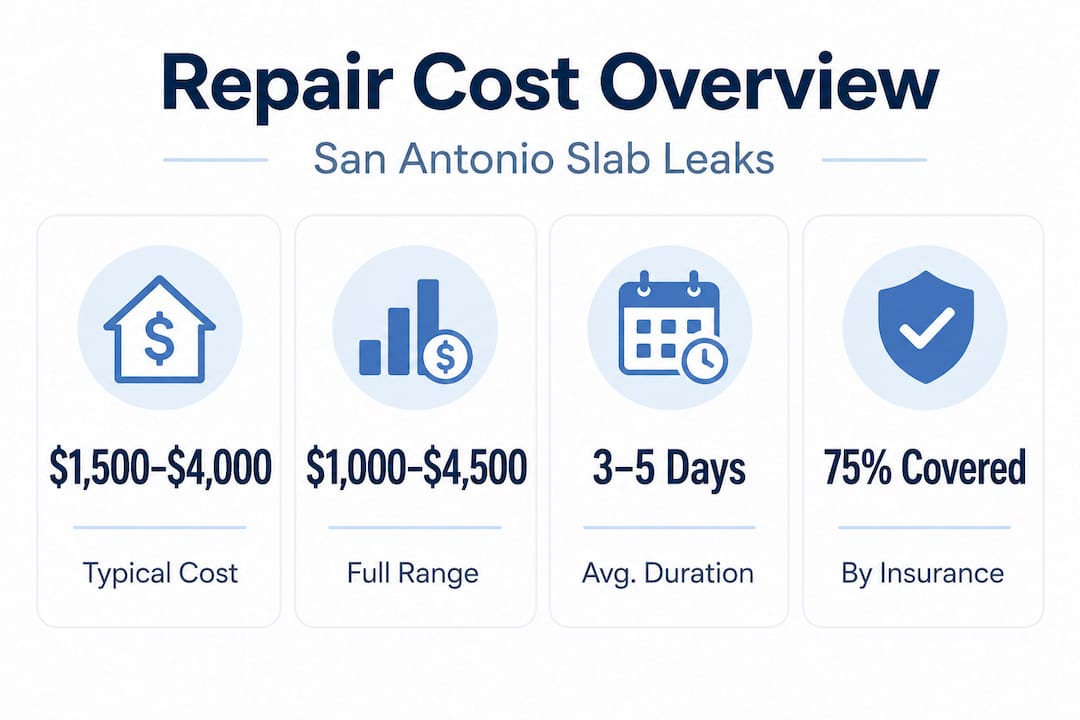
Slab leaks are one of the most stressful and costly plumbing problems a San Antonio homeowner can face. The moment you notice warm spots on your floor or a water bill that’s suddenly doubled, the anxiety kicks in fast. What’s this going to cost me? Will insurance cover it? Do I need to tear up my whole floor? The repair cost typically ranges from $1,000 to $4,500, with most San Antonio homeowners paying between $1,500 and $4,000 depending on how severe the leak is and what method is used to fix it. This guide will walk you through every major cost factor so you can make informed decisions quickly.
Table of Contents
- What is a slab leak, and why do they happen in San Antonio?
- How much does it cost to repair a slab leak in San Antonio?
- Comparing slab leak repair methods and costs
- How to minimize slab leak repair costs: prevention and early action
- The real cost of waiting: what most homeowners overlook about slab leaks
- San Antonio slab leak repairs from trusted local experts
- Frequently asked questions
Key Takeaways
| Point | Details |
|---|---|
| Typical repair cost | Most San Antonio slab leak repairs cost between $1,500 and $4,000. |
| Main cost factors | Repair method, leak location, and foundation work drive prices up or down. |
| Early detection saves money | Catching leaks early prevents both structural damage and higher repair bills. |
| San Antonio risk factors | Local soil and aging pipes make slab leaks more likely in the area. |
| Prevention and maintenance | Regular plumbing checkups can help avoid expensive slab leak repairs. |
What is a slab leak, and why do they happen in San Antonio?
A slab leak occurs when a water supply or drain line running beneath your home’s concrete foundation develops a crack or break. Water then seeps into the ground or pushes up through the slab, often going unnoticed for weeks or even months. By the time most homeowners realize something is wrong, significant damage has already started.
San Antonio has a particularly high rate of slab leaks compared to many other cities, and the reasons come down to local soil and aging infrastructure. The city sits on expansive clay soils that swell when wet and shrink during dry spells. This constant movement puts stress on buried pipes year after year. Combined with San Antonio’s wide temperature swings between summer highs and winter cold snaps, the conditions are a recipe for leaks.
Older homes are especially vulnerable. Many properties built before the 1980s used copper or galvanized steel pipes, both of which corrode over time. San Antonio’s clay soils and aging pipes create an environment where slab leaks aren’t just possible. They’re almost predictable. Being proactive about how you prevent plumbing problems is one of the smartest investments you can make as a homeowner in this region.
Here’s a quick look at the main risk factors for San Antonio slab leaks:
- Expansive clay soil that shifts with moisture and temperature changes
- Aging copper or galvanized pipes that corrode from the inside out
- High mineral content in San Antonio water, which accelerates pipe corrosion
- Poor original installation of pipes during construction
- Seasonal freeze events, which can crack pipes not adequately protected
If you ignore a slab leak, the consequences escalate fast. You’re looking at potential foundation damage, mold growth under your flooring, structural wall cracks, and thousands of dollars in water waste. Money is literally going down the drain, sometimes for months before the problem is confirmed.
How much does it cost to repair a slab leak in San Antonio?
Now that you understand why slab leaks happen so frequently in our area, the next question is the one that most homeowners lose sleep over: what’s this actually going to cost?
Slab leak repairs in San Antonio typically land between $1,000 and $4,500, with the majority of jobs falling in the $1,500 to $4,000 range. That wide spread exists because no two leaks are exactly alike. Location, depth, pipe material, repair method, and whether additional flooring or foundation work is needed all push the number up or down.
Here’s a breakdown of the main cost variables you should know before calling any plumber:
| Cost factor | Low end | High end |
|---|---|---|
| Leak detection (acoustic/thermal) | $150 | $400 |
| Direct access repair (single opening) | $1,000 | $2,500 |
| Pipe rerouting around the slab | $2,000 | $4,500 |
| Epoxy pipe lining | $1,500 | $3,500 |
| Concrete cutting and patching | $300 | $900 |
| Flooring restoration (tile/hardwood) | $500 | $2,000+ |
Keep in mind: If the leak is under a heavily tiled bathroom or kitchen, the cost of restoring the flooring alone can add $1,000 or more to your final bill. Always ask for an itemized estimate so you know exactly what you’re paying for.
Several factors are especially important in San Antonio specifically. If your home sits on particularly active clay soil, a single pipe failure can cause stress fractures in nearby pipes, meaning you might be dealing with multiple openings rather than just one. Some older San Antonio neighborhoods also have pipes that were never designed to handle modern water pressure demands, which increases the complexity of any repair.

Regarding insurance: most standard homeowners policies will cover the damage caused by a slab leak (warped floors, drywall repair, mold remediation) but will not pay for the plumbing repair itself unless you have a specific endorsement for service line coverage. Review your policy carefully before assuming you’re fully covered.
Pro Tip: Schedule an annual plumbing inspection for your home. Catching early signs of pipe corrosion or pressure problems before a full slab leak develops can save you several thousand dollars in emergency repairs.
Understanding the full range of water leak repair costs in this area helps you compare quotes accurately and avoid overpaying.
Comparing slab leak repair methods and costs
With average costs in mind, the next thing to understand is what repair options actually exist. Your plumber’s recommendation will depend on the leak’s location, the condition of the surrounding pipes, and what makes financial sense long term.
Here are the four main methods used in San Antonio:
- Direct access repair. This is the most straightforward approach. The plumber cuts through concrete directly above the leak, repairs or replaces the damaged section of pipe, and patches the concrete. This method works well when the leak is isolated and easy to reach. Expect to pay between $1,000 and $2,500 per opening.
- Pipe rerouting. Instead of digging under the slab, the plumber runs a new pipe through your walls, attic, or crawl space, completely bypassing the damaged underground line. This is often the best solution when a pipe is severely corroded or when multiple leaks exist in close proximity. Costs typically run from $2,000 to $4,500 depending on the distance and complexity of the new route.
- Epoxy pipe lining. This method uses a special resin to coat the inside of the existing damaged pipe, sealing cracks and small holes without breaking concrete. It’s less invasive and works well for minor deterioration, but it’s not appropriate for severely damaged or collapsed pipes. Costs range from $1,500 to $3,500.
- Full repipe. In some older San Antonio homes, especially those with widespread galvanized pipe corrosion, a full repipe is actually the most cost-effective long-term solution. This involves replacing all or most of the home’s water supply lines and starts around $4,000 but eliminates the risk of repeated slab leaks for decades.
| Repair method | Typical cost range | Best for | Disruption level |
|---|---|---|---|
| Direct access | $1,000–$2,500 | Isolated leaks | Moderate |
| Pipe rerouting | $2,000–$4,500 | Multiple/severe leaks | Low to moderate |
| Epoxy lining | $1,500–$3,500 | Minor pipe damage | Minimal |
| Full repipe | $4,000–$10,000+ | Widespread corrosion | High |
Cost data per opening confirms that most San Antonio repairs fall in the $1,000 to $4,000 range per leak site, with more extensive jobs pushing past that ceiling.
Pro Tip: Always ask your plumber whether they use slab leak detection technology like acoustic listening devices or thermal imaging before recommending a repair method. Precise detection means less concrete cutting, fewer surprises, and a lower total bill.
The method your plumber recommends matters enormously. A plumber who jumps straight to breaking concrete without accurate detection tools may end up cutting in the wrong spot, adding unnecessary cost and repair time to your project.
How to minimize slab leak repair costs: prevention and early action
Understanding your repair options is only half the picture. The other half is knowing how to catch a slab leak early or prevent one from developing in the first place. In San Antonio’s environment, this knowledge is genuinely valuable.
Early detection prevents foundation damage and keeps repair costs at the lower end of the spectrum. A leak caught in week two is a very different problem from one that’s been running for six months undetected.
Watch for these warning signs in your home:
- Unexplained spikes in your water bill with no change in usage habits
- Warm or hot spots on your floor, especially on slab-on-grade flooring like tile or concrete
- Damp or wet carpet or flooring without an obvious source
- Sounds of running water when all fixtures are turned off
- Cracks appearing in your walls, floors, or foundation
- Low water pressure that develops gradually over several weeks
- Mold or mildew smell coming from floors or baseboards
If you notice any combination of these signs, act immediately. Waiting even a few weeks can mean the difference between a $1,500 repair and a $6,000 restoration project that includes foundation work. Learn more about what to look for by reviewing common slab leak warning signs before a small issue becomes a major one.
Beyond early detection, here are the most effective prevention practices for San Antonio homeowners:
- Schedule annual plumbing inspections, especially if your home is more than 20 years old
- Monitor your water meter during periods when no water is being used to catch silent leaks
- Install a whole-home water pressure regulator to prevent excessive pressure from stressing pipes
- Consider a water softener to reduce mineral buildup and pipe corrosion in San Antonio’s notoriously hard water
- Ask about proactive pipe inspection during any remodel that involves opening walls or floors
Following solid plumbing maintenance tips specific to San Antonio’s environment can dramatically extend the life of your pipes and reduce the risk of a slab leak catching you off guard.
Pro Tip: If your home was built before 1985 and has never had a plumbing inspection, schedule one now. Many San Antonio homes of that era have copper pipes already showing early signs of corrosion that are inexpensive to address before they rupture beneath your slab.
The real cost of waiting: what most homeowners overlook about slab leaks
Here’s the truth most homeowners don’t hear until it’s too late: the number on the repair estimate is rarely the full cost of a slab leak. The real financial damage is what accumulates while the leak goes unaddressed.
We’ve seen San Antonio homes where a leak ran silently for three to four months before the homeowner called us. By that point, the slab repair itself was straightforward. But the foundation had shifted slightly, the hardwood floors in two rooms were warped beyond saving, and there was active mold growth under the subfloor. What could have been a $2,000 repair turned into a $9,000 project once all the collateral damage was factored in.
Homeowners insurance is another area where people get caught off guard. Most policies will reimburse you for secondary damage, things like flooring replacement, drywall, and mold remediation. But very few standard policies pay for the plumbing repair itself. That gap surprises a lot of homeowners who assumed they were covered end to end.
San Antonio’s expansive clay soils and temperature shifts make this city uniquely unforgiving when it comes to delayed repairs. In a more stable soil environment, a slow leak might take years to cause foundation movement. Here, active clay can respond to moisture changes in a matter of weeks. The foundation shifts, creates new pipe stress points, and one leak becomes two.
Our perspective is this: the cost of not acting is almost always higher than the cost of acting. A well-maintained San Antonio home with a proactive plumbing guide in hand is far less likely to face a five-figure repair bill. Every year you defer a plumbing inspection on a 30-year-old home with original copper pipes is a year that leak is growing.
San Antonio slab leak repairs from trusted local experts
When a slab leak is confirmed in your home, you need a team that’s going to locate it precisely, recommend the right repair method for your situation, and give you a transparent price before any work begins. That’s exactly what we do at Stultz Plumbing.
We offer complete slab leak detection using advanced acoustic and thermal imaging technology, so we know exactly where your leak is before a single inch of concrete is cut. If your home’s pipe situation calls for something more comprehensive, we also walk homeowners through San Antonio repiping options that eliminate recurring leaks for good. Explore our full range of affordable plumbing services and schedule your in-home estimate today. No surprises, no pressure, just straightforward answers and expert repairs from a team that knows San Antonio’s plumbing challenges inside and out.
Frequently asked questions
Does homeowners insurance cover slab leak repairs in San Antonio?
Homeowners insurance may cover damage caused by a slab leak, such as flooring or drywall repairs, but it typically excludes the cost to fix the pipe itself unless your policy specifically includes a service line or water backup endorsement.
How can I tell if I have a slab leak in my San Antonio home?
Common signs include a sudden spike in your water bill, warm or wet spots on your floors, low water pressure, or new cracks in your walls or foundation. San Antonio’s clay soils and aging pipes make these signs especially important to take seriously.
What is the most expensive part of a slab leak repair?
The biggest cost drivers are the leak’s location under the slab, the repair method required, and any secondary work like flooring restoration or foundation repair, with total costs ranging from $1,000 to over $4,500 for complex jobs.
Can slab leaks be prevented?
Routine annual plumbing inspections, water pressure regulation, and proactive maintenance can significantly reduce slab leak risk, since early detection is the single most effective tool for avoiding major foundation damage.
Are slab leaks common in new homes?
Slab leaks are far less common in newer homes but can still occur if the original installation used corrodible pipe materials or if San Antonio’s expansive clay soils cause unexpected ground movement during the home’s early years.
Recommended
- Slab Leak Repairs in San Antonio | Early Warning Signs Guide
- Water Leak Repair Cost: Budgeting for San Antonio Homes
- Water Leak Detection Cost: San Antonio Facts
- Read Basement Water Leak Repair Guide For San Antonio Homes
Jean runs growth strategy at AimSetWin, a performance marketing agency specializing in local service businesses across Texas. he's helped plumbers, HVAC companies, pest control operators, and home service brands build predictable revenue systems using data-driven advertising and conversion optimization.


