

Spot the top signs your water heater needs replacement in San Antonio. Learn how age, rust, rising bills, and hard water affect your decision to repair or replace.
TL;DR:
- Most water heaters in San Antonio fail within 8-12 years due to hard water corrosion.
- Rusty water, inconsistent heating, and rising energy bills signal the need for replacement.
- Early replacement can prevent costly repairs and water damage caused by delayed maintenance.
Most San Antonio homeowners don’t realize their water heater is failing until they’re standing in a cold shower or mopping up a flooded utility room. The warning signs are usually there weeks or even months before a full breakdown, but they’re easy to miss or dismiss. San Antonio’s notoriously hard water makes water heaters work harder and wear faster than in softer-water cities, which means local homeowners face a shorter window between “watch it” and “replace it.” This guide walks you through the clearest indicators that your unit is on its way out, so you can make a smart, timely decision before a small problem becomes a serious one.
Table of Contents
- How old is your water heater? Age matters most
- Warning signs inside your water: Rust, color, and taste changes
- Hot water running cold or fluctuating? Temperature and supply issues
- Is your energy bill or repair history spiking? How inefficiency and maintenance costs indicate it’s time
- Making the replacement decision: Local factors, water quality, and maintenance tips
- A plumber’s perspective: The uncomfortable truth about waiting too long
- San Antonio solutions for water heater replacement and maintenance
- Frequently asked questions
Key Takeaways
| Point | Details |
|---|---|
| Age is critical | Water heaters over 8–12 years old are much more likely to fail and should be checked for replacement. |
| Water discoloration | Rusty or cloudy hot water indicates internal corrosion and usually means it’s time for a new unit. |
| Rising costs matter | Jumping energy bills and frequent repairs make replacement more cost-effective than repeated fixes. |
| Hard water impacts | San Antonio’s hard water can shorten your heater’s life unless you soften and service the system regularly. |
How old is your water heater? Age matters most
With the basics set, let’s dig into your first benchmark: how old is your current water heater?
Age is, without question, the single most reliable predictor of water heater failure. Most homeowners are surprised to learn just how narrow the safe operating window really is. According to established average water heater lifespan data, tank units typically last 8 to 12 years, while tankless models push further at 15 to 20 years. But those numbers assume average water conditions. In San Antonio, where hard water accelerates sediment buildup and corrosion, tank water heaters average 8-12 years at the high end, with many units showing failure symptoms well before year 10.
| Water heater type | Average lifespan (standard water) | Expected lifespan (San Antonio hard water) |
|---|---|---|
| Tank (gas or electric) | 8-12 years | 7-10 years |
| Tankless | 15-20 years | 12-17 years |
Here’s something most homeowners don’t know: risk doesn’t increase gradually. After year 8, the probability of a significant failure jumps noticeably each year. A unit at year 11 isn’t just “older” than one at year 9 — it’s operating in a fundamentally different risk category.
To find your unit’s age, look for the serial number on the rating plate, usually on the upper portion of the tank. Most manufacturers encode the manufacture date in the first four characters. The first letter often represents the month (A = January, B = February, etc.) and the next two digits represent the year. A serial starting with “C18” would indicate March 2018.
Key age-based warning signs to watch:
- Unit is 8 years or older (tank) or 12+ years (tankless)
- You’ve had the unit since moving in and aren’t sure of its age
- No maintenance record of flushing or anode rod checks
- You’re already noticing any other symptoms listed below
Pro Tip: If you’re unsure whether to repair or replace your water heater, age alone can tip the decision. A unit over 10 years old rarely justifies significant repair investment.
Warning signs inside your water: Rust, color, and taste changes
Besides age, what you see and taste in your water offers telling clues.
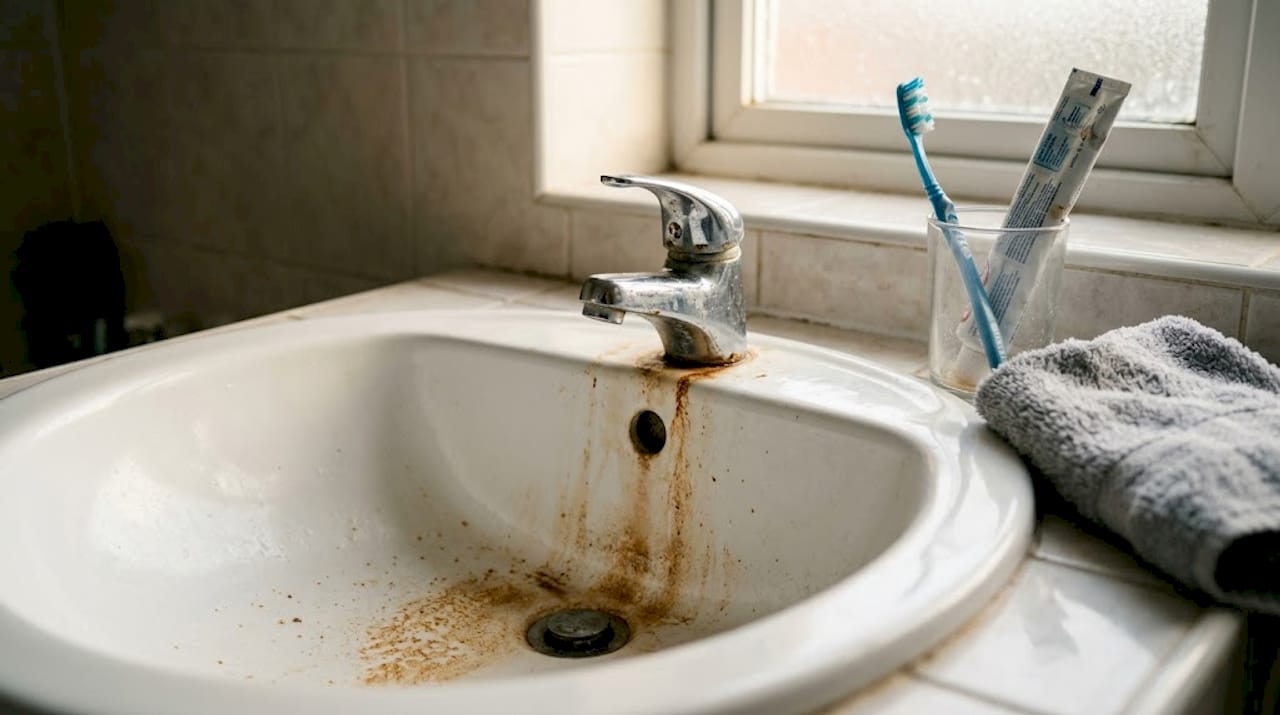
Rusty or discolored hot water is one of the most alarming signals your water heater can send, and it’s one that too many homeowners try to wait out. When you turn on the hot tap and the water comes out brown, orange, or with a metallic taste, that’s not a pipe quirk. It’s your tank telling you corrosion has set in. Internal corrosion and water quality studies confirm that rusty, discolored, or brown hot water signals internal tank corrosion, making repairs ineffective and replacement necessary.
Important: Before blaming your water heater, run the cold tap for 60 seconds. If the discoloration only appears in hot water, the tank itself is the source. If both hot and cold run rusty, the issue may be in your supply pipes instead.
Here’s why this matters so much: once internal corrosion reaches the tank walls, there’s no fixing it. You can replace a heating element, a thermostat, or even an anode rod. You cannot reverse metal that has rusted through from the inside.
Signs inside your water that point to a failing heater:
- Hot water appears brown, red, or orange
- Water has a metallic or sulfur-like smell (rotten egg odor from bacteria in sediment)
- Visible particles or sediment in the hot water flow
- Taste changes only in heated water, not cold
These are not cosmetic issues. Corroded water can stain fixtures, damage appliances like dishwashers and washing machines, and raise health concerns. If you’re seeing these signs, review the signs to replace water heater in San Antonio before spending money on a repair that won’t solve the root cause.
Hot water running cold or fluctuating? Temperature and supply issues
Water’s appearance is just one aspect — how it heats signals internal troubles too.
Inconsistent hot water is frustrating, and it’s also a diagnostic signal you shouldn’t ignore. Failing heating elements, a malfunctioning thermostat, or heavy sediment buildup can all cause temperature swings or reduce your total hot water supply. In aging units, these issues tend to pile up rather than occur in isolation.
Sediment is a particular problem in San Antonio. Mineral-rich hard water leaves calcium and magnesium deposits at the bottom of your tank. Over time, that layer of sediment acts as insulation between the burner and the water, forcing your unit to work harder and longer to reach temperature. The result is inconsistent heat, longer recovery times, and higher energy use.
Temperature warning signs to note:
- Hot water runs out faster than it used to
- Temperature fluctuates during a single shower without changing the dial
- It takes noticeably longer for hot water to reach fixtures
- You hear popping or rumbling sounds during heating cycles (a sediment signal)
Pro Tip: A one-time flush can sometimes restore performance in younger units. But if your heater is already past year 8, a flush might reveal just how much damage the sediment has caused. Review these water heater repair warning signs and use this guide to know if your water heater needs repair before committing to a fix.
For homeowner troubleshooting, start by checking the thermostat setting (recommended at 120°F). If it’s correctly set and you’re still getting cold or lukewarm water, the problem is internal and warrants a professional assessment.
Is your energy bill or repair history spiking? How inefficiency and maintenance costs indicate it’s time
Beyond function, costs offer some of the most persuasive evidence it’s time for a change.
Your utility bill is one of the most honest reporters in your home. When your water heater is losing efficiency, that cost shows up fast. Rising energy bills without a usage change point to inefficiency from age, sediment, or corrosion — and newer models save 20 to 30% on energy costs compared to older units. That’s real money on every monthly statement.
The 50% rule explained:
If the cost of a repair exceeds 50% of what a new unit would cost, replacement is almost always the smarter financial decision. Frequent repairs that exceed 50% of new unit price — or multiple repairs within a short period — favor replacement over continued fixes.
| Situation | Recommended action |
|---|---|
| One repair, unit under 8 years | Repair |
| One repair, unit over 10 years | Evaluate total cost vs. new unit |
| Multiple repairs in 12 months | Replace |
| Repair cost over 50% of new unit | Replace |
Numbered signs that costs are driving replacement:
- Your energy bill has crept up 15% or more with no change in household habits
- You’ve called for repairs more than once in the past year
- You’re told you need a new heating element, control board, or gas valve on an older unit
- The repair estimate alone is $400 or more on a unit that would cost $800 to $1,200 to replace
Use the water heater replacement guide to benchmark costs, and ask yourself honestly whether you’re patching something that’s already decided to fail. Our should you repair or replace your water heater guide breaks this decision down clearly, and replace water heater in San Antonio resources can help you act with confidence.
Making the replacement decision: Local factors, water quality, and maintenance tips
Having covered all major signs and costs, here’s how to make the call in San Antonio’s unique conditions.
San Antonio’s water hardness averages around 357 parts per million (ppm), which places it firmly in the “very hard” category. That’s not just a nuisance — it directly affects how long your water heater lasts and how aggressively it deteriorates. In hard water areas like San Antonio, water softeners extend life by 3 to 5 or more years, and annual flushing removes up to 70% of the failure causes tied to sediment buildup.
If you’re seeing one or more of the signs covered in this article, here’s a practical checklist to guide your next move:
- Check the age first. If you’re at or past year 10, replacement should be your default consideration, not a last resort.
- Run the hot vs. cold water test. Rust only in hot water means the tank, not the pipes, is the source.
- Review your last 6 months of energy bills. An upward trend without a usage explanation is a red flag.
- Count your repair calls. More than one repair in the past 12 to 18 months is a pattern, not a coincidence.
- Consider a water softener. If you haven’t installed one, you’re accelerating wear on every water-using appliance in your home.
- Schedule a professional assessment. When two or more signs are present, a licensed plumber can give you a clear picture of cost versus replacement value.
Our water heater repair vs replace guide is built specifically for San Antonio homeowners navigating this decision with local water conditions in mind. You can also use this repair or replace guidance to weigh your options before any service call.
A plumber’s perspective: The uncomfortable truth about waiting too long
Here’s what we see on the job that most articles won’t say directly: the homeowners who wait the longest almost always pay the most. Not because replacement costs more than they expected, but because they keep spending on repairs that buy months, not years.
There’s a persistent myth that repairs are always “cheaper” than replacing a unit. That’s only true for isolated problems on young units. Once a heater hits year 9 or 10, we rarely see a single issue. One repair uncovers another. A new element doesn’t fix a corroded tank. A thermostat swap doesn’t address failing insulation. Money is literally going down the drain in increments small enough to feel manageable but large enough to add up fast.
We’ve seen San Antonio homeowners avoid replacement for two years on a failing unit, spending $600 to $800 in repairs before a tank rupture caused $4,000 in water damage to drywall and flooring. That’s not an edge case. It happens regularly. Our plumber advice on water heaters is built from exactly these situations. The decision is rarely about whether to replace, but when — and the right answer is almost always sooner than feels necessary.
San Antonio solutions for water heater replacement and maintenance
When the signs are clear, the next step is choosing your solution. At Stultz Plumbing, we work with San Antonio homeowners every day to make that decision straightforward and stress-free. Whether you need a professional assessment, a new installation, or a clear answer on repair versus replacement, our team brings local expertise and transparent pricing to every job. Explore our affordable plumbing services or use our detailed water heater repair vs replace guide to understand your options before you call. Ready to talk specifics? Get expert water heater advice from our team today.
Frequently asked questions
How do I know if my water heater is failing or just needs repair?
Look for combined signals like age over 8 years, rust in hot water, and repeated service calls — these together suggest replacement is more practical than another repair on aging units past year 10.
What is the average lifespan of a water heater in San Antonio?
Most tank models last 8 to 12 years, but San Antonio’s hard water can shorten that significantly without a softener or regular flushing.
Do energy bills really go down after replacing an old water heater?
Yes — newer models save 20-30% on energy costs, so lower utility bills are one of the first measurable benefits you’ll notice after installation.
How does hard water affect when I need a new water heater?
Hard water speeds up mineral deposits and corrosion inside the tank — without a softener or annual flush, San Antonio homeowners should expect earlier replacement than national averages suggest.
Are there any DIY checks before calling a plumber?
Yes — compare hot versus cold water for discoloration, watch for temperature swings, and note any unusual sounds. These homeowner-checkable warning signs give your plumber a useful starting point and can speed up diagnosis.
Recommended
- Signs You Need Water Heater Repair | Stultz Plumbing
- Signs You Need Water Heater Repair | San Antonio TX
- Water Heater Warning Signs | Stultz Plumbing San Antonio
- Repair or Replace Your Water Heater | Stultz Plumbing
Jean runs growth strategy at AimSetWin, a performance marketing agency specializing in local service businesses across Texas. he's helped plumbers, HVAC companies, pest control operators, and home service brands build predictable revenue systems using data-driven advertising and conversion optimization.


