

Use this San Antonio plumbing maintenance checklist to prevent leaks, slab damage, and costly repairs. Protect your home with monthly and seasonal steps.
TL;DR:
- Regular visual inspections and professional checks help prevent costly plumbing failures in San Antonio.
- Using natural drain cleaning methods and flushing water heaters extend system lifespan and reduce risks.
- Local conditions like hard water and shifting soils require more frequent maintenance and vigilant monitoring.
A single dripping faucet wastes over 3,000 gallons of water every year, and a running toilet can drain 200 gallons in a single day. For San Antonio homeowners, those numbers translate directly into inflated water bills and preventable damage. Local conditions like hard water and shifting clay soils make your plumbing system even more vulnerable than in other parts of the country. The good news is that a structured maintenance checklist puts you in control. What follows is a practical, step-by-step routine built specifically for San Antonio homes, designed to keep your system running efficiently and your repair costs low year-round.
Table of Contents
- Monthly and seasonal visual inspections
- Drain care: prevention and safe cleaning methods
- Water heater and shut-off valve maintenance
- San Antonio specifics: hard water, soil shifts, and local threats
- Testing water pressure and crisis readiness
- Checklist vs. crisis: what most homeowners get wrong
- Take the next step in plumbing protection
- Frequently asked questions
Key Takeaways
| Point | Details |
|---|---|
| Inspect monthly | A quick monthly check for leaks and drips prevents water damage and big bills. |
| Use natural cleaners | Hot water and baking soda/vinegar keep drains clear without damaging your pipes. |
| Maintain water heater | Annual flushing and inspection saves up to $2,500 by avoiding breakdowns. |
| Check water pressure | Keep pressure between 40–60 PSI to prevent plumbing failures and leaks. |
| Tailor for San Antonio | Hard water and soil movement need extra attention to avoid slab leaks and mineral buildup. |
Monthly and seasonal visual inspections
Once you’re aware of the cost of unaddressed drips and leaks, it’s vital to establish a simple monthly inspection habit. Monthly visual inspections of visible pipes, faucets, toilets, and drains for leaks, moisture, corrosion, or slow drainage prevent small issues from escalating into costly repairs. Think of this routine as your first line of defense.
Here’s what to look for during each monthly walkthrough:
- Pipes under sinks: Check for moisture, rust staining, or soft spots on the cabinet floor. Even minor dampness signals a slow leak.
- Faucets and fixtures: Turn each one on and watch for irregular flow, drips at the base, or water that takes too long to run clear.
- Toilets: Press gently on the base to feel for any give, and look at the floor around it for discoloration.
- Drains: Run water in every sink and tub. Water pooling or draining slowly often indicates a partial blockage forming deeper in the line.
- Outdoor hose bibs and exposed lines: Look for corrosion or joint separation, especially after temperature swings.
One of the sneakiest threats is a silent toilet leak. These leaks don’t make a sound but can waste 20 or more gallons per day, and you’d never know without testing. Fortunately, the fix is simple.
Pro Tip: Drop a few food coloring tablets into your toilet tank and wait 10 to 15 minutes without flushing. If color appears in the bowl, your flapper valve is leaking. A replacement flapper costs under five dollars at any hardware store.
You can also visit our San Antonio home plumbing tips resource to see how these small checks connect to bigger prevention strategies. For homeowners who want to build a full system, our guide on how to prevent plumbing repairs breaks down each season’s priorities.
“The EPA estimates that household leaks waste nearly 1 trillion gallons of water annually across the U.S. Catching them early is one of the simplest ways to protect your home and your water bill.”
Drain care: prevention and safe cleaning methods
Routine checks spot the start of trouble, but the way you care for drains keeps issues from building up. Many homeowners reach for a bottle of chemical drain cleaner at the first sign of a slow drain. That’s a recipe for trouble, especially in San Antonio homes with older pipes where harsh chemicals can accelerate corrosion and cause more harm than the original clog.
Instead, follow these steps for safe and effective drain maintenance:
- Weekly hot water flush: Every week, pour a full kettle of hot water slowly down each drain. This dissolves soap residue and grease before they harden into a blockage.
- Monthly baking soda and vinegar treatment: Pour half a cup of baking soda into the drain, followed by half a cup of white vinegar. Let it fizz for 15 minutes, then flush with hot water. This breaks down organic buildup naturally.
- Use a drain strainer: Install mesh strainers in every shower and kitchen sink. Hair and food debris are the leading causes of clogs, and a strainer costs less than two dollars.
- High-use drains get priority: Kitchen and master bathroom drains see the most traffic. Treat these weekly. Guest bathroom drains can be addressed monthly.
- Low-use drains still need attention: A drain that’s rarely used can develop a dry P-trap (the curved pipe section that blocks sewer gas). Pour a cup of water into it monthly to keep the trap sealed.
As chemical cleaner risks are well documented for pipe degradation, sticking to natural methods protects both your plumbing and the environment. This matters even more in San Antonio where many neighborhoods still have original galvanized or cast-iron drain lines.
Pro Tip: Consistent natural drain cleaning is one of the most effective ways to avoid emergency service calls. We’ve seen homeowners cut their plumbing issues in half simply by adopting the weekly hot water flush. Learn the full reasoning behind drain cleaning basics and why the importance of routine drain cleaning goes beyond just clearing a slow sink.
Water heater and shut-off valve maintenance
Protecting your pipes is only half the checklist. Your major appliances and safety systems need proactive attention, too. Your water heater and shut-off valves are two areas where neglect creates genuinely serious risk.
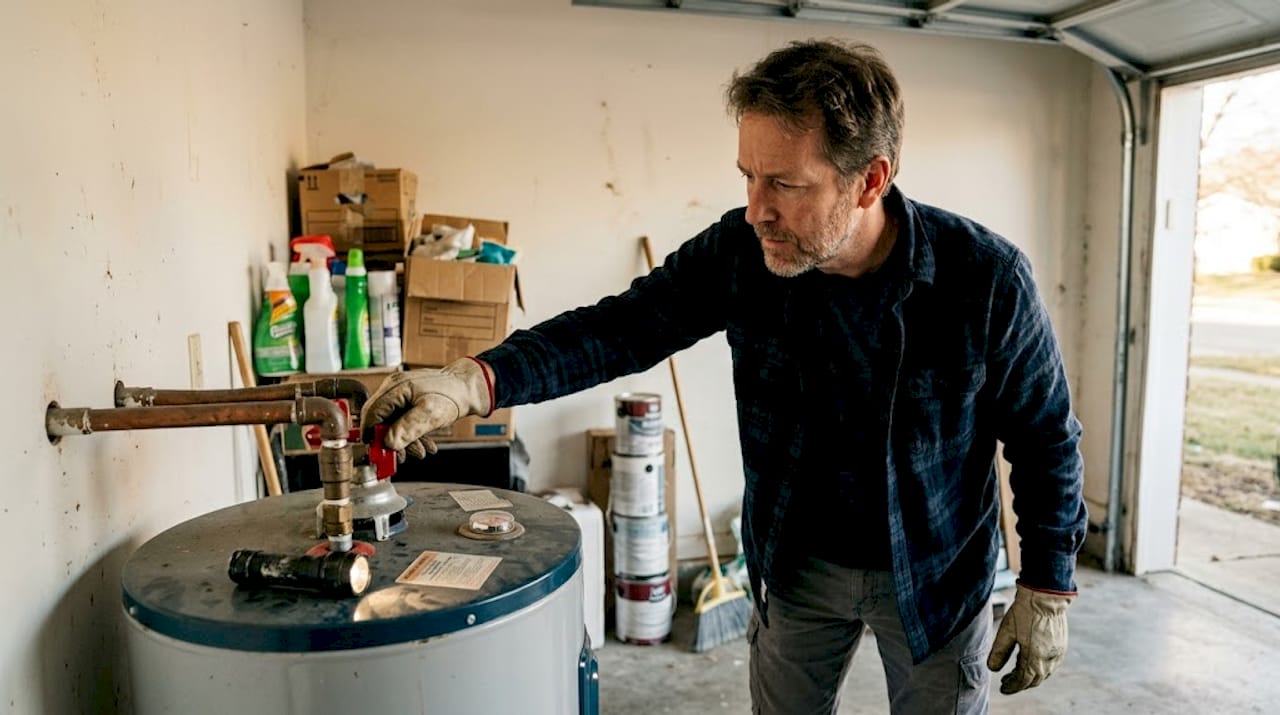
San Antonio’s notoriously hard water accelerates sediment buildup inside water heaters. That sediment acts as an insulating layer between the burner and the water, forcing the unit to work harder and reducing its lifespan. Flushing your water heater annually to remove sediment and testing the pressure relief valve can extend the unit’s life by three to five years. In a city with our mineral content, we actually recommend flushing every six months.
Here’s your annual water heater checklist:
- Turn off power or gas to the unit before starting any work.
- Connect a garden hose to the drain valve and run it to a safe discharge point.
- Open the drain valve and let the tank empty fully. Watch for sediment in the discharge water.
- Inspect the anode rod (the metal rod that prevents tank corrosion). If it’s heavily corroded, replace it.
- Test the pressure relief valve by lifting its lever briefly. Water should flow freely, then stop when released.
For the full water heater care process and when to call a professional, we outline each step in detail.
Shut-off valves are just as critical. Valves seize if not turned periodically, and a seized valve during a burst pipe emergency is money literally going down the drain. Turn every shut-off valve in your home fully clockwise, then fully counterclockwise, once per quarter. Our annual inspection checklist shows you exactly where to find each one.
| Task | Preventive cost | Emergency repair cost |
|---|---|---|
| Annual water heater flush | $0 to $150 | $800 to $1,500 (replacement) |
| Anode rod replacement | $20 to $50 | Included in full replacement |
| Shut-off valve exercise | $0 | $200 to $500 (valve replacement) |
| Pressure relief valve test | $0 to $75 | $300 to $700 (water damage) |
Pro Tip: Always switch off the power supply to your electric water heater or turn the gas to pilot before beginning any maintenance. Running the heating elements without water in the tank destroys them instantly.
San Antonio specifics: hard water, soil shifts, and local threats
Beyond basics, local conditions put your system at special risk. San Antonio’s water is among the hardest in the country, and the expansive clay soils beneath our homes move with every rain and drought cycle. These are not minor inconveniences. They are conditions that shorten the life of your plumbing system and create hazards you won’t find in most other cities.
San Antonio’s hard water requires more frequent flushing of water heaters and appliances, and the shifting clay soils here are a leading cause of slab leaks. A slab leak (a pipe rupture beneath the concrete foundation of your home) can go undetected for months, quietly soaking your foundation and raising your water bill. Warning signs include warm spots on tile floors, the sound of running water with all fixtures off, and unexpected increases in your monthly bill.
Here’s how to adapt your checklist for San Antonio’s environment:
- Increase water heater flushing to every six months rather than once per year.
- Inspect for slab leak signs quarterly: unusual floor warmth, damp baseboards, or mold near ground-level walls.
- Monitor your water bill monthly: a sudden spike with no change in usage is a red flag.
- Check exposed pipe connections after any significant rainfall, as soil movement can shift joints.
For a deeper look, our guide on San Antonio plumbing risks covers the most common local failure points in detail. You’ll also find a full breakdown in our annual inspection steps resource.
“Annual professional inspections are especially important in San Antonio, where hard water and clay soil conditions create plumbing stressors that standard national checklists simply don’t account for.”
| Scenario | Avg. annual maintenance cost | Avg. emergency repair cost |
|---|---|---|
| Slab leak (caught early) | $200 to $400 inspection | $500 to $2,000 repair |
| Slab leak (undetected) | N/A | $3,000 to $10,000+ |
| Mineral buildup in heater | $100 to $200 flush | $900 to $1,500 replacement |
| Corroded pipe joint | $50 to $150 inspection | $400 to $1,200 repair |
The numbers make the case clearly. For additional annual tips that complement this checklist, HomeLight’s home maintenance guide is a useful starting point.
Testing water pressure and crisis readiness
One last safeguard: make sure your water pressure is in the safe zone and you know every emergency shutoff in your home. High pressure feels like a luxury, but it quietly stresses every joint, valve, and fixture in your system. Low pressure signals a blockage or supply problem. Both deserve attention.
The ideal water pressure for most homes is between 40 and 60 PSI. Testing yours takes about five minutes.
- Purchase a water pressure gauge at any hardware store for around ten dollars. It screws onto an outdoor hose bib.
- Close all water-using appliances and fixtures in your home, including the dishwasher and ice maker.
- Attach the gauge to the hose bib and turn the spigot fully open.
- Read the dial. Below 40 PSI means your supply may be restricted. Above 80 PSI means your pipes are under stress and a pressure-reducing valve may be needed.
- Record your reading and compare it every quarter. Sudden changes indicate a developing problem.
For common pressure-related issues that San Antonio homeowners encounter, our resource on common pressure issues walks through the most frequent causes and fixes. You can also review the full inspection checklist for pressure to see how this fits into your overall routine.
“Knowing where every shut-off valve is in your home before an emergency is the difference between a quick fix and a flooded floor. Practice locating and turning each one now, not during a crisis.”
Checklist vs. crisis: what most homeowners get wrong
Now that you’ve seen the step-by-step, here’s why just having a checklist isn’t always enough. Most homeowners who come to us after a significant plumbing failure tell us the same thing: they thought everything was fine. They’d done their checks. They hadn’t noticed anything unusual.
The problem isn’t effort. It’s that some failures hide in places no visual inspection can reach: inside walls, beneath slabs, and behind appliances. That’s why DIY monthly checks combined with annual professional inspections represent the most effective approach. A trained technician uses pressure testing and careful evaluation to catch what you can’t see.
We worked with a homeowner in Alamo Heights who followed her checklist faithfully every month. She caught a toilet leak early and kept her drains clear. But during a routine annual inspection, we found a slow slab leak beneath her kitchen that had been quietly saturating her foundation for months. Her vigilance had kept her system healthy everywhere she could see. The professional visit caught what she couldn’t. That’s the real value of pairing your full homeowner guide habits with expert eyes once a year.
Take the next step in plumbing protection
For peace of mind beyond your DIY checklist, partner with trusted San Antonio experts. At Stultz Plumbing, we bring region-specific knowledge and years of hands-on experience to every home we service. Whether you need a full affordable plumbing services walkthrough, a professional water heater inspection before sediment causes damage, or fast drain unclogging services when your natural methods aren’t cutting it, our team is ready.
Schedule your inspection today and let us help you prevent problems before they start. San Antonio’s hard water and shifting soils aren’t going anywhere, but with the right professional support, your plumbing doesn’t have to suffer for it.
Frequently asked questions
How often should I perform routine plumbing checks in San Antonio?
Monthly visual inspections combined with an annual professional inspection are the recommended standard for San Antonio homes, especially given local hard water and soil conditions.
Can I use store-bought drain cleaners for monthly maintenance?
Avoid chemical drain cleaners. Natural cleaners like hot water, baking soda, and vinegar clean effectively without corroding your pipes.
What is the ideal water pressure for my home?
Most homes operate best between 40 and 60 PSI. If your pressure exceeds 80 PSI, a pressure-reducing valve is strongly recommended to prevent long-term pipe stress.
How can I check if my toilet has a silent leak?
Add a few drops of food coloring to the toilet tank and wait 10 to 15 minutes without flushing. If color appears in the bowl, your flapper valve is leaking and needs replacement.
Why is plumbing maintenance more important in San Antonio?
Hard water and clay soils in San Antonio create faster mineral buildup in water heaters and increase the risk of slab leaks, making a consistent maintenance routine more critical here than in most other cities.
Recommended
- Home plumbing maintenance guide for San Antonio 2026
- San Antonio home plumbing maintenance: prevent costly repairs
- San Antonio annual plumbing inspection: 5 must-checks
- Complete plumbing inspection checklist for San Antonio 2026
- Essential plumbing maintenance checklist for UK homeowners
- Why plumbing maintenance prevents costly emergencies | Proper Plumbing GTA Blog
Jean runs growth strategy at AimSetWin, a performance marketing agency specializing in local service businesses across Texas. he's helped plumbers, HVAC companies, pest control operators, and home service brands build predictable revenue systems using data-driven advertising and conversion optimization.


