

Confused about how much does it cost to repipe a house in San Antonio? Learn key factors that affect pricing and budget wisely!
TL;DR:
- Whole-home repiping costs in San Antonio range from around $4,000 for small homes to over $20,000 for larger properties, depending on multiple factors. Key drivers include home size, pipe material, access difficulty, and permit requirements, which homeowners should understand to budget accurately. Using quality materials like PEX and thorough planning ensures a reliable system and better resale value, with expert estimates recommended before proceeding.
If you’ve ever asked a plumber for a repiping quote and walked away more confused than when you started, you’re not alone. Whole-home repiping prices in San Antonio can range from roughly $4,000 for a small house all the way past $20,000 for a larger property, and that wide gap leaves a lot of homeowners second-guessing every number they hear. The good news is that those prices aren’t random. Once you understand what’s actually driving the cost, you can budget accurately, compare quotes fairly, and make a confident decision about your home’s plumbing upgrade.
Table of Contents
- Key cost factors in house repiping
- Repiping material options and their costs
- Sample repipe project costs for San Antonio homes
- When to consider repiping: Signs and timing
- How to get the best value on your repipe project
- Our take: What most homeowners miss about repiping costs
- Ready to upgrade your plumbing? Get an expert estimate
- Frequently asked questions
Key Takeaways
| Point | Details |
|---|---|
| Major cost drivers | Home size, pipe material, and labor significantly affect repiping prices. |
| Material matters | PEX piping offers lower costs and flexible installation versus copper or CPVC. |
| Smart scheduling | Bundle repiping with renovations for maximum savings and efficiency. |
| Shop for quality | Get multiple, detailed, in-person estimates from licensed San Antonio experts. |
| Long-term value | A well-done repipe improves water quality, home value, and peace of mind. |
Key cost factors in house repiping
Repiping costs vary widely because every home is different. The house repipe cost factors that matter most are home size, pipe material, labor intensity, and local permit requirements. Let’s break each one down so you know exactly what you’re paying for.
Home size and fixture count are the starting point. A 1,200 square foot home might have 8 to 12 plumbing fixtures (sinks, toilets, tubs, showers, washing machine connections). A 2,800 square foot home could have 20 or more. More fixtures mean more linear feet of pipe, more connections, and more labor hours. The relationship between size and cost is nearly linear, which means doubling your square footage can come close to doubling your price.
Pipe material is the next major driver. Copper, PEX (cross-linked polyethylene), and CPVC (chlorinated polyvinyl chloride) each carry different price tags per linear foot, and labor costs differ depending on how easy each material is to install. We’ll cover materials in detail in the next section.
Labor, permits, and disposal together often account for 40 to 60 percent of your total project cost in San Antonio. City permits are required for whole-home repiping, and inspection fees vary by municipality. Tearing out old pipe and disposing of it safely adds another line item that some low-ball quotes conveniently leave out.
Access difficulty is a cost factor that surprises many homeowners. A single-story home built on a crawlspace gives plumbers room to run new lines with relative ease. A two-story home built on a concrete slab requires cutting through drywall, sometimes working overhead, and navigating tighter spaces. Slab-built homes are especially common in San Antonio, and they typically add $1,000 to $3,000 to the overall project price depending on layout.
San Antonio-specific conditions add a layer of complexity you won’t find in many other markets. The city’s notoriously hard water accelerates corrosion in older copper and galvanized steel pipes, which means many homes here show failure signs earlier than expected. Homes built before 1980 may still have galvanized steel plumbing that’s operating on borrowed time. Some properties from the late 1980s and early 1990s contain polybutylene pipe, a material that was widely recalled due to chronic failure. Both materials drive up labor costs because removal is more involved.
Understanding repiping timelines also helps with planning. Knowing how long the work will take helps you coordinate water shutoffs, temporary accommodations, and any related renovation work.
Pro Tip: Always request a full written estimate that separates labor, materials, permit fees, and disposal costs. This makes comparing multiple quotes a true apples-to-apples exercise rather than a guessing game.
Repiping material options and their costs
With those variables in mind, let’s explore the primary piping materials you can choose and how they impact your final bill.
Copper pipe is the gold standard for durability. When properly installed, copper piping can last 50 to 70 years, handles high water pressure with ease, and resists bacterial growth. The downside is cost. Copper currently runs between $8 and $12 per linear foot installed in San Antonio, making it the most expensive option. It’s also more labor-intensive because it requires soldering each joint, which takes more time and skill.
PEX pipe has become the most popular choice for whole-home repiping projects, and for good reason. It’s flexible, which means it can be routed around obstacles without as many joints. Fewer joints translate to fewer potential leak points over time. PEX also handles San Antonio’s temperature swings well, since it expands slightly in cold weather rather than cracking. The cost advantage is significant. According to our PEX vs copper pipe costs comparison, PEX is about 50 percent less expensive than copper. Installed PEX typically runs $4 to $6 per linear foot in this market.
CPVC pipe sits in the middle ground. It costs more than PEX but less than copper, typically ranging from $5 to $8 per linear foot installed. CPVC is rigid like copper, which makes it easier to plan and route, but harder to install in tight spaces compared to flexible PEX. One important note for San Antonio homeowners: CPVC can become brittle over time when exposed to highly chlorinated water, and the city’s municipal water supply does use chlorination as a standard treatment.
| Pipe material | Avg. cost per linear foot (installed) | Lifespan | Best for |
|---|---|---|---|
| Copper | $8 to $12 | 50 to 70 years | Long-term investment, premium builds |
| PEX | $4 to $6 | 25 to 40 years | Cost savings, flexibility, retrofits |
| CPVC | $5 to $8 | 25 to 35 years | Mid-range budget, straightforward layouts |
Pro Tip: Check whether your city or county offers any rebates or incentives for upgrading from condemned materials like polybutylene. Some utility programs in the San Antonio area provide partial reimbursement when replacing systems that have been flagged as high-risk.
Sample repipe project costs for San Antonio homes
Once you know the material, here’s what real costs look like for several common San Antonio home types.
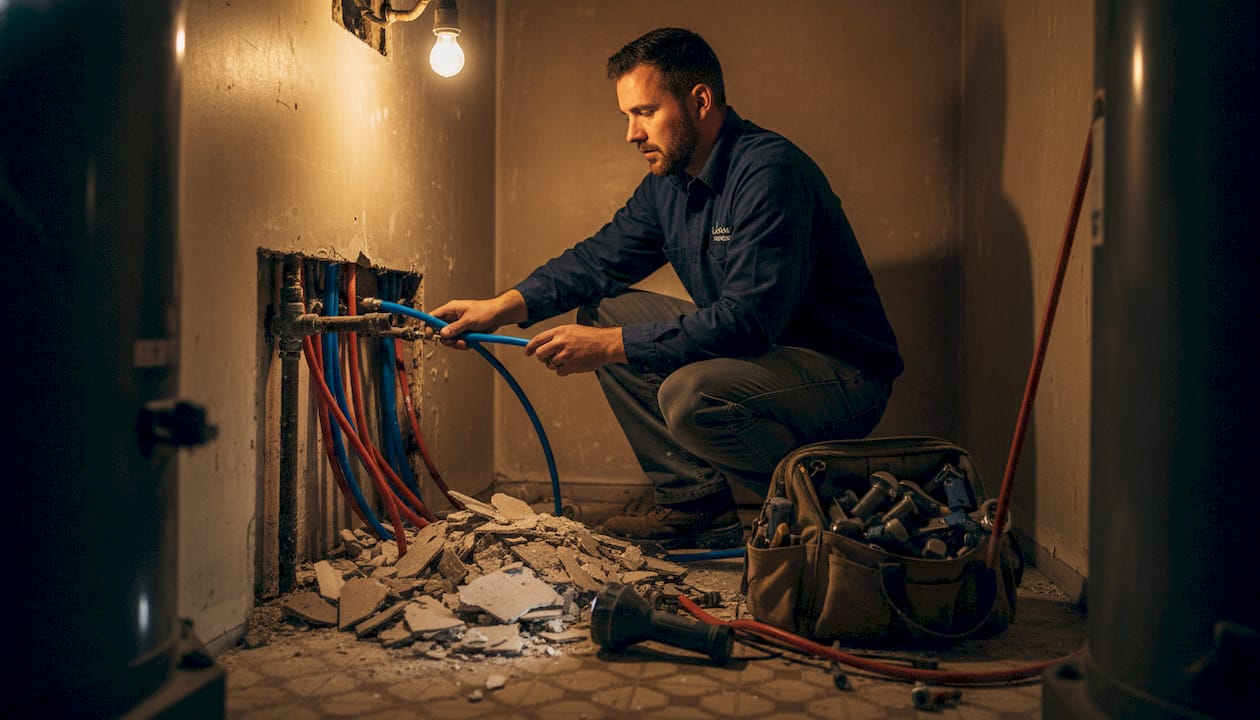
These numbers reflect full whole-home repiping, including labor, materials, permits, and cleanup. They assume average access conditions. Homes with unusual layouts, multiple stories, or full slab-on-grade construction may fall on the higher end of each range.
| Home size | Pipe material | Low estimate | High estimate |
|---|---|---|---|
| 1,500 sq ft | PEX | $4,500 | $8,000 |
| 1,500 sq ft | Copper | $8,500 | $13,000 |
| 2,500 sq ft | PEX | $7,500 | $12,500 |
| 2,500 sq ft | Copper | $14,000 | $20,000 |
| 2,500 sq ft | CPVC | $10,000 | $16,000 |
For a more detailed breakdown of what these numbers include, the typical repipe project costs on our website walk through each line item in full.
Most professional repipe quotes will include the following steps:
- Initial walkthrough and assessment to measure linear footage, count fixtures, and identify access challenges.
- Demo and old pipe removal including cutting drywall or accessing crawlspace areas as needed.
- New pipe installation following updated local plumbing codes.
- Connection of fixtures including water heater, appliances, and outdoor hose bibs.
- City inspection and permit closure to ensure all work meets current code requirements.
- Patching and cleanup to restore walls and surfaces to a livable condition.
A well-planned repipe on a 2,000 square foot San Antonio home using PEX materials typically runs between $8,000 and $15,000 all-in, including permits and drywall patching. That figure drops noticeably when the home has a crawlspace versus a full slab foundation.
Planning around the project timelines is just as important as understanding the dollar figures, since most families need to prepare for temporary water shutoffs during installation.
When to consider repiping: Signs and timing
Now that you see typical price ranges, it’s smart to learn when repiping actually makes sense and how to plan around it.
The most reliable signs old plumbing needs replaced include:
- Discolored water at the tap, especially a brown or rust color, which signals pipe corrosion working its way into your supply lines.
- Reduced water pressure throughout the home, not just at one fixture. When pressure drops everywhere at once, it usually points to widespread mineral buildup or internal corrosion narrowing the pipe diameter.
- Frequent leaks in different parts of the house. One leak is a repair. Three leaks in three years is a pattern that suggests the entire system is deteriorating.
- Visible corrosion or green staining on exposed pipes under sinks or in utility areas. This is often the first visible sign of a deeper problem throughout the system.
- Foul or metallic taste in tap water, even after running the line for a few seconds.
Older San Antonio homes built before 1985 carry a particularly high risk because many were plumbed with galvanized steel. Galvanized steel pipes have an average lifespan of 40 to 60 years, and many of those pipes are well past that mark right now. Homes from the late 1980s may have polybutylene pipe, which was used widely before manufacturers acknowledged its failure rate. If your home falls in either category, a full inspection is worthwhile even if you haven’t seen obvious symptoms yet.
Timing matters. If you’re already planning a major kitchen remodel or bathroom renovation, folding repiping into that project makes smart financial sense. Walls are already open, contractors are already on-site, and you can often negotiate lower overall labor costs. Scheduling during mild weather months (spring or fall in San Antonio) also tends to mean shorter waits for licensed plumbing crews.
Pro Tip: Bundle your repiping with other major home improvement projects whenever possible. When drywall is already being opened for a renovation, the additional cost to run new pipe through those walls drops significantly, sometimes by 20 to 30 percent compared to a standalone repipe.
How to get the best value on your repipe project
Once you’ve recognized the signs and timing, let’s make sure you get the most for your investment.
Getting multiple quotes is non-negotiable. We recommend getting at least three written estimates from licensed San Antonio plumbers. Each estimate should clearly list pipe brand, material type, linear footage, permit costs, and warranty terms. If a quote only gives you a single bottom-line number without details, that’s a red flag.
Here’s what to ask every provider before you sign:
- What brand of PEX or copper piping do you use? Not all pipe brands are equal. Ask for manufacturer specs and warranty information.
- Is the permit included, and who pulls it? In Texas, the licensed plumber must pull the permit. If a contractor asks you to pull it yourself, walk away.
- Who patches the drywall? Some plumbing companies handle their own drywall repair. Others leave that to you. Clarify this before the project starts to avoid surprise costs.
- What does your warranty cover? A reputable company will back their labor for at least one year, with manufacturer warranties on materials extending longer.
Checking provider credentials is simple but critical. Verify that your plumber holds an active Texas plumbing license and that the company carries liability insurance. You can confirm licensing through the Texas State Board of Plumbing Examiners online.
For upgrading with top repiping services, choose a company that can provide references from recent whole-home repipe projects in your area. A company that primarily does drain cleaning or water heater swaps may not have the project management experience that a full repipe demands.
Pro Tip: Prioritize companies that offer free repiping estimates with an in-home walkthrough. A phone quote for a whole-home repipe is almost always inaccurate. An experienced plumber needs to see your home in person to give you a number you can actually rely on.
Our take: What most homeowners miss about repiping costs
After guiding hundreds of San Antonio homeowners through the repiping process, we keep seeing the same costly mistake repeated. Homeowners choose the lowest bid without reading the fine print, and they end up paying more in the long run.
Here’s what those lowball quotes almost always leave out: permit fees, city inspection charges, quality pipe brands, and post-installation drywall repair. A quote that looks $2,000 cheaper on paper can quickly become $3,000 more expensive once those line items get added back in. Some contractors skip the permit entirely, which is a serious problem. Unpermitted plumbing work voids homeowner’s insurance claims related to water damage and creates legal complications when you sell the property.
We also want to reframe how you think about repiping as a financial decision. This isn’t just a repair. A full repipe using quality materials improves water pressure throughout your home, eliminates the risk of a sudden catastrophic pipe failure, and can improve your home’s resale value. Buyers and their inspectors actively look at pipe material and age. Homes with documented, fully permitted repiping on quality materials move faster and often command better offers.
The most financially sound path, and we say this after seeing it play out repeatedly in San Antonio homes, is to invest in saving money with PEX on material costs while refusing to cut corners on labor quality, permitting, or warranty coverage. You get a modern, reliable plumbing system at a fair price, with documentation that protects you now and when you eventually sell.
Ready to upgrade your plumbing? Get an expert estimate
When you’re ready to get pricing tailored to your property, here’s how to get started with expert help. At Stultz Plumbing, we specialize in San Antonio repiping services for homes of every size and age. Our licensed team provides in-home estimates at no charge, so you see a real, itemized number before any commitment. We serve homeowners across the metro area, including dedicated Shavano Park repipe service for that community’s specific home types. Whether you need a full copper system or want to save with modern PEX, we’ll walk you through the options honestly. Explore our full range of affordable plumbing services or call us today to schedule your free walkthrough.
Frequently asked questions
What is the average cost to repipe a 2,000 sq ft house in San Antonio?
For a standard 2,000 square foot San Antonio home, repiping costs usually range from $8,000 to $18,000 depending on material choice and how easily plumbers can access existing lines.
How long does the repiping process take for a typical home?
Most homes can be repiped in 2 to 5 days with minimal interruption to water service, though larger or more complex properties may require an additional day or two.
Is PEX piping better than copper for San Antonio homes?
PEX is 50% less expensive than copper, easier to install, and handles San Antonio’s temperature variations well, though copper offers a longer proven lifespan when installed correctly.
Should I repipe all at once or in sections?
A whole-home repipe is almost always more cost-effective and less disruptive over time than patching sections repeatedly, since labor mobilization costs add up quickly across multiple smaller jobs.
Recommended
- Upgrade your home with top repiping services in San Antonio
- How long does it take to repipe a house in 2026?
- Repiping Service in Alamo Heights TX | Stultz Plumbing
- Expert Repiping Service in Shavano Park TX | Stultz Plumbing
Jean runs growth strategy at AimSetWin, a performance marketing agency specializing in local service businesses across Texas. he's helped plumbers, HVAC companies, pest control operators, and home service brands build predictable revenue systems using data-driven advertising and conversion optimization.


