

Learn how San Antonio homeowners can prevent costly plumbing repairs with monthly inspections, drain care, and climate-specific tips from Stultz Plumbing.
TL;DR:
- Regular inspections, proper drain care, and climate precautions can prevent costly plumbing failures in San Antonio.
- Using the right tools and safe methods helps maintain aging pipes, especially during freezes.
- Professional assessments are essential for identifying hidden pipe weaknesses caused by hard water and aging infrastructure.
A small drip under the kitchen sink. A faint hiss from a toilet that never quite stops running. These minor annoyances rarely feel urgent until the water bill spikes or a pipe bursts at 2 a.m. on a cold January night. San Antonio homeowners face a unique set of plumbing challenges, from hard water mineral buildup to the occasional hard freeze that catches aging pipes off guard. The good news is that most expensive plumbing failures are preventable. This guide walks you through the tools, inspection habits, drain care, and climate-specific precautions that keep your plumbing system running efficiently year after year.
Table of Contents
- Essential tools and materials for plumbing maintenance
- Routine inspections and checks: What to look for monthly
- Preventing and clearing common drain clogs
- San Antonio’s climate: Special precautions for pipes and plumbing
- The uncomfortable truth: Why small problems turn costly in San Antonio
- Get expert plumbing help for your San Antonio home
- Frequently asked questions
Key Takeaways
| Point | Details |
|---|---|
| Inspect monthly | Regular checks catch leaks and corrosion early, preventing water damage. |
| Use safe cleaning methods | Avoid chemical drain cleaners in older homes, prefer baking soda or enzyme options. |
| Adapt to San Antonio weather | Insulate pipes and consult professionals for extreme heat and freeze protection. |
| Prevent clogs proactively | Flush drains, use screens, and keep grease out of pipes for smooth plumbing. |
| Professional help matters | Local plumbing experts offer inspections that catch problems homeowners might miss. |
Essential tools and materials for plumbing maintenance
Before you can protect your plumbing, you need the right equipment on hand. Think of it like keeping a first-aid kit in the house. You hope you never need it urgently, but when something goes wrong, having the right tools makes all the difference between a quick fix and a flooded bathroom.
Here are the basic tools every San Antonio homeowner should keep accessible:
- Flashlight or headlamp for inspecting dark cabinet interiors, crawl spaces, and behind appliances
- Adjustable wrench and slip-joint pliers for tightening fittings and shutoff valves
- Work gloves to protect your hands when handling corroded fittings or cleaning agents
- Drain screens for every sink, tub, and shower to catch hair, debris, and food particles
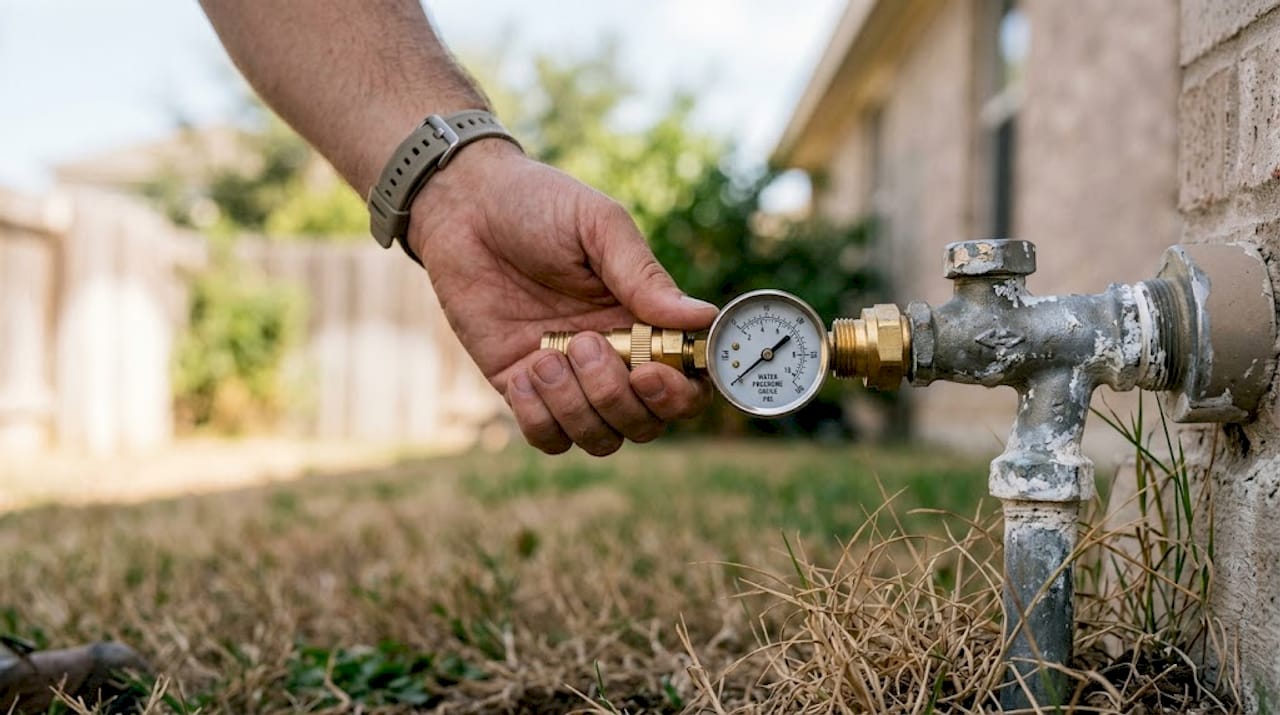
- PSI gauge (pounds per square inch) to measure water pressure at any hose bib or faucet
- Baking soda and white vinegar for safe, non-corrosive drain maintenance
- Enzyme-based drain cleaner as a monthly treatment to break down organic buildup without damaging pipes
Here is a quick comparison of cleaning approaches to help you choose the right one for your situation:
| Method | Best for | Safe for old pipes? | Cost |
|---|---|---|---|
| Baking soda and vinegar | Light buildup, odors | Yes | Very low |
| Enzyme cleaner | Organic clogs, maintenance | Yes | Low |
| Chemical drain cleaner | Severe clogs | No | Low to moderate |
| Mechanical snake | Stubborn blockages | Yes | Moderate |
As noted in our home plumbing maintenance guide for San Antonio 2026, monthly visual inspections of visible pipes, faucets, toilets, and under-sink areas are essential to catch issues early and prevent water damage. Having your tools ready before you start those inspections means you can act immediately if you spot a problem.
For broader guidance on keeping your system in shape, these plumbing tips from Bob Vila offer a solid homeowner reference alongside your local maintenance routine.
Pro Tip: A PSI gauge costs less than $15 at any hardware store. Clip it onto an outdoor hose bib and check your water pressure monthly. Ideal pressure sits between 40 and 60 PSI. Anything above 80 PSI is quietly stressing every joint, valve, and appliance in your home.
Routine inspections and checks: What to look for monthly
With tools in hand, move to monthly inspections for early detection. A systematic approach takes less than 30 minutes and can save you thousands. The goal is to catch moisture, corrosion, and pressure problems before they become structural damage or mold.
Follow this monthly inspection sequence:
- Check under every sink for moisture, soft cabinet floors, or discoloration that signals a slow drip
- Inspect exposed pipes in the garage, utility room, and crawl spaces for rust, white mineral deposits, or green oxidation on copper
- Test every faucet for drips, reduced flow, or unusual sounds when shutting off
- Flush every toilet and watch for running water after the tank refills, which wastes hundreds of gallons monthly
- Look at supply lines behind toilets and under sinks for bulging, cracking, or wet spots
- Check your water meter before and after a two-hour period of zero water use. A moving dial means a hidden leak somewhere in the system
Here is a quick reference for what normal versus warning readings look like:
| Indicator | Normal range | Warning sign |
|---|---|---|
| Water pressure | 40 to 60 PSI | Above 80 PSI |
| Toilet refill time | Under 60 seconds | Over 90 seconds or continuous |
| Visible pipe condition | Clean, dry, no discoloration | Rust, moisture, green or white deposits |
| Water meter after 2 hours | No movement | Any dial movement |
Our annual plumbing inspection checklist expands on this routine with seasonal items, and the must-checks for plumbing covers San Antonio-specific concerns worth reviewing each year.
Critical note: High water pressure above 80 PSI accelerates wear on pipe joints, appliance connections, and shutoff valves. If your reading is consistently high, a pressure-reducing valve (PRV) adjustment by a licensed plumber is not optional. It is urgent.
The home plumbing maintenance guide for San Antonio 2026 confirms that ideal pressure sits at 40 to 60 PSI and that exceeding 80 PSI requires PRV adjustment to prevent pipe stress.
Preventing and clearing common drain clogs
After inspections, regular drain care is key to avoiding disruption. Clogged drains are one of the most common and preventable plumbing problems in San Antonio homes. The fix is usually simple, but the damage from ignoring them, including pipe corrosion, sewage backup, and water damage, is anything but.
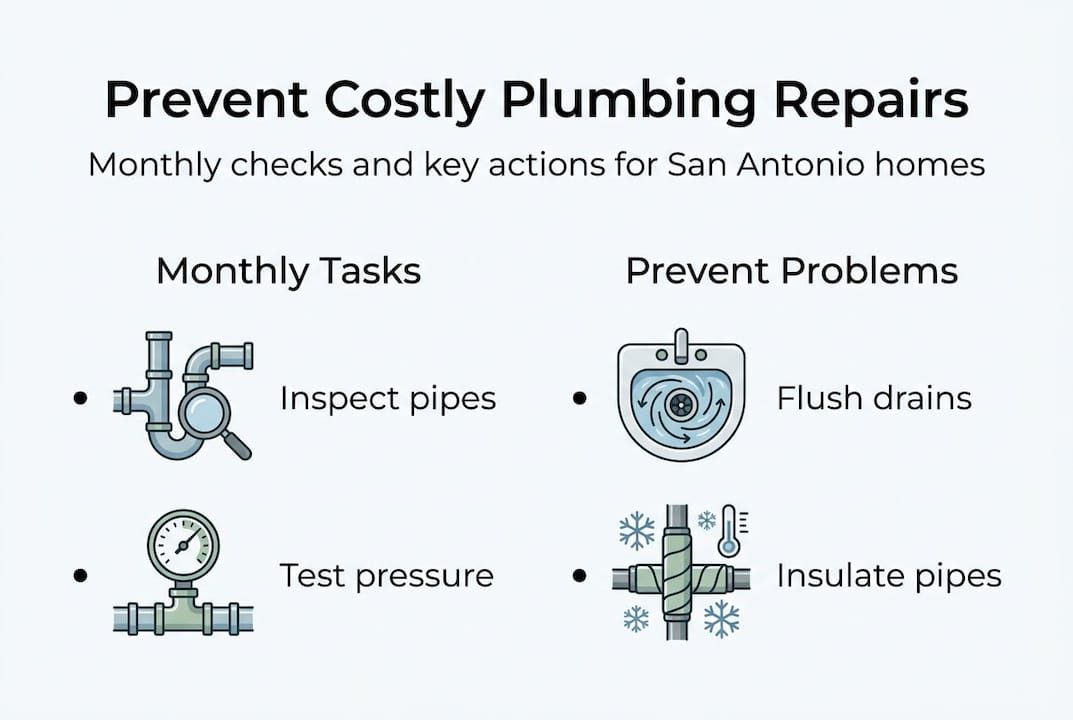
Here is how to prevent clogs before they form:
- Install drain screens on every sink, shower, and tub opening
- Never pour grease or cooking oil down the drain. It solidifies inside the pipe and builds up over time, a recipe for blockages
- Limit what goes into the garbage disposal. Fibrous vegetables, coffee grounds, and starchy foods like pasta are common culprits
- Run cold water for 30 seconds before and after using the garbage disposal to flush debris through
- Treat drains with an enzyme cleaner once a month to break down organic material before it accumulates
When a clog does form, here is the safe clearing sequence:
- Pour boiling or very hot water down the drain in two to three stages, pausing between each pour
- Follow with baking soda and vinegar: pour half a cup of baking soda, then half a cup of white vinegar, cover the drain for 15 minutes, then flush with hot water
- Use an enzyme cleaner if the clog persists, allowing it to work overnight
- Try a manual drain snake for stubborn blockages that do not respond to the above methods
As Bob Vila’s plumbing tips for homeowners confirm, hot water weekly prevents grease, soap scum, and mineral buildup, and enzyme cleaners are far safer than harsh chemicals on aging pipes. The same source warns that grease down drains solidifies and causes serious blockages over time.
For more detailed guidance, our drain cleaning tips cover prevention strategies, and our guide to unclogging drains walks through the full clearing process for San Antonio homes.
Pro Tip: If your home was built before 1960, skip chemical drain cleaners entirely. Older galvanized pipes are already thinning from years of mineral buildup and corrosion. Chemical cleaners accelerate that damage. Mechanical snaking is always the safer call.
San Antonio’s climate: Special precautions for pipes and plumbing
The final maintenance step is adapting your routine to local weather challenges. San Antonio’s climate is mostly warm, but that lulls many homeowners into skipping cold-weather preparation. When a freeze does hit, pipes that were never insulated or inspected can crack fast, and repairs are expensive.
Here is what to do before and during cold snaps:
- Insulate exposed pipes in the garage, attic, crawl space, and any exterior walls using foam pipe insulation, which costs just a few dollars per foot
- Disconnect and drain garden hoses before temperatures drop. Water left in hoses can back up into the bib and freeze the connection inside the wall
- Inspect outdoor hose bibs each fall for drips, corrosion, or loose fittings before winter arrives
- Drip faucets on exterior walls during a freeze to keep water moving and reduce the risk of ice forming in the line
- Know where your main shutoff valve is so you can act immediately if a pipe does burst
- Schedule a seasonal inspection with a licensed plumber before winter, especially if your home has older pipes or has never had a professional assessment
Our winter plumbing preparation guide covers the full checklist, and if summer heat is your bigger concern, our tips on how to prevent plumbing problems in hot summers address heat-related pipe stress and water heater strain.
As our home plumbing maintenance guide for San Antonio 2026 advises, insulating exposed pipes and dripping faucets during rare freezes, along with seasonal hose bib inspections, are non-negotiable steps for local homeowners.
Pro Tip: San Antonio’s hard water leaves mineral deposits at pipe joints over time. Those deposits weaken the connection points. When a freeze hits, those stressed joints are the first to crack. Addressing hard water with a water softener is not just a comfort upgrade. It is a long-term pipe protection strategy.
The uncomfortable truth: Why small problems turn costly in San Antonio
Here is something most maintenance guides will not tell you directly. In San Antonio, a small plumbing problem is not just a small plumbing problem. It is a small problem sitting inside a home that may have galvanized pipes from the 1950s, hard water that deposits scale at every joint, and a climate that swings from 100-degree summers to surprise freezes that the pipes were never designed to handle.
We have seen it repeatedly. A homeowner drips their faucets during a freeze, follows the basic advice, and still ends up with a cracked joint because the hard water scale had already weakened that connection over years. The drip method helps. But it is not enough on its own when the underlying pipe condition is compromised.
That is why professional inspections catch threats that DIY routines simply cannot. A trained technician uses pressure testing and visual assessment to identify pipe sections that are close to failure, not just ones that have already failed. Our perspective is that preventing costly repairs requires treating your plumbing system as a whole, not just responding to visible symptoms.
As our home plumbing maintenance guide for San Antonio 2026 notes, pro winter inspections are advised over the DIY drip method alone due to hard water joint stress. We agree completely.
Get expert plumbing help for your San Antonio home
Maintaining your plumbing does not have to feel overwhelming. The steps in this guide give you a strong foundation, but there are times when a trained eye and professional tools make all the difference. Whether you need a full system assessment, a stubborn clog cleared, or seasonal preparation before the next cold snap, Stultz Plumbing is ready to help.
Our team offers affordable plumbing services across San Antonio and surrounding communities, with transparent pricing and fast response times. If drains are your concern, our drain cleaning services use professional-grade equipment to clear lines quickly and correctly. Contact us today to schedule a maintenance visit and protect your home before a small issue becomes a costly repair.
Frequently asked questions
How often should I inspect my home’s plumbing?
Monthly visual inspections of pipes, faucets, and under-sink areas are recommended to catch issues before they escalate into major damage. A quick 30-minute walkthrough each month is all it takes.
Are chemical drain cleaners safe for older San Antonio homes?
Chemical drain cleaners can corrode the old galvanized pipes common in pre-1960s San Antonio homes, making enzyme cleaners or mechanical snaking the far safer choice. Protecting aging pipes means avoiding anything that accelerates corrosion.
What should I do for plumbing during a San Antonio freeze?
Drip faucets on exterior walls, insulate exposed pipes, and schedule a professional inspection to protect against freeze damage and the added risk of hard water joint stress. Do not rely on dripping alone if your pipes are older.
How do I safely clear a drain clog?
Start with hot water and baking soda combined with vinegar, then follow up with an enzyme cleaner for persistent blockages. Avoid harsh chemical cleaners whenever possible, especially in homes with older pipe systems.
Recommended
- Plumbing maintenance: prevent costly repairs in San Antonio
- Regular plumbing maintenance: lower costs, fewer headaches
- Types of plumbing repairs every San Antonio homeowner should know
- Plumbing Maintenance Tips Stultz | Prevent Costly Repairs
Jean runs growth strategy at AimSetWin, a performance marketing agency specializing in local service businesses across Texas. he's helped plumbers, HVAC companies, pest control operators, and home service brands build predictable revenue systems using data-driven advertising and conversion optimization.


