Discover top-notch water softener service in San Antonio, TX, to tackle hard water issues. Protect your home and enjoy better water today!
TL;DR:
- San Antonio’s water is extremely hard, causing faster scale buildup and appliance wear.
- Salt-based water softeners are most effective in removing minerals and preventing scale in this region.
- Professional installation and regular maintenance ensure optimal performance and longer system lifespan.
San Antonio homeowners deal with one of the most aggressive water supplies in the entire country. The water coming out of your taps carries about 12.7 grains per gallon, which puts it firmly in the “very hard” category. That’s not just a number on a chart. It’s the reason your showerhead clogs, your skin feels tight after a shower, your appliances wear out faster than they should, and your water heater works overtime. Professional water softener service is the most effective way to protect your home, your plumbing, and your family’s comfort.
Table of Contents
- Understanding hard water in San Antonio: What makes it a problem?
- Types of water softeners for San Antonio homes: Options and effectiveness
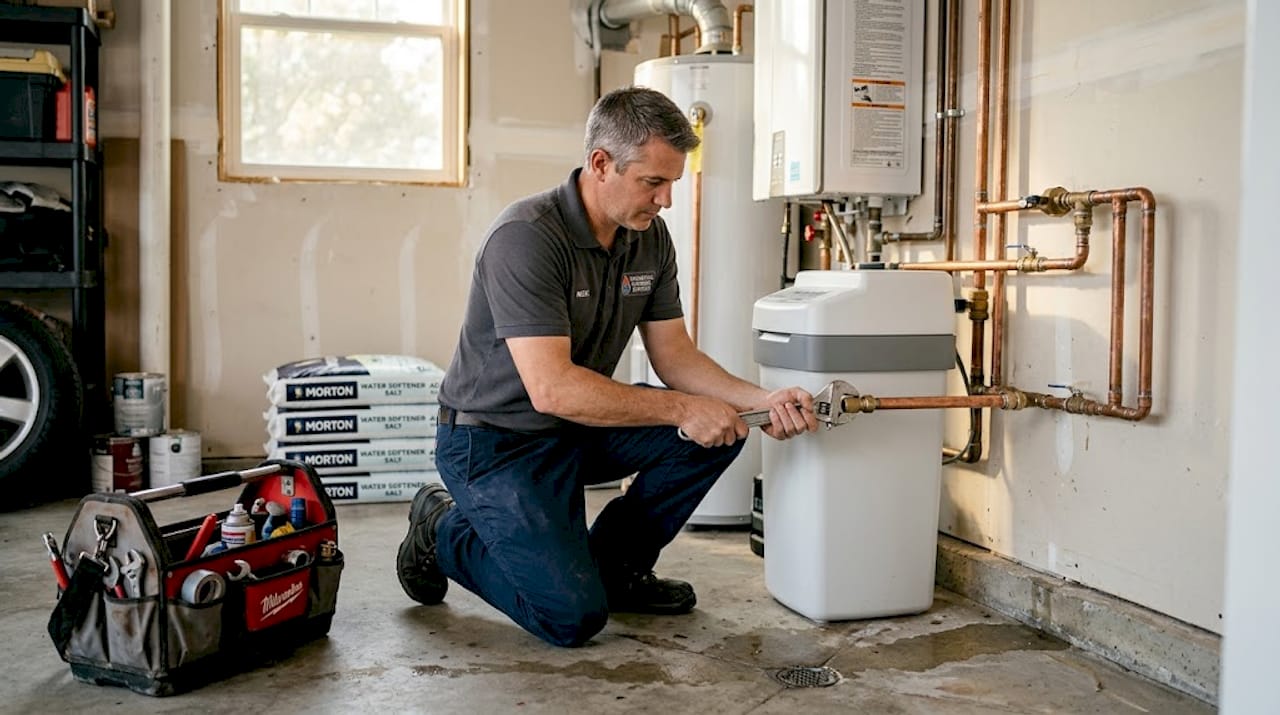
- What professional water softener service includes: Installation to ongoing maintenance
- How to choose the right water softener service company in San Antonio
- Why one-size-fits-all water softener solutions fail in San Antonio
- Get expert water softener installation and service in San Antonio today
- Frequently asked questions
Key Takeaways
| Point | Details |
|---|---|
| San Antonio water is very hard | Homeowners face over 12 grains per gallon, leading to scale and plumbing issues. |
| Match softener type to needs | Salt-based systems are best for existing scale while salt-free work for prevention. |
| Professional service matters | Proper installation and maintenance maximize system lifespan and home benefits. |
| Check provider credentials | Choose experienced, local companies with strong reviews and proper licensing. |
Understanding hard water in San Antonio: What makes it a problem?
Before exploring service options, it’s important to understand exactly why San Antonio’s water presents such a challenge.
Hard water is water that contains elevated levels of dissolved minerals, primarily calcium and magnesium. These minerals are measured in two ways: parts per million (ppm) and grains per gallon (gpg). The U.S. Geological Survey classifies water above 180 ppm as “very hard.” San Antonio’s water sits at around 218 ppm and 12.7 gpg, which places it well above that threshold.
To put that in perspective, here’s how San Antonio compares to other cities:
| City | Hardness (ppm) | Hardness (gpg) | Classification |
|---|---|---|---|
| San Antonio, TX | 218 | 12.7 | Very Hard |
| Dallas, TX | 121 | 7.1 | Hard |
| Denver, CO | 68 | 4.0 | Moderately Hard |
| Seattle, WA | 25 | 1.5 | Soft |
| U.S. Average | ~100 | ~5.8 | Moderately Hard |
San Antonio’s hardness level is more than double the national average. That gap matters enormously when you’re choosing a water softener and planning a maintenance schedule.
“Very hard water like San Antonio’s accelerates scale buildup inside pipes and appliances at a rate that soft-water cities simply don’t experience. What takes years elsewhere can happen in months here.”
The consequences show up everywhere in your home. Here’s what very hard water does on a daily basis:
- Scale buildup inside pipes: Calcium deposits narrow your water lines over time, reducing water pressure and eventually causing blockages.
- Appliance damage: Water heaters, dishwashers, and washing machines accumulate scale that forces them to work harder and fail sooner. A water heater in a hard-water home can lose up to 30% of its efficiency from scale alone.
- Soap scum and spotting: Hard water reacts poorly with soap, leaving a filmy residue on dishes, shower walls, and fixtures.
- Skin and hair effects: The minerals strip natural oils from your skin and hair, leaving both feeling dry and dull after washing.
- Higher utility bills: When appliances run inefficiently because of scale, you pay more in energy costs every month.
These aren’t minor annoyances. Over years, very hard water is money literally going down the drain.
Types of water softeners for San Antonio homes: Options and effectiveness
Now that you know why San Antonio homes suffer, let’s look at the solutions available for tackling hard water.
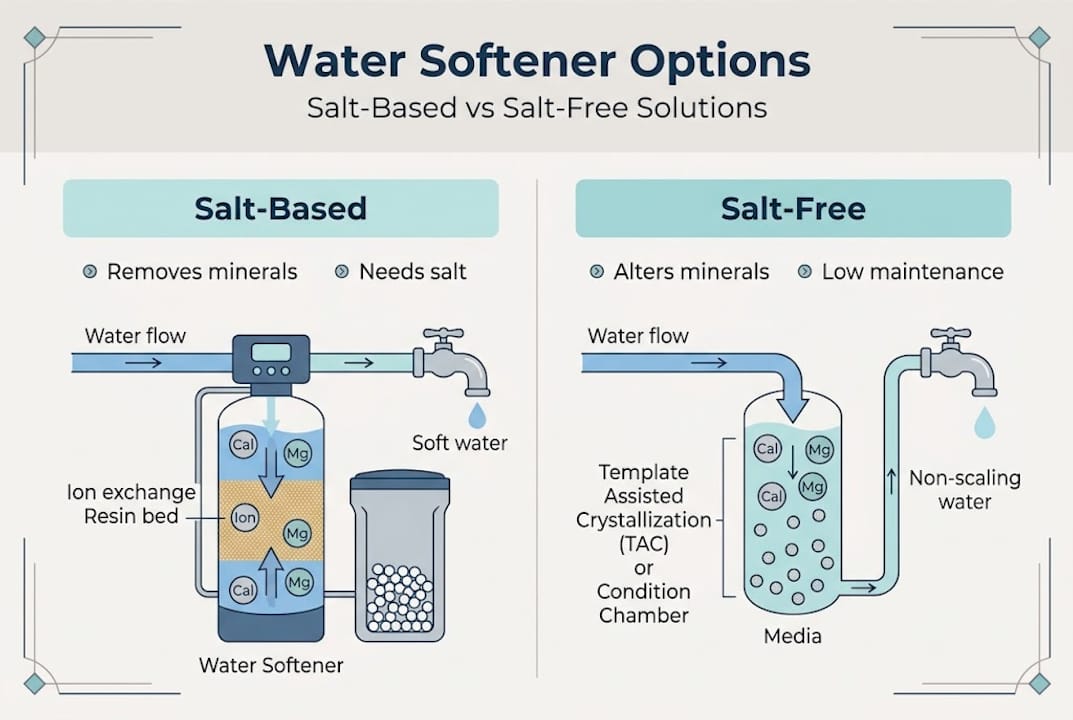
The two primary categories are salt-based ion exchange softeners and salt-free conditioners. Understanding the difference is critical before you invest.
| Feature | Salt-Based Softener | Salt-Free Conditioner |
|---|---|---|
| How it works | Replaces calcium/magnesium with sodium ions | Alters mineral structure to prevent adhesion |
| Removes existing scale | Yes | No |
| Prevents new scale | Yes | Yes |
| Maintenance required | Salt refills, resin cleaning | Minimal |
| Ideal water hardness | Any, especially very hard | Mild to moderate hardness |
| Best for San Antonio | Yes | Limited effectiveness |
Salt-based systems pull calcium and magnesium ions out of the water entirely, replacing them with sodium through a process called ion exchange. The result is genuinely soft water that won’t form scale, won’t leave soap scum, and won’t damage your appliances. For a city with water hardness at 12.7 gpg, this is the most reliable technology available.
Salt-free conditioners, on the other hand, don’t actually remove hardness minerals. They change the minerals’ physical structure so they’re less likely to stick to surfaces. Salt-free systems are often chosen for low-maintenance or health reasons, but they’re commonly positioned as less effective at full hardness removal, especially in extreme cases like San Antonio’s water supply. They won’t clear out existing scale buildup either, which is a serious limitation if your pipes have been accumulating deposits for years.
Pro Tip: If you already have visible scale on your fixtures and appliances, a salt-based system is your best starting point. It will address both current buildup and prevent future deposits. A salt-free unit alone won’t get you there.
When you’re reviewing water softener systems for your home, consider these factors:
- Household size: A larger family uses more water, requiring a higher-capacity system.
- Existing plumbing condition: Older pipes with significant scale may need a staged approach.
- Water usage habits: High daily usage demands a system with faster regeneration cycles.
- Budget for ongoing maintenance: Salt-based systems require regular salt purchases and periodic servicing.
The right installation options depend on your specific home setup, not just a general recommendation from a product brochure.
What professional water softener service includes: Installation to ongoing maintenance
Let’s look at what happens when you call a water softener professional in San Antonio.
A quality service call is not just about dropping off equipment. It’s a structured process that starts with your home’s specific conditions and ends with a system calibrated to perform reliably for years. Here’s what that process looks like:
- Water quality evaluation: A technician tests your water hardness, pH, and any additional contaminants. San Antonio’s very hard water classification means the baseline is already high, but individual homes can vary.
- System sizing: This step is critical. An undersized softener won’t keep up with demand, while an oversized one wastes salt and water during unnecessary regeneration cycles. Sizing is based on your household’s daily water usage multiplied by the local hardness level.
- Location assessment: The technician identifies the best entry point for the softener, typically near the main water line, before water reaches your water heater and fixtures.
- Installation: This includes connecting the unit to your plumbing, setting up the brine tank, configuring the control valve, and running a bypass test to confirm everything works correctly.
- System programming: The regeneration schedule is programmed based on your household’s usage patterns, not a generic factory default.
- Homeowner walkthrough: A good technician explains how to monitor salt levels, what warning signs to watch for, and when to schedule the next service visit.
“Correct sizing is the single most overlooked step in DIY water softener installations. A system that’s too small for San Antonio’s hardness will exhaust its resin before regeneration kicks in, leaving you with hard water again within days.”
Professional installation matters because the consequences of getting it wrong are expensive. Resin beds that aren’t sized properly wear out faster. Brine tanks that aren’t set up correctly can cause salt bridging, where a hard crust forms above the water line and prevents the system from regenerating at all.
Ongoing maintenance is just as important as the initial setup. Here’s what a solid maintenance plan covers:
- Salt refills: Depending on your household size and water usage, you’ll need to add salt every four to eight weeks. Using the correct salt type (pellet vs. crystal vs. block) matters for your specific system.
- Resin bed cleaning: Over time, iron and other minerals can foul the resin, reducing its ability to soften water. An annual resin cleaner treatment keeps performance consistent.
- Annual professional checkup: A technician inspects the control valve, checks the brine draw, tests the output water hardness, and cleans internal components.
- Quick repairs: Seals, O-rings, and control valves wear out. Catching small issues early prevents full system failures.
Pro Tip: Check your system’s lifespan and maintenance schedule with your installer. A well-maintained salt-based softener in San Antonio should last 15 to 20 years. Skipping annual service can cut that lifespan nearly in half.
How to choose the right water softener service company in San Antonio
After learning about service steps, here’s how to evaluate and hire the best local help.
Not every plumbing company has genuine experience with San Antonio’s extreme water conditions. A company that installs softeners in a city with moderate hardness operates very differently from one that’s been sizing systems for 218 ppm water for years. The difference shows up in how they size equipment, which products they recommend, and how they set up regeneration schedules.
Here’s what to look for when evaluating a service provider:
- State plumbing license: In Texas, any company working on your plumbing must hold a valid license. Ask for it upfront.
- Insurance coverage: General liability and workers’ compensation protect you if something goes wrong during installation.
- Local reviews: Look for patterns in reviews, not just star ratings. Consistent mentions of correct sizing, clean installations, and responsive follow-up are strong signals.
- Water testing capability: A reputable company tests your water before recommending a system, not after.
- Transparent pricing: You should receive a written quote that itemizes equipment, labor, and any permit fees before work begins.
- Maintenance plans: Companies that offer ongoing service agreements are invested in your system’s long-term performance.
Ask these questions before signing anything:
- How long have you been servicing water softeners specifically in San Antonio?
- Do you size systems based on local water hardness, or do you use a standard formula?
- What happens if the system underperforms after installation?
- Do you offer emergency service if the softener fails?
Avoid companies that offer unusually low quotes without a site visit or water test. Vague contracts that don’t specify the equipment model, warranty terms, or service timeline are a warning sign. The homeowner guide we’ve put together covers these selection criteria in more detail if you want to go deeper before making a decision.
Pro Tip: Ask specifically whether the company has experience with San Antonio Water System (SAWS) supply characteristics. Local knowledge about seasonal hardness variations and municipal treatment changes can make a real difference in how your system is configured.
Why one-size-fits-all water softener solutions fail in San Antonio
Here’s the critical insight most homeowners miss after choosing a company.
We’ve seen it repeatedly. A homeowner buys a nationally marketed water softener kit, follows the instructions, installs it, and within a few months notices their water still feels hard. The showerhead is still clogging. The dishwasher still leaves spots. They assume water softeners just don’t work that well.
The real problem is almost always the same: the system was sized for average U.S. water conditions, not for San Antonio’s extreme hardness. A softener rated for 10 gpg will be overwhelmed by water coming in at 12.7 gpg. It runs out of softening capacity before it regenerates, and you end up with partially treated water.
Generic advice from national retailers compounds the problem. They recommend systems based on household size alone, ignoring local water chemistry entirely. That approach works fine in Seattle. It fails in San Antonio.
Salt-free systems marketed as low-maintenance alternatives are particularly prone to this mismatch. They’re often promoted with broad claims, but their effectiveness is genuinely limited at the hardness levels San Antonio homeowners face. We’re not saying they have no value. For a vacation home with light usage and moderate hardness, they can be a reasonable choice. But for a primary residence in San Antonio, relying on a salt-free unit as your only treatment is a recipe for continued frustration and ongoing pipe damage.
Local expertise changes everything. A technician who has worked specifically in San Antonio understands that the water hardness here demands a higher-capacity resin tank, more frequent regeneration cycles, and a brine concentration calibrated for very hard water. That knowledge doesn’t come from a product manual. It comes from years of hands-on experience in this city.
The detailed installation guide we’ve developed reflects exactly this kind of local knowledge. It’s built around San Antonio’s actual water conditions, not a national average.
Get expert water softener installation and service in San Antonio today
If you’ve been putting up with hard water, spotty dishes, dry skin, and scale-damaged appliances, you already know the problem is real. What you need now is a solution that’s built for San Antonio’s specific conditions, installed correctly the first time, and backed by ongoing service you can count on.
At Stultz Plumbing, our water softener installation experts size every system based on your home’s actual water hardness and usage, not a generic formula. We test your water, recommend the right equipment, and install it with the precision your plumbing deserves. Whether you’re starting fresh or replacing an underperforming system, we’re ready to help. Get a free quote and take the first step toward water that actually works for your home.
Frequently asked questions
How hard is the water in San Antonio, TX?
San Antonio water averages about 218 ppm or 12.7 grains per gallon, which is classified as very hard and well above the national average.
Do salt-free water softeners work for extreme hardness?
Salt-free units are less effective at full hardness removal and won’t clear existing scale buildup, making them a limited option for San Antonio’s very hard water.
What should I look for in a water softener service provider?
Choose a licensed, insured, and highly rated local company with proven experience sizing systems for San Antonio’s 12.7 gpg hardness and a track record of transparent pricing.
How often does a water softener need maintenance in San Antonio?
With very hard water at 12.7 gpg, plan on annual professional checkups and salt refills every four to eight weeks to keep your system performing at full capacity.
Recommended
- Water Softener Installation in San Antonio | Stultz Plumbing
- Get Water Softener Installation In San Antonio With Free Quote
- Water Softener Systems San Antonio | Stultz Plumbing
- Water Softener Installation San Antonio | Stultz Plumbing
Jean runs growth strategy at AimSetWin, a performance marketing agency specializing in local service businesses across Texas. he's helped plumbers, HVAC companies, pest control operators, and home service brands build predictable revenue systems using data-driven advertising and conversion optimization.