

Learn how professional drain cleaning works for San Antonio homes, why hard water causes fast clogs, and how hydro jetting keeps your pipes clear and protected.
TL;DR:
- San Antonio’s hard water causes mineral scale buildup, leading to frequent drain clogs.
- Hydro jetting and CCTV inspections are the most effective professional methods to clean mineral deposits.
- Regular drain maintenance every 12 to 24 months prevents costly backups and extends pipe life.
San Antonio’s water is notoriously hard, registering between 15 and 20 grains per gallon, and that means your drains face a challenge most homeowners don’t see coming. Mineral scale quietly lines your pipes month after month, narrowing the passage until even a small amount of grease or hair causes a stubborn clog. Most people reach for a bottle of chemical drain cleaner or a basic snake and assume the problem is solved. It rarely is. Understanding how professional drain cleaning actually works gives you the knowledge to protect your plumbing system and avoid the costly emergencies that come from waiting too long.
Table of Contents
- Why San Antonio drains clog so quickly
- Methods professionals use to clean drains
- What happens during a professional drain cleaning
- Maintenance tips to keep drains clear
- What most homeowners miss about drain cleaning
- Get expert drain cleaning in San Antonio
- Frequently asked questions
Key Takeaways
| Point | Details |
|---|---|
| San Antonio clogs explained | Hard water and debris cause frequent and challenging drain clogs in local homes. |
| Hydro jetting is best | Professional hydro jetting cleans drains more thoroughly than snaking, preventing rapid recurrence. |
| Maintenance prevents emergencies | Routine cleaning and inspection every 12-24 months greatly reduce the risk of costly plumbing emergencies. |
| Expert help matters | Hiring pros with CCTV and hydro jetting ensures safe, effective, and lasting drain cleaning. |
Why San Antonio drains clog so quickly
Now that we’ve set the stage, let’s dig into why drains in San Antonio develop stubborn clogs in the first place. The short answer is chemistry. San Antonio’s water supply is rich in calcium and magnesium, the minerals that define hard water. As water flows through your pipes every day, it leaves a thin film of mineral residue behind. Over weeks and months, that residue hardens into scale, and the internal diameter of your pipes shrinks bit by bit.
This is why San Antonio plumbing issues are so persistent. The problem isn’t just one bad clog. It’s a cycle. Scale narrows the pipe, grease from cooking sticks to the rough mineral surface, hair and soap scum layer on top, and the clog grows. Standard store-bought solutions cut through the soft debris but leave the mineral scale completely untouched. That’s why the same drain clogs again three weeks later.
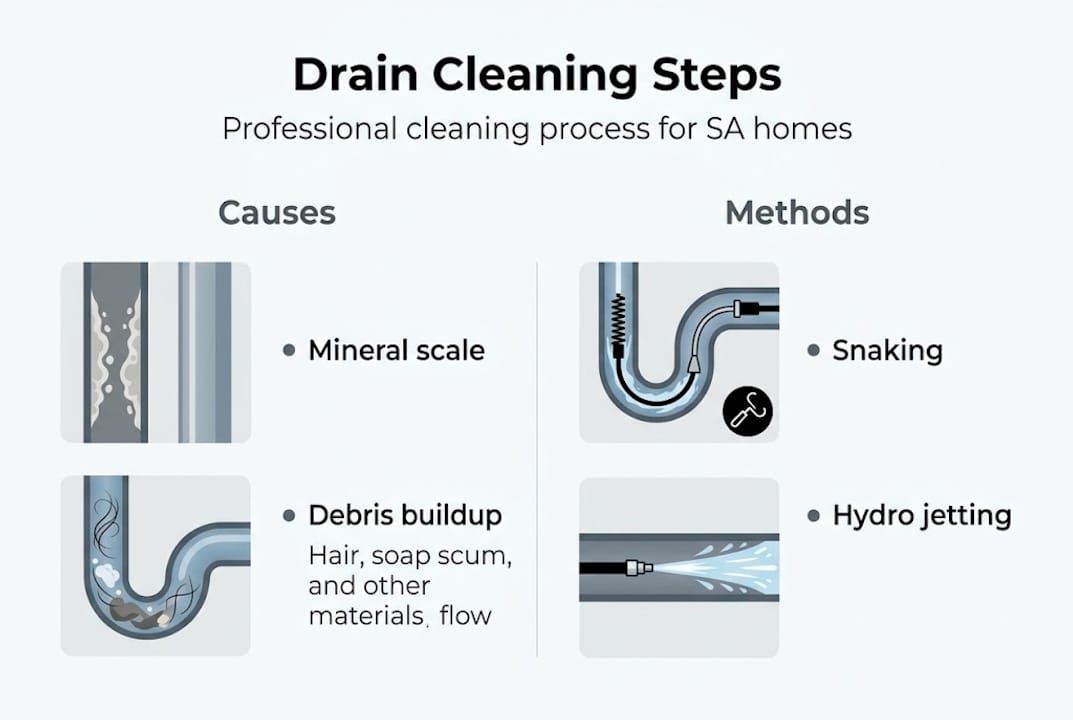
Common causes of drain clogs in San Antonio homes:
- Mineral scale from hard water buildup (15 to 20 gpg), which differs from what most other cities deal with
- Grease and cooking oil that solidifies on pipe walls
- Soap scum and hair combining with mineral deposits
- Tree root intrusion in older neighborhood sewer lines
- Slow drainage from partial clogs that go unaddressed
| Cause | How it starts | Why it returns |
|---|---|---|
| Mineral scale | Hard water deposits on pipe walls | Not removed by chemical cleaners |
| Grease buildup | Daily cooking and dish washing | Adheres to existing scale |
| Hair and soap scum | Normal bathroom use | Collects on rough pipe surfaces |
| Root intrusion | Roots seek moisture in sewer lines | Grows back without pipe repair |
“San Antonio’s water hardness is a recipe for recurring clogs that won’t stop until the scale itself is addressed.”
Pro Tip: Installing a water softener is one of the most effective long-term moves you can make to slow mineral buildup in your pipes and extend the life of your entire plumbing system.
Preventing buildup is far easier and less expensive than dealing with a full blockage or a backed-up sewer line. Being proactive is how San Antonio homeowners protect their investment.
Methods professionals use to clean drains
Understanding what causes clogs helps explain why plumbers choose specific cleaning methods. Not every clog calls for the same tool, and that distinction matters a lot in a city with water as hard as San Antonio’s.
The two main professional methods are:
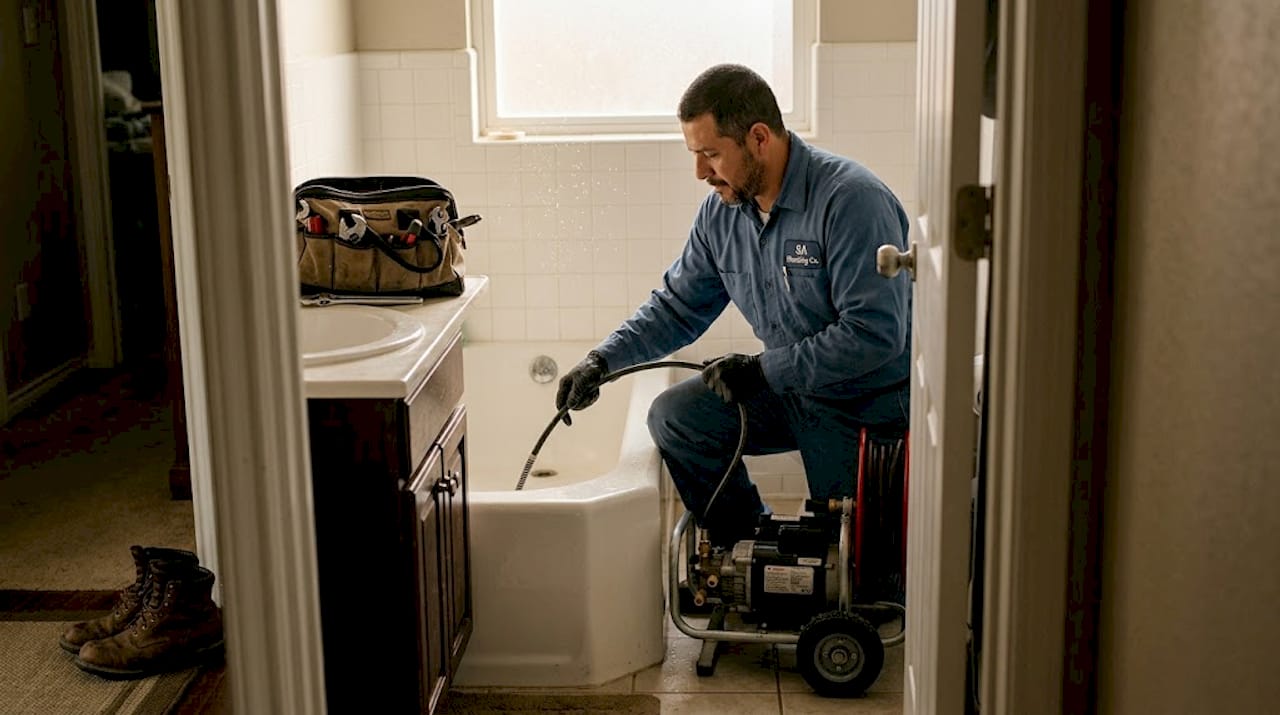
- Drain snaking: A rotating metal cable is fed into the pipe to physically break apart or retrieve a clog. It works well for soft, localized blockages like a ball of hair near a drain opening. However, snaking has a significant limitation. It punches a hole through the clog without cleaning the pipe walls. Mineral scale and grease residue stay in place, meaning the clog reforms quickly.
- Hydro jetting: High-pressure water, typically between 3,000 and 4,000 PSI, is blasted through the pipe using a specialized nozzle. This scours the pipe walls clean, removing mineral scale, grease, and debris entirely. The hydro jetting process is far more thorough than snaking and is the preferred method for hard water regions.
- CCTV drain inspection: A small waterproof camera is fed into the pipe to provide a live video feed of the interior. This allows the plumber to pinpoint the exact location and type of blockage before any cleaning begins, eliminating guesswork.
| Method | Best for | Removes scale | Prevents recurrence |
|---|---|---|---|
| Snaking | Soft, localized clogs | No | Rarely |
| Hydro jetting | Mineral/grease buildup | Yes | Often |
| CCTV inspection | Diagnosis and verification | N/A | Supports it |
According to our guide to drain cleaning, hydro jetting removes mineral scale far more effectively than snaking, which leaves residue behind and leads to quick recurrence. San Antonio plumbers rely on hydro jetting precisely because the city’s water hardness demands a method that cleans the pipe, not just clears it.
Pro Tip: Always ask your plumber to run a CCTV inspection before any cleaning. Knowing what’s inside the pipe prevents wasted effort and ensures the right method is used from the start.
What happens during a professional drain cleaning
With the methods understood, homeowners need to know what happens step-by-step during a cleaning service. Knowing the process removes the mystery and helps you evaluate whether a plumber is doing the job right.
A professional drain cleaning appointment typically follows these steps:
- Initial consultation and visual check: The plumber asks about symptoms, how long the issue has been present, and which drains are affected. This narrows down the probable cause before any equipment is deployed.
- CCTV camera inspection: A camera is inserted into the drain line. The plumber reviews the footage to identify the type, location, and severity of the blockage. This step is non-negotiable for any serious cleaning job.
- Method selection: Based on the inspection results, the plumber selects the appropriate tool. Soft clogs near the surface may be snaked. Mineral and grease buildup deeper in the line calls for hydro jetting.
- Cleaning: Hydro jetting is commonly used for the stubborn clogs typical in San Antonio homes. The high-pressure water nozzle is worked through the line, stripping scale and flushing all debris downstream and out.
- Post-cleaning verification: The camera is run through the pipe a second time to confirm the line is fully clear. No assumptions, no guesswork.
- Final flow test: Water is run through the system at full volume to verify proper drainage speed and confirm no secondary blockages remain.
As part of regular drain cleaning service, this process catches problems before they become emergencies. Scheduling drain cleaning benefits your entire system, not just the one clogged drain.
Important: Experts recommend scheduling professional drain cleaning every 12 to 24 months in hard water areas like San Antonio to avoid emergency backups and costly pipe damage.
Skipping this routine maintenance is how a slow drain becomes a sewage backup. The process is straightforward, and the peace of mind it delivers is worth every dollar.
Maintenance tips to keep drains clear
Once you’ve had your drains professionally cleaned, here’s how to keep them clear between visits. Regular habits make a real difference, especially in a city where hard water works against you every single day.
Practical steps to slow drain buildup:
- Run hot water down kitchen drains for 30 seconds after washing dishes to help flush grease before it cools and hardens
- Use a mesh drain screen in bathroom sinks and showers to catch hair and soap scum before they enter the pipe
- Never pour cooking oil or grease directly down a drain, not even with hot water running
- Flush drains monthly with a mix of baking soda and white vinegar to break up soft deposits
- Watch for early warning signs: slow draining, gurgling sounds, or foul odors coming from drains
The benefits of drain cleaning go beyond just clearing a clog. A clean drain system reduces stress on your pipes, lowers the risk of leaks, and extends the life of your plumbing fixtures. These are not small savings.
Investing in water softener systems is a smart move for any San Antonio homeowner. Softened water dramatically reduces the rate of mineral scale buildup in pipes, which means your professionally cleaned drains stay cleaner for longer between service visits.
Maintenance every 12 to 24 months with hydro jetting and CCTV inspection is critical in hard water regions to prevent emergencies. San Antonio’s conditions make this schedule essential, not optional.
Pro Tip: Mark your calendar now. Set a recurring reminder every 18 months for a professional drain inspection. It’s the single most effective habit you can build to protect your home’s plumbing.
What most homeowners miss about drain cleaning
Here is the uncomfortable truth we see again and again: most homeowners wait until a drain backs up completely before calling a plumber. By then, the damage is already done. The mineral scale has been building for years, grease has hardened into a near-solid mass, and what could have been a routine cleaning turns into an emergency service call with a much larger bill.
San Antonio’s hard water makes this city fundamentally different from most others. A one-size-fits-all approach to drain maintenance simply does not work here. Snaking, the method most people associate with drain cleaning, is almost always insufficient in this region. Hydro jetting paired with CCTV inspection is the proven method to avoid recurring clogs and expensive repairs.
We also see homeowners underestimate how quickly conditions change. A drain that ran fine six months ago can be 60% blocked today with no visible symptoms. That’s what makes the importance of regular drain cleaning so easy to overlook and so costly to ignore. Routine service is not a luxury. In San Antonio, it’s necessary maintenance.
Get expert drain cleaning in San Antonio
If your drains are slow, gurgling, or you simply haven’t had them inspected in over a year, now is the right time to act. At Stultz Plumbing, our drain unclogging services are built around the tools and methods that actually work in San Antonio’s hard water conditions. We use CCTV inspection and professional hydro jetting on every serious job so you get a real solution, not a temporary fix. Our team offers fast drain cleaning with clear upfront estimates and no surprises. And when something urgent comes up, our emergency plumbing service is ready to respond quickly. Call us today and let’s keep your plumbing running right.
Frequently asked questions
Why does my drain clog so often in San Antonio?
San Antonio’s hard water leaves mineral scale inside your pipes, which traps grease and debris and causes clogs to form much faster than in areas with softer water.
Is snaking or hydro jetting better for my home’s drains?
Hydro jetting outperforms snaking for most San Antonio homes because it removes the mineral and grease buildup that snaking leaves behind, which is what causes the clog to come back.
How often should drains be professionally cleaned?
Experts recommend cleaning every 12 to 24 months in San Antonio to stay ahead of mineral buildup and prevent costly emergency repairs.
What signs mean I need professional drain cleaning?
Slow draining water, recurring clogs after DIY fixes, gurgling sounds from your pipes, and persistent foul odors are all clear signals that it’s time to call a professional.
Will drain cleaning damage my pipes?
Professional hydro jetting is safe for most residential pipes when performed by trained plumbers using properly calibrated equipment and a prior camera inspection to assess pipe condition.
Recommended
- Drain Cleaning Services In San Antonio | Get Estimate Today
- Top drain cleaning benefits for San Antonio homes
- What is drain cleaning? A homeowner’s guide to clear pipes
- Why Drain Cleaning Matters: Protect Your San Antonio Home
- Drain Surveys London | CCTV Drainage Inspections & Reports – Pest Control 24 London
Jean runs growth strategy at AimSetWin, a performance marketing agency specializing in local service businesses across Texas. he's helped plumbers, HVAC companies, pest control operators, and home service brands build predictable revenue systems using data-driven advertising and conversion optimization.


