

Pool heater repair cost covers types, common fixes, labor rates, and budget tips. Get transparent prices for San Antonio pool repairs with expert insights.
Every San Antonio homeowner wants to enjoy a warm, comfortable pool no matter the season, but pool heaters are not the worry-free devices many believe them to be. The real risk comes from skipping regular care, as neglected electrical components and poor grounding may lead to expensive repairs or even safety hazards. Understanding these common misconceptions about pool heater repairs will help you avoid costly emergencies and keep your family swimming happily all year long.
Table of Contents
- Pool Heater Repairs And Common Misconceptions
- Types Of Pool Heaters And Breakdown Costs
- What Drives Pool Heater Repair Prices
- Typical Repair Procedures And Labor Charges
- Saving Money And Avoiding Costly Mistakes
Key Takeaways
| Point | Details |
|---|---|
| Regular Maintenance is Crucial | Pool heaters require annual inspections to avoid costly breakdowns and ensure safety; neglect can lead to significant repair costs. |
| DIY Repairs Can Be Dangerous | Attempting home repairs on pool heaters can create safety hazards; always hire licensed professionals for electrical issues. |
| Preventive Measures Save Money | Implementing simple strategies such as using pool covers and maintaining water chemistry can significantly reduce heating costs and prolong the heater’s lifespan. |
| Understanding Heater Types is Important | Knowing the type of heater you own helps in budgeting for maintenance and anticipating repair costs, as different systems have varying complexities and expenses. |
Pool heater repairs and common misconceptions
Most San Antonio pool owners think their heater is basically maintenance-free after installation. That’s one of the biggest mistakes you can make.
Here’s the truth: pool heaters need regular upkeep, just like your car or air conditioner. Aging electrical components, corroded connections, and improper grounding can create serious problems over time. Many homeowners don’t realize this until something breaks down in the middle of summer.
Myth #1: Set It and Forget It
This misconception costs San Antonio homeowners thousands in emergency repairs every year. Your pool heater isn’t a “set it and forget it” appliance.
Here’s what actually happens:
- Electrical connections corrode from moisture exposure
- Heating elements degrade with regular use
- Filters and pipes accumulate sediment buildup
- Wiring insulation cracks from temperature fluctuations
- Electrical components lose proper grounding over time
Periodic inspection and maintenance ensure electrical and heater safety, preventing costly repairs and potential safety hazards. Most systems need professional attention at least once per year.
Here’s a quick reference to typical pool heater issues and how professional maintenance addresses them:
| Common Issue | Impact if Unchecked | Maintenance Solution |
|---|---|---|
| Electrical corrosion | Heater failure or shock risk | Annual inspection, tighten connections |
| Sediment buildup | Reduced efficiency, breakdown | Filter cleaning, flush pipes |
| Cracked insulation | Fire hazard, electrical faults | Replace insulation during inspection |
| Poor grounding | Equipment damage, safety violation | Professional grounding check |
| Worn heating element | Slow heating, noisy operation | Element replacement by technician |
Myth #2: All Repairs Are Simple DIY Jobs
Some pool owners think they can handle repairs themselves to save money. This approach often backfires.
Pool heater repairs involve electrical systems that demand professional expertise. One mistake with wiring or grounding can create dangerous situations. Your safety isn’t worth the savings on a service call.
Electrical safety matters more than saving money here. Licensed technicians understand the codes and safety requirements that protect your family.
Myth #3: Grounding Issues Aren’t That Serious
Many homeowners underestimate how critical proper grounding is for pool systems. The grounding and bonding of electrical components in pools involves complex safety considerations that most people don’t understand.
Improper grounding creates electrical hazards that can cause:
- Electric shock to swimmers
- Equipment damage and failure
- Fire risks from faulty wiring
- Costly safety violations
Get professional inspection when you suspect grounding problems. This isn’t something to experiment with.
Myth #4: Repair Costs Are Always Outrageous
People assume pool heater repairs drain your wallet completely. Sometimes they do, but often they don’t have to.
Regular maintenance catches small problems before they become big ones. A $200 service call today beats a $2,500 replacement next month. Prevention is cheaper than emergency repairs, especially in San Antonio’s hot climate where heaters run heavily.
Regular maintenance prevents costly repairs and safety hazards that could have been avoided with basic upkeep and professional inspections.
Pro tip: Schedule annual pool heater inspections before the summer season starts in San Antonio. This lets technicians catch corrosion, grounding issues, and wear before your heater needs heavy use.
Compare annual pool heater maintenance with emergency repairs:
| Approach | Annual Cost | Expected Outcome | Risk Level |
|---|---|---|---|
| Scheduled maintenance | $200-$250 | Longer heater lifespan, fewer repairs | Low |
| Emergency repairs | $1,500-$2,500 | Short-term fix, possible recurring issues | High |
| DIY servicing | $100-$200 | Warranty void, safety risks | Very High |
| No upkeep | $0 initially | Heater breakdown, system failure | Highest |
Types of pool heaters and breakdown costs
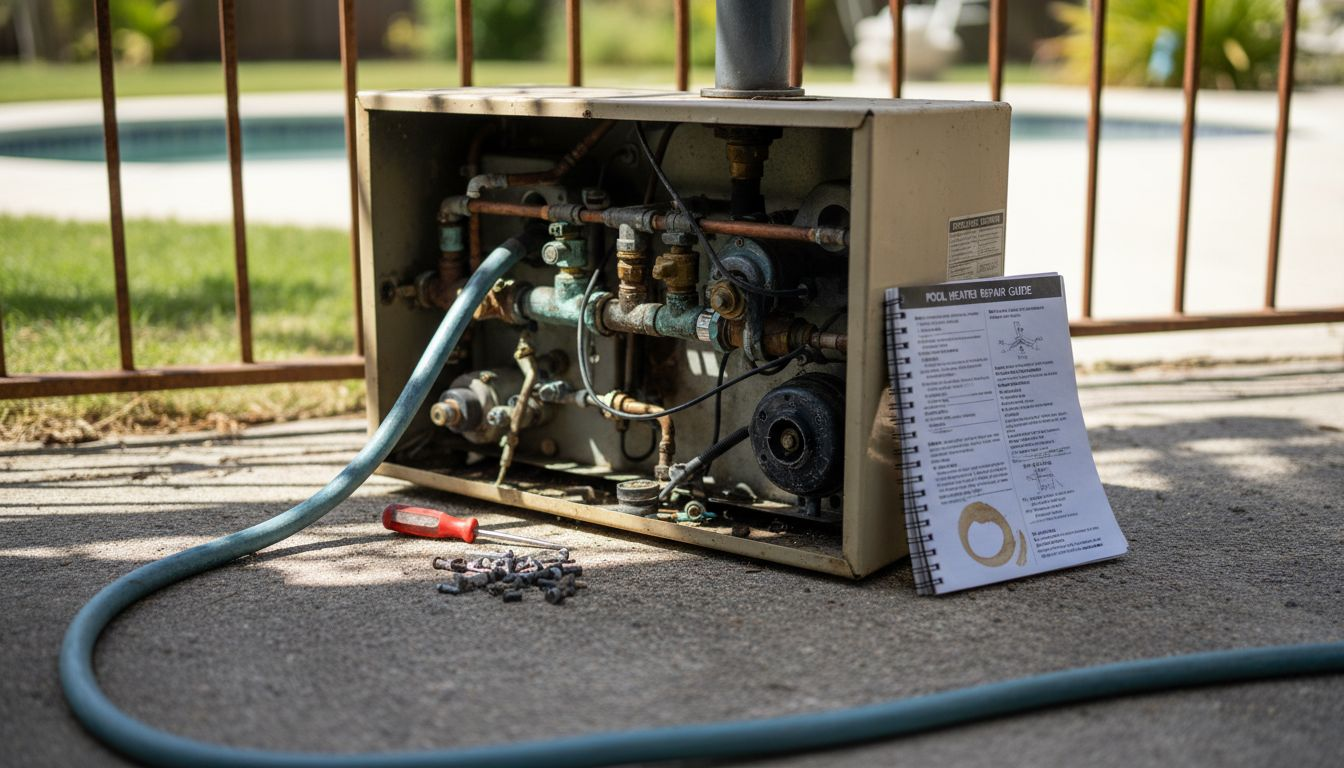
San Antonio has three main types of pool heaters, and each comes with different upfront costs and repair expenses. Knowing which type you have helps you understand what repairs might cost.
Heat Pump Heaters
Heat pumps are the most energy-efficient option for San Antonio’s warm climate. They pull heat from the air and transfer it to your pool water, using less electricity than other methods.
Here’s what you’re looking at:
- Initial cost: $1,200 to $3,000 for most residential units
- Annual operating cost: $300 to $800 depending on usage
- Repair costs: $500 to $1,500 for compressor or fan replacement
- Lifespan: 10 to 15 years with proper maintenance
Electric pool heat pumps with varying BTU outputs make them flexible for different pool sizes. The bigger your pool, the more you’ll pay upfront, but savings accumulate over time.
Gas Pool Heaters
Gas heaters heat water quickly using natural gas or propane. They work well when you want fast temperature increases, but they cost more to operate annually.
Expect these costs:
- Initial installation: $1,500 to $3,500
- Annual operating cost: $1,200 to $2,000 (much higher than heat pumps)
- Repair costs: $400 to $1,200 for common fixes
- Lifespan: 8 to 12 years
Gas heaters run hotter than heat pumps, which means more wear on internal components. This translates to more frequent repairs in San Antonio’s constant-use season.
Solar Pool Heaters
Solar heaters harness the sun’s energy through roof-mounted collectors. San Antonio’s sunny climate makes this option attractive for long-term savings.
You’ll invest more upfront but save significantly later:
- Initial installation: $3,000 to $7,000 or more
- Annual operating cost: $50 to $200 (minimal)
- Repair costs: $300 to $1,000 (usually collector or valve issues)
- Lifespan: 15 to 20 years
Solar heaters have the lowest operating costs but require more substantial upfront investment than gas or heat pump systems.
Cost Comparison Table
| Heater Type | Upfront Cost | Annual Operating Cost | Typical Repair Cost |
|---|---|---|---|
| Heat Pump | $1,200-$3,000 | $300-$800 | $500-$1,500 |
| Gas | $1,500-$3,500 | $1,200-$2,000 | $400-$1,200 |
| Solar | $3,000-$7,000 | $50-$200 | $300-$1,000 |
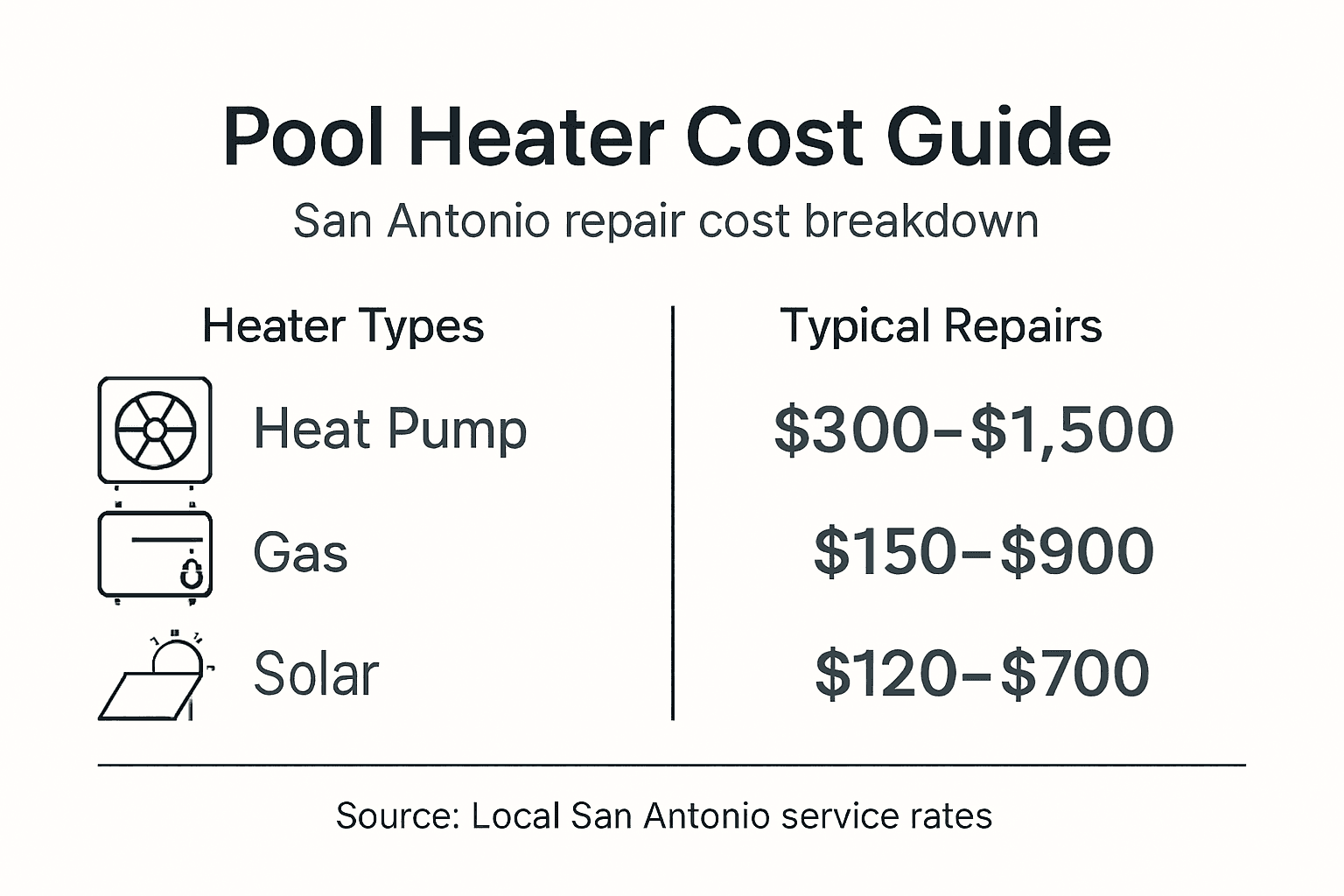
The type of heater you own directly affects repair complexity and cost. Understanding your system helps you budget for maintenance and avoid surprise expenses.
Pro tip: Identify your heater type before calling for repairs. Knowing whether you have a heat pump, gas, or solar system helps technicians quote accurately and prevents unnecessary diagnostic fees.
What drives pool heater repair prices
Pool heater repair costs in San Antonio vary wildly depending on several factors. Understanding what determines pricing helps you anticipate expenses and avoid sticker shock.
The Type of Heater You Own
Your heater type is the single biggest cost driver. Heat pumps, gas heaters, and solar systems each have different repair complexities and component costs.
Heat pumps require specialized expertise and expensive replacement parts. A compressor failure can run $800 to $1,500 alone. Gas heaters involve ignition systems and gas line repairs, which also cost significantly. Solar heaters have fewer moving parts but specialized collector repairs can be pricey.
Parts and Labor Costs
Repair expenses depend on specific equipment and parts needed, not just labor hours. Some components are simple replacements, while others require technical expertise.
Common repair scenarios include:
- Thermostat replacement: $150 to $400
- Pump motor replacement: $600 to $1,200
- Compressor replacement: $800 to $1,500
- Gas valve repair: $300 to $700
- Electrical rewiring: $200 to $600
Labor rates in San Antonio typically range from $75 to $150 per hour. A simple repair might take one hour, while complex diagnostics can take three to four hours.
Maintenance History Matters
Neglected heaters cost more to repair. Poor maintenance causes recurring failures that compound expenses over time.
A heater that hasn’t been serviced in years develops multiple problems simultaneously. Instead of fixing one issue for $400, you might need $1,500 in repairs because neglect damaged other components.
Seasonality and Demand
Timing affects your repair bill. San Antonio’s pool season peaks in summer, when demand for service technicians surges.
Emergency repairs requested in July cost more than preventive maintenance scheduled in April. Off-season service calls often get faster scheduling and better rates.
Water Chemistry and System Efficiency
Pool water chemistry and operating system efficiency influence repair frequency and costs. Poor water chemistry creates corrosion that damages heater components.
Using pool covers reduces evaporation and heat loss, lowering your heater’s workload. Less strain means fewer repairs and lower long-term expenses.
The best way to manage repair costs is preventing problems through regular maintenance and proper water chemistry management.
Location and Labor Availability
San Antonio’s service market affects pricing. Areas farther from major service centers might pay travel fees. Technician availability during peak season influences both cost and scheduling speed.
Pro tip: Schedule repairs during San Antonio’s shoulder seasons (spring or fall) when demand is lower and technicians have more availability, often resulting in faster service and better pricing.
Typical repair procedures and labor charges
Pool heater repairs follow a standard process that determines how much time and money you’ll spend. Knowing what technicians do helps you understand your invoice.
The Diagnostic Phase
Every repair starts with thorough diagnostics to identify the actual problem. Technicians don’t just guess at what’s wrong.
They perform these checks:
- Visual inspection of all components
- Electrical testing with specialized equipment
- Refrigerant level checking (for heat pumps)
- Thermostat and control system testing
- Filter and flow rate assessment
Diagnostics typically cost $75 to $150 per hour and take 1 to 2 hours. This upfront investment prevents wasting money on unnecessary repairs.
Common Repair Procedures
Technicians troubleshoot electrical controls and check refrigerant levels when addressing pool heater failures. They also replace failed components systematically.
Most common repairs include:
- Compressor replacement (heat pumps): $800 to $1,500 plus labor
- Thermostat replacement: $150 to $400
- Fan motor replacement: $400 to $900
- Heat exchanger repairs or replacement: $600 to $1,800
- Electrical connector replacement: $100 to $300
- Filter cleaning or replacement: $75 to $200
Labor Charges in San Antonio
Labor rates depend on technician certification and experience. Certified specialists charge more because they have specialized training.
Expect to pay:
- Entry-level technicians: $65 to $85 per hour
- Experienced technicians: $100 to $125 per hour
- Master technicians: $125 to $150+ per hour
Most repairs take 2 to 4 hours, meaning labor alone runs $130 to $600. Adding parts to that creates your final bill.
Preventive Maintenance Reduces Costs
Preventative maintenance reduces labor frequency and overall costs by catching problems early. Annual inspections cost $150 to $250 but prevent expensive emergency repairs.
Regular maintenance includes:
- Filter cleaning or replacement
- Refrigerant level checks
- Electrical connection inspection
- System performance testing
A $200 maintenance call today prevents a $1,500 compressor failure next summer.
Service Call Fees and Trip Charges
Many San Antonio companies charge service call fees separate from labor. This typically ranges from $50 to $100 just to send a technician to your home.
If they perform repair work, this fee is usually waived or credited toward the final bill. Emergency after-hours calls may incur additional charges.
Regular maintenance prevents expensive repairs and keeps your pool comfortable throughout San Antonio’s long swimming season.
Pro tip: Request detailed written estimates before any repair work begins, including parts costs, labor hours, and service fees. This prevents billing surprises and lets you compare pricing from multiple companies.
Saving money and avoiding costly mistakes
Most San Antonio homeowners waste hundreds of dollars annually on pool heating through simple oversights. Smart choices now prevent expensive repairs and wasted energy later.
Use Pool Covers to Reduce Heat Loss
Using pool covers is one of the most effective ways to save money on heater operating costs. A cover reduces evaporation and heat loss significantly throughout the year.
Here’s what a cover accomplishes:
- Reduces heat loss by 50 to 80 percent
- Cuts heater run time substantially
- Lowers annual energy costs by $300 to $500
- Prevents debris from damaging the heater
- Reduces water chemistry problems
Investing $200 to $400 in a quality cover pays for itself in one season through reduced heating costs.
Maintain Proper Pool Chemistry
Water chemistry directly affects heater lifespan and repair frequency. Poor chemistry creates corrosion that damages internal components.
Test your water weekly and maintain these levels:
- pH: 7.2 to 7.6
- Chlorine: 1 to 3 parts per million
- Alkalinity: 80 to 120 parts per million
- Calcium hardness: 200 to 400 parts per million
A $100 annual chemistry maintenance investment prevents $1,500 in corroded parts replacement.
Install a Programmable Thermostat
Programmable thermostats control heater operation time and temperature efficiently. You don’t need to heat your pool when nobody’s using it.
Thermostats let you:
- Set different temperatures for different times
- Reduce heating during off-peak hours
- Avoid overnight heating waste
- Save $200 to $400 annually
They cost $150 to $300 but pay for themselves quickly.
Repair Problems Promptly
Delaying repairs turns small problems into expensive ones. A leaking valve fixed for $200 today becomes a corroded system costing $2,000 tomorrow.
Act immediately when you notice:
- Strange noises from the heater
- Temperature not reaching target
- Visible leaks or corrosion
- Electrical sparks or burning smells
Emergency repairs always cost more than scheduled maintenance.
Choose the Right Heater Size
An undersized heater runs constantly and breaks down frequently. An oversized heater wastes energy. Correct sizing balances performance and efficiency.
Smart preventative measures and prompt repairs save San Antonio homeowners thousands in heating costs over a pool’s lifetime.
Avoid Common Mistakes
These costly errors happen repeatedly in San Antonio:
- Running the heater 24/7 instead of during use hours
- Ignoring warning signs until failure occurs
- Skipping annual maintenance inspections
- Using the wrong chemicals for your heater type
- Covering the heater without ventilation
Awareness prevents expensive mistakes.
Pro tip: Create a maintenance calendar marking seasonal inspections, filter cleanings, and chemistry checks. Regular upkeep prevents emergency calls and saves thousands over your pool’s lifetime.
Keep Your San Antonio Pool Heater Running Smoothly with Expert Service
Dealing with unexpected pool heater repairs and costly emergency bills can be stressful and expensive. This article highlights how a neglected heater, grounding issues, and incorrect maintenance can drain your wallet and jeopardize your safety. If you want to avoid sudden breakdowns, extend your heater’s lifespan, and maintain efficient operation, regular professional inspections and timely repairs are essential.
At Stultz Plumbing, we specialize in reliable Pool Heater Service San Antonio tailored to your specific heating system. From heat pumps to gas and solar heaters, our licensed technicians have the expertise to inspect, repair, and maintain your pool heater safely and effectively. Don’t wait for a mid-summer failure—protect your investment and keep your family safe by scheduling a thorough inspection with us today. Visit Stultz Plumbing to book your service and experience transparent pricing, fast response, and trusted workmanship that San Antonio homeowners rely on.
Frequently Asked Questions
What are the common costs associated with pool heater repairs?
Repair costs for pool heaters can vary widely based on the type of heater. For heat pumps, you may expect repair costs between $500 to $1,500, while gas heater repairs range from $400 to $1,200. Solar heater repairs typically cost between $300 to $1,000.
How often should I have my pool heater serviced?
It is recommended to have your pool heater professionally inspected and serviced at least once a year to ensure optimal performance and prevent costly repairs.
What are the signs that my pool heater needs repairs?
Signs that your pool heater may need repairs include strange noises during operation, failure to reach the desired temperature, visible leaks, and electrical sparks or burning smells.
How can I avoid expensive pool heater repairs?
To avoid costly repairs, ensure regular maintenance, maintain proper water chemistry, use a pool cover to reduce heat loss, and address any small issues immediately before they escalate into major problems.
Recommended
- Get Pool Heater Services In San Antonio Today !
- What Is Real Pool Heater Installation Cost In San Antonio?
- Solar Pool Heater Cost: Savings for San Antonio Homes
- Electric Pool Heater Installation in San Antonio: Boosting Pool Comfort
Jean runs growth strategy at AimSetWin, a performance marketing agency specializing in local service businesses across Texas. he's helped plumbers, HVAC companies, pest control operators, and home service brands build predictable revenue systems using data-driven advertising and conversion optimization.


