

Unlock the basics of plumbing with our guide on plumbing terminology explained. Make informed DIY decisions and master your home's plumbing!
TL;DR:
- Understanding plumbing terminology empowers homeowners to make informed decisions and communicate effectively with professionals. Knowing key terms like P-trap, shutoff valve, and sewer line distinguishes simple issues from urgent repairs, preventing costly mistakes. Regular maintenance of components like anode rods and pressure valves extends system lifespan and avoids emergency failures.
Plumbing terminology explained is the foundation every homeowner needs before calling a professional or tackling a DIY repair. When you understand what a P-trap does, why your PRV matters, or what a cleanout actually is, you stop guessing and start making informed decisions. This guide covers the most common plumbing vocabulary, from basic fixtures and valves to water heater components and drain systems. Whether you are dealing with a slow drain in your San Antonio home or planning a repipe, knowing the right terms puts you in control of the conversation and the outcome. Read through this guide and you will never feel lost on a service call again.
What are the most common plumbing terms every homeowner should know?
A solid plumbing vocabulary guide starts with the terms you encounter most often in your home. These are the words plumbers use every day, and understanding them helps you describe problems accurately and avoid costly misunderstandings.
Here are the core terms you need to know:
- Fixture: Any device connected to your plumbing system that uses water. Sinks, toilets, bathtubs, and showers are all fixtures. When a plumber asks which fixture is affected, they are narrowing down the problem location.
- P-trap: The curved pipe section under your sink or shower drain. It holds a small amount of water at all times to block sewer gases from entering your home. A dry P-trap causes that rotten egg smell you sometimes notice in a guest bathroom that rarely gets used. Running water for 30 seconds re-primes it.
- Shutoff valve: A valve that stops water flow to a specific fixture or to the entire house. Every toilet and sink has its own shutoff valve, usually located underneath or behind the fixture.
- Vent stack: The vertical pipe that runs up through your walls and exits through the roof. It equalizes air pressure in your drain system. When your sink gurgles after draining, a blocked vent stack is often the real culprit, not just a clog.
- Trap: The general term for any curved pipe section that holds water to seal out sewer gases. The P-trap is the most common type in residential plumbing.
- Cleanout: A capped pipe fitting that gives plumbers direct access to your drain or sewer line. It is the entry point for drain snakes and hydro jetting equipment.
Pro Tip: Locate your main shutoff valve before an emergency happens. It is typically found near where the water supply enters your home, often in a utility room, garage, or near the foundation. Knowing exactly where it is can stop a burst pipe from becoming a flooded room.
Understanding these terms also helps you with basic troubleshooting. A foul smell near a rarely used bathroom sink almost always points to a dry P-trap, not a sewer line problem. That distinction saves you a service call fee.
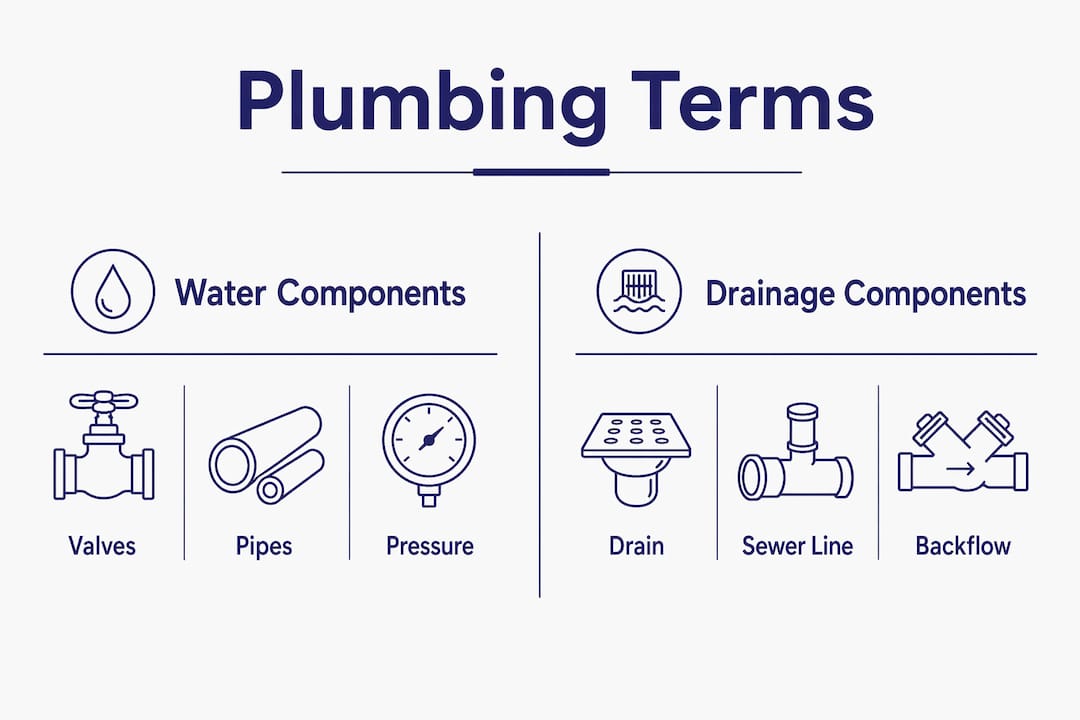
How do plumbing components like valves and pipes affect home water pressure and flow?
Water pressure is one of the most misunderstood aspects of residential plumbing, and the terminology around it matters. Standard residential water pressure is 50 to 75 PSI, controlled by a pressure reducing valve. PSI stands for pounds per square inch, and it measures the force of water moving through your pipes.
Here is a quick reference for the key pressure-related terms and components:
| Term | Definition | Normal Range or Function |
|---|---|---|
| PSI | Pounds per square inch; measures water pressure | 50 to 75 PSI for residential homes |
| PRV (Pressure Reducing Valve) | Regulates incoming water pressure to a safe level | Installed near the main water supply entry |
| Water hammer | Banging sound caused by sudden water flow stoppage | Resolved with arrestors or pressure adjustment |
| Backflow preventer | Device that stops contaminated water from flowing backward into the supply | Required near irrigation systems and hose bibs |
| Ball valve | Quarter-turn valve for fast shutoff | Used on main lines and appliance connections |
A PRV that fails can let pressure spike well above 80 PSI. That extra pressure stresses every joint, fitting, and appliance in your home. You might notice it as a faucet that sprays too hard or a toilet that fills with unusual force.
Water hammer is a sudden stop of fast-moving water that causes banging sounds and stresses pipe joints. It is more than just an annoying noise. Repeated water hammer can loosen fittings and eventually cause leaks. The fix is usually a water hammer arrestor, a small device installed near the offending valve, or a pressure adjustment at the PRV.
Backflow is the reverse flow of water from your home’s plumbing back into the municipal supply. It can carry contaminants with it. A backflow preventer is a one-way valve that stops this from happening. San Antonio homes with irrigation systems are required to have one installed on the outdoor water supply line.
Pro Tip: If you hear banging pipes when you shut off a faucet quickly, that is water hammer in action. Do not ignore it. A plumber can install a hammer arrestor for a relatively low cost before the repeated stress causes a joint to fail.
What is the difference between a drain, sewer line, and related plumbing terms?
This is one of the most important distinctions in common plumbing terminology, and getting it right tells you how urgent your problem actually is. A drain and a sewer line are not the same thing, and the difference determines whether you need a simple fix or a professional service call.
Follow these steps to identify what type of problem you are dealing with:
- Check one fixture first. If only one sink, toilet, or tub is draining slowly or backing up, the problem is almost certainly a localized drain clog. This is the most common and least serious scenario.
- Check multiple fixtures. If two or more fixtures back up at the same time, especially if flushing a toilet causes water to rise in the bathtub, you are likely dealing with a sewer line issue. Sewer line problems affect multiple fixtures simultaneously and require professional attention.
- Listen for gurgling. Gurgling sounds from a drain after another fixture is used often point to a vent stack blockage, not a clog. The vent stack equalizes pressure, and when it is blocked, air gets pushed through the water in your traps.
- Look for the cleanout. Your home has one or more cleanout access points, usually a white or black capped pipe near the foundation or in the yard. This is where a plumber inserts a drain snake or hydro jetting hose to clear a blockage.
- Assess the severity. A clog is a partial or full obstruction within a single drain line. A blockage in the main sewer line is a more serious condition that can cause sewage to back up into your home if left unaddressed.
Hydro jetting uses high-pressure water to clear tough buildup better than traditional snaking. It is the preferred method for recurring clogs caused by grease, scale, or root intrusion in sewer lines. You can learn more about the full drain cleaning process for San Antonio homes to understand when each method applies.
The key takeaway here is simple. One slow drain is a minor inconvenience. Multiple drains backing up at once is a plumbing emergency that needs a professional the same day.
Which plumbing terms relate to home water heating and system maintenance?
Water heater terminology is an area where most homeowners have significant gaps in their knowledge. Understanding these terms helps you maintain your system properly and recognize when something is wrong before it becomes a costly failure.
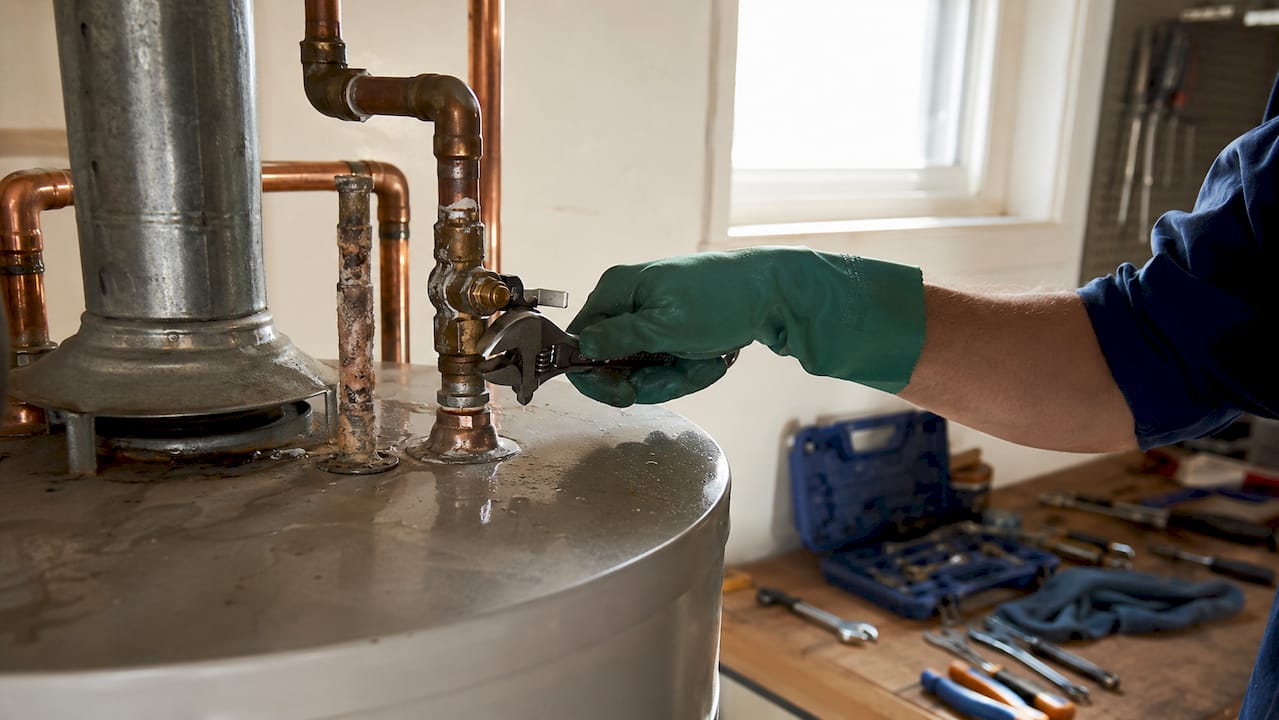
Anode rod is the most overlooked component in residential water heaters. It is a sacrificial metal rod, usually made of magnesium or aluminum, that corrodes slowly inside the tank to protect the steel walls from rust. Anode rods should be inspected every 3 to 5 years to prevent tank corrosion and extend the heater’s lifespan. Most homeowners never touch theirs, which is why so many water heaters fail prematurely.
TPR valve stands for temperature and pressure relief valve. It is a critical safety device that releases water automatically if the temperature or pressure inside the tank rises to a dangerous level. Every water heater has one, and it should be tested periodically. A faulty TPR valve is a serious safety risk.
Repiping refers to replacing all or most of the water supply pipes in a home. This is typically done when pipes are corroded, leaking frequently, or made of outdated materials like galvanized steel or polybutylene. A whole-house repipe usually takes 1 to 3 days to complete. You can review the full timeline and what to expect in Stultz Plumbing’s guide on how long repiping takes in San Antonio.
Here is a comparison of older versus modern water heater efficiency to put the terminology in context:
| Feature | Older Water Heaters | Modern High-Efficiency Units |
|---|---|---|
| Efficiency rating | Around 80% | 96 to 98% efficiency |
| Anode rod lifespan | 3 to 5 years with hard water | 5 to 7 years with water softener |
| TPR valve testing | Rarely done by homeowners | Recommended annually |
| Energy cost | Higher monthly bills | Significantly lower operating cost |
| Typical lifespan | 8 to 12 years | 12 to 20 years with proper maintenance |
San Antonio’s hard water accelerates anode rod corrosion, which is why water softener installation is a smart investment for homeowners here. Soft water reduces mineral buildup in your water heater, extends the anode rod’s life, and protects every fixture in your home. Understanding these terms gives you the ability to have a real conversation with your plumber about maintenance schedules rather than just reacting to failures.
Key takeaways
Knowing your plumbing vocabulary is the single most effective way to protect your home, communicate clearly with professionals, and avoid paying for repairs you do not need.
| Point | Details |
|---|---|
| P-trap and sewer gas | A dry P-trap causes odors; run water in unused fixtures to re-prime the seal. |
| Water pressure range | Residential PSI should stay between 50 and 75; a failing PRV can spike pressure and damage pipes. |
| Drain vs. sewer line | One slow fixture means a local clog; multiple fixtures backing up signals a sewer line problem. |
| Anode rod maintenance | Inspect every 3 to 5 years to prevent tank corrosion and extend water heater life. |
| Repiping timeline | A full house repipe typically takes 1 to 3 days and resolves chronic leak and pressure issues. |
Why knowing plumbing lingo is the smartest home maintenance move you can make
I have spent years watching homeowners describe plumbing problems in ways that make diagnosis harder than it needs to be. “The water is doing something weird” is not a description a plumber can act on quickly. “My P-trap smells and I think the vent stack might be blocked” gets you a faster, more accurate service call.
The homeowners who understand basic plumbing vocabulary make better decisions at every stage. They know when to call immediately and when to wait. They recognize that a single gurgling drain is not the same emergency as sewage backing up into the tub. That distinction alone can save hundreds of dollars in unnecessary service fees.
What I find most telling is how often anode rod neglect comes up in water heater failures. Homeowners spend thousands replacing a tank that could have lasted another decade with a simple rod inspection. The terminology gap is not just an inconvenience. It is money out of your pocket.
My honest advice is this: learn where your main shutoff valve is today, understand what your P-trap does, and schedule a water heater inspection if you cannot remember the last time one happened. These three actions, grounded in basic plumbing knowledge, prevent the majority of residential plumbing emergencies I see in San Antonio homes.
You do not need to become a plumber. You just need enough vocabulary to be an informed homeowner. That is the real value of understanding plumbing terminology.
— Jean
Get expert plumbing help from Stultz Plumbing in San Antonio
Now that you have a solid foundation in plumbing vocabulary, you are ready to handle conversations with professionals confidently. But some problems go beyond terminology and require skilled hands.

Stultz Plumbing delivers professional plumbing services across San Antonio and surrounding communities, including drain cleaning, repiping, water heater repair, and emergency response. Our team speaks plainly, prices transparently, and responds fast. Whether you have identified a PRV issue, a sewer line backup, or a water heater that needs attention, we are ready to help. We also offer same-day emergency service when urgent issues cannot wait. Call Stultz Plumbing today and put your new plumbing knowledge to work.
FAQ
What does PSI mean in plumbing?
PSI stands for pounds per square inch and measures the force of water moving through your pipes. Safe residential water pressure is 50 to 75 PSI, regulated by a pressure reducing valve.
What is a P-trap and why does it smell?
A P-trap is the curved pipe under your sink that holds water to block sewer gases from entering your home. When a fixture goes unused for weeks, the water evaporates and the gas seal breaks, causing odors. Running water for 30 seconds fixes it.
What is the difference between a drain clog and a sewer line problem?
A drain clog affects one fixture and is a localized blockage. A sewer line problem causes multiple fixtures to back up at the same time and requires professional service immediately.
How often should I inspect my water heater’s anode rod?
Anode rods should be inspected every 3 to 5 years. In San Antonio, where hard water accelerates corrosion, checking closer to the 3-year mark protects your tank and extends its lifespan significantly.
What is hydro jetting and when is it used?
Hydro jetting is a professional drain cleaning method that uses high-pressure water to clear tough buildup, grease, and root intrusion from pipes. It is more effective than snaking for recurring or severe clogs in sewer lines.
Recommended
Jean runs growth strategy at AimSetWin, a performance marketing agency specializing in local service businesses across Texas. he's helped plumbers, HVAC companies, pest control operators, and home service brands build predictable revenue systems using data-driven advertising and conversion optimization.


