

Master plumbing safety basics with essential tips for San Antonio homeowners. Learn how to prevent water damage and stay in control during emergencies.
TL;DR:
- Knowing the locations of your main and fixture shutoff valves enables quick response to plumbing emergencies, preventing extensive water damage.
- Properly shutting off and gradually restoring water pressure reduces the risk of pipe failure and water hammer, safeguarding your home.
- Advanced seasonal precautions, such as insulating pipes and verifying sump pump function, are essential to prevent cold-weather plumbing failures that can cause costly damage.
Plumbing emergencies don’t send a warning. One moment everything looks fine, and the next, water is pouring through your ceiling or pooling across your kitchen floor. Most San Antonio homeowners assume disasters like these are rare, or that only a licensed plumber needs to know what to do. That’s a costly misconception. The truth is, knowing main water shutoff valve locations and how to use fixture shutoffs to isolate leaks can prevent catastrophic water damage before help arrives. This guide gives you the essential steps to stay safe and in control when things go wrong.
Table of Contents
- Know your shutoff valves: Your first line of defense
- Shutting off and restoring water safely
- Winter plumbing safety: Sump pumps and freeze protection
- Deciding between localized and main shutoff in emergencies
- Why plumbing safety basics matter more than most homeowners realize
- Protect your home with expert San Antonio plumbing help
- Frequently asked questions
Key Takeaways
| Point | Details |
|---|---|
| Know your valves | Locate and test all home shutoff valves so you can act quickly during emergencies. |
| Shut off water safely | Use slow, deliberate steps to turn water off and back on, reducing system stress and air pockets. |
| Prepare for winter | Insulate pipes and check your sump pump to avoid freeze-related damage, even in San Antonio. |
| Act fast in emergencies | When in doubt, use your main shutoff to minimize damage and buy time for professional help. |
| Practice prevention | Regular checks and basic knowledge help prevent major plumbing disasters and save on costly repairs. |
Know your shutoff valves: Your first line of defense
With emergencies looming, your main and fixture shutoff valves are your best tools for immediate control. Let’s examine how they work and why knowing the difference matters so much.
Every home has two levels of water control: the main shutoff valve, which cuts water to the entire house, and individual fixture shutoffs, which control water only to a specific appliance or area. Understanding when to use each one is one of the most practical skills a homeowner can have. According to best practices from licensed plumbers, fixture shutoffs isolate only the leaking area, which means the rest of your home keeps running normally during a repair.
Here’s a quick comparison to make it easier:
| Shutoff type | Location | When to use | Area affected |
|---|---|---|---|
| Main shutoff valve | Near water meter, garage, or exterior wall | Widespread leak, unknown source, multiple areas | Entire home |
| Fixture shutoff | Under sinks, behind toilets, near appliances | Isolated leak at one fixture | Single fixture only |
| Street shutoff | At the curb, city controlled | Main valve failure or plumber-required access | Entire property |
In Texas homes, the main shutoff is commonly found in one of a few places: near the water meter box at the front of the property, inside a garage along the front-facing wall, in a utility closet, or on an exterior wall where the supply line enters the house. Slab foundation homes, which are extremely common in San Antonio, often have the shutoff located in a small access box near the front exterior. If you’ve never checked yours, now is the time to look.
Here’s what to look for when locating your shutoff valves:
- A gate valve (round wheel-shaped handle) or ball valve (straight lever handle) near the water meter
- Individual shutoffs under each bathroom sink, behind each toilet, and below kitchen sinks
- A shutoff behind washing machine connections and near your water heater
- Shutoffs near outdoor hose bibs in some newer homes
Quick access to the main shutoff can save thousands in damage. Every second a pipe is gushing unchecked, water is spreading into walls, subfloor, and insulation. Knowing where your valve is before an emergency means you act in seconds, not minutes.
Pro Tip: Label each shutoff valve clearly using waterproof tags or a permanent marker. Test your main shutoff and key fixture shutoffs twice a year to make sure they turn freely. Valves that sit idle for years can seize up or fail right when you need them most.
For a broader overview of what to do when things go wrong, our emergency plumbing tips page covers the most urgent steps, and we also have a detailed plumbing emergencies step-by-step guide for more complex situations.
Shutting off and restoring water safely
Knowing which valve to use makes a difference, but the shutdown and restart process itself needs careful attention to avoid creating new problems.
Most homeowners think shutting off water is as simple as turning a valve closed, and they’re right about that part. The real risk comes when the water is restored. Done incorrectly, reopening your main valve too fast can cause a pressure surge that sends air pockets racing through your pipes. These air pockets create banging sounds, called water hammer, and in worst-case scenarios, they can stress already weakened pipe joints enough to cause a new failure.
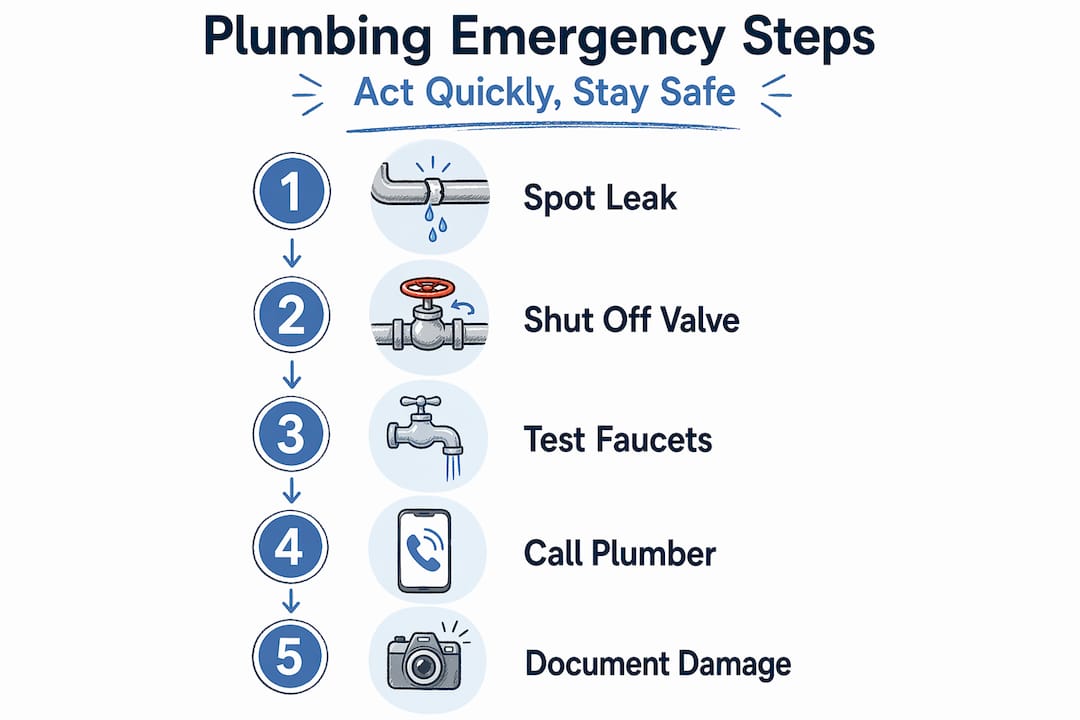
Here is the safe, step-by-step process for both shutdown and restoration:
- Identify the source. Confirm whether the leak is at a single fixture or across multiple areas before choosing which valve to use.
- Turn the main valve clockwise to close. If it’s a ball valve, rotate the lever perpendicular to the pipe. If it’s a gate valve, turn it fully clockwise until it stops.
- Relieve pressure by opening a faucet. Turn on a faucet at the lowest point in the home, such as a first-floor bathroom or outdoor spigot, to drain remaining pressure from the lines.
- Address the leak. Once the water is off, you can safely inspect or temporarily patch the source, or simply wait for a licensed plumber.
- Restore water slowly. When you’re ready to turn the water back on, reopen the main valve slowly and open faucets one at a time to flush out trapped air and allow pressure to stabilize.
- Check for leaks at the repair site. After pressure restores, visually inspect the area to confirm the issue is contained before calling the situation handled.
Pro Tip: Start with the faucet closest to the main shutoff and work your way through the house, opening each faucet one by one. Let the water run until it flows smoothly without sputtering before closing it. This method vents trapped air progressively and prevents the banging that damages pipe connections.
The most common cause of secondary water damage in home emergencies is not the initial leak itself. It’s the delayed or improper restoration of water after shutoff. Homeowners who rush to get water flowing again without following a methodical process often end up with a second problem right on top of the first. For a thorough breakdown of this process, our resource on fast home plumbing solutions walks through this in practical detail.
Winter plumbing safety: Sump pumps and freeze protection
With water control basics covered, let’s address San Antonio’s unique seasonal threats, especially as winter approaches.
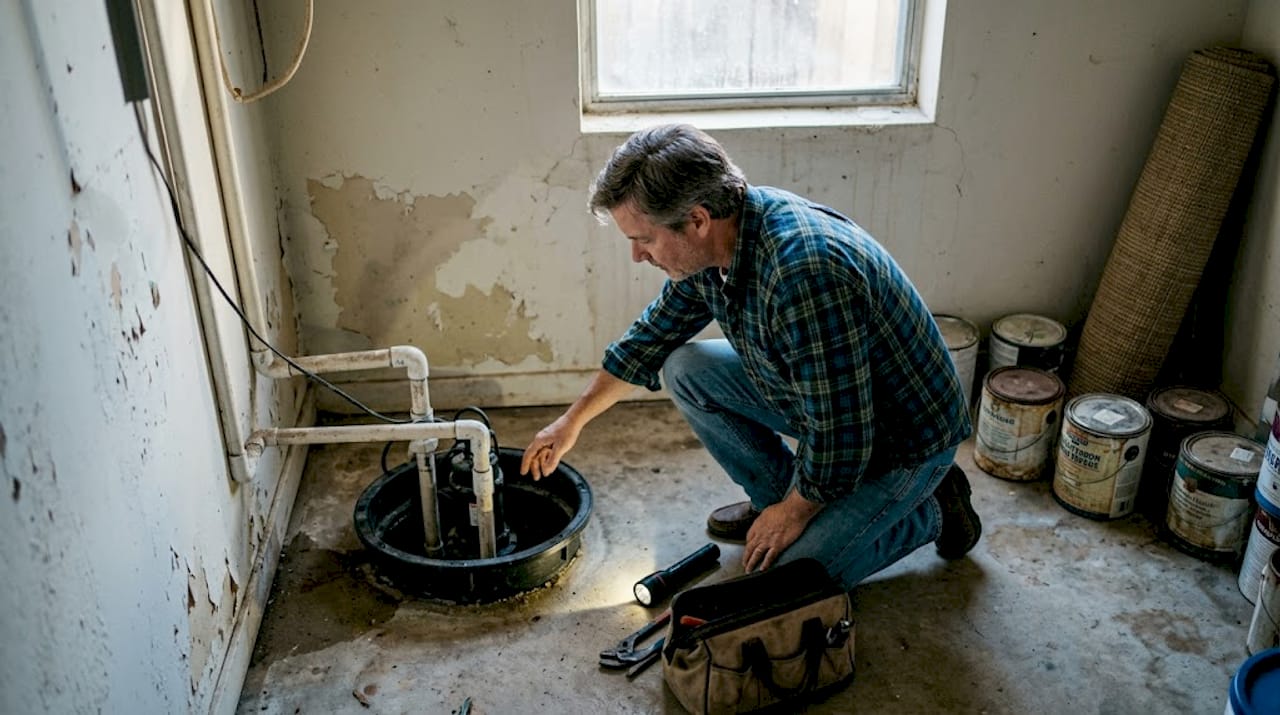
San Antonio is not a cold city by most measures, but the rare deep freeze, like the ones that hit in February 2021, can expose just how unprepared local homes are for extreme cold. Pipes in uninsulated attics, exterior walls, and garages are especially vulnerable to freezing and bursting. A burst pipe can release hundreds of gallons of water per hour into your home. That’s not a minor inconvenience. It’s a structural disaster.
Here’s a look at sump pump issues, safety checks, and quick fixes:
| Problem | Warning sign | Safety check | Quick fix |
|---|---|---|---|
| Frozen discharge line | Water not pumping out | Inspect exterior discharge pipe | Install a freeze relief valve or air gap |
| Power failure | Pump not running | Test GFCI outlet and breaker | Add a battery backup or generator |
| Float switch failure | Pit overflows | Manually lift float to test pump | Clean debris from pit and float |
| Sump pit freeze | Pump runs but no output | Check pit temperature and insulation | Insulate pit cover and surrounding area |
According to winterization best practices, sump pump safety in winter focuses on three things: keeping the discharge line from freezing, confirming power and GFCI function, and using backup power if outages are likely. San Antonio homes without basements may not have traditional sump pumps, but they may have drainage systems in low-lying areas that still need cold-weather attention.
Key actions to protect your plumbing before cold weather arrives:
- Insulate exposed pipes in attics, crawl spaces, garages, and along exterior walls using foam pipe insulation or heat tape
- Disconnect garden hoses and shut off outdoor spigots from the inside using the individual shutoff valve
- Verify GFCI outlet function for any sump pump installation to ensure the outlet trips and resets properly
- Add a backup power source such as a battery backup pump or a generator connection if your area is prone to outages during ice storms
- Open cabinet doors under sinks on exterior walls during a freeze to let warm air circulate around the pipes
Pro Tip: Install a discharge line freeze relief or air gap fitting on your sump pump’s exterior discharge line. This small device allows water to escape even if the line freezes over, preventing the pump motor from burning out. It costs very little and can save your entire pump system.
For a full seasonal readiness checklist, our winter plumbing checklist covers everything to review before cold snaps. If you have a water softener, our guide on how to protect water softener from freezing is essential reading. We also recommend reviewing the winter plumbing inspection benefits before temperatures drop.
Deciding between localized and main shutoff in emergencies
Picking the right shutoff strategy can mean the difference between a minor hassle and a major disaster. Here’s how to decide under pressure.
When a pipe starts leaking, panic is the enemy. Your instinct might be to run to the nearest valve and turn it off. That’s not always wrong, but knowing which valve to use, and why, helps you make a smarter decision when seconds count.
Here’s a side-by-side comparison:
| Factor | Fixture shutoff | Main shutoff |
|---|---|---|
| Speed to stop leak | Fast for accessible fixtures | Fastest for unknown or widespread leaks |
| Area impacted | Single fixture or appliance | Entire home loses water |
| Best use case | Toilet, sink, washing machine, water heater | Burst pipe, slab leak, leak in walls or ceilings |
| Risk if wrong valve | Leak continues if valve fails or leak spreads | Disrupts all water use, but prevents major damage |
Use this quick decision checklist when a leak occurs:
- Can you see the source? If yes and it’s at one fixture, try the fixture shutoff first.
- Is the fixture shutoff accessible? If it’s blocked, corroded, or won’t turn, go straight to the main valve.
- Is water spreading to multiple areas? If yes, don’t waste time on a fixture shutoff. Go to the main valve immediately.
- Is the leak inside a wall or ceiling? Shut off the main. You cannot isolate a hidden pipe leak with a fixture shutoff.
- Are you unsure? Default to the main shutoff. Shutting off the main supply is the correct escalation step when a leak cannot be safely localized.
Uncertainty itself is a signal. If you’re standing there unsure whether the fixture shutoff is working or whether the leak is spreading, shut off the main. You can always restore water later. You cannot undo water damage to drywall, flooring, and insulation that sat wet for an extra 10 minutes while you deliberated.
Our guides on when to call an emergency plumber and how plumbing emergencies are defined can help you assess the situation after shutoff and decide your next move.
Why plumbing safety basics matter more than most homeowners realize
Here’s a truth that surprises most of the homeowners we work with: the homes that sustain the worst water damage are rarely the ones with the oldest pipes or the worst leaks. They’re the homes where no one knew what to do in the first minute.
We’ve walked through post-emergency situations where a pipe burst while a family was home. In some cases, they found the shutoff and stopped the flow within 60 seconds. Damage was minimal. In other cases, the family spent five minutes searching, another three minutes trying a valve that was seized shut, and by the time water was off, it had already traveled across two rooms and into a subfloor. Same size pipe. Completely different outcomes.
The counterintuitive truth about plumbing safety is this: preparedness beats response speed almost every time. A fast plumber arriving 20 minutes after a burst pipe does less good than a homeowner who shuts the valve within 90 seconds. You are always the first responder in your own home.
Homeowners also tend to overestimate what their insurance will cover. Standard homeowners’ policies often pay for sudden and accidental damage, but they routinely exclude slow leaks, pre-existing issues, and damage that could have been minimized by prompt action. If you couldn’t show you acted quickly to shut off the water, your claim can be disputed or reduced.
The basics, knowing your valve locations, testing them regularly, following a safe shutdown process, and preparing for seasonal threats, are not advanced skills. They take maybe 30 minutes to learn and practice. But they protect an asset worth hundreds of thousands of dollars. We’ve seen firsthand how prompt shutoff actions protect San Antonio homes from damage that would otherwise require full floor replacement and mold remediation.
Treat plumbing safety the same way you treat smoke detectors. You don’t wait for a fire to learn where they are.
Protect your home with expert San Antonio plumbing help
Knowing the basics puts you miles ahead of most homeowners, but pairing that knowledge with professional support is what creates real long-term protection for your home. When a leak is more serious than a fixture shutoff can handle, or when you’re unsure whether repairs were fully effective, that’s where we come in.

At Stultz Plumbing, we offer fast, reliable emergency plumber services across San Antonio and surrounding communities, including Boerne and Fair Oaks. We also provide seasonal plumbing inspections, repiping, water heater services, and full drain cleaning, everything you need to keep your system safe year-round. Whether you’re dealing with an active emergency or want to get ahead of potential issues, our team is ready to respond. Explore our full range of affordable plumbing services and reach out to schedule an inspection or get help right now.
Frequently asked questions
Where is the main water shutoff valve usually found in San Antonio homes?
Most main shutoff valves are located near the water meter, in garages, or along exterior walls close to where the water line enters the home. Because San Antonio homes are typically slab-foundation builds, the shutoff is often in a small exterior access box near the front of the property.
What should I do if I can’t locate a fixture shutoff during a leak?
Go directly to the main water shutoff valve and close it immediately. Shutting off the main supply is the correct escalation step when a leak cannot be safely localized or the fixture shutoff cannot be reached.
How do I safely restore water after a main valve shutdown?
Reopen the main valve slowly and open faucets one at a time, starting nearest to the shutoff, to flush trapped air and allow pressure to stabilize before resuming normal use.
What are essential winter plumbing safety steps for San Antonio?
Insulate exposed pipes, disconnect outdoor hoses, and verify that your sump pump’s GFCI outlet works and has backup power. Sump pump winterization also includes protecting the discharge line from freezing to prevent pump motor failure during a cold snap.
Should I call a plumber after handling a plumbing emergency myself?
Yes, always. Even if you stopped the leak quickly, a licensed plumber should inspect for hidden pipe damage, assess whether joints or fittings were stressed, and confirm that everything was fully restored and safe before you return to normal water use.
Recommended
- Home plumbing maintenance guide for San Antonio 2026
- San Antonio home plumbing maintenance: prevent costly repairs
- Plumbing maintenance: prevent costly repairs in San Antonio
- San Antonio homeowner’s plumbing maintenance checklist
Jean runs growth strategy at AimSetWin, a performance marketing agency specializing in local service businesses across Texas. he's helped plumbers, HVAC companies, pest control operators, and home service brands build predictable revenue systems using data-driven advertising and conversion optimization.


