

Learn what counts as a plumbing emergency in San Antonio, how to respond fast, and how annual maintenance prevents 80% of costly urgent repairs.
TL;DR:
- A plumbing emergency threatens safety, structure, or health, requiring immediate attention.
- Recognizing signs like burst pipes or sewer backups prompts prompt action to minimize damage.
- Preventive maintenance and quick response save homeowners significant costs and prevent disasters.
Most San Antonio homeowners have stood in a flooded bathroom at midnight, unsure whether to call a plumber right now or wait until morning. That moment of hesitation is exactly where the real damage begins. Some plumbing problems can wait a few hours. Others cannot wait even a few minutes. The difference between those two categories can mean thousands of dollars in structural repairs, mold remediation, or health hazards for your family. This guide cuts through the confusion, defines what a true plumbing emergency looks like, and tells you exactly what to do when one strikes your home.
Table of Contents
- What is a plumbing emergency? Core definitions and scenarios
- Recognizing the major types: Burst pipes, sewer backups, gas leaks, and more
- What to do in a plumbing emergency: Steps to minimize damage before help arrives
- Emergency costs and prevention: What San Antonio homeowners need to know
- Our perspective: Why clarity on emergencies saves San Antonio homeowners more than money
- Get expert help for plumbing emergencies in San Antonio
- Frequently asked questions
Key Takeaways
| Point | Details |
|---|---|
| Define true emergencies | Emergencies affect structure, safety, or health and need fast action. |
| Know the main risks | Burst pipes, sewer backups, and gas leaks are critical threats in San Antonio homes. |
| Respond quickly | Immediate steps minimize damage before professional help arrives. |
| Prevention saves money | Routine maintenance prevents about 80% of plumbing emergencies. |
| Professional help matters | Trusted emergency plumbers are essential for complex or hazardous situations. |
What is a plumbing emergency? Core definitions and scenarios
Not every dripping faucet or slow drain deserves a panic call at 2 a.m. But some situations absolutely do. Understanding the difference is the first step toward protecting your home and your wallet.
A plumbing emergency is any situation that poses immediate risk to your home structure, safety, or health, including burst pipes, sewer backups, major leaks, gas leaks, and overflowing toilets that cannot be stopped. That definition matters because it gives you a clear standard. If the problem threatens your structure, your safety, or your health right now, it is an emergency. If it is inconvenient but stable, it can often wait for a scheduled appointment.
Here are the scenarios that almost always qualify as true emergencies:
- Burst or ruptured pipes releasing water rapidly and uncontrollably
- Sewer backups pushing raw sewage into your home
- Gas leaks detected by smell or sound near plumbing fixtures
- Overflowing toilets that cannot be stopped by shutting off the supply valve
- Active ceiling leaks suggesting a pipe failure above the structure
- Complete loss of water with no known cause
Some situations fall into gray territory. A water heater that stops working is uncomfortable, but it rarely threatens your structure or health. A single slow drain is almost never an emergency. The key question to ask yourself is: Is this getting worse right now, or is it stable?
San Antonio homeowners face a unique set of risk factors. Over 80% of homeowners face plumbing emergencies yearly, and local conditions make that number worse here. Hard water accelerates pipe corrosion faster than in softer-water cities. The expansive clay soil under many San Antonio foundations shifts with moisture changes, stressing pipes and creating slab leaks that can go undetected until serious damage has already occurred.
The bottom line: If water or gas is moving in a direction you did not intend, and you cannot stop it, treat it as an emergency.
For more guidance on emergency plumbing tips or to understand when to call an emergency plumber, knowing your specific situation is always the first priority.
Recognizing the major types: Burst pipes, sewer backups, gas leaks, and more
Now that you know what defines a true plumbing emergency, let’s zero in on the common types and symptoms you’ll encounter locally.
| Emergency type | Key warning signs | Immediate action |
|---|---|---|
| Burst pipe | Sudden water flow, wet walls, low pressure | Shut off main water valve |
| Sewer backup | Multiple drains slow, sewage smell, gurgling | Stop all water use, call plumber |
| Gas leak | Sulfur/rotten egg smell, hissing near pipes | Evacuate, call 911 and gas company |
| Ceiling leak | Water stains spreading, sagging drywall | Shut off water, contain drip, call plumber |
| Slab leak | Warm floor spots, unexplained high water bill | Call plumber for detection |
Burst pipes are among the most destructive emergencies a homeowner can face. Burst pipes release hundreds of gallons per hour, caused by corrosion, high pressure, freezing, or San Antonio’s clay soil shifts, and require immediate shutoff of the main water valve. In San Antonio, aging galvanized pipes and the stress of soil movement make burst pipes more common than many homeowners expect.
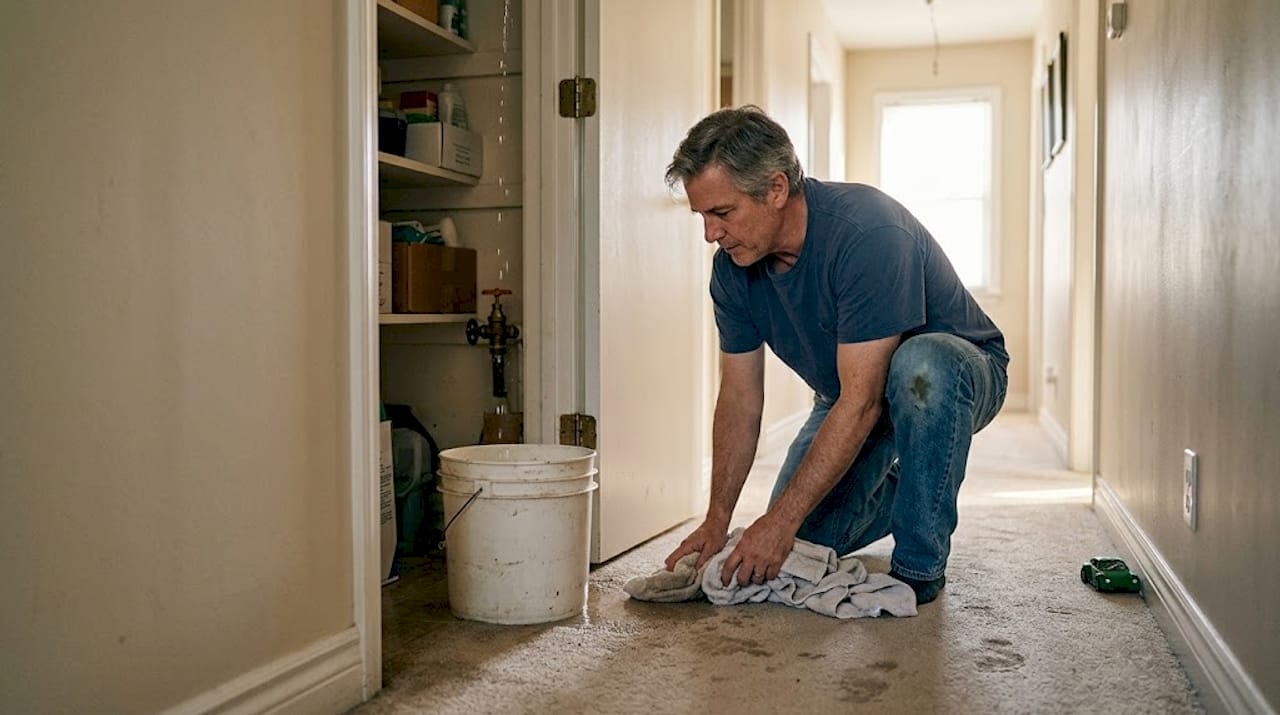
Sewer backups are a health emergency, not just a plumbing problem. Sewer backups involve raw sewage flooding your home, caused by tree roots, clogs, or municipal issues, and are a serious health hazard requiring no water use until a professional fixes the problem. If multiple drains in your home are slow at the same time, or you hear gurgling sounds from your toilet when you run the sink, those are early warning signs.
Gas leaks demand a completely different response. Gas leaks are explosive risks requiring immediate evacuation, a call to 911 and your gas company first, and then your plumber, and they are most common near water heaters and older gas line connections. Do not flip light switches. Do not use your phone inside the house. Get out first, then call.
Pro Tip: If you smell rotten eggs anywhere near your water heater or gas appliances, do not investigate further. Leave immediately and call 911 from outside.
Ceiling leaks in San Antonio deserve special attention because of the local climate. Water stains or spreading ceiling damage in San Antonio’s humid conditions indicate active leaks that can rapidly lead to mold growth or structural collapse and should be treated as an emergency if they are spreading.
For a full breakdown of common emergency issues specific to this area, or a step-by-step emergency guide, being prepared before a crisis hits makes all the difference.
What to do in a plumbing emergency: Steps to minimize damage before help arrives
Recognizing an emergency is only half the battle. Knowing exactly what to do next can make all the difference between a manageable repair and a catastrophic loss.
Here is the sequence of actions that protects your home and your insurance claim:
- Shut off the water or gas supply. Know where your main water shutoff valve is before an emergency happens. For gas issues, locate your gas shutoff as well.
- Turn off electricity in affected areas. Water and electricity are a dangerous combination. Flip the breaker for any room with active water intrusion.
- Contain the water. Use towels, buckets, or plastic sheeting to limit spread. Every square foot of water damage you prevent is money saved.
- Document everything. Take photos and video of all visible damage before cleanup begins. Your insurance company will need this.
- Call a licensed 24/7 plumber. This is not the moment for DIY repairs. Shutting off water, containing damage, and calling a professional immediately prevents far worse outcomes than attempting repairs yourself.
- Notify your insurance company. Report the claim as soon as possible. Early reporting protects your coverage.
Important: Avoid using chemical drain cleaners, pipe patch kits, or temporary tape fixes during an active emergency. These products can mask the true severity of the problem and make professional repairs more difficult and expensive.
One of the most common mistakes we see is homeowners waiting to call because they are not sure the problem is serious enough. Active ceiling leaks in San Antonio’s humid climate can lead to mold growth within 24 to 48 hours. What looks like a minor stain on Monday can become a mold remediation project by Wednesday.
Pro Tip: Save your plumber’s number, your gas company’s emergency line, and your insurance agent’s contact in your phone right now, before you ever need them. In a real emergency, searching for numbers wastes critical minutes.
For a full emergency response guide with detailed steps for each scenario, being prepared is always cheaper than being caught off guard.
Emergency costs and prevention: What San Antonio homeowners need to know
With immediate actions covered, let’s talk costs and the critical role of prevention for homeowners in this region.
Plumbing emergencies are expensive. There is no way around that fact. But understanding the numbers helps you make smarter decisions about maintenance and response timing.
| Issue | Typical repair cost | After-hours surcharge |
|---|---|---|
| Burst pipe | $500 to $5,000 | 20% to 50% added |
| Sewer backup | $2,000 to $8,000 | 20% to 50% added |
| Slab leak | $1,500 to $4,000 | 20% to 50% added |
| Annual maintenance | $150 to $300 | None |
Emergency repair costs in San Antonio range from $500 to $5,000 for burst pipes and $2,000 to $8,000 for sewer backups, with 20% to 50% surcharges added for after-hours calls, while annual maintenance costing $150 to $300 prevents roughly 80% of emergencies. That last number is the one that should get your attention.
The prevention math is clear. Spending $200 on an annual inspection is a fraction of the cost of a single emergency call, especially one that happens at midnight on a Sunday.
Here is what routine maintenance catches before it becomes a crisis:
- Hard water scale buildup that narrows pipes and increases pressure
- Early-stage corrosion in older galvanized or copper pipes
- Tree root intrusion into sewer lines before a full backup occurs
- Water heater sediment that leads to failure or leaks
- Slab leak indicators detectable through pressure testing
Preventive annual inspections catch 80% of issues early, and San Antonio’s hard water and shifting soil conditions make frequent checks especially important for local homeowners. The clay soil under this city moves with every rain cycle, and that movement stresses your pipes in ways that are invisible until something breaks.
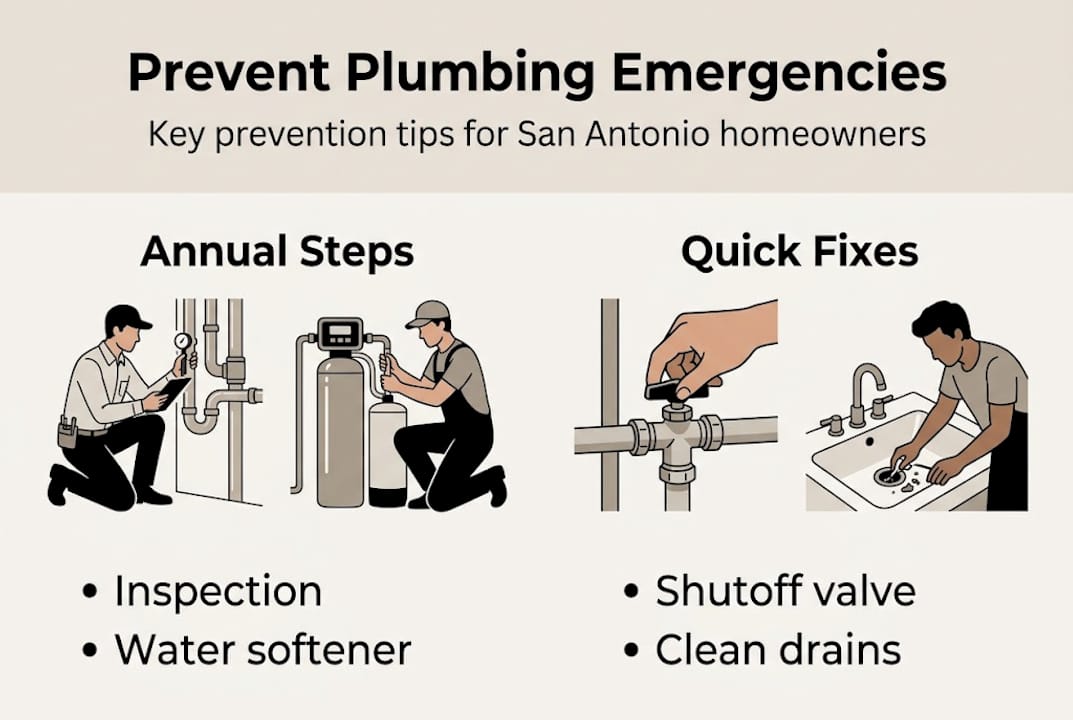
The rule of thumb we follow: if there is no active damage and no safety risk, schedule a non-emergency appointment and avoid the after-hours premium. But if either of those conditions exists, call immediately. Waiting to save money on the service call often costs far more in additional damage.
Learning how maintenance lowers costs and how routine care prevents costly repairs is one of the smartest investments a San Antonio homeowner can make.
Our perspective: Why clarity on emergencies saves San Antonio homeowners more than money
After years of responding to plumbing emergencies across San Antonio, we have noticed a consistent pattern. The most expensive jobs we handle are rarely caused by the initial plumbing failure. They are caused by the hours or days of inaction that followed it.
Homeowners hesitate because they are not sure. They wonder if they are overreacting. They search online instead of calling. That window of uncertainty is where mold grows, where ceilings collapse, and where a $600 pipe repair becomes a $6,000 restoration project.
The real value of understanding plumbing emergencies is not just financial. It is the confidence to act decisively when it matters. We have seen families displaced from their homes because a slow ceiling leak was dismissed as a cosmetic issue. We have seen foundation damage from slab leaks that were ignored for months.
Our advice is simple: when in doubt, call. A quick phone consultation costs nothing and could save you everything. Knowing when to seek prompt repairs is not an overreaction. It is the smartest thing a homeowner can do.
Get expert help for plumbing emergencies in San Antonio
If you are facing a situation that feels urgent, trust that instinct. When in doubt, a call to a trusted emergency plumber in San Antonio protects your property, your family’s health, and your long-term costs. At Stultz Plumbing, we provide 24/7 emergency response across San Antonio and surrounding communities, with the local expertise to handle everything from burst pipes to sewer backups quickly and correctly. You can explore our full emergency services overview or browse our complete range of affordable plumbing services. Do not wait for a small problem to become a major disaster.
Frequently asked questions
What makes a plumbing issue a true emergency?
A plumbing emergency poses an immediate risk to your home structure, safety, or health. If water or gas is moving uncontrollably or raw sewage is present, act immediately.
Should I try to fix a burst pipe myself?
No. Burst pipes release hundreds of gallons per hour, and DIY repairs often worsen the damage. Shut off the main water valve and call a licensed plumber right away.
How can I prevent plumbing emergencies in San Antonio?
Annual maintenance costing $150 to $300 prevents roughly 80% of emergencies, making it especially valuable given San Antonio’s hard water and shifting soil conditions.
Are sewer backups always emergencies?
Yes. Sewer backups involve raw sewage entering your home and are a serious health hazard. Do not use any water fixtures until a professional resolves the problem.
What’s the average emergency plumber cost in San Antonio?
Repairs range from $500 to $8,000 depending on the issue, with an additional 20% to 50% surcharge applied for after-hours service calls.
Recommended
- Handle plumbing emergencies: step-by-step guide 2026
- Emergency Plumbing Guide for Fast Home Solutions
- When To Call An Emergency Plumber In San Antonio
- Emergency Plumber San Antonio | What to Do Before we Arrives
Jean runs growth strategy at AimSetWin, a performance marketing agency specializing in local service businesses across Texas. he's helped plumbers, HVAC companies, pest control operators, and home service brands build predictable revenue systems using data-driven advertising and conversion optimization.


