

Hear a faint drip or hiss at home? Learn what leaking water sounds like, where leaks hide, and when to call a San Antonio plumber before damage spreads.
Many San Antonio homeowners hear a faint drip or a soft hiss somewhere in their home and chalk it up to normal house noise. That assumption is expensive. Hidden leaks can go undetected for months, quietly soaking insulation, rotting wood, and feeding mold colonies behind your walls. The truth is that most leaks announce themselves long before visible damage appears. They just do it quietly. This guide will walk you through exactly what leaking water sounds like, where those sounds come from, and what to do the moment you hear something that does not feel right.
Table of Contents
- Why water leak sounds matter for San Antonio homes
- What does a light water leak sound like?
- Where do light leak sounds come from?
- Identifying subtle leak noises: tools and techniques
- When to call a plumbing professional for leak sounds
- Need help stopping water leak sounds?
- Frequently asked questions
Key Takeaways
| Point | Details |
|---|---|
| Subtle leak sounds matter | Ignoring faint dripping or trickling can lead to costly damage and mold in your home. |
| Check key locations | Bathrooms, kitchens, basements, and floors are prime spots for subtle water leaks. |
| Use detection tools | Simple listening tools and apps help reliably identify leak sounds before damage worsens. |
| Professional help is critical | If you can’t pinpoint a leak, plumbing experts provide fast, accurate solutions that protect your property. |
Why water leak sounds matter for San Antonio homes
San Antonio’s climate is a recipe for plumbing stress. Extreme summer heat, occasional hard freezes, and the region’s notoriously hard water all accelerate pipe wear and seal deterioration. That combination means local homes face a higher-than-average risk of developing slow, hidden leaks that build pressure over time.
The financial stakes are real. Early leak detection prevents costly water damage that can run into thousands of dollars in structural repairs, mold remediation, and flooring replacement. Many homeowners assume that if a leak were serious, it would be obvious. That is rarely how it works. A pinhole crack in a pipe inside your wall may drip for six months before you see a single stain.
Understanding the leak detection cost facts helps put early action in perspective. Catching a leak early is almost always far cheaper than repairing the damage it leaves behind.
Here are the main risks of ignoring subtle leak sounds:
- Mold and mildew growth behind walls and under floors, which creates serious health hazards
- Structural wood rot that weakens floor joists, wall studs, and subflooring
- Elevated water bills as water literally goes down the drain undetected
- Foundation damage, especially relevant for San Antonio homes built on expansive clay soil
- Pest attraction, since moisture draws termites and other wood-destroying insects
What does a light water leak sound like?
This is the question we hear most often, and the answer surprises people. Leaking sounds may be faint, such as dripping or trickling, and indicate early-stage leaks that are easy to dismiss as background noise. Knowing the difference between a leak sound and a normal plumbing noise is the first step toward protecting your home.
Here is a comparison to help you tell them apart:
| Sound | Likely cause | Normal or concerning? |
|---|---|---|
| Steady drip | Worn faucet washer or valve seat | Concerning if constant |
| Soft trickle | Pipe crack or loose fitting | Concerning |
| Hissing | Pressurized leak at a joint or seal | Concerning |
| Single tap or knock | Water hammer from pressure surge | Usually normal |
| Gurgling | Drain blockage or venting issue | Investigate further |
A hissing sound typically points to a pressurized leak, meaning water is being forced through a small gap under pressure. That is urgent. A soft trickle often signals a crack or a loose fitting where water escapes slowly. A steady drip is usually a worn washer or valve seat, common in older faucets and bathroom leak indicators that have not been serviced in years.
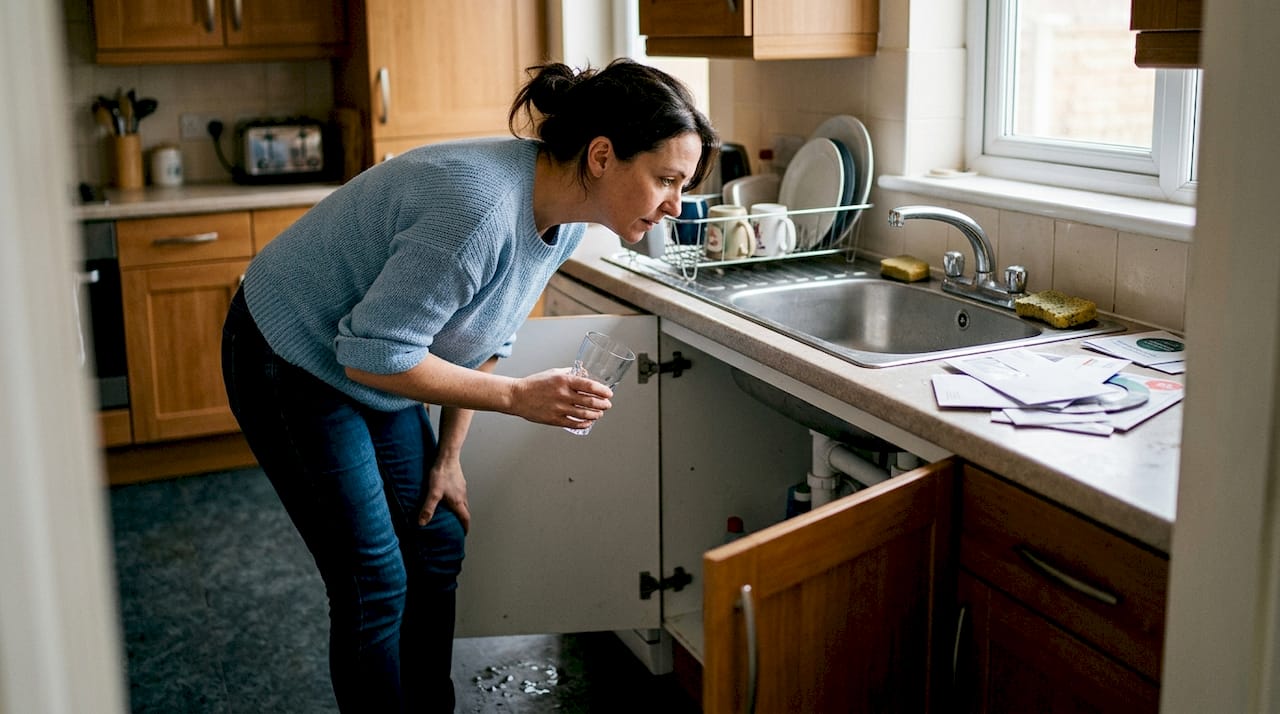
If your home has aging pipes, these sounds become even more significant. Knowing the signs it is time to replace old plumbing can help you decide whether a repair or a full repipe is the smarter investment.
Pro Tip: Press a drinking glass firmly against the wall near a suspected leak area and place your ear against the base of the glass. This simple trick amplifies faint sounds and can help you confirm whether water is moving inside the wall.
Where do light leak sounds come from?
Once you know what a leak sounds like, the next challenge is finding where it originates. Leaks commonly originate in bathrooms, kitchens, basements, and under floors where pipes run close to surfaces and experience frequent use.
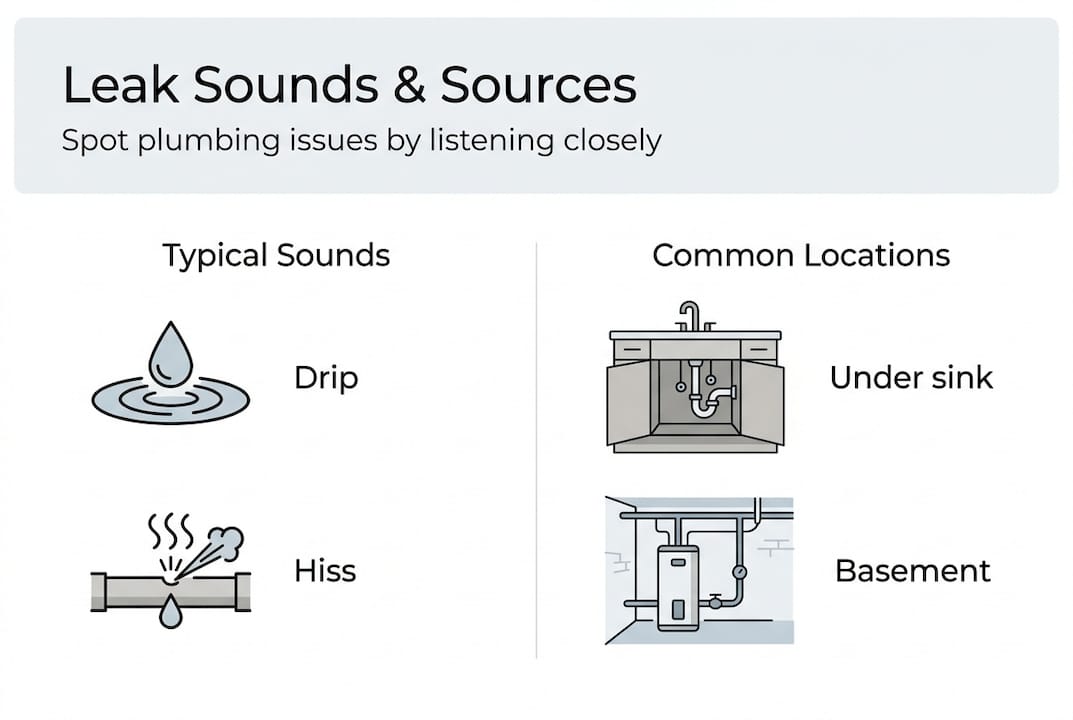
The tricky part is that ambient daytime noise, appliances running, traffic outside, and general household activity can completely mask a faint drip or trickle. Many homeowners only notice leak sounds late at night when the house is quiet.
Here are the spots to check first when you suspect a leak:
- Bathroom fixtures: toilets, supply lines under sinks, and shower valve connections are frequent culprits
- Kitchen sink area: the supply lines and drain connections under the cabinet are often overlooked
- Refrigerator water line: a slow drip from the ice maker line can go unnoticed for months
- Basement and crawl space: pipes running through these areas are vulnerable to temperature swings and corrosion
- Walls near plumbing runs: listen along walls that share space with bathrooms or kitchens on the other side
For a more structured approach, our detect water leaks guide walks you through a room-by-room inspection process that covers the most common leak locations in San Antonio homes.
Identifying subtle leak noises: tools and techniques
Your ears are your first tool, but they have limits. Acoustic leak detection, which means using sound-amplifying equipment to locate hidden leaks, significantly improves accuracy for hidden leaks compared to guesswork alone. You do not need professional equipment to get started, though.
Follow these steps to conduct your own acoustic leak check at home:
- Turn off all appliances and water-using fixtures in the home. Dishwasher, washing machine, ice maker, everything. You need silence.
- Check your water meter. If the dial is still moving with everything off, water is flowing somewhere it should not be.
- Use a listening device. A glass against the wall works for a quick check. A basic plumbing stethoscope, available at hardware stores, works much better.
- Download a sound amplification app on your smartphone. Several free apps boost microphone sensitivity and can help you detect faint sounds through walls and floors.
- Move systematically through the house. Start at the water meter and work inward, checking along pipe runs, under sinks, and near appliances.
- Mark any spots where sound seems louder and compare them. The loudest point is usually closest to the leak source.
Pro Tip: The best time to listen for leaks is between 2 a.m. and 4 a.m. when household noise is at its lowest. Set an alarm, walk through your home in silence, and listen carefully near walls, floors, and fixtures.
For leaks that may be running underground, the process is more involved. Our guide on how to find underground leaks in San Antonio covers the specialized steps and equipment needed for those situations.
When to call a plumbing professional for leak sounds
DIY detection has real value, but it has a ceiling. Professional plumbers use specialized equipment to pinpoint leaks beyond what homeowners can reliably identify, including thermal imaging cameras, acoustic amplifiers, and pressure testing tools that reveal leaks hidden deep inside walls or under concrete slabs.
“A leak you can hear but cannot find is almost always a leak that is getting worse. The longer it goes unaddressed, the more damage accumulates. Calling a professional early is not an overreaction. It is the smart financial decision.” — Stultz Plumbing, San Antonio
Some situations call for a professional right away. Do not wait if you notice any of these:
- A musty or mildew smell in rooms with no obvious moisture source
- Water stains on ceilings or walls that appear without explanation
- A sudden spike in your water bill with no change in usage habits
- Persistent trickling or dripping sounds that you cannot locate after a thorough check
- Soft or warped flooring near bathrooms, kitchens, or laundry areas
- Visible mold growth on walls, baseboards, or under sink cabinets
For appliance-related leaks, it is worth checking washer hose maintenance tips and reviewing a dishwasher leak repair guide before assuming the issue is in your main plumbing lines. Appliance connections are a surprisingly common source of hidden moisture.
When a professional does arrive, expect them to use a combination of acoustic detection, pressure testing, and possibly thermal imaging to locate the leak without unnecessary demolition. Our pipe leak repair guide explains what the repair process typically looks like and what questions to ask your plumber.
Need help stopping water leak sounds?
If you have worked through this guide and still hear something that does not add up, do not wait for the damage to show itself. At Stultz Plumbing, we use advanced acoustic detection and thermal imaging to find leaks fast, without tearing apart your home unnecessarily. Our team serves San Antonio homeowners with transparent pricing and rapid response times, whether you need a same-day inspection or an urgent fix. Explore our plumbing emergency services for immediate help, browse our full range of affordable plumbing services, or get a clear picture of water leak detection cost before you call. We are here when you need us.
Frequently asked questions
How can I tell if the leak sound is serious?
Persistent dripping, trickling, or a spike in your water bill signals a potentially serious leak that needs prompt attention. Subtle leaking sounds may indicate hidden plumbing problems that worsen over time if left unaddressed.
What tools help homeowners detect leak sounds?
Simple tools like a glass, stethoscope, or smartphone app can help amplify and isolate subtle leak noises for early detection. Acoustic leak detection improves accuracy significantly compared to listening with the unaided ear alone.
Where are light water leaks most likely to occur?
Light leaks most often occur near bathroom fixtures, kitchen sinks, basements, and under floors where pipes run. Leaks commonly originate in these high-use, high-moisture areas of the home.
When should I call a plumber about leak sounds?
Call a plumber if leak sounds persist, you see water stains, or your DIY detection methods cannot pinpoint the source. Specialized equipment allows professionals to locate leaks that are simply beyond what homeowners can reliably find on their own.
Recommended
- How to find a water leak underground in San Antonio
- How to Detect Water Leaks in San Antonio Homes?
- How to Detect Water Leaks in San Antonio Homes?
- Why You Need Water Leak Detection In San Antonio?
- Fix dishwasher leaks fast: 2026 guide with 60% seal tips
Jean runs growth strategy at AimSetWin, a performance marketing agency specializing in local service businesses across Texas. he's helped plumbers, HVAC companies, pest control operators, and home service brands build predictable revenue systems using data-driven advertising and conversion optimization.


