

Standing water in your shower? Learn step-by-step how to unclog your shower drain, with tips for San Antonio's hard water and when to call a pro.
Standing water pooling around your feet is one of those problems that starts as a minor annoyance and quickly turns into a real plumbing headache. In San Antonio, the situation is even more frustrating because very hard water accelerates clog buildup faster than in most other cities. Hair, soap scum, and mineral scale team up to create blockages that resist simple fixes. This guide walks you through exactly what causes those stubborn clogs, what tools you need, and a clear step-by-step process to restore your drain, plus practical prevention habits to keep standing water from coming back.
Table of Contents
- Why your shower drain clogs: San Antonio’s hard water factor
- Tools and safety precautions before you start
- Step-by-step: How to unclog a shower drain with standing water
- Troubleshooting, recurring clogs, and when to call a plumber
- Preventing future clogs: Easy habits for San Antonio showers
- The overlooked truths about shower drain clogs in San Antonio homes
- Professional help for tough clogs and ongoing issues
- Frequently asked questions
Key Takeaways
| Point | Details |
|---|---|
| Hair and minerals cause clogs | San Antonio’s hard water and shed hair quickly build up, making regular drain care essential. |
| DIY works for most clogs | Manual removal and safe home methods can handle most shower backups with standing water. |
| Avoid chemicals on PVC or septic | Chemical drain cleaners can harm modern pipes or septic tanks—use safe alternatives first. |
| Prevention is key | Weekly hair catcher cleaning and monthly flushes prevent repeat problems and costly repairs. |
| Know when to call a pro | If DIY solutions fail, a local plumber can resolve tough clogs and recommend long-term fixes. |
Why your shower drain clogs: San Antonio’s hard water factor
Understanding the enemy is the first step toward beating it. Shower drain clogs are not random. They follow a predictable pattern, and in San Antonio, that pattern is more aggressive than most homeowners expect.
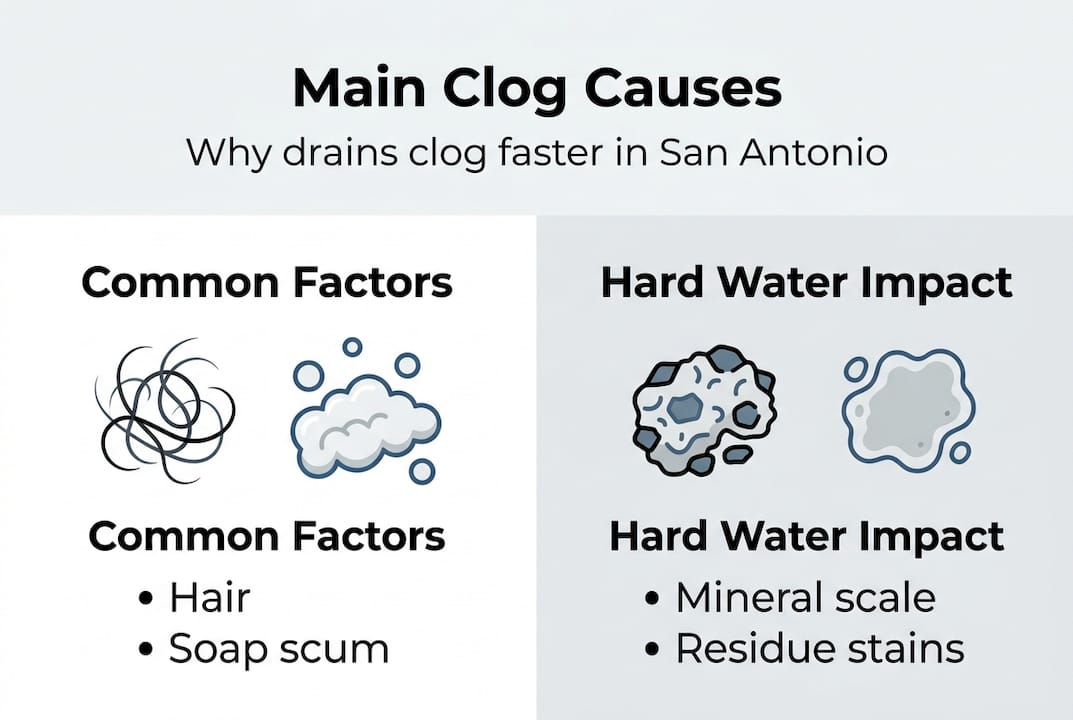
The primary causes of shower clogs are hair buildup combined with soap scum, body oils, and mineral scale from San Antonio’s very hard water, which measures between 15 and 20 grains per gallon. Each of these substances alone is manageable. Together, they form a dense, sticky mass that grips the inside of your drain pipe and grows over time.
Here is what typically builds up in a San Antonio shower drain:
- Hair: You shed 50 to 100 strands daily, and most of them go straight down the drain during your shower.
- Soap scum: Bar soap reacts with hard water minerals to create a chalky, sticky film that coats pipe walls.
- Body oils and shampoo residue: These bind hair strands together into a solid plug.
- Mineral scale: Calcium and magnesium deposits from hard water narrow the pipe opening over time, turning a slow drain into a fully blocked one.
| Clog contributor | Found everywhere | Worsened by San Antonio hard water |
|---|---|---|
| Hair | Yes | Slightly |
| Soap scum | Yes | Significantly |
| Body oils | Yes | Moderately |
| Mineral scale | Rarely | Severely |
San Antonio homeowners can experience clog buildup at nearly double the rate of households in softer water regions. The minerals do not just add to the clog. They act like cement, locking everything else in place and making the blockage far harder to break up.
For more detail on how hard water affects your drains, including what you can do to slow the damage, our resource page covers it thoroughly.
Pro Tip: If you notice chalky white or gray residue around your drain cover or on your shower walls, mineral buildup is almost certainly worsening your clogs. That residue is the same material coating the inside of your pipes.
Knowing what causes clogs is the first step to solving them. Next, gather what you will need.
Tools and safety precautions before you start
Going into a drain job without the right tools is a recipe for frustration. Worse, using the wrong materials on the wrong pipe type can cause real damage. Take five minutes to set up properly before you touch the drain.
Your basic toolkit:
- Rubber gloves (thick ones, not disposable)
- A cup or small bucket for removing standing water
- A flathead screwdriver for removing the drain cover
- A standard cup plunger
- A drain snake (also called a hand auger)
- Baking soda and white vinegar
- A flashlight
- Old towels or rags
Not all tools and methods are safe for every pipe type. This matters in San Antonio, where homes range from new builds with PVC plumbing to older properties with galvanized or cast iron pipes.
| Method | Metal pipes | PVC pipes | Older/aging pipes | Septic systems |
|---|---|---|---|---|
| Plunger | Safe | Safe | Safe | Safe |
| Drain snake | Safe | Safe with care | Use gently | Safe |
| Baking soda and vinegar | Safe | Safe | Safe | Safe |
| Boiling water | Safe | Unsafe | Risky | Safe |
| Caustic chemical cleaners | Risky | Unsafe | Unsafe | Unsafe |
The risk of boiling water and harsh chemicals on PVC pipes and septic systems is real. PVC softens and warps under extreme heat, and caustic chemicals can destroy the beneficial bacteria your septic system depends on.
If you are unsure whether bleach is safe for your drains, the short answer is: use it sparingly if at all, and never mix it with other cleaners.
Never pour boiling water or caustic chemicals down a PVC drain or if you have a septic system, as damage may result.
Before you start, always:
- Wear rubber gloves from start to finish
- Open a window or run the exhaust fan for ventilation
- Never mix chemical products, even “natural” ones like vinegar and bleach
- Keep children and pets out of the bathroom during the process
For more effective drain cleaning tips that protect your pipes, bookmark that resource for ongoing maintenance guidance.
With your toolkit and safety priorities clear, you are ready for the removal steps.
Step-by-step: How to unclog a shower drain with standing water
Follow these steps in order. Do not skip ahead, especially if there is standing water present. Each step builds on the last.
-
Remove the standing water first. Use a cup or small bucket to scoop out as much water as possible. Trying to plunge or snake a drain through six inches of standing water reduces your effectiveness significantly. Get the floor as clear as you can.
-
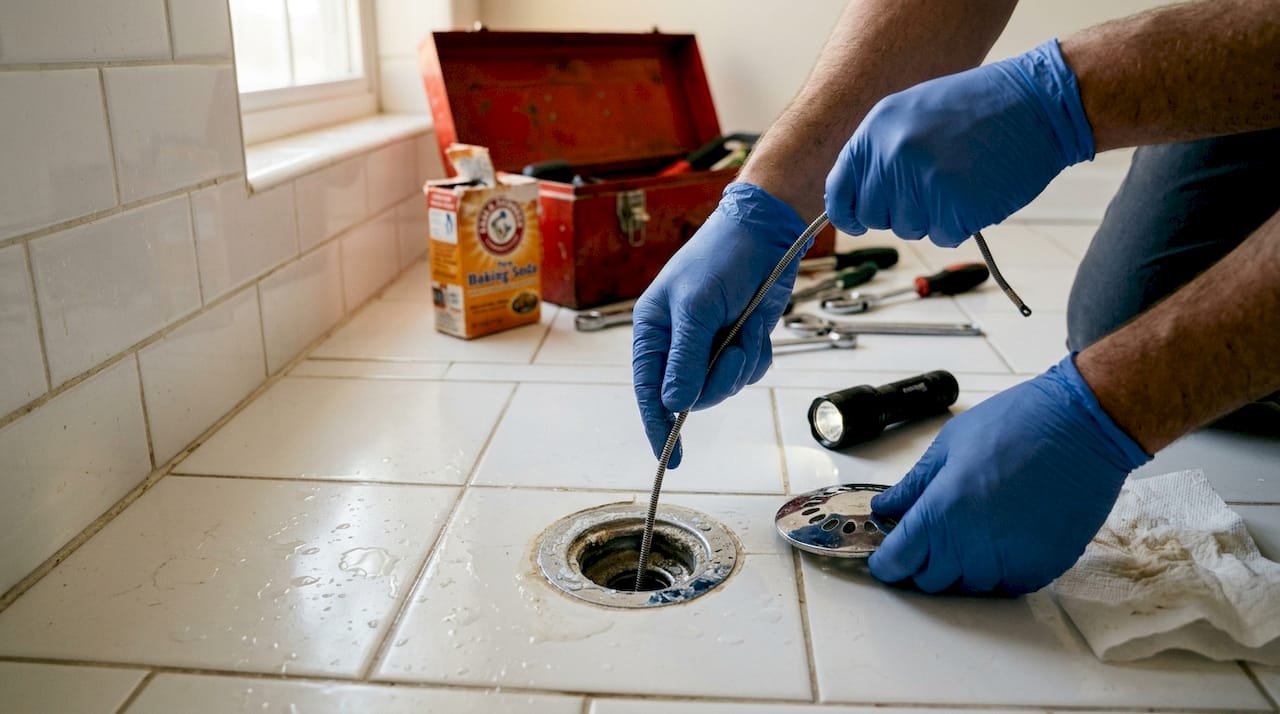
Unscrew and remove the drain cover. Most shower drain covers have one or two screws. Remove them with a flathead screwdriver and set the cover aside. Use your flashlight to look down into the drain opening before reaching in.
-
Pull out visible debris by hand. Put on your rubber gloves and reach into the drain. Pull out any hair clumps, soap buildup, or debris you can reach. This step alone often restores partial flow. It is unpleasant but highly effective.
-
Plunge the drain. Place a cup plunger firmly over the drain opening and pump it vigorously 10 to 15 times. The pressure can dislodge clogs that are just out of reach. Run water briefly to test flow.
-
Flush with baking soda and vinegar. Pour half a cup of baking soda directly into the drain, followed by half a cup of white vinegar. Cover the drain opening and let the mixture fizz for 15 to 20 minutes. Then flush with hot (not boiling) water. This non-chemical DIY method is safe for all pipe types and works well on soap scum and minor mineral buildup.
-
Use a drain snake if needed. Feed the snake slowly into the drain until you feel resistance. Rotate the handle to break up or hook the clog, then pull it back out carefully.
Stat callout: Because you shed 50 to 100 hairs every single day, even one missed week of drain maintenance can mean hundreds of strands working their way into a tangle.
Pro Tip: If you feel strong resistance after inserting the snake just a few feet, stop. Forcing it risks scratching or cracking the pipe. At that point, the clog may be deeper or more severe than a standard hand auger can handle. Our DIY unclogging methods guide covers what to do next, and our San Antonio DIY guide has city-specific advice for local pipe types.
These steps should clear most clogs, but what if your water still will not go down?
Troubleshooting, recurring clogs, and when to call a plumber
Sometimes a clog comes back within days or weeks of a successful DIY fix. That is a signal worth paying attention to.
Signs of a deeper problem:
- Multiple drains in your home are slow at the same time
- You smell sewage or a strong sulfur odor near the drain
- You hear gurgling sounds from the drain or toilet after water runs
- The clog returns within two to three weeks of clearing it
- Water backs up into other fixtures when you run the shower
These symptoms point beyond a simple hair clog. They suggest a blockage further down the line, possible pipe damage, or significant mineral scale buildup that DIY tools cannot reach.
| Situation | Recommended action |
|---|---|
| Single slow drain, first time | DIY steps above |
| Clog clears but returns quickly | Inspect for mineral scale, consider softener |
| Multiple slow drains | Call a plumber |
| Sewage smell or gurgling | Call a plumber immediately |
| DIY fails after two attempts | Call a plumber |
For San Antonio homeowners, hard water demands frequent maintenance or a longer-term solution like a water softener. A softener reduces the mineral content entering your pipes, which directly reduces the rate of scale buildup and clog frequency.
If you want to understand what causes persistent clogs in more detail, or need a full drain and toilet guide for your San Antonio home, both resources will help you make a more informed call on whether to DIY or bring in a professional.
Now that your drain is clear, keep it that way with some simple prevention habits.
Preventing future clogs: Easy habits for San Antonio showers
The best clog is one that never forms. These habits take almost no extra time and make a real difference, especially with San Antonio’s mineral-heavy water working against you.
Following a consistent prevention routine is the single most effective thing you can do between professional services.
- Install a mesh drain strainer or hair catcher. This is the highest-impact, lowest-effort fix available. A strainer catches hair before it enters the pipe. Clean it weekly to keep it working.
- Monthly baking soda and vinegar flush. Even when the drain seems fine, a monthly flush keeps soap scum and minor mineral deposits from accumulating into a real blockage.
- Hot water rinse after every shower. Once you finish showering, let hot water run for 30 to 60 seconds. This pushes residual soap and oils further down the line before they can settle.
- Switch from bar soap to liquid soap. Bar soap reacts with hard water minerals to form a thick, sticky scum. Liquid soap does not create the same buildup.
- Brush your hair before showering. Removing loose strands before you step in means far fewer end up in your drain. It is a small habit with a surprisingly large impact.
With prevention in place, it is important to see the bigger picture.
The overlooked truths about shower drain clogs in San Antonio homes
We have seen hundreds of shower drain calls across San Antonio, and the pattern is almost always the same. A homeowner does a solid DIY job, the drain flows freely, and then three weeks later they are standing in water again. They assume they did something wrong. Usually, they did not.
The real issue is that most people underestimate how aggressively San Antonio’s mineral-heavy water works against them. Minerals settle fast. Even a clean pipe starts accumulating scale within weeks in this water. DIY methods remove the soft blockage, but they rarely touch the hardened mineral layer coating the pipe walls beneath it.
The honest truth is that quick fixes and good habits are not always enough on their own. A water softener is not a luxury for San Antonio homeowners. It is a practical investment that reduces how often you fight this battle. And every two to three years, a professional descaling service clears the buildup that no plunger or snake can reach. That is not a failure of DIY. That is just the reality of living with very hard water.
Professional help for tough clogs and ongoing issues
When DIY has not solved the problem, or the same clog keeps coming back, it is time to call in our team. At Stultz Plumbing, we provide fast, reliable drain unclogging services for San Antonio homeowners, from simple blockages to stubborn mineral scale buildup deep in the line. Our technicians know local pipe types, local water conditions, and how to clear drains without causing damage. We also offer comprehensive San Antonio plumbing services including water softener installation to address the root cause of frequent clogs. If you want to understand why regular drain cleaning matters for long-term home health, that resource explains it clearly. Reach out today for a fast response and transparent pricing.
Frequently asked questions
What is the fastest way to remove standing water from a shower?
The quickest method is scooping the standing water into a bucket with a cup before beginning any unclogging attempt. This clears the way for more effective plunging or snaking.
Can I use chemical drain cleaners if I have PVC pipes or a septic system?
No. Harsh chemicals damage PVC pipes and destroy the beneficial bacteria in septic systems. Use a plunger or a baking soda and vinegar flush instead.
How often should I clean my shower drain to prevent standing water?
Clean the hair catcher weekly and flush with baking soda and vinegar every month for consistent results.
Does San Antonio’s hard water make shower drain clogs worse?
Yes. San Antonio’s water hardness of 15 to 20 grains per gallon causes mineral scale to build up inside pipes, making clogs more frequent and harder to clear.
What are signs I should call a plumber instead of doing it myself?
Persistent clogs after two DIY attempts, slow drainage across multiple fixtures, or sewage odors near the drain are all clear indicators that professional help is needed.
Recommended
- How to Unclog a Shower Drain: 9 DIY Methods Tested by Plumbers
- How to Unclog a Shower Drain: DIY Guide for San Antonio
- How Professional Hydro Jetting Clears Stubborn Drain Clogs
- Common Reasons for Clogged Drains & Fixes | Stultz Plumbing
Jean runs growth strategy at AimSetWin, a performance marketing agency specializing in local service businesses across Texas. he's helped plumbers, HVAC companies, pest control operators, and home service brands build predictable revenue systems using data-driven advertising and conversion optimization.


