Learn practical methods to find underground water leaks in San Antonio. Step-by-step guide with DIY tools, professional options, and cost-saving tips for homeowners.
Underground water leaks pose a serious threat to San Antonio homeowners, often going undetected until significant damage occurs. A hidden leak can inflate your water bills, erode your property’s foundation, and create costly repair scenarios. The challenge lies in spotting these leaks early, before they escalate into expensive emergencies. This guide walks you through practical, step-by-step methods to detect underground water leaks using both DIY techniques and professional tools, empowering you to protect your home and budget.
Table of Contents
- Understanding The Problem: Signs And Risks Of Underground Water Leaks
- Preparing To Find The Leak: Tools, Equipment, And Safety Measures
- Step-By-Step Guide: How To Detect An Underground Water Leak Effectively
- Verifying And Addressing Detected Leaks: Next Steps For Homeowners
- Professional Plumbing Services For Underground Leaks In San Antonio
- Frequently Asked Questions
Key takeaways
| Point | Details |
|---|---|
| Underground leaks show subtle signs | Watch for soggy patches, high water bills, and low pressure to catch leaks early. |
| DIY methods work for obvious leaks | Simple tools help locate surface leaks, but professionals handle complex cases better. |
| Advanced tools improve accuracy | Ground-penetrating radar detects deep or slow leaks that basic methods miss. |
| Early action prevents damage | Quick detection reduces water waste, property damage, and expensive repairs. |
| Professional help may qualify for rebates | Some regions offer financial incentives for hiring licensed leak detection specialists. |
Understanding the problem: signs and risks of underground water leaks
Recognizing the warning signs of underground water leaks is your first line of defense against costly damage. Common indicators include unexplained wet patches in your yard, persistently soggy lawns even during dry weather, inflated water bills without increased usage, and noticeably low water pressure throughout your home. These symptoms often appear gradually, making them easy to overlook until the problem worsens.
The risks associated with underground leaks extend far beyond higher utility costs. Water seeping into your property’s foundation can cause structural damage, while prolonged moisture creates ideal conditions for mold growth inside walls and under flooring. Soil erosion around leak sites weakens your landscape and can undermine driveways, sidewalks, and building supports. Left unchecked, these issues compound into repair bills that dwarf the cost of early detection and intervention.
Different pipe materials and leak depths affect how symptoms manifest. Metal pipes often produce audible hissing or rushing sounds near the surface, while plastic pipes leak silently. Deep leaks may show no surface signs for weeks or months, requiring attentive monitoring of your water meter and bills. Slow underground leaks are difficult to detect without specialized tools, making regular inspection habits essential for San Antonio homeowners.
Pro Tip: Check your water meter before bed and again in the morning without using any water overnight. If the meter reading changes, you likely have a leak somewhere in your system.
Early detection preserves your home’s integrity and saves substantial money over time. Catching a small leak before it becomes a major rupture means simpler repairs, less water waste, and avoided secondary damage to your property. If you notice signs to replace old plumbing throughout your home, addressing underground leaks becomes even more urgent as aging systems are prone to multiple failure points.
Common signs requiring immediate attention:
- Unexplained puddles or wet spots in your yard that persist after dry weather
- Water bill increases of 20% or more without changes in household usage
- Sounds of running water when all fixtures are turned off
- Cracks appearing in your foundation or driveway
- Areas of grass that grow faster or greener than surrounding lawn
Preparing to find the leak: tools, equipment, and safety measures
Successful leak detection starts with proper preparation and the right equipment for your specific situation. Basic tools include a moisture meter to identify damp soil areas, an acoustic listening device to hear water escaping from pipes, a pressure gauge to test your system for drops indicating leaks, a shovel for careful excavation, and a high-powered flashlight for inspecting dark areas. These items handle most straightforward leak investigations without major investment.
Advanced tools offer superior detection capabilities for challenging scenarios. Ground-penetrating radar (GPR) excels at locating deep plastic pipe leaks that acoustic methods miss, though wet soil conditions can compromise its effectiveness. Thermal imaging cameras reveal temperature differences caused by water movement underground. Tracer gas systems inject harmless gases into pipes that escape at leak points, making them detectable with specialized sensors. While these technologies deliver impressive results, they typically require professional operation and interpretation.
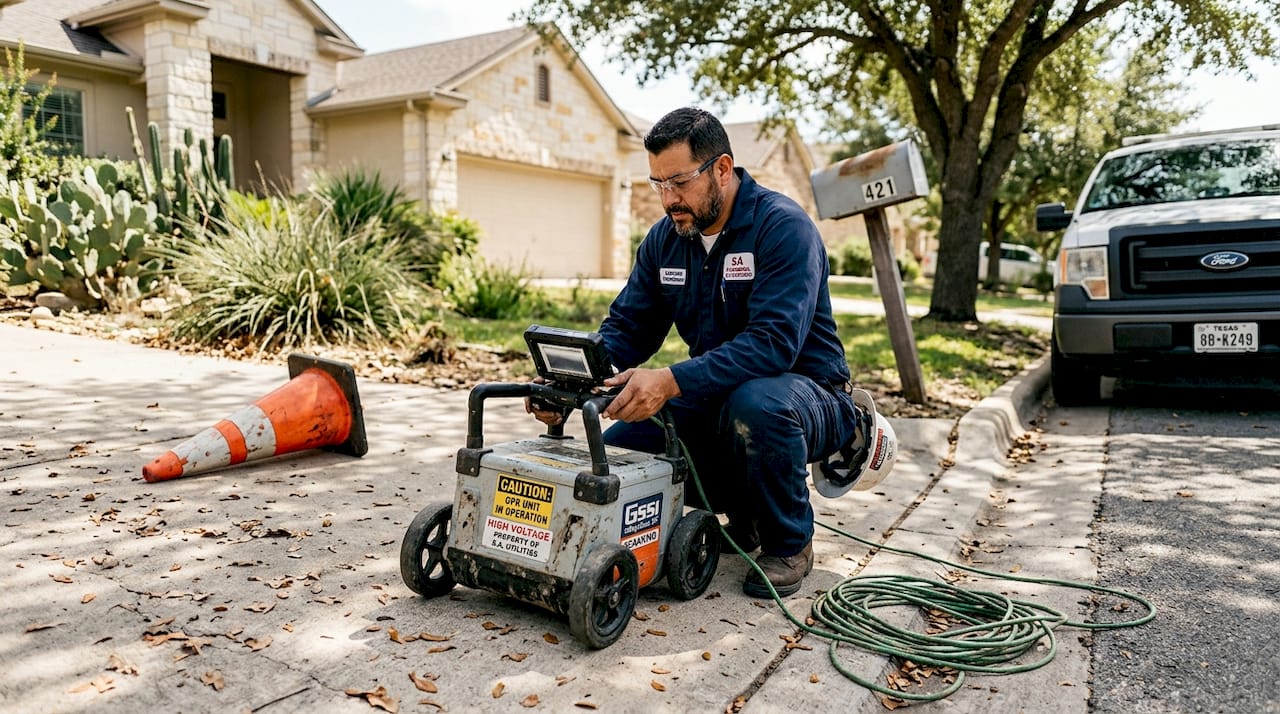
Safety must guide every step of your leak detection process. Call 811 or your local utility companies before digging to mark underground lines and prevent dangerous accidents. Wear protective gloves, safety glasses, and sturdy boots when excavating or handling tools. Confirm pipe locations using your home’s plumbing diagram or professional locating services to avoid damaging water, gas, or electrical lines. One wrong shovel strike can turn a simple leak investigation into an emergency repair situation.
DIY detection has moderate success for obvious leaks near the surface, while professionals achieve higher accuracy rates for complex cases involving deep pipes, slow leaks, or multiple potential sources. Assess your situation honestly before committing to a DIY approach. Visible wet spots with accessible pipes make good candidates for homeowner investigation, while mysterious pressure drops or hidden leaks often justify professional assistance from the start.
Pro Tip: Keep basic repair materials like pipe clamps, epoxy putty, and waterproof tape on hand during your inspection. If you discover a small, accessible leak, you can implement a temporary fix immediately while planning permanent repairs.
| Tool Type | Best For | Approximate Cost | Skill Level |
|---|---|---|---|
| Moisture meter | Surface damp spots | $30-$80 | Beginner |
| Acoustic listening device | Pressurized pipe leaks | $50-$200 | Intermediate |
| Pressure gauge | System leak confirmation | $15-$40 | Beginner |
| Ground-penetrating radar | Deep plastic pipes | $15,000+ (rental $200/day) | Professional |
| Thermal imaging camera | Temperature anomalies | $300-$3,000 | Intermediate |
Essential safety checklist before starting:
- Contact 811 to mark underground utilities at least 48 hours before digging
- Review your property’s plumbing layout and pipe materials
- Gather protective equipment including gloves, glasses, and boots
- Plan excavation areas away from known utility lines
- Have a first aid kit and phone readily accessible
For comprehensive guidance on various leak types, review this water leak detection guide covering both visible and hidden plumbing issues throughout your home.
Step-by-step guide: how to detect an underground water leak effectively
Begin your leak detection by confirming that water is actually escaping your system. Turn off all water-using appliances, faucets, and fixtures throughout your home, then locate your water meter. Note the current reading or watch for movement on the flow indicator. Wait 30 minutes without using any water, then check again. If the meter has advanced or the indicator continues moving, you have confirmed a leak somewhere in your system.
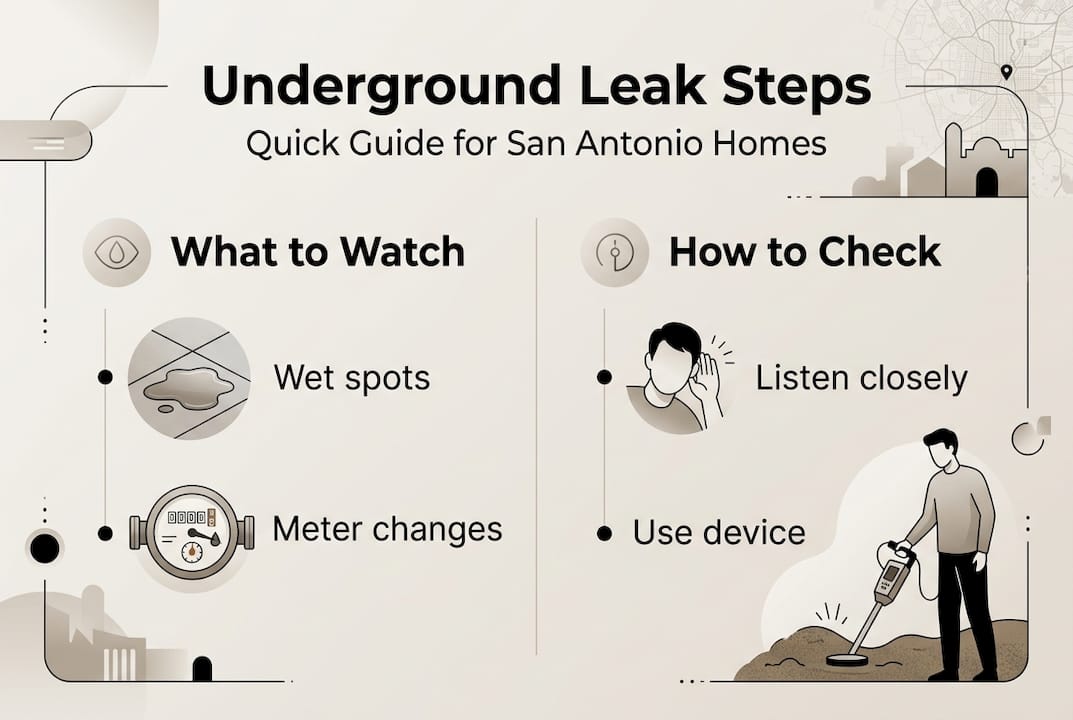
Conduct a thorough visual inspection of your property’s exterior, focusing on areas where pipes run underground. Look for patches of grass that stay green during dry spells, soil that feels spongy or wet when surrounding areas are dry, unexpected puddles or standing water, and sinkholes or depressions forming in your yard. These visible clues often pinpoint leak locations without requiring specialized equipment.
Acoustic listening devices help narrow down leak locations along pipe runs. In quiet conditions, place the device’s sensor on the ground at regular intervals along suspected pipe paths. Listen for hissing, rushing, or gurgling sounds that indicate water escaping under pressure. This method works best for metal pipes and leaks near the surface, becoming less effective for deep or slow-dripping leaks.
GPR is superior for detecting deep plastic pipe leaks but can be compromised by wet soil, making timing and soil conditions important factors in detection success. Professional operators interpret radar signals to identify pipe locations and anomalies indicating leaks, even when no surface symptoms exist.
Step-by-step detection process:
- Confirm leak existence using water meter test with all fixtures off for 30 minutes
- Map your property’s underground pipe layout using plumbing diagrams or professional locating
- Conduct visual inspection for wet spots, green patches, and soil depressions
- Use acoustic listening device along pipe runs in quiet conditions
- Mark suspected leak locations with flags or spray paint
- Verify findings with pressure testing or secondary detection methods
- Document locations with photos and measurements from fixed landmarks
- Decide between DIY repair for accessible leaks or professional service for complex cases
| Detection Method | Accuracy | Cost Range | Best Application | Limitations |
|---|---|---|---|---|
| DIY acoustic listening | Moderate | $50-$200 | Metal pipes, surface leaks | Ineffective for deep or plastic pipes |
| Pressure testing | High | $15-$100 | Confirming leak existence | Does not pinpoint location |
| Ground-penetrating radar | Very High | $200-$500 (service call) | Deep leaks, plastic pipes | Compromised by wet soil |
| Thermal imaging | High | $150-$400 (service call) | Temperature-sensitive leaks | Weather dependent |
| Tracer gas injection | Very High | $300-$600 (service call) | Slow leaks, complex systems | Requires professional equipment |
Pro Tip: Keep detailed notes including date, time, weather conditions, and exact measurements from permanent landmarks like property corners or building edges. This documentation proves invaluable if you need to hire professionals or file insurance claims later.
Know when to call a professional rather than continuing DIY efforts. Complex situations involving multiple potential leak sources, leaks deeper than three feet, leaks near building foundations, or persistent symptoms without identifiable sources all warrant expert intervention. Professionals bring experience interpreting subtle clues and equipment that reveals what basic tools cannot detect. For San Antonio-specific guidance, explore how to detect water leaks in San Antonio considering local soil types and common pipe materials in the region.
Compare your options thoroughly by reviewing DIY vs professional leak detection to understand success rates, time investment, and total costs including potential mistakes or missed leaks that worsen over time.
Verifying and addressing detected leaks: next steps for homeowners
Once you have identified a potential leak location, verification prevents wasted effort on false positives. Use multiple detection methods to confirm your findings. If acoustic listening suggested a leak at a specific spot, follow up with moisture readings or visual excavation to confirm water presence. Cross-referencing results from different tools builds confidence before committing to repair work.
Small, accessible leaks may be suitable for DIY repair if you have plumbing experience and confidence in your skills. Simple fixes like tightening connections, replacing short pipe sections, or applying repair clamps can resolve minor issues quickly. However, large leaks, breaks near your home’s foundation, or damage requiring extensive excavation typically demand licensed plumbers with proper equipment, permits, and insurance coverage.
Consider the full scope of repair implications before proceeding. Calculate costs for materials, tools, and your time versus professional service quotes. Research local permit requirements, as many jurisdictions mandate permits for underground plumbing work. Review your homeowner’s insurance policy to understand coverage for water damage and whether leak detection and repair qualify for claims or reimbursement.
Monitor the repaired area carefully after completing fixes. Check your water meter regularly using the overnight test method to confirm the leak has stopped. Inspect the repair site for new wet spots or settling soil. Track your water bills over the next few months to verify consumption returns to normal levels. Persistent problems indicate incomplete repairs or additional leaks requiring further investigation.
Pro Tip: Hiring professionals for leak detection can be lucrative as some areas offer rebates, and many insurance policies cover professional services when DIY attempts fail. Research local utility rebate programs and insurance benefits before paying out of pocket.
Post-detection action checklist:
- Verify leak location with secondary detection method before excavating
- Obtain necessary permits for underground plumbing repairs
- Gather multiple quotes from licensed plumbers for complex repairs
- Document all damage with photos for insurance claims
- Research local rebates and insurance coverage options
- Plan repairs during dry weather for easier excavation and better results
- Schedule follow-up inspections to confirm successful leak closure
Understanding repair costs helps you budget appropriately and make informed decisions about DIY versus professional approaches. Review typical water leak repair costs in San Antonio to set realistic expectations and identify fair pricing from contractors.
Professional plumbing services for underground leaks in San Antonio
When underground leaks prove elusive or repairs exceed your comfort level, Stultz Plumbing delivers specialized detection and repair services using advanced technology and local expertise. Our team understands San Antonio’s unique soil conditions, common pipe materials in area homes, and the specific challenges posed by the region’s water chemistry and seasonal weather patterns.
We deploy professional-grade equipment including ground-penetrating radar, acoustic amplification systems, and thermal imaging to locate leaks quickly and accurately, minimizing excavation and property disruption. Our licensed plumbers handle everything from pinpointing leak locations to complete repair or replacement of damaged sections, obtaining necessary permits, and ensuring work meets local codes. Early detection through our services saves you money on water bills, prevents escalating property damage, and may qualify you for local utility rebates designed to encourage water conservation.
Scheduling is straightforward, with rapid response times for urgent situations and flexible appointments for non-emergency inspections. After detection, we provide detailed assessments of damage, transparent pricing for repair options, and comprehensive solutions that address both immediate leaks and underlying system vulnerabilities. Our commitment to quality workmanship and customer satisfaction has made us a trusted name across San Antonio and surrounding communities.
Explore our full range of affordable plumbing services San Antonio designed to keep your home’s water systems running efficiently. For immediate leak concerns, learn about our specialized water leak detection in San Antonio capabilities and review water leak detection cost San Antonio to understand pricing and service options.
Frequently asked questions
How can I tell if my underground pipe is leaking?
Look for soggy patches in your yard, unusually high water bills without increased usage, and water meter movement when all fixtures are off. Listen for sounds of running water near pipe locations and check for areas where grass grows greener or faster than surrounding lawn. These signs often indicate water escaping underground, though slow leaks may show minimal surface symptoms initially.
Is DIY leak detection reliable for underground water leaks?
DIY methods work well for obvious, shallow leaks with visible symptoms like wet spots or audible sounds. However, DIY detection has moderate success for obvious leaks while professionals have higher success rates for slow, deep, or hidden leaks. Basic tools struggle with plastic pipes, leaks below three feet, or multiple potential sources requiring systematic elimination.
When should I contact a professional plumber for underground leaks?
Call a professional if leak signs persist despite DIY checks, if you cannot locate the source after thorough investigation, or if leaks appear near your foundation or under structures. Complex repairs requiring permits, specialized equipment, or extensive excavation also warrant professional help. Slow, hidden leaks without obvious symptoms benefit most from professional detection technology and expertise.
What tools do professionals use that homeowners cannot access?
Professionals deploy ground-penetrating radar to see deep underground, tracer gas systems that pinpoint exact leak locations, and thermal imaging cameras that reveal temperature anomalies invisible to basic tools. They also use correlation equipment that analyzes sound patterns across long pipe runs and video inspection systems for internal pipe assessment. These technologies require specialized training and significant investment beyond typical homeowner budgets.
How much does professional underground leak detection cost in San Antonio?
Professional leak detection in San Antonio typically ranges from $200 to $600 depending on property size, leak complexity, and detection methods required. Simple acoustic detection costs less than advanced GPR or tracer gas services. Many companies offer free estimates and some costs may be offset by utility rebates or insurance coverage. Investing in professional detection often saves money compared to extensive excavation, trial and error repairs, or ongoing water waste from undetected leaks.
Recommended
- How to Detect Water Leaks in San Antonio Homes?
- How to Detect Water Leaks in San Antonio Homes?
- Why You Need Water Leak Detection In San Antonio?
- Read Basement Water Leak Repair Guide For San Antonio Homes
- What is a drainage survey? 80% hidden defects found early
Jean runs growth strategy at AimSetWin, a performance marketing agency specializing in local service businesses across Texas. he's helped plumbers, HVAC companies, pest control operators, and home service brands build predictable revenue systems using data-driven advertising and conversion optimization.