

Learn how to detect water leaks in your home with easy steps. Follow this guide to identify leaks, prevent damage, and save on utility bills fast.
Persistent water leaks can turn any San Antonio home into a source of stress and unexpected expenses. Locating hidden leaks before they cause significant damage is not always simple, but knowing the right tools and techniques can make a difference. This guide offers practical steps and highlights professional-grade leak detection methods to help you protect your home, prevent rising utility costs, and tackle water issues with confidence.
Table of Contents
- Step 1: Gather Essential Leak Detection Tools
- Step 2: Inspect Visible Plumbing for Leak Signs
- Step 3: Check Water Meter for Hidden Leaks
- Step 4: Test Appliances and Fixtures Systematically
- Step 5: Verify Results and Monitor for Recurrence
Quick Summary
| Key Takeaway | Explanation |
|---|---|
| 1. Assemble essential tools | Gather devices like moisture meters and thermal cameras to effectively identify and address leaks early. |
| 2. Inspect plumbing systems | Regularly check visible plumbing areas for signs of leaks such as discoloration, corrosion, or dampness. |
| 3. Utilize your water meter | To detect hidden leaks, compare meter readings before and after turning off all water sources for a few hours. |
| 4. Systematically test fixtures | Conduct thorough checks on appliances and fixtures, focusing on faucets and toilets that commonly leak unnoticed. |
| 5. Maintain ongoing monitoring | After repairs, consistently track water usage and inspect for recurrent issues to prevent future leaks and damage. |
Step 1: Gather Essential Leak Detection Tools
As a homeowner, having the right tools can make detecting water leaks a smooth and efficient process. Understanding which tools work best will help you quickly identify potential water damage before it becomes a costly problem.
To get started, you’ll want to assemble a comprehensive toolkit that covers different leak detection scenarios. Professional plumbers recommend several key devices for effective home leak investigation:
- Digital moisture meter: Measures moisture levels in walls, floors, and ceilings
- Thermal imaging camera: Detects temperature variations indicating hidden water leaks
- Acoustic listening device: Amplifies pipe sounds to pinpoint leak locations
- Bright flashlight: Helps inspect dark or confined spaces
- Infrared thermometer: Checks surface temperatures around suspected leak areas
Professional plumbers use specialized leak detection techniques that homeowners can also learn. The goal is to identify potential water issues before they cause significant damage.
Professional-grade leak detection requires patience and systematic investigation of potential problem areas.
While purchasing all these tools might seem expensive, many can be rented from local hardware stores or borrowed from neighbors. Some home improvement centers even offer weekend rental options for advanced detection equipment.
Here’s a quick comparison of commonly used leak detection tools and their unique benefits:
| Tool Type | Primary Function | Typical Use Case |
|---|---|---|
| Digital moisture meter | Detects hidden moisture | Walls and ceilings monitoring |
| Thermal imaging camera | Reveals temperature anomalies | Locating leaks in structures |
| Acoustic listening device | Pinpoints pipe leak sounds | Underground pipe diagnosis |
| Bright flashlight | Illuminates inspection zones | Confined or dark areas |
| Infrared thermometer | Measures surface temperature | Finding cold leak spots |
Pro Tip: Before investing in expensive tools, consider consulting a professional plumber who can provide expert leak detection services and potentially save you money in the long run.
Step 2: Inspect Visible Plumbing for Leak Signs
Your home’s plumbing system has multiple areas where water leaks can occur, often hiding in plain sight. By systematically examining exposed pipes and fixtures, you can catch potential problems before they escalate into costly water damage.
Common household water leak indicators require careful visual and physical inspection. Focus on these key areas:
- Bathroom fixtures: Check around toilets, sinks, and shower bases
- Kitchen plumbing: Inspect under the sink and around the dishwasher
- Exposed pipe connections: Look for corrosion, rust, or mineral buildup
- Water heater area: Scan for puddles or moisture around the base
- Pipe joints: Examine for signs of water stains or dampness
Start by visually scanning each area for telltale signs of moisture. Discoloration on walls or floors often indicates ongoing water leakage. Soft or bubbling paint, warped flooring, and musty odors are additional red flags that suggest hidden water issues.
Water stains and unexpected moisture are your home’s way of signaling potential plumbing problems.
During your inspection, gently touch pipe connections to feel for unexpected moisture or subtle dampness. Run your hand along pipe surfaces to detect any wet spots that might not be immediately visible.
Pro Tip: Keep a detailed log of your inspection findings, noting exact locations and types of potential leak indicators to help professional plumbers diagnose issues more efficiently.
Step 3: Check Water Meter for Hidden Leaks
Detecting hidden water leaks can save you hundreds of dollars in potential water damage and utility bills. Your home’s water meter is a powerful diagnostic tool that can reveal silent leaks lurking in your plumbing system.
Detecting hidden household water leaks requires a simple but systematic approach. Follow these steps to use your water meter as a leak detection device:
- Turn off all water sources: Ensure no water is running in your home
- Locate your water meter: Usually near the street or in a basement
- Record the current meter reading: Note the exact numbers
- Wait 2-3 hours: Do not use any water during this time
- Check the meter again: Compare the readings
Key indicators of potential leaks include:
- Meter dial movement when no water is being used
- Unexpected changes in meter reading
- Continuous spinning of the meter’s flow indicator
A moving water meter when all fixtures are off is a clear sign of a hidden leak.
If you notice any unexpected meter activity, you might have a leak in underground pipes, inside walls, or beneath your foundation. Underground leaks can be particularly tricky and might require professional assessment.
Pro Tip: Take photos of your meter readings as evidence to show a plumber if you suspect a persistent leak.
Step 4: Test Appliances and Fixtures Systematically
Identifying potential water leaks requires a methodical approach to examining every water-using appliance and fixture in your home. By systematically testing each component, you can catch small issues before they become expensive problems.
EPA’s Fix a Leak Week recommendations provide a comprehensive strategy for homeowners to detect hidden leaks. Start with these critical fixtures:
- Toilet leak test: Drop food coloring in tank
- Faucet inspection: Check for constant dripping
- Showerhead examination: Look for persistent water drops
- Washing machine hoses: Inspect for moisture or wear
- Refrigerator water line: Check for subtle dampness
Key areas to examine include:
- Pipe connections under sinks
- Valve seals on appliances
- Grout lines around fixtures
- Flooring around water sources
- Hose connections for washing machines
Small, consistent leaks can waste hundreds of gallons of water annually.
Pay special attention to toilet flappers, which often fail silently. A worn flapper can cause continuous water flow without obvious signs, dramatically increasing your water bill. Gentle pressure testing can reveal many hidden leak sources.
Pro Tip: Purchase replacement washers and gaskets before starting your inspection to quickly address any minor leaks you discover.
Step 5: Verify Results and Monitor for Recurrence
After detecting and repairing leaks, your job isn’t quite finished. Confirming the effectiveness of your repairs and establishing a monitoring system is crucial to preventing future water damage and unexpected utility expenses.
EPA leak detection recommendations emphasize the importance of ongoing vigilance. To verify your repairs and monitor potential recurrence, follow these strategic steps:
- Recheck water meter after repairs
- Compare recent water bills
- Conduct monthly visual inspections
- Track water usage trends
- Document all repairs and observations
Key monitoring strategies include:
- Tracking monthly water consumption
- Watching for unexplained bill increases
- Inspecting previously problematic areas
- Maintaining repair documentation
- Setting calendar reminders for routine checks
Consistent monitoring is your best defense against potential water damage.
Pay close attention to subtle changes in water pressure, unusual sounds in pipes, or slight moisture accumulation. These can be early warning signs of developing issues that might have been missed during initial repairs.
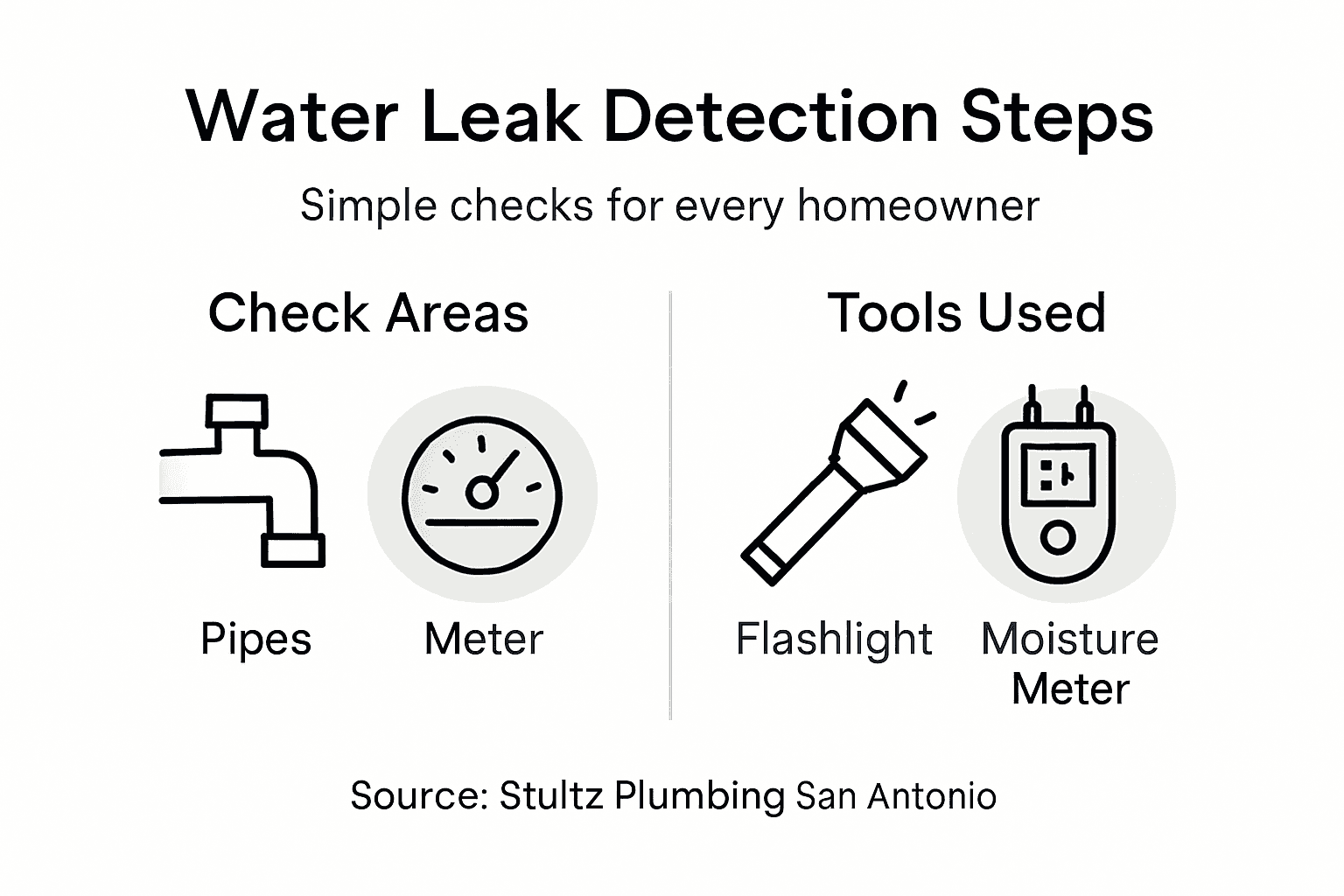
To help you monitor your plumbing system, here is a summary of monthly home inspection strategies:
| Inspection Activity | Prevention Benefit | Recommended Frequency |
|---|---|---|
| Visual check of fixtures | Early leak detection | Every month |
| Water meter monitoring | Identifies hidden leaks | Every month |
| Review water bill trends | Spots unexpected increases | With each bill |
| Update repair log | Ensures maintenance record | After each repair |
Pro Tip: Create a dedicated digital folder to store photos, repair receipts, and inspection notes for easy future reference and tracking.
Protect Your Home with Expert Leak Detection and Plumbing Solutions
Identifying hidden water leaks early prevents costly damage and stress. If you have noticed moisture, unusual water meter readings, or suspect leaks after following steps like using a moisture meter or inspecting fixtures, do not wait for the problem to worsen. Leaking pipes and appliances can cause serious structural harm and increase your water bills dramatically.
At Stultz Plumbing, we specialize in reliable Plumbing Services San Antonio TX that help you detect and repair leaks quickly. Our experienced team offers professional water heater repair, repiping services, and emergency plumbing solutions to stop leaks at the source. With advanced equipment and expert knowledge, we make sure your home is safe and your plumbing system functions flawlessly.
If you want peace of mind, contact us today to schedule a thorough inspection or repair service. Don’t let small leaks turn into expensive repairs. Visit Stultz Plumbing now and protect your home with trusted professionals. Get immediate help and lasting solutions tailored to your needs.
Frequently Asked Questions
What are the essential tools for detecting water leaks in my home?
To effectively detect water leaks, gather essential tools such as a digital moisture meter, thermal imaging camera, acoustic listening device, bright flashlight, and infrared thermometer. Assemble this toolkit to help identify moisture issues before they escalate into costly damage.
How can I visually inspect my plumbing for signs of leaks?
Visually inspect plumbing by checking around bathroom and kitchen fixtures, exposed pipe connections, and the water heater area for signs of moisture, discoloration, or corrosion. Focus on these areas regularly to catch potential issues early, potentially saving hundreds on repairs.
How can I use my water meter to check for hidden leaks?
To check for hidden leaks using your water meter, ensure all water sources are turned off, record the initial reading, wait for 2-3 hours, and then recheck the meter. If the reading changes unexpectedly without water usage, you likely have a hidden leak in your plumbing system.
What steps should I follow to test appliances and fixtures for leaks?
Test appliances and fixtures by inspecting toilets, faucets, showerheads, washing machine hoses, and refrigerator water lines for signs of moisture or dripping. Conduct this testing systematically to identify and address leaks early, potentially reducing water waste by over 10%.
How can I monitor for recurrence of leaks after repairs?
After repairs, monitor for recurrence by rechecking your water meter, reviewing water bills for unusual increases, and conducting monthly visual inspections of previous leak-prone areas. This proactive monitoring can help catch any lingering problems early on, ensuring long-term plumbing health.
What should I include in my leak inspection log?
Maintain a detailed leak inspection log that includes the date, exact locations of any observed leak indicators, and notes on any repairs performed. This record can assist professional plumbers in diagnosing issues efficiently and provide a useful reference for future inspections.
Recommended Articles
- Why You Need Water Leak Detection In San Antonio?
- Slab Leak Repairs in San Antonio | Early Warning Signs Guide
- How Smart Plumbing Is Changing Home Maintenance | Stultz
- Prevent Water Damage at Home | Stultz Plumbing Experts
Jean runs growth strategy at AimSetWin, a performance marketing agency specializing in local service businesses across Texas. he's helped plumbers, HVAC companies, pest control operators, and home service brands build predictable revenue systems using data-driven advertising and conversion optimization.


