Discover how long water softeners last, essential maintenance tips, and signs it's time to repair or replace your system to protect your San Antonio home's plumbing.
Most San Antonio homeowners think water softeners are set and forget appliances, but that’s a costly myth. These systems typically last 10 to 20 years, yet many fail prematurely due to neglected maintenance or poor installation. Understanding your water softener’s lifespan and care needs protects your plumbing investment and ensures soft water flows reliably. This guide walks you through realistic lifespan expectations, essential upkeep tasks, warning signs of decline, and how to choose a system built to last in our region’s challenging hard water conditions.
Table of Contents
- Key takeaways
- Understanding the typical lifespan of water softeners
- How maintenance affects your water softener’s lifespan
- Signs it’s time to repair or replace your water softener
- Choosing the right water softener for lasting performance in San Antonio
- Get expert water softener services in San Antonio
- Frequently asked questions
Key Takeaways
| Point | Details |
|---|---|
| Lifespan range | Most water softeners last 10 to 20 years, with longer life for premium models when properly maintained. |
| Maintenance extends life | Regular resin cleaning, salt top ups, and brine tank flushing dramatically increase service life. |
| Signs of decline | Watch for a salty taste, water spots, and plumbing issues as indicators that the system is weakening. |
| Quality installation matters | Professional installation and timely repairs improve longevity and reduce premature failures. |
| Hard water impact | San Antonio hardness above 15 grains per gallon accelerates resin wear and increases salt use, shortening overall life. |
Understanding the typical lifespan of water softeners
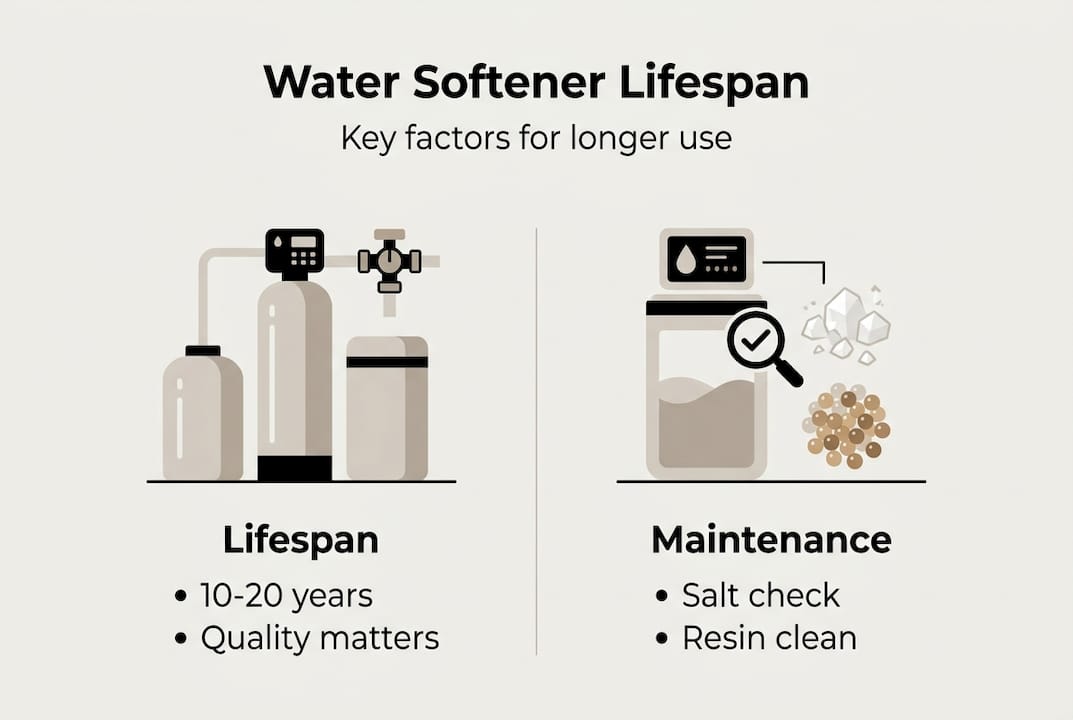
Most water softeners last between 10 and 20 years, but that range depends heavily on quality, usage, and care. Basic models often reach the 10 to 15 year mark before performance drops noticeably. Premium systems with durable resin tanks and advanced controls can push beyond 15 years when maintained properly. The difference comes down to component quality, water hardness levels, and how diligently you perform routine upkeep.
San Antonio’s water presents unique challenges. Our region consistently registers hardness levels above 15 grains per gallon in many neighborhoods, forcing softener resin to work overtime. This accelerated workload wears down the ion exchange beads faster than in areas with moderately hard water. Higher hardness also means more frequent salt consumption and regeneration cycles, adding stress to valves and control heads. If you skip maintenance in these conditions, expect your system to falter closer to the 10 year mark rather than 20.
Environmental factors play a quiet but significant role. Garage installations expose softeners to temperature swings that can crack plastic components or freeze vulnerable parts during rare cold snaps. Water quality issues like iron or sediment contaminate resin beds, reducing their effectiveness and lifespan. Even electrical surges from storms can damage electronic control boards in modern digital units. Choosing the right location and protecting your system from extremes adds years to its service life.
Brand reputation matters more than many homeowners realize. Well known manufacturers use higher grade resin, thicker tank walls, and better seals that withstand pressure and time. Cheaper units often cut corners on these critical components, leading to leaks, valve failures, and premature breakdowns. Investing in a quality water softener installation from a reputable brand pays dividends through fewer repairs and longer intervals between replacements.
- Entry level softeners typically last 10-12 years with basic maintenance
- Mid range models reach 12-15 years when properly cared for
- Premium systems can exceed 18-20 years with excellent upkeep
- San Antonio’s hard water reduces these timelines by 2-3 years without diligent maintenance
How maintenance affects your water softener’s lifespan
Maintenance directly determines whether your softener reaches its maximum lifespan or fails years early. Three core tasks keep systems running smoothly: refilling salt, cleaning resin beds, and flushing the brine tank. Skipping any of these accelerates wear and compromises water quality. Regular resin cleaning and salt refills are critical to system efficiency and longevity, yet many homeowners only think about their softener when problems arise.
Salt management seems simple but requires attention. Using the wrong type damages resin beads over time. Rock salt contains impurities that leave residue, while solar salt dissolves cleanly and extends resin life. Letting the salt level drop too low forces the system to regenerate ineffectively, leaving hard minerals in your water and on your resin. Most systems need salt added every four to six weeks depending on household size and water usage. Checking monthly prevents surprises and keeps your softener operating at peak efficiency.
Resin bed cleaning removes iron deposits and organic matter that accumulate despite regular regeneration cycles. This buildup coats the resin beads, blocking ion exchange sites and reducing softening capacity. Annual cleaning with a specialized resin cleaner restores performance and prevents permanent damage. In San Antonio, where iron content varies by neighborhood, this step becomes even more important. Ignoring resin maintenance for several years can require complete resin replacement, a costly repair that often prompts homeowners to replace the entire unit instead.
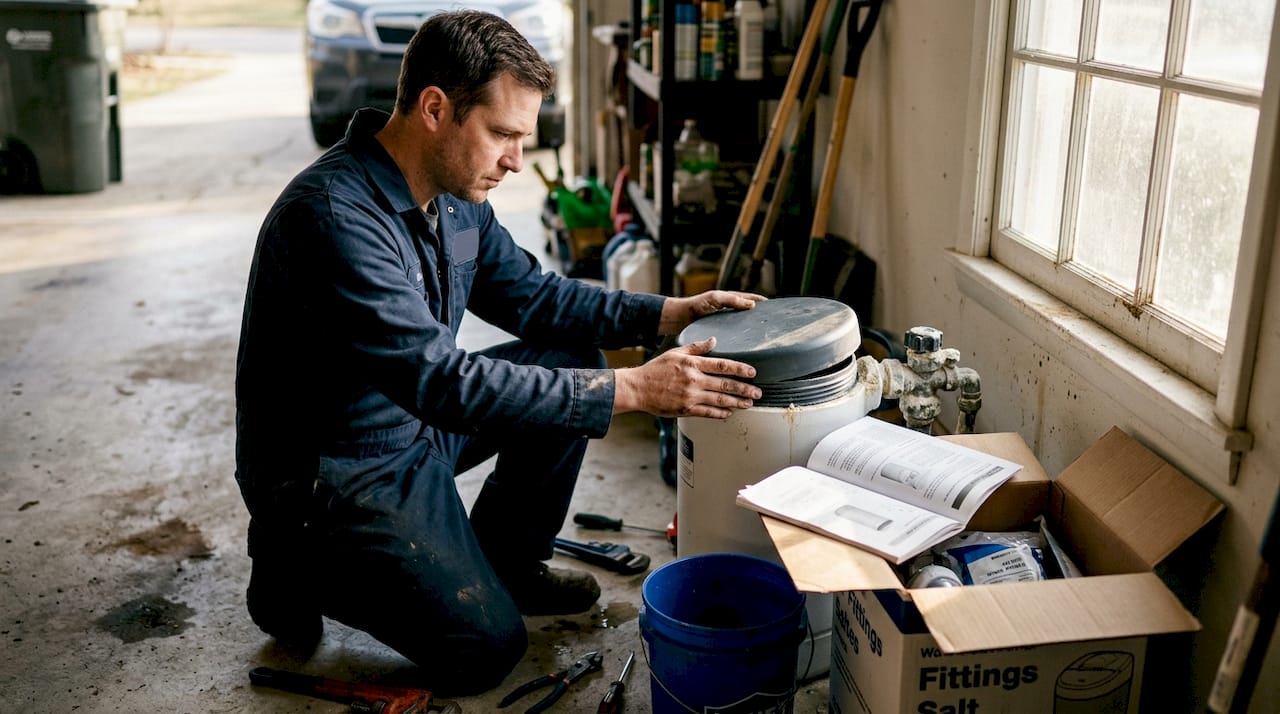
Brine tank maintenance prevents salt bridges and mushing, two common issues that stop regeneration. Salt bridges form when humidity causes salt to clump together, creating a hollow space beneath. The system thinks it has plenty of salt but can’t access it. Mushing happens when dissolved salt recrystallizes at the bottom, forming a thick sludge. Both problems require manual intervention, breaking up bridges or scooping out mush. Cleaning the brine tank annually during salt refills prevents these issues and ensures consistent regeneration.
Common maintenance mistakes cost homeowners thousands in premature replacements. Using water during regeneration cycles interrupts the process and leaves resin partially recharged. Ignoring error codes or unusual noises allows small problems to become major failures. Skipping annual professional inspections means worn seals, failing valves, and corroded connections go unnoticed until they leak or break completely. The minimal cost of routine maintenance, typically under $150 annually for professional service, pales compared to $1,500 to $3,000 for a new system.
Pro Tip: Set phone reminders for monthly salt checks and annual resin cleaning. Consistent small efforts prevent expensive emergency repairs and extend your softener’s life by years. Keep a maintenance log noting salt additions, cleaning dates, and any unusual observations to protect your water softener during winters and track performance trends.
- Check salt levels monthly and refill before the tank drops below one quarter full
- Use high purity solar salt or pellets designed specifically for water softeners
- Clean the resin bed annually with a commercial resin cleaner following manufacturer instructions
- Inspect and clean the brine tank once per year, removing any salt bridges or mushing
- Schedule professional maintenance every 12-18 months for valve inspection and system testing
- Monitor water softness with test strips quarterly to catch declining performance early
Signs it’s time to repair or replace your water softener
Recognizing decline early saves money and prevents plumbing damage. Salty taste and plumbing damage indicate replacement may be needed, but several warning signs appear before reaching that point. Increased salt consumption without corresponding water usage changes suggests the system regenerates more frequently due to failing resin or valve problems. Water spots on dishes and fixtures return despite regular salt levels, signaling reduced softening capacity. Strange noises during regeneration, like grinding or excessive motor running, point to mechanical wear.
Physical symptoms in your home reveal softener problems clearly. Soap scum builds up in showers and sinks when hard minerals slip through. Laundry feels stiff and scratchy instead of soft. Water heaters and appliances develop scale deposits faster, reducing efficiency and lifespan. Plumbing fixtures show white crusty buildup around faucets and showerheads. These signs mean hard water is bypassing your softener, either due to exhausted resin, valve failure, or inadequate regeneration.
Deciding between repair and replacement depends on age, cost, and extent of damage. Minor issues like replacing a control valve or cleaning clogged injectors cost $200 to $500 and add years to a system under 10 years old. Major problems like cracked resin tanks, failed motors, or corroded valve bodies often exceed $800 in repairs. At that point, investing in a new system makes more financial sense, especially if your current unit is already 12 to 15 years old. Professional inspection provides accurate diagnosis and cost comparison.
| Factor | Repair | Replace |
|---|---|---|
| System age | Under 10 years | Over 15 years |
| Issue severity | Single component failure | Multiple failing parts |
| Cost comparison | Under $500 | Repairs exceed 50% of new system cost |
| Efficiency | Restore to original performance | Gain modern efficiency improvements |
| Timeline | 1-2 days for parts and service | 1 day for removal and installation |
| Warranty | Limited to repaired components | Full system warranty 5-10 years |
Some failures clearly signal replacement time. Resin tank cracks or splits cannot be repaired effectively and leak salt water into your home. Control boards in older systems become obsolete, making replacement parts unavailable or prohibitively expensive. If your softener has required multiple repairs in the past two years, continuing to fix it becomes a money drain compared to new equipment. Age combined with repair history guides the smartest financial decision.
Pro Tip: Request a water hardness test during professional inspections. Comparing your treated water hardness to incoming levels reveals exactly how well your softener performs. If treated water measures above 3 grains per gallon, your system isn’t working properly and needs attention. This objective data removes guesswork from repair versus replacement decisions and helps you understand signs to replace your homes old plumbing components.
- Salty or metallic taste in drinking water indicates valve problems or resin exhaustion
- Frequent salt bridge formation suggests humidity issues or incorrect salt type
- Visible rust or corrosion on tank or connections signals structural deterioration
- Error codes or flashing lights on digital controls point to electronic failures
- Leaking around valves or tanks requires immediate professional assessment
- Declining water pressure throughout the house may indicate internal blockages
Choosing the right water softener for lasting performance in San Antonio
Selecting a durable system starts with understanding the types available and their longevity profiles. Salt based ion exchange softeners dominate the market because they last longest with proper upkeep in hard water conditions like ours. These traditional systems use resin beds to swap calcium and magnesium for sodium, effectively removing hardness minerals. Salt free conditioners don’t actually soften water but crystallize minerals to reduce scaling. They require less maintenance but don’t protect plumbing as thoroughly and typically last 5 to 10 years before media replacement becomes necessary.
Dual tank systems offer continuous soft water by alternating between tanks during regeneration. One tank softens while the other regenerates, eliminating the hard water window that occurs with single tank units. This design suits large families or homes with high water usage. The added complexity means more components that can fail, but quality dual tank systems still reach 15 to 18 years with proper care. Single tank units work fine for most households and simplify maintenance with fewer parts to monitor.
Capacity matching prevents premature wear. Undersized softeners regenerate constantly, exhausting resin faster and wasting salt. Oversized units cost more upfront without providing benefits unless your household grows. Calculate your daily water usage and multiply by hardness level to determine required grain capacity. San Antonio water averaging 15 grains per gallon means a family using 300 gallons daily needs a softener rated for at least 4,500 grains between regenerations. Adding 20% buffer accounts for occasional high usage days and extends time between regenerations.
Resin quality separates long lasting systems from early failures. Premium softeners use high capacity resin rated for 10% crosslink, which resists compaction and maintains ion exchange efficiency longer. Standard resin at 8% crosslink costs less but degrades faster under heavy use. Tank construction matters equally. Fiberglass reinforced polyethylene tanks withstand pressure and resist cracking better than basic plastic. Stainless steel valve bodies outlast brass in corrosive conditions. These features add $300 to $500 to initial cost but prevent repairs and extend lifespan significantly.
Warranty coverage indicates manufacturer confidence. Look for at least 5 years on electronics and 10 years on tanks and valves. Some premium brands offer lifetime warranties on tanks, showing their commitment to durability. Read the fine print regarding required maintenance and professional installation. Many warranties become void if homeowners install the unit themselves or skip annual service. Professional installation improves lifespan and system efficiency while protecting your warranty investment.
- Salt based ion exchange softeners provide the longest lifespan and most complete hardness removal
- Look for high capacity 10% crosslink resin in premium models
- Match system capacity to your household’s actual daily water usage and hardness level
- Fiberglass reinforced tanks and stainless steel valves resist corrosion and cracking
- Digital controls with diagnostic features simplify troubleshooting and maintenance tracking
- Warranty coverage should include 10+ years on major components with clear maintenance requirements
Expert installation sets the foundation for longevity. Proper sizing of drain lines, adequate loop connections, and correct bypass valve placement prevent common problems. Professional installers understand local code requirements and ensure your system meets them. They set regeneration schedules based on your specific water conditions rather than factory defaults. This customization optimizes salt usage and reduces unnecessary wear. Investing in quality water softener installation in San Antonio hill country or surrounding areas pays dividends through decades of reliable performance. Choosing proven water softener systems San Antonio residents trust ensures you get equipment designed for our specific water challenges.
Get expert water softener services in San Antonio
Professional plumbing services transform water softener ownership from frustrating guesswork to confident maintenance. Expert installation ensures your system operates at peak efficiency from day one, with proper sizing, placement, and programming tailored to San Antonio’s hard water. Regular maintenance services catch small issues before they become expensive failures, extending your softener’s lifespan well beyond average expectations. When repairs become necessary, experienced technicians diagnose problems accurately and fix them right the first time, saving you money on repeated service calls.
Stultz Plumbing brings local expertise that understands the unique challenges our water presents. Our team provides affordable plumbing services in San Antonio that protect your entire plumbing system, not just your water softener. We offer comprehensive water softener installation with equipment selection guidance based on your household needs and water test results. For Boerne area residents, our specialized water softener repair and installation in Boerne services ensure hill country homes get the same expert care.
Frequently asked questions
How often should I add salt to my water softener?
Most households need to refill salt every four to six weeks depending on water usage and hardness levels. Check your brine tank monthly and add salt when the level drops to one quarter full. Keeping adequate salt prevents regeneration problems and maintains consistent soft water throughout your home.
Can a water softener last longer than 20 years?
Some premium systems with exceptional maintenance reach 22 to 25 years, but performance typically declines after 20 years regardless of care. Resin beds lose capacity, seals harden, and valves wear out. Replacement at the 20 year mark usually makes more financial sense than continuing repairs on aging equipment.
What are the signs my water softener needs repair?
Watch for salty or metallic taste in water, white mineral buildup returning to fixtures, unusual noises during regeneration, and dramatically increased salt consumption. Declining water softness measured with test strips confirms problems. Any of these symptoms warrant professional inspection to determine if repair or replacement makes better sense.
Does San Antonio’s hard water shorten softener lifespan?
Yes, our region’s high mineral content forces softeners to work harder and regenerate more frequently than in areas with moderate hardness. This accelerated wear typically reduces lifespan by two to three years compared to manufacturer estimates. Diligent maintenance becomes even more critical in our conditions to reach expected longevity.
Should I repair or replace a 12 year old water softener?
It depends on the specific problem and repair cost. Minor fixes under $400 make sense for a well maintained 12 year old system. If repairs approach $800 or multiple components are failing, replacement provides better long term value. Consider that a new system includes warranty coverage and improved efficiency that an aging unit cannot match.
Recommended
- Water Softener Systems San Antonio | Stultz Plumbing
- Water Softener Installation in San Antonio | Stultz Plumbing
- How to Protect Your Water Softener During Freezing Weather
- Extend Your Water Heater’s Life | Stultz Plumbing Guide
- Role of Maintenance in Water Purifiers: Complete Guide – Coway Water Purifier
Jean runs growth strategy at AimSetWin, a performance marketing agency specializing in local service businesses across Texas. he's helped plumbers, HVAC companies, pest control operators, and home service brands build predictable revenue systems using data-driven advertising and conversion optimization.