Learn the essential water heater basics every San Antonio homeowner needs: types, maintenance, installation rules, and troubleshooting tips to avoid costly repairs.
TL;DR:
- Regular maintenance, especially flushing and anode rod checks, extends water heater lifespan in San Antonio.
- Proper installation per local codes and permits ensures safety and prevents costly issues.
- Choosing the right type, like heat pump or tankless, depends on household needs and local conditions.
Your water heater works silently every single day, and most homeowners never think about it until something goes wrong. That cold shower on a Monday morning, the strange rumbling noise at 2 a.m., the water bill that crept up for no obvious reason — these are not random bad luck. Most water heater failures are preventable with annual care and a basic understanding of how your system works. This guide gives San Antonio homeowners exactly that: a clear, practical foundation covering the main water heater types, essential maintenance steps, local installation rules, and how to troubleshoot problems before they become expensive emergencies.
Table of Contents
- Types of water heaters: What every homeowner should know
- How to maintain your water heater for long life and efficiency
- Installation essentials: Doing it right in San Antonio
- Troubleshooting common water heater issues
- Our perspective: What most homeowners miss about water heaters
- Trust San Antonio’s water heater experts for support
- Frequently asked questions
Key Takeaways
| Point | Details |
|---|---|
| Pick the right type | Each water heater type offers different lifespans, savings, and needs—know what suits your home. |
| Flush and check often | Flushing and simple annual checks prevent costly damage and keep your water heater running longer. |
| Follow local codes | Proper permitting and installation prevent safety risks and keep your home compliant with San Antonio rules. |
| DIY simple, call for complex | You can handle basic tasks, but always call a pro for anything involving gas, electric, or code issues. |
Types of water heaters: What every homeowner should know
With the basics in mind, let’s break down exactly what types of water heaters are in homes and how each one performs in a Texas climate.
There are four main types you’ll encounter as a San Antonio homeowner: storage tank, tankless, heat pump, and solar. Each works differently, costs differently, and fits different households.
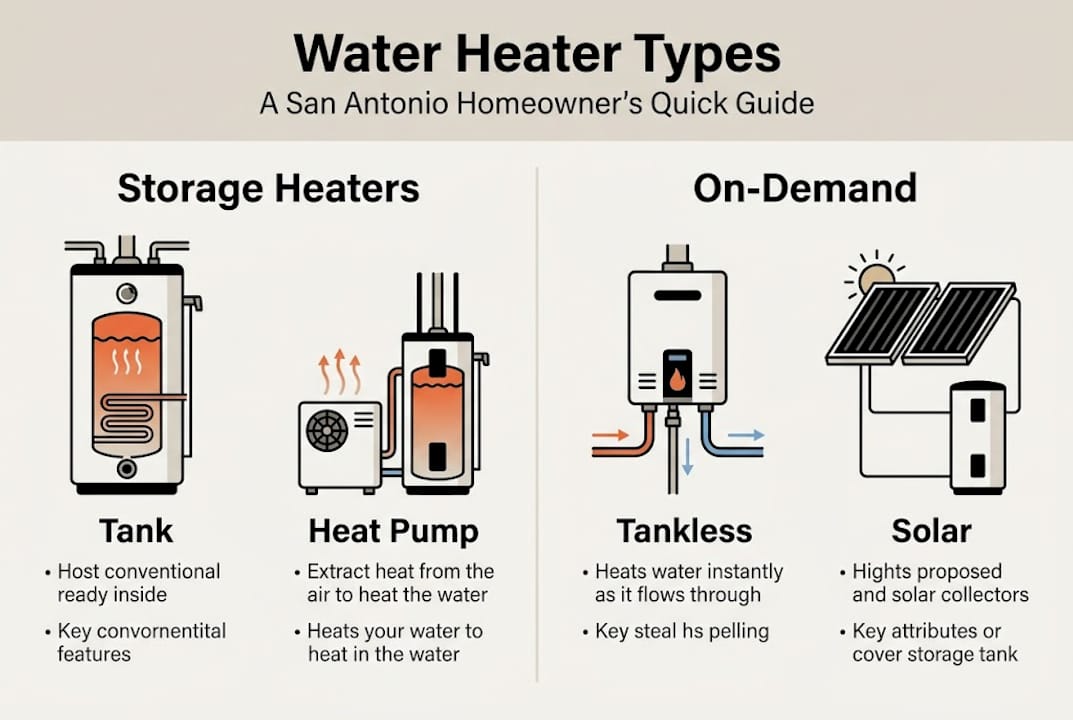
Storage tank water heaters are the most common. They hold 30 to 80 gallons of preheated water and deliver it on demand. They’re affordable upfront and easy to replace, but they run continuously to keep water hot, which drives up energy bills. In San Antonio’s hard water environment, sediment builds up faster inside tanks, shortening their lives.
Tankless water heaters heat water only when you turn on the tap. No tank, no standby heat loss. They’re compact, last longer, and work well in high-demand households. The tradeoff is a higher upfront cost and the need for proper gas line sizing or electrical upgrades.
Heat pump water heaters pull heat from surrounding air to warm water, making them dramatically more efficient. Storage tanks last 10-15 years, tankless units last 20-plus years, and heat pumps save 50-60% versus standard electric tanks. That’s a meaningful difference on your monthly utility bill.
Solar water heaters use rooftop collectors and work well in sunny San Antonio, but they require backup systems and a larger upfront investment.
| Type | Lifespan | Upfront Cost | Energy Efficiency | Best For |
|---|---|---|---|---|
| Storage tank | 10-15 years | Low | Moderate | Most homes |
| Tankless | 20+ years | Medium-High | High | High-demand households |
| Heat pump | 10-15 years | High | Very high (50-60% savings) | Energy-conscious homes |
| Solar | 15-20 years | Very high | Excellent | Sunny climates |
Key factors to compare when shopping:
- Capacity: How many gallons per hour does your household need?
- Energy factor (UEF): Higher UEF means lower operating costs
- Space and ventilation: Heat pumps need at least 1,000 cubic feet of air space
- Fuel type: Gas, electric, or hybrid affects both cost and installation complexity
Pro Tip: Always check the Uniform Energy Factor (UEF) rating when comparing models. A higher number means the unit converts more energy into hot water, which lowers your monthly bill. For help reviewing your water heater service options, our team can walk you through what makes sense for your home’s size and usage.
How to maintain your water heater for long life and efficiency
Now that you know the types, protecting your investment starts with regular maintenance. This is where most homeowners fall short, and it’s where the biggest savings are hiding.
San Antonio’s water is notoriously hard. High mineral content means calcium and magnesium deposits settle at the bottom of your tank faster than in softer water regions. That sediment acts as an insulating layer between the burner and the water, forcing your heater to work harder and wear out sooner. Annual flushing, anode replacement, and TPR valve testing dramatically boost water heater life. In San Antonio, we recommend flushing every six months, not once a year.
Here’s a simple maintenance routine you can follow:
- Flush the tank — Connect a garden hose to the drain valve, turn off the heater, and let sediment-filled water drain out. Do this every six months.
- Test the TPR valve — The temperature-pressure relief (TPR) valve is a safety device. Lift the lever briefly to confirm water flows and releases. Replace it if it sticks or drips.
- Inspect the anode rod — This sacrificial metal rod corrodes so your tank doesn’t. Check it every two to three years and replace it when it’s less than half an inch thick.
- Set the thermostat — 120°F is the sweet spot for energy savings and safety. Higher settings waste energy and risk scalding.
- Insulate pipes and the tank — Foam pipe insulation and an insulating blanket reduce standby heat loss, especially in older units.
- Check for leaks — Look around the base, connections, and valves. Small drips become big water damage quickly.
Skipping this routine can cut your water heater’s lifespan in half. That’s the difference between 12 years of service and six. For tailored San Antonio heater upkeep tips specific to our local water conditions, we’ve put together additional guidance to help you stay ahead of problems.
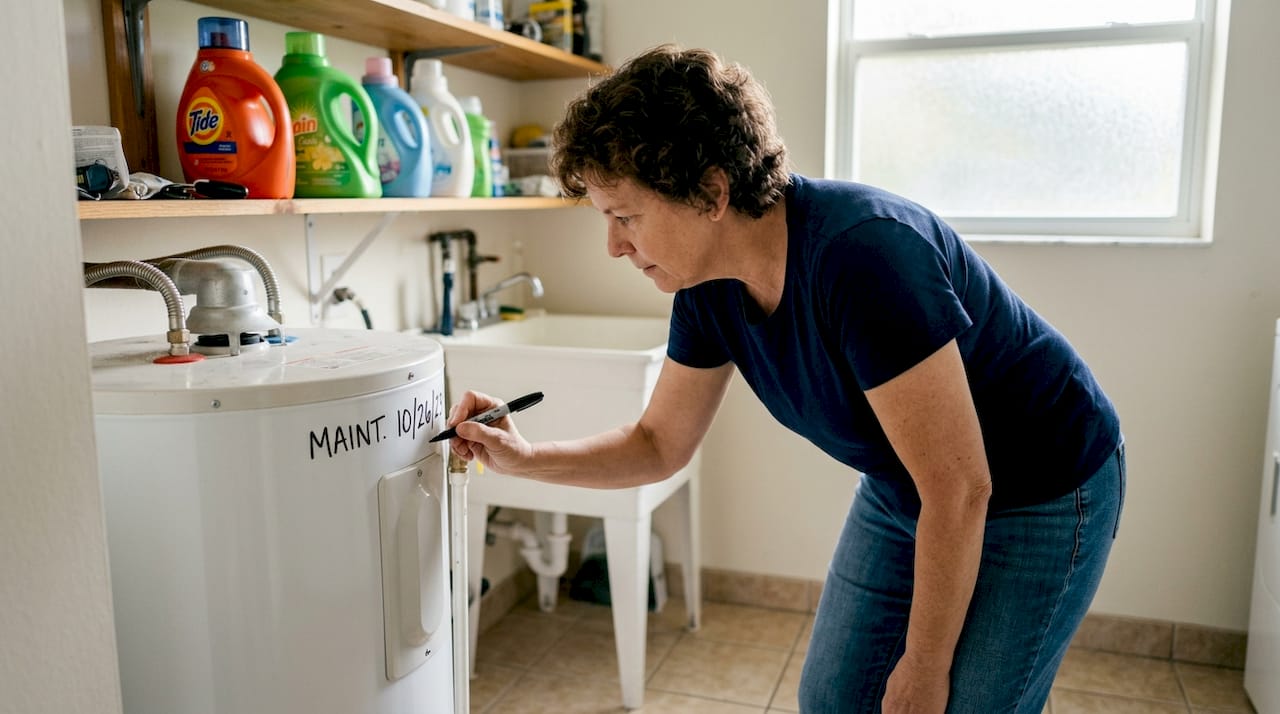
Pro Tip: Write your next maintenance date directly on the tank with a permanent marker. It takes five seconds and removes all guesswork.
Installation essentials: Doing it right in San Antonio
Performing regular maintenance is half the story. The next step is ensuring safe, legal installation and upgrades.
Many homeowners assume swapping a water heater is a simple DIY job. In San Antonio, it’s not that simple. The city requires permits and inspections for water heater installations, with strict rules covering venting, expansion tanks, and seismic strapping. Skipping permits isn’t just a legal risk. It can void your homeowner’s insurance and create problems when you sell your home.
Here’s what San Antonio code typically requires:
- Permit: Required for both new installations and like-for-like replacements
- TPR discharge pipe: Must terminate within six inches of the floor or drain
- Drip pan: Required when the unit is installed above living space
- Expansion tank: Needed on closed plumbing systems to handle pressure buildup
- Seismic straps: Required to secure the tank against movement
- Proper venting: Gas units need correctly sized flue pipes with adequate clearance
Code compliance isn’t just about following rules. It protects your family’s safety and preserves your home’s value.
| Installation factor | DIY risk | Licensed plumber advantage |
|---|---|---|
| Permit filing | Easy to miss steps | Handled correctly, first time |
| Gas line connections | High danger if incorrect | Certified and pressure-tested |
| Venting and clearance | Code violations common | Meets 2024 IRC/IMC standards |
| Expansion tank sizing | Often undersized | Matched to system pressure |
When should you hire a licensed plumber? Any time you’re dealing with gas connections, electrical panel upgrades, or a first-time installation in a new location. For guidance on local replacement regulations, we’ve outlined exactly what San Antonio homeowners need to know before starting the process.
Troubleshooting common water heater issues
Even with the right heater and proper maintenance, issues can crop up. Here’s what to check when the hot water stops flowing.
Top homeowner complaints include no hot water, not enough hot water, leaks, noise, and odors. Most are preventable or easily fixed when caught early.
Common symptoms and what they usually mean:
- No hot water: Tripped breaker (electric) or extinguished pilot light (gas)
- Not enough hot water: Sediment buildup, undersized tank, or a failing heating element
- Rumbling or popping noise: Sediment at the bottom of the tank being heated
- Rotten egg smell: Bacterial growth in the tank, often from a depleted anode rod
- Water pooling at the base: Leaking drain valve, loose connections, or tank corrosion
- Overheating or scalding water: Thermostat set too high or a faulty thermostat
First steps to try before calling anyone:
- Reset the circuit breaker or relight the pilot light
- Flush the tank to clear sediment
- Check the thermostat setting and adjust to 120°F
- Inspect all visible connections for drips
- Listen for the heating element cycling on and off
Some repairs are safe for homeowners to handle. Others are not. Never attempt gas line repairs, electrical component replacements, or TPR valve work without a license. These involve real safety risks. For step-by-step detailed troubleshooting tips or help deciding between options, our repair vs replace guide can help you make a confident, informed decision.
Our perspective: What most homeowners miss about water heaters
We’ve seen hundreds of water heater failures across San Antonio, and the pattern is almost always the same. The homeowner knew something was off for months. They heard the noise, noticed the slightly lower water temperature, or saw a small drip. But they waited.
Here’s what standard advice misses: San Antonio’s water isn’t just hard, it’s aggressive. Hard water here means even newer heaters can degrade rapidly without aggressive flushing and anode checks. A unit that might last 14 years in Austin can fail in eight years here without proper care.
The other thing we see constantly is homeowners investing in tankless or heat pump systems without addressing the installation details. These are excellent technologies, but they only perform as promised when sized correctly, vented properly, and paired with the right water treatment. A tankless heater on hard water without a sediment filter is a recipe for failure within a few years.
The single step that doubles most tanks’ lifespans? Replacing the anode rod on schedule. It costs under $50 and takes about 30 minutes. Most homeowners have never done it once. For local maintenance tips built around San Antonio’s specific conditions, we’ve made it easy to stay on top of this.
Less than one hour per year of basic care prevents the majority of the failures we’re called to fix. That’s a powerful return on a small investment of time.
Trust San Antonio’s water heater experts for support
If you want true peace of mind or run into an issue you can’t solve yourself, get help from local experts. At Stultz Plumbing, we handle everything from routine maintenance and fast repairs to full installations that meet San Antonio’s 2024 code requirements. Our team knows local water conditions, permit processes, and the specific challenges that come with Texas homes. Explore our affordable plumbing services to see how we can help, or use our repair or replace advice to figure out your best next move. When you’re ready to act, our water heater repair or replacement service is one call away.
Frequently asked questions
How often should I flush my water heater in San Antonio?
Flush every six months in San Antonio due to hard water conditions that accelerate sediment buildup and increase the risk of premature failure.
What temperature should I set my water heater to?
Set your thermostat to 120°F for safety and energy efficiency, which reduces scalding risk and lowers monthly operating costs.
Do I need a permit to replace my water heater in San Antonio?
Yes, a plumbing or mechanical permit is required for water heater replacement in San Antonio, and the installation must meet current 2024 code standards.
When should I call a plumber instead of DIY for my water heater?
Call a licensed plumber for gas line or electrical repairs and TPR valve replacement, as these involve serious safety and code compliance risks.
What’s the most efficient type of water heater for San Antonio homes?
Heat pump water heaters are the most efficient option, saving 50-60% over standard electric tanks, though they require adequate space and proper ventilation to perform correctly.
Recommended
- Water Heater Services in San Antonio TX
- Top water heater maintenance tips for San Antonio homes
- Top Signs You Need to Replace Your Water Heater in San Antonio
- Water heater repair vs replace guide for San Antonio 2026
Jean runs growth strategy at AimSetWin, a performance marketing agency specializing in local service businesses across Texas. he's helped plumbers, HVAC companies, pest control operators, and home service brands build predictable revenue systems using data-driven advertising and conversion optimization.