

This emergency plumbing guide shows step-by-step actions for San Antonio and Boerne homeowners to solve urgent plumbing issues quickly and safely.
Waking up to the sound of rushing water in your San Antonio or Boerne home can turn an ordinary morning into a race against time. Plumbing emergencies are never convenient and waiting too long can mean costly repairs and major headaches. Knowing how to act fast with a quick and accurate assessment gives you the upper hand in protecting your family’s comfort and stopping damage before it spreads.
Table of Contents
- Step 1: Assess The Plumbing Emergency
- Step 2: Shut Off Water And Power Safely
- Step 3: Contain Leaks And Prevent Damage
- Step 4: Apply Quick Fixes To Slow Issues
- Step 5: Verify Temporary Repairs And Call Professionals
Quick Summary
| Key Point | Explanation |
|---|---|
| 1. Assess the Plumbing Issue | Identify leak severity by checking for pooling water, unusual sounds, or pressure changes. Prompt assessment minimizes damage. |
| 2. Shut Off Water and Power | Turn off the main water valve and electrical circuits to prevent further damage. Ensure safety by not accessing wet electrical areas. |
| 3. Contain the Leak | Use waterproof tarps, towels, and buckets to contain leaks immediately. Quick containment prevents extensive water damage. |
| 4. Apply Quick Fixes | Use pipe clamps, waterproof tape, and epoxy for temporary repairs. Doing so can stabilize issues until professional help arrives. |
| 5. Call Professionals When Needed | Monitor temporary repairs for ongoing issues. Seek professional assistance if leaks persist or if there are signs of structural damage. |
Step 1: Assess the Plumbing Emergency
When a plumbing emergency strikes your San Antonio home, quick and accurate assessment can mean the difference between a minor repair and a major disaster. Understanding how to evaluate the situation will help you take immediate, strategic action to minimize potential damage.
First, identify the specific type and severity of the plumbing issue you’re experiencing. Look for key indicators such as water volume, location of the leak, and potential structural risks. Some critical areas to examine include:
- Visible water pooling on floors or walls
- Unusual sounds like hissing or rushing water
- Significant water pressure changes
- Potential sewage backups
- Active pipe leaks or ruptures
Rapid assessment is crucial in preventing extensive water damage to your home.
Next, perform a quick safety check. Turn off your main water valve to stop additional water flow and prevent further potential damage. If you’re unsure about the valve’s location, check near your water meter or in your basement. Electrical safety is paramount – if water is near electrical outlets or appliances, avoid the area and consider shutting off electricity at the circuit breaker.
For a comprehensive understanding of emergency preparedness, review emergency management resources that can guide your response strategy.
Pro tip: Keep a flashlight and wrench near your main water valve so you can quickly locate and shut off water during unexpected emergencies.
Step 2: Shut Off Water and Power Safely
Quickly and safely stopping water flow and electrical power is crucial during a plumbing emergency to prevent extensive damage and protect your home and family. Understanding the correct procedures can help you minimize risks and potential hazards.
First, locate your main water shut-off valve. Typically, this valve is found near your water meter, in the basement, or on the ground floor. Emergency water shut-off procedures recommend turning the valve clockwise to completely stop water flow. If you have a gate valve, turn it until it’s fully closed. For ball valves, rotate the handle 90 degrees until it’s perpendicular to the pipe.
When dealing with electrical safety, follow these critical steps:
- Identify your home’s main circuit breaker panel
- Wear rubber-soled shoes for electrical protection
- Use a dry wooden object to switch off breakers if the area is wet
- Switch off circuits near water-affected areas
Electrical safety is paramount during any water-related emergency.
If water has reached electrical outlets or appliances, do not touch them. Instead, follow power outage safety guidelines and call a professional electrician or your local utility company for assistance.
Pro tip: Keep a laminated emergency guide near your circuit breaker showing which switches control specific areas of your home for quick reference during stressful situations.
Step 3: Contain Leaks and Prevent Damage
In the midst of a plumbing emergency, your primary goal is to minimize water damage and protect your home’s structural integrity. Rapid and strategic leak containment can save you thousands of dollars in potential repairs and prevent long-term structural issues.
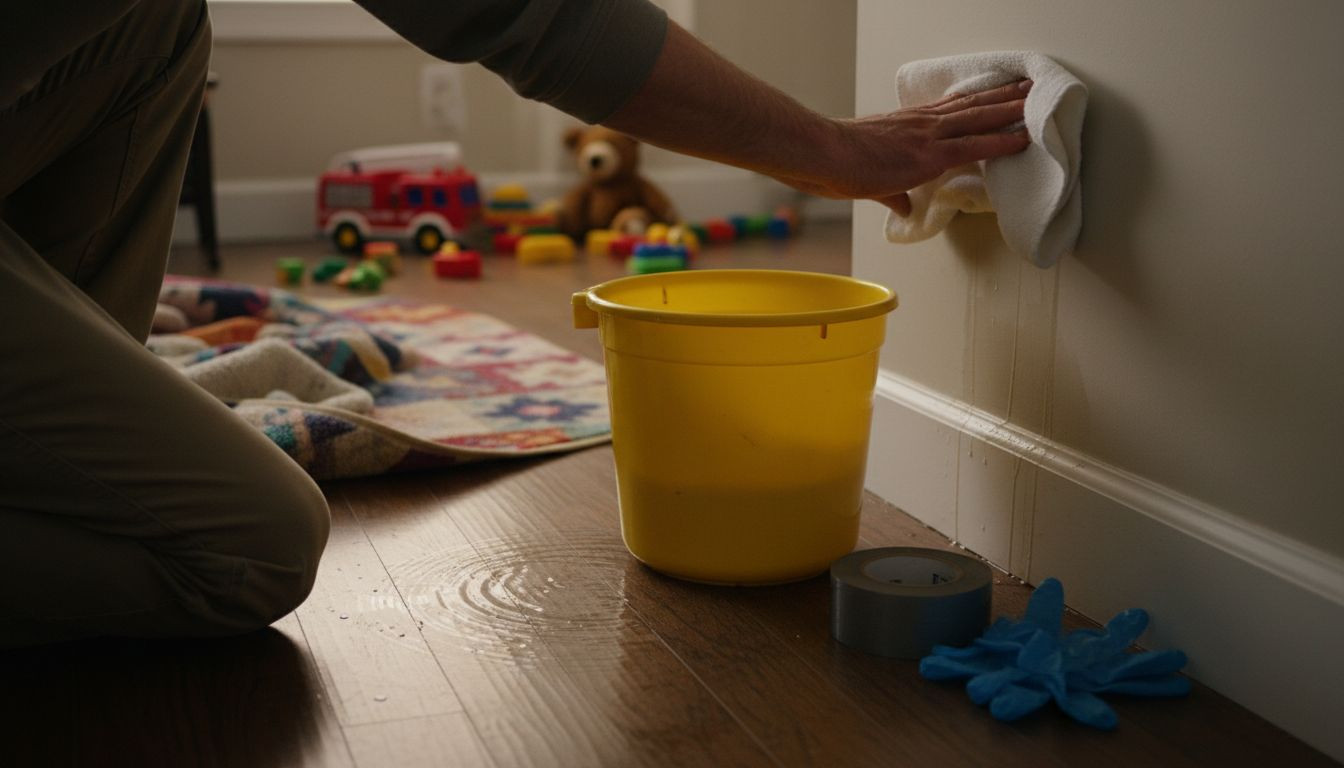
Begin by gathering emergency containment materials. Waterproof tarps, absorbent towels, and plastic sheeting are your first line of defense. Home water damage prevention strategies recommend quickly identifying the leak’s source and creating a temporary barrier to stop water spread. For smaller leaks, use heavy-duty towels or specialized water-absorption mats to soak up standing water immediately.
Depending on the leak’s severity, use these containment techniques:
- Place buckets under active drips to catch water
- Use waterproof tape to seal minor pipe cracks temporarily
- Wrap leaking pipes with rubber and clamps
- Create drainage paths away from valuable furniture and electronics
- Move vulnerable items to dry areas immediately
Quick action can prevent catastrophic water damage to your home’s structure and belongings.
Understand your home’s plumbing installation standards to better assess potential long-term risks. Some leaks might indicate deeper structural problems that require professional intervention.
Pro tip: Keep a dedicated emergency leak kit with towels, waterproof tape, plastic sheeting, and rubber gloves in an easily accessible location to respond quickly during unexpected plumbing incidents.
Step 4: Apply Quick Fixes to Slow Issues
When facing a plumbing emergency, knowing how to apply temporary fixes can buy you crucial time and potentially prevent more extensive damage. Understanding basic repair techniques will help you stabilize the situation before professional help arrives.
Practical plumbing maintenance suggests several strategies for addressing common slow plumbing issues. For minor leaks and pipe problems, you can implement these quick containment techniques:
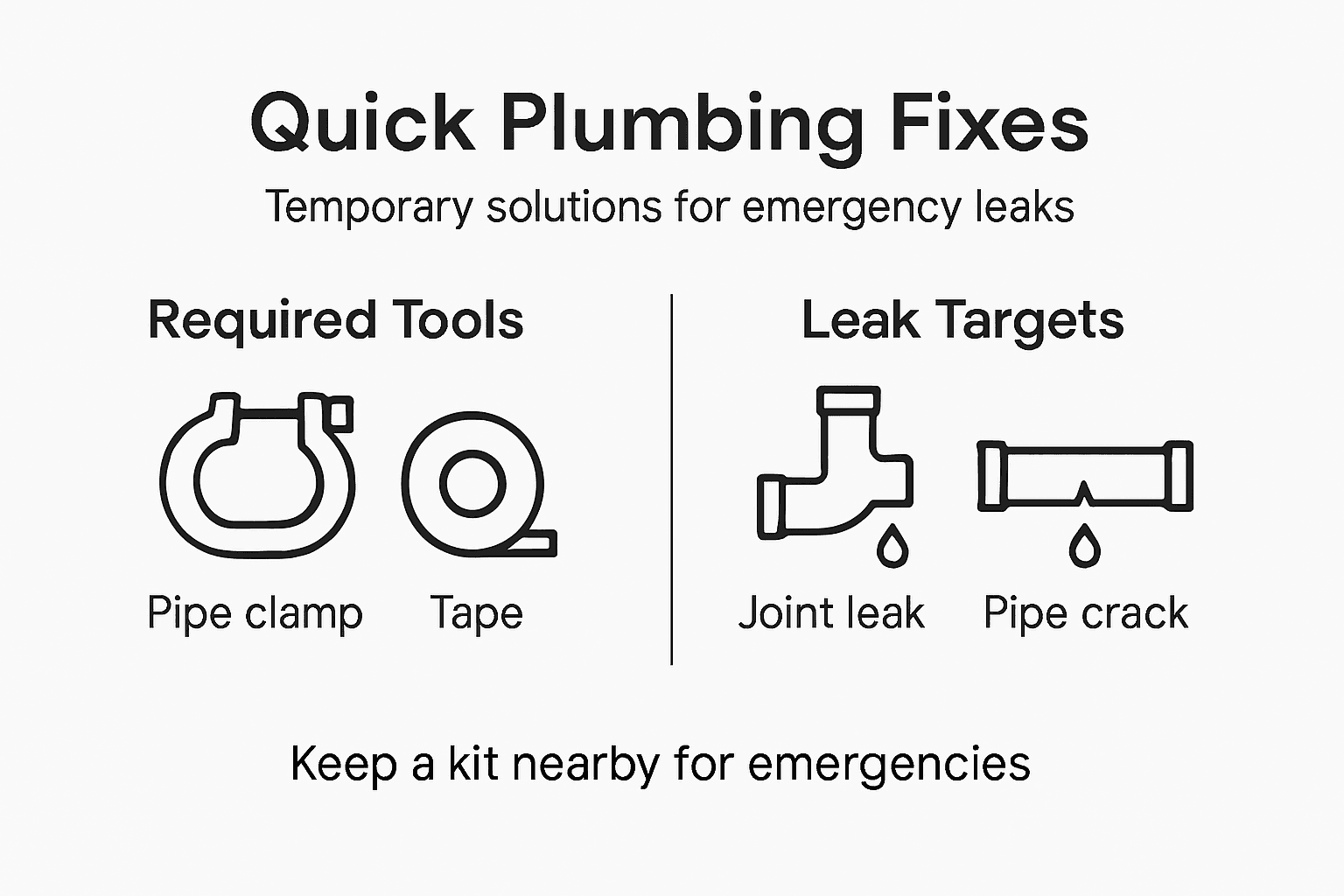
- Use pipe repair clamps for small ruptures
- Apply waterproof epoxy to seal tiny cracks
- Tighten loose pipe connections with adjustable wrenches
- Replace damaged washers in faucets
- Use plumber’s tape on threaded pipe connections
Temporary repairs can prevent significant water damage while you arrange professional help.
Refer to plumbing problem documentation to understand the potential risks of prolonged issues. Small leaks can quickly escalate into major structural problems if left unaddressed. Always monitor the effectiveness of your temporary fix and prepare for professional intervention.
Here’s a quick comparison of common temporary plumbing fixes and their effectiveness:
| Temporary Fix Method | Suitable For | Expected Duration |
|---|---|---|
| Pipe repair clamp | Small pipe ruptures | Several days |
| Waterproof epoxy | Tiny cracks or holes | Hours to a few days |
| Plumber’s tape | Minor threaded leaks | 1-2 days |
| Waterproof tape wrap | Leaks at pipe joints | Hours |
| Tightened connections | Loose faucets or fittings | As long as no movement |
Pro tip: Keep a compact emergency plumbing repair kit with pipe clamps, waterproof tape, and basic tools in an easily accessible location to respond quickly during unexpected issues.
Step 5: Verify Temporary Repairs and Call Professionals
After applying emergency plumbing fixes, your next critical step is carefully assessing the effectiveness of your temporary repairs and preparing to bring in professional help. Not all quick fixes are permanent solutions, and recognizing when you need expert intervention can save your home from potential extensive damage.
Emergency home repair guidelines emphasize the importance of thorough assessment before assuming a problem is resolved. Carefully inspect your temporary repair by monitoring these key indicators:
- Check for continued water leakage
- Observe pipe pressure and stability
- Look for signs of additional structural stress
- Monitor repaired areas for moisture or discoloration
- Assess the overall integrity of your temporary fix
Professional assessment is crucial in preventing long-term plumbing complications.
Before scheduling a professional, verify plumbing contractor credentials to ensure you’re working with a licensed and qualified technician. Gather all details about the temporary repair, including the location, type of damage, and steps you’ve already taken to mitigate the issue.
Review this summary of when to seek professional help after temporary repairs:
| Situation Indicator | Why to Call a Professional |
|---|---|
| Continued water leakage | May signal hidden pipe issues |
| Pressure instability after repair | Suggests larger system failure |
| Moisture or recurring discoloration | Risk of mold and structural damage |
| Repairs repeatedly fail | Temporary methods are insufficient |
| Water reached electrical systems | Safety and code compliance needed |
Pro tip: Take clear photos of the temporary repair and affected area to provide your plumber with comprehensive information about the emergency.
Fast, Reliable Help When Plumbing Emergencies Strike Your San Antonio Home
Plumbing emergencies require quick action and trusted solutions to prevent costly water damage and structural risks. This guide highlights key steps like assessing leaks, shutting off water safely, containing damage, and applying temporary fixes. If you want peace of mind knowing your emergency repairs are handled by licensed professionals with honest pricing and dependable service, Stultz Plumbing is your local San Antonio and Boerne expert.
Do not wait until a small drip turns into a major disaster. Visit Stultz Plumbing today to connect with a family-owned team specializing in emergency plumbing services. They provide fast response times and long-term fixes for issues like leak detection, drain cleaning, and water heater repair. Get expert help that protects your home now and prevents future problems. Act now to secure your home against unexpected plumbing troubles and experience the difference of trusted professionals ready to assist you 24/7.
Frequently Asked Questions
What should I do first during a plumbing emergency?
To start, quickly assess the situation and identify the type and severity of the plumbing issue. Look for signs like visible water pooling, unusual sounds, or changes in water pressure, and then turn off your main water valve to prevent further damage.
How can I safely shut off power during a plumbing emergency?
Locate your main circuit breaker panel and turn off the power in areas affected by water. Wear rubber-soled shoes and use a dry wooden object if necessary to switch off breakers to ensure your safety from electrical hazards.
What quick fixes can I apply to slow down a plumbing issue?
You can apply temporary fixes like using pipe repair clamps for small ruptures or wrapping leaking pipes with rubber and clamps. These actions can help contain leaks and minimize damage until professional help arrives.
How do I know if my temporary repairs are effective?
After applying quick fixes, regularly check for ongoing water leakage and observe the stability of repaired areas. If you notice continued issues or changes in moisture levels, it may indicate that professional intervention is needed.
When should I call a professional plumber?
Contact a professional plumber if you see continued water leakage, pressure instability, or signs of additional damage after applying temporary fixes. It’s important to seek expert help before minor issues escalate into major structural problems.
Recommended
Jean runs growth strategy at AimSetWin, a performance marketing agency specializing in local service businesses across Texas. he's helped plumbers, HVAC companies, pest control operators, and home service brands build predictable revenue systems using data-driven advertising and conversion optimization.


