

Learn what qualifies as a plumbing emergency, common San Antonio issues, how pros respond, and what 2026 repair costs look like. Get expert guidance from Stultz Plumbing.
TL;DR:
- Only plumbing issues causing immediate safety, health, or property damage qualify as emergencies.
- Preventive maintenance reduces the likelihood of costly plumbing emergencies by up to 80%.
- Promptly shutting off water and calling a licensed emergency plumber are essential steps during a crisis.
Not every dripping faucet at 2 a.m. deserves a panic call, but some plumbing problems genuinely cannot wait until morning. Knowing the difference protects your home, your wallet, and your peace of mind. Many San Antonio homeowners either overreact to minor issues or, worse, ignore warning signs until real damage sets in. The truth is that preventive maintenance reduces emergencies by 80%, which means most crisis calls are avoidable with the right knowledge. This guide cuts through the confusion, defines what truly qualifies as a plumbing emergency, and gives you a practical roadmap for handling high-stakes situations confidently.
Table of Contents
- What is emergency plumbing?
- Common emergency plumbing issues in San Antonio homes
- How emergency plumbers respond: Steps and solutions
- Costs of emergency plumbing in Texas: What to expect in 2026
- Why most emergencies can be prevented: An expert’s take
- How to get reliable emergency plumbing help now
- Frequently asked questions
Key Takeaways
| Point | Details |
|---|---|
| Define true emergency | Not all plumbing problems require immediate action—true emergencies risk major damage or health hazards. |
| Act fast and smart | Immediately shut off water and call a licensed emergency plumber to minimize further harm. |
| Be cost-aware | Emergency plumbing costs more, so know the rates, avoid unnecessary calls, and maintain regularly. |
| Prevention saves money | Regular inspections and proactive repairs can prevent up to 80 percent of plumbing crises. |
What is emergency plumbing?
Now that we’ve clarified why not every plumbing problem is urgent, let’s define what actually qualifies as an emergency and how to spot the difference.
Emergency plumbing refers to 24/7 rapid response services for urgent issues that threaten property damage, health, or safety. It is not a routine service call you schedule a week out. It is a specialized, fast-moving response designed to stop active harm to your home right now.
Routine plumbing covers things like slow drains, minor fixture repairs, or a toilet that runs occasionally. These are real problems, but they don’t threaten your home’s structure or your family’s safety within hours. Emergency plumbing, by contrast, addresses situations where delay makes everything significantly worse. Think flooding, sewage exposure, or loss of water entirely.
What defines a true emergency: Any plumbing situation that poses an immediate risk of structural damage, health hazard, or safety threat qualifies. If waiting 24 hours means a flooded kitchen or contaminated water supply, that’s your answer.
Here’s a quick comparison to help you decide:
| True emergency | Can wait for regular service |
|---|---|
| Burst pipe flooding rooms | Slow-draining sink |
| Sewage backup into home | Dripping faucet |
| Gas leak near plumbing lines | Running toilet (no overflow) |
| Complete loss of water | Minor fixture leak |
| Slab leak causing foundation risk | Low water pressure |
San Antonio’s climate adds a layer of complexity. Freezing temperatures during rare winter storms, like the ones Texas experienced in 2021, cause pipes to burst suddenly. Conversely, the intense summer heat accelerates pipe material breakdown in older homes. These regional factors mean that some issues escalate faster here than in other parts of the country.
Before anything else, review these emergency plumbing tips so you’re prepared, and bookmark when to call an emergency plumber for fast reference during a stressful moment.
Key signs you’re dealing with a real emergency:
- Water actively spreading across floors or walls
- Sewage smell or visible backup inside the home
- No water access at all
- Visible pipe damage with active flow
- Suspected gas leak near water lines
Common emergency plumbing issues in San Antonio homes
Understanding what qualifies as an emergency is just the start. Here’s what San Antonio homeowners encounter most often and what to do first.
| Emergency type | Symptoms | First step |
|---|---|---|
| Burst pipe | Sudden flooding, wet walls | Shut off main water valve |
| Sewer backup | Gurgling drains, sewage smell indoors | Avoid using drains, call immediately |
| Overflowing toilet | Water on floor, no stop | Turn off toilet shutoff valve |
| Severe water leak | Visible pipe failure, pooling water | Shut off water, contain with towels |
| Gas leak | Sulfur smell, hissing near lines | Evacuate, call 911, then a plumber |
Slab leaks are hidden under foundations and are especially common in Texas slab homes, where the ground shifts with moisture changes throughout the year. San Antonio’s expansive clay soil contracts and expands constantly, placing stress on pipes buried beneath your foundation. You might notice unexplained warm spots on your floor, a water bill that jumped without explanation, or the faint sound of running water when everything is off. These are not subtle hints; they’re serious warnings.

Gas leaks deserve their own callout. If you smell sulfur or hear a hissing sound near any water heater or gas-connected plumbing, do not touch anything electrical. Leave the house immediately, call 911 from outside, and then contact a licensed plumber once emergency services have cleared the scene.
Pro Tip: Know where your main water shutoff valve is before any emergency happens. It’s usually near the water meter at the street or where the main line enters your home. Being able to cut the water in under 30 seconds can prevent thousands of dollars in damage.
For a full walkthrough on protecting yourself during these scenarios, check out this guide on handling plumbing emergencies. And for a broader look at how to safeguard your home, visit our resource on emergency plumbing protection.
How emergency plumbers respond: Steps and solutions
Now that you recognize what counts as an emergency, let’s look at how pros actually tackle these high-stakes situations.
When our team arrives at your home, every second counts. Here’s the sequence we follow:
- Water shutoff: The first priority is stopping the source. We locate and close the main valve or the specific supply line causing the problem.
- Initial assessment: We identify whether the issue is a pipe failure, blockage, sewer problem, or something structural like a slab leak.
- Damage containment: We isolate affected areas to prevent water from spreading to dry zones, protecting flooring, drywall, and personal property.
- Advanced diagnostics: For hidden issues, we use camera inspection to look inside pipes, acoustic detection to hear pressurized leaks behind walls, and thermal imaging to spot temperature anomalies from hidden water flow.
- Repair or stabilization: Emergency services prioritize stabilization over full repair on the first visit. Stopping active damage is the goal. Full restoration may follow in a scheduled appointment.
- Documentation: We walk you through what was found, what was done, and what needs follow-up, so you’re never left guessing.
Pro Tip: When calling an emergency plumber, ask directly whether their service vehicle is stocked for on-the-spot repairs. A well-equipped truck means faster fixes and fewer return visits. This one question can save hours.
For blocked or slow drain situations within an emergency, professional hydro jetting solutions use high-pressure water to clear obstructions that chemicals or snaking cannot touch. This is especially useful after sewer backups. Our complete emergency plumbing guide covers these solutions in more detail.
Costs of emergency plumbing in Texas: What to expect in 2026
Before you’re faced with an urgent repair, it’s smart to know what the costs really look like and what you can control.
Emergency plumbing is not cheap, and it shouldn’t be. You’re paying for 24/7 availability, specialized equipment, and immediate response. Here’s a realistic breakdown of repair costs in Texas for 2026:
| Issue | Estimated cost range | Notes |
|---|---|---|
| Burst pipe | $500 to $4,000+ | Depends on location and access |
| Sewer backup | $2,000 to $8,000+ | Includes clearing and cleanup |
| Slab leak repair | $600 to $4,000 | Detection adds to cost |
| Overflowing toilet | $150 to $500 | Usually faster to resolve |
| Water heater failure | $800 to $2,500 | Replacement vs. repair varies |
Emergency rates run 1.5 to 3 times the standard rate, with trip fees ranging from $150 to $350 depending on time of day and distance. After-hours calls, holidays, and weekend service always carry surcharges. That’s the reality of on-demand skilled labor.
The bottom line on costs: Preventive maintenance is almost always cheaper than an emergency call. Catching a weakening pipe joint during an annual inspection costs a fraction of what a burst pipe inside your wall will.
Here’s how to manage your exposure:
- Schedule annual plumbing inspections to catch problems before they escalate
- Know your shutoff valve location to minimize damage while waiting for help
- Ask for upfront pricing before any work begins to avoid surprise bills
- Check your homeowner’s insurance policy since some emergencies like burst pipes may be covered
- Avoid DIY fixes on pressurized systems since a failed patch often costs more than calling a pro from the start
For a detailed look at what you might pay locally, see our breakdown of emergency plumber cost in San Antonio, and review water leak repair cost specifics before your next call.
Why most emergencies can be prevented: An expert’s take
With all the numbers and solutions considered, let’s step back for an honest look at what really causes plumbing disasters.
We’ve seen it hundreds of times. A homeowner calls us in a panic at midnight, facing a flooded utility room, and when we trace the problem back, it started as a slow, detectable leak months earlier. The pipe fitting that finally gave out showed clear signs of corrosion. A simple inspection would have caught it.
The hard truth is that most plumbing emergencies are not random bad luck. They are the result of deferred maintenance. Preventive maintenance reduces emergencies by 80%, and that statistic lines up exactly with what we see in the field. The homes that call us least often are the ones that invite us in for checkups most regularly.
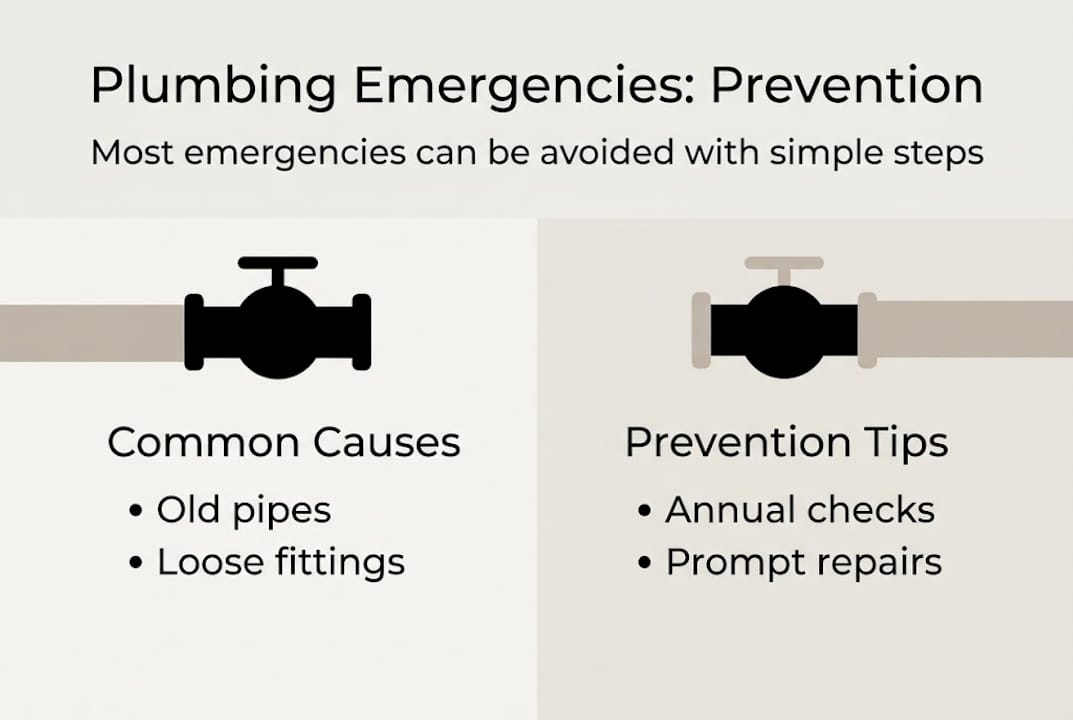
San Antonio’s soil movement and extreme temperature swings do make plumbing more vulnerable here than in many other cities. That’s real. But it also means prevention is more practical, not less. Knowing your pipes are under extra stress is a reason to inspect more often, not to assume disaster is inevitable.
If you want to understand the specific risks your home faces, start with common emergency plumbing issues and build your maintenance plan from there. A $150 inspection today is a far better investment than a $4,000 emergency call at midnight.
How to get reliable emergency plumbing help now
Armed with this knowledge, you’re ready to take action if the worst happens. Here’s how to get immediate help.
When a plumbing crisis hits your San Antonio home, you need a licensed, local team that arrives fast and solves the problem correctly the first time. Stultz Plumbing provides around-the-clock emergency response with fully stocked service vehicles and technicians who know San Antonio’s unique plumbing challenges inside and out. We don’t just stabilize the damage; we give you a clear path forward. Reach out to our emergency plumber in San Antonio any time of day or night. We offer emergency services in less than 60 minutes across San Antonio and surrounding communities, with transparent pricing and no surprise fees.
Frequently asked questions
What qualifies as a plumbing emergency?
A plumbing emergency is any situation that poses an immediate threat of property damage, health risk, or safety hazard. Emergency plumbing refers to 24/7 rapid response services covering situations like flooding, sewer backup, gas leaks, or complete loss of water.
How much does emergency plumbing cost in San Antonio?
Repair costs in Texas for 2026 range from $500 to $4,000+ depending on the issue, with emergency surcharges running 1.5 to 3 times standard rates and trip fees between $150 and $350.
What should I do first during a plumbing emergency?
Immediate water shutoff is the single most important first step, followed by calling a licensed emergency plumber to prevent further damage to your home.
Are all leaks considered emergencies?
Not all issues are true emergencies, as a dripping faucet is very different from a flooding pipe. Only leaks that actively threaten your home’s structure or water supply require an emergency call.
Recommended
- Emergency Plumbing Guide for Fast Home Solutions
- 7 Essential Emergency Plumbing Tips for Homeowners
- Handle plumbing emergencies: step-by-step guide 2026
- Why prompt plumbing repairs prevent costly damage
Jean runs growth strategy at AimSetWin, a performance marketing agency specializing in local service businesses across Texas. he's helped plumbers, HVAC companies, pest control operators, and home service brands build predictable revenue systems using data-driven advertising and conversion optimization.


