

Electric pool heater installation in San Antonio: Learn system types, key steps, safety regulations, costs, and mistakes to avoid for optimal comfort.
Choosing the right electric pool heater can seem complicated when safety, efficiency, and San Antonio’s unique weather all play a role. Homeowners with in-ground pools want warmth without worry, so every installation must balance modern comfort with strict safety codes. This guide breaks down the process, highlighting the importance of professional expertise, local compliance, and how different technologies like heat pumps offer better energy efficiency for year-round swimming.
Table of Contents
- What Electric Pool Heater Installation Involves
- Types of Electric Pool Heaters for San Antonio Homes
- Step-By-Step Process for Professional Installation
- Safety Codes and Local Compliance Requirements
- Cost, Efficiency, and Common Pitfalls to Avoid
Key Takeaways
| Point | Details |
|---|---|
| Professional installation is essential | Hire licensed electricians for pool heater installation to ensure compliance with safety standards and local codes. |
| Understanding heater types is crucial | Choose between heat pumps for efficiency and lower operating costs, or resistance heaters for faster heating but higher energy consumption. |
| Importance of permits and inspections | Always obtain necessary permits and pass inspections to protect your home and ensure safety. |
| Regular maintenance maximizes efficiency | Schedule routine maintenance to prevent breakdowns and maintain optimal performance of your pool heater. |
What Electric Pool Heater Installation Involves
Electric pool heater installation is more than just connecting equipment and flipping a switch. It’s a detailed process that requires understanding electrical systems, safety codes, and proper connections to keep your family safe while enjoying a warm pool year-round.
The installation process starts with planning and assessment. A professional technician evaluates your pool’s current electrical setup, the heater’s power requirements, and your home’s available electrical capacity. This step determines whether your existing electrical panel can handle the heater or if upgrades are needed.
Next comes designing safe electrical connections that follow international electrical standards. This isn’t just about running wires; it involves calculating proper conductor sizes, planning circuit protection, and ensuring adequate grounding throughout the system.
Key Components of the Installation Process
The actual installation involves several critical steps:
- Conductor sizing: Selecting the right wire gauge to handle the heater’s electrical load safely
- Circuit protection: Installing properly rated breakers and switches to prevent electrical hazards
- Grounding systems: Establishing proper ground connections required by code
- Wiring layout: Running conduit and wiring according to local building codes and the National Electrical Code (NEC)
- Testing and inspection: Verifying all connections work correctly before the heater operates
Electrical Safety Standards Matter
Your San Antonio home’s pool heater installation must comply with strict standards. The International Swimming Pool and Spa Code (ISPSC) and National Electrical Code (NEC) establish requirements for electrical safety around water. These standards exist because water and electricity create serious hazards when not properly managed.
Electricians inspect for common problems like outdated wiring, missing grounding, and improper circuit protection. These issues might seem minor, but they can cause equipment failure, electrical shock, or fires.
Proper installation also means following manufacturer instructions precisely. Different heater models have specific electrical requirements, and cutting corners here voids warranties and creates safety risks.
Professional installation ensures your pool heater operates safely and efficiently while meeting all local electrical codes and manufacturer requirements.
Why Professional Installation Matters
You might think about DIY installation, but electrical work around pools requires licensed expertise. Experienced professionals understand San Antonio’s specific building codes and ensure your system passes inspection on the first try.
They also catch potential issues before they become expensive problems. A proper installation today prevents costly repairs or dangerous situations tomorrow.
Your understanding of pool heater installation costs helps you budget accordingly and avoid unexpected expenses.
Pro tip: Always hire a licensed electrician familiar with pool installations in San Antonio to handle this work—it protects your investment and keeps your family safe.
Types of Electric Pool Heaters for San Antonio Homes
When it comes to electric pool heaters, you have distinct options available. Understanding the differences helps you choose the best system for your San Antonio home’s needs, budget, and long-term energy costs.
The two main categories are resistance heaters and heat pumps. Resistance heaters convert electrical energy directly into heat through heating elements, similar to how a toaster works. Heat pumps, on the other hand, use electricity to transfer heat from the surrounding air into your pool water.
If energy efficiency matters to you, heat pumps are the clear winner. They operate with heat pump efficiency ratings between 1.5 to 6.0, meaning they deliver significantly more heating power per dollar spent than resistance heaters. Over a pool season, this efficiency translates to lower electricity bills.
Heat Pump Heaters: The Popular Choice
Most San Antonio homeowners choosing electric heating select heat pumps for good reasons. These systems are designed specifically for pool heating and pull warmth from the air to warm your pool water consistently.
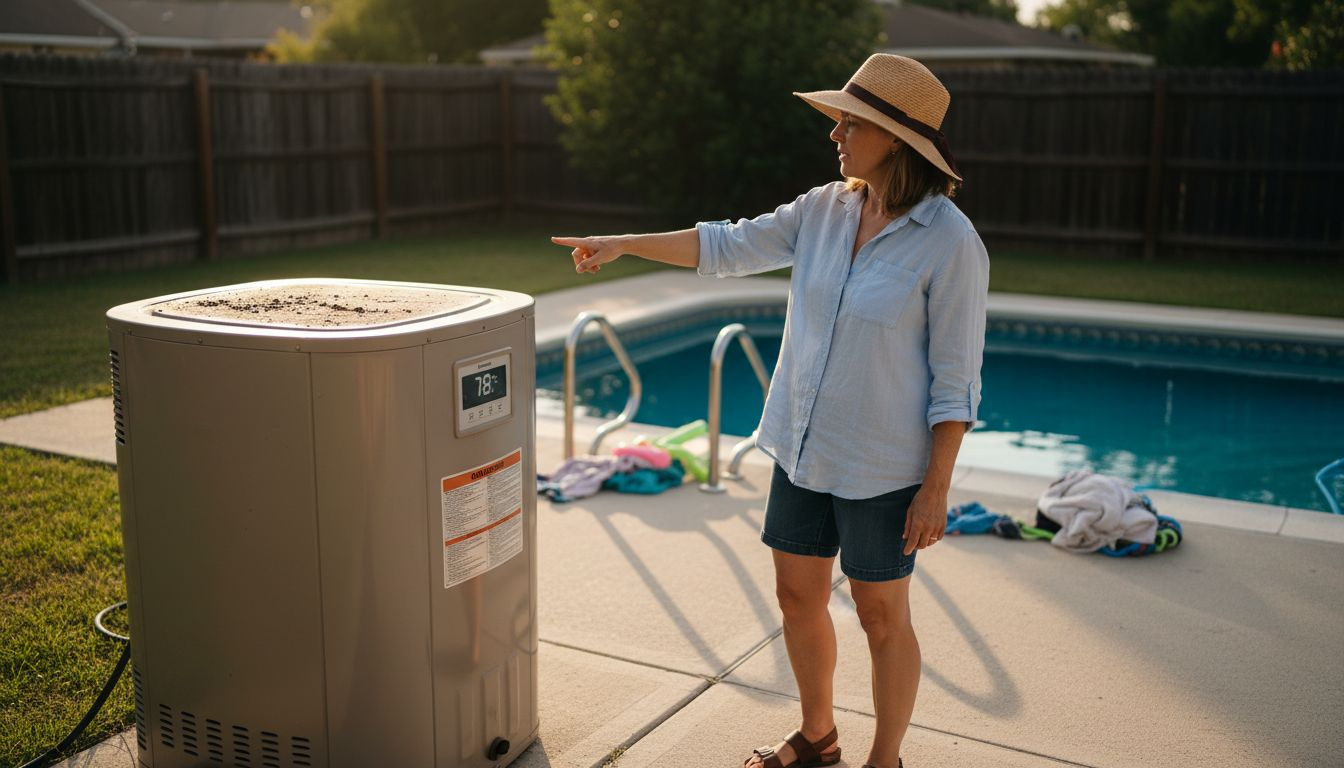
Heat pumps work well in San Antonio’s warm climate because they can extract heat even from relatively mild air temperatures. This makes them ideal for extending your swimming season in spring and fall.
Key advantages of heat pumps include:
- Lower operating costs compared to resistance heaters
- Consistent water temperature maintenance
- Ability to heat pools efficiently even in cooler months
- Environmental benefits from reduced energy consumption
- Quieter operation than traditional gas heaters
Resistance Electric Heaters: Direct Heat Option
Resistance heaters work more like traditional electric heating. They use electric elements to generate heat directly, delivering warm water quickly. However, they consume significantly more electricity to produce the same amount of heat as a pump.
These heaters might make sense if you need fast heating for occasional use or have specific heating requirements. Still, the ongoing energy costs make them expensive for regular, year-round pool heating in most situations.
Here’s a side-by-side comparison to help you choose the best electric pool heater type for your San Antonio home:
| Feature | Heat Pump | Resistance Heater |
|---|---|---|
| Initial Cost | Higher upfront investment | Lower initial expense |
| Operating Cost | Lower monthly bills | Higher monthly bills |
| Heating Speed | Slower water temperature rise | Quick water temperature rise |
| Energy Efficiency | 1.5–6.0 COP (more efficient) | Less than 1.0 COP (less efficient) |
| Climate Suitability | Best for mild, warm climates | Works in any climate |
| Ideal Usage | Regular and season-long use | Occasional or rapid heating |
| Noise Level | Quieter operation | Silent operation |
| Environmental Impact | Lower emissions, saves energy | Consumes more electricity |
Heat pumps are more efficient and cost-effective for San Antonio pool owners who want consistent comfort without excessive electricity bills.
Choosing Between Types
Your decision depends on several factors: how often you use your pool, your budget for installation, and monthly electricity costs you can accept. Many San Antonio pools benefit from understanding the differences between heating systems for making informed choices.
A professional can evaluate your pool size, sunlight exposure, and local climate to recommend the best option. They’ll calculate the payback period so you understand your investment clearly.
Pro tip: Ask your installer for a cost comparison showing monthly electricity usage for both heat pump and resistance heater options over a full year to make the most financially smart decision for your situation.
Step-By-Step Process for Professional Installation
A professional pool heater installation follows a structured process designed to ensure safety, compliance, and reliable operation. Understanding each step helps you know what to expect when technicians arrive at your San Antonio home.
The entire process typically takes one to three days depending on your pool setup and whether electrical upgrades are needed. Having a licensed professional handle this work guarantees that every step meets local codes and safety standards.
Initial Assessment and Planning
Your installer begins by evaluating your pool area and electrical system. They examine your home’s electrical panel capacity, the location where the heater will go, and distance from the pool.
This assessment determines if your existing electrical service can support the heater or if upgrades are necessary. They also survey the layout to plan the most efficient wiring route while meeting code requirements.
Obtaining Permits and Compliance
Before any installation work starts, your technician must obtain proper permits from local authorities. This ensures your project complies with the International Swimming Pool and Spa Code and local building regulations.
Permits protect you by guaranteeing that inspectors will verify the work meets safety standards. This step prevents future problems when selling your home or filing insurance claims.
Installation Steps
Once permits are approved, the actual installation proceeds systematically:
- Prepare the installation site and position the heater unit
- Install appropriate circuit protection devices at your electrical panel
- Size and run wiring and conduits to the heater location
- Connect the heater to the power supply with proper connections
- Install grounding and bonding for all electrical components
- Connect pool water plumbing to the heater inlet and outlet
- Test all electrical connections and safety mechanisms
- Verify proper operation before handing over the system
Each step requires specific expertise. Your technician ensures that grounding, bonding, and circuit protection meet all electrical codes throughout the process.
Final Testing and Inspection
Before you use the heater, thorough testing happens. The installer verifies that heating cycles work properly, temperature controls respond correctly, and all safety switches function.
Once testing is complete, a municipal inspector visits to verify compliance. This inspection confirms that everything meets code requirements before final approval.
Professional installation with proper permits and inspections protects your investment and ensures your pool heater operates safely for years to come.
Pro tip: Ask your installer for copies of all permits, inspection certificates, and warranty documentation once the work is complete and approved, keeping these records with your home maintenance files.
Safety Codes and Local Compliance Requirements
Pool heater installation in San Antonio isn’t just about getting warm water. It’s governed by strict safety codes that protect your family and property from electrical hazards. Understanding these requirements helps you appreciate why professional installation matters so much.
The National Electrical Code (NEC) and the International Swimming Pool and Spa Code (ISPSC) set the standards for all electrical work around pools in the United States. These codes exist because water and electricity together create serious dangers if not properly managed.
Key Safety Codes You Should Know
Your pool heater installation must comply with several critical safety standards. The National Electrical Code requires proper grounding, bonding, and GFCI protection around all pool equipment to prevent electrocution risks.
GFCI devices cut power instantly if they detect a fault, stopping electrical shock before it happens. This simple technology saves lives and is mandatory around pools in San Antonio.
Key code requirements include:
- Proper grounding of all electrical equipment and pool structures
- GFCI protection on all circuits serving pool heaters and equipment
- Correct placement of electrical equipment away from the pool
- Bonding that connects all metal components electrically
- Adequate wire sizing based on heater electrical demands
- Circuit breakers rated for the heater’s amperage requirements
Licensing and Professional Requirements
Only licensed electricians can legally install pool heaters in San Antonio. This requirement protects you because licensed professionals have training, experience, and accountability.
Your electrician must understand how electrical safety standards apply specifically to pool installations. They know local variations and how San Antonio’s municipal codes add to state requirements.
Licensing ensures the installer carries liability insurance and is accountable if something goes wrong.
Permits and Inspections
Before installation begins, a permit must be obtained from San Antonio’s building department. This permit authorizes the work and schedules mandatory inspections.
During installation, inspectors verify that the work meets all codes. After completion, a final inspection confirms everything passes before you can use the heater. This process protects your home’s value and your family’s safety.
Skipping permits or using unlicensed workers creates serious problems. Insurance may deny claims if work wasn’t permitted. You could face fines from the city.
Licensed professionals who obtain permits and pass inspections ensure your pool heater installation meets every safety standard protecting your family.
Compliance Checklist
Before signing off on installation, verify these items:
- Permits obtained from San Antonio building department
- Licensed electrician performing all electrical work
- GFCI protection installed on heater circuits
- Proper grounding and bonding completed
- Final inspection passed by municipal inspector
- Warranty documentation provided
- All safety certifications in place
Pro tip: Request from your installer copies of the final inspection certificate and compliance documentation showing all codes were met before you make your final payment.
Cost, Efficiency, and Common Pitfalls to Avoid
Pool heater installation involves real money, both upfront and ongoing. Understanding costs and efficiency helps you make smart decisions that pay off for years to come in San Antonio.
Initial costs include the heater unit itself, installation labor, and any electrical upgrades your home needs. A basic electric resistance heater might cost less upfront, but heat pump systems deliver better long-term value through lower operating expenses.
Understanding Installation Costs
Installation labor typically ranges from several hundred to a few thousand dollars depending on complexity. If your electrical panel needs upgrades or wiring runs a long distance, costs increase.
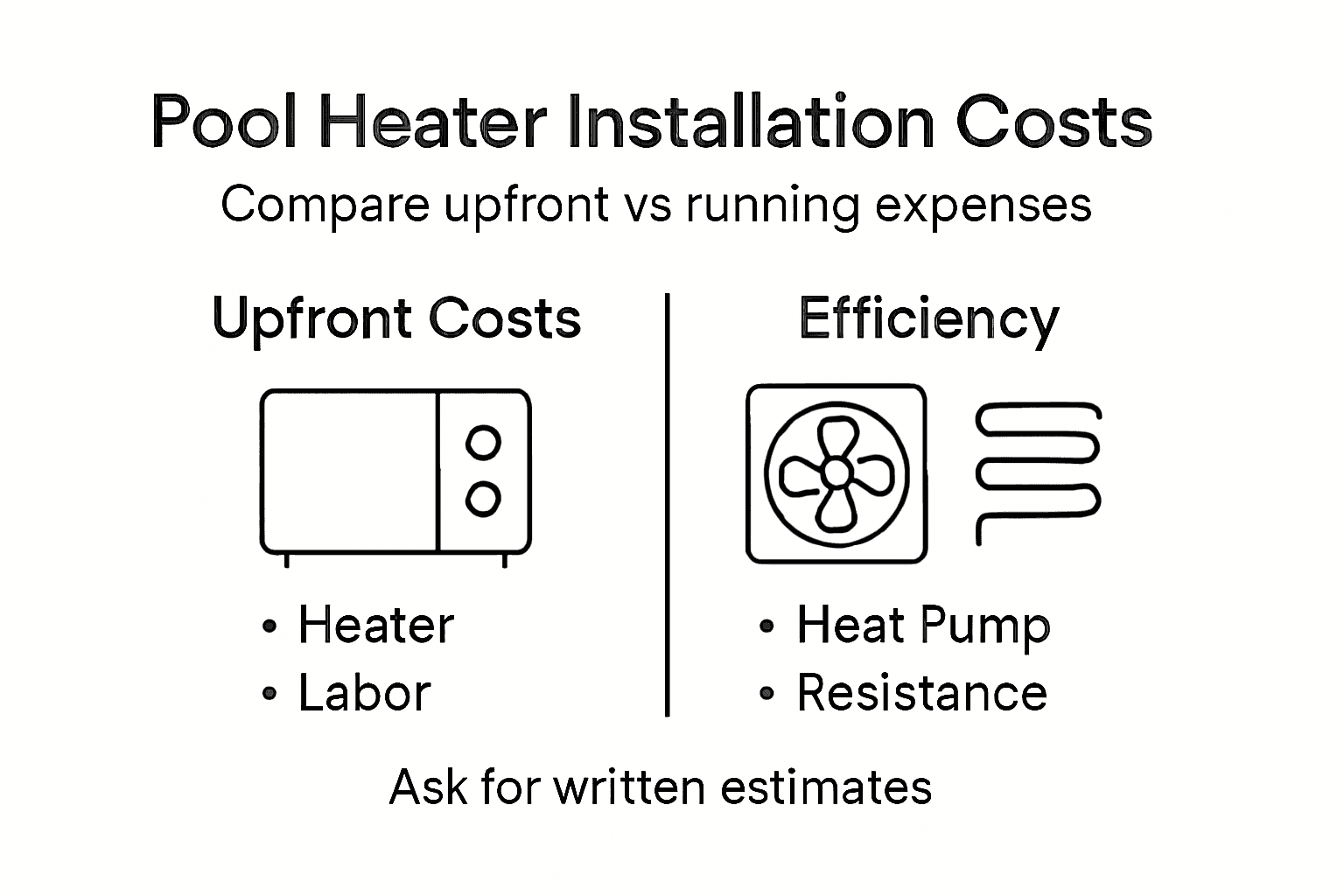
Don’t let a low quote fool you. Licensed professionals charge appropriately because they carry insurance, know codes, and guarantee their work. Cheap installation often means shortcuts that cause expensive problems later.
Energy Efficiency Matters for Your Budget
Heat pumps are significantly more efficient than resistance heaters, using far less electricity to deliver the same heating. While heat pumps cost more initially, monthly electricity savings often recover that investment in three to five years.
A resistance heater might seem cheaper at purchase, but the operating costs add up quickly. Over ten years, a heat pump typically saves thousands compared to resistance heating.
Consider these efficiency factors:
- Monthly electricity consumption varies by heater type
- Pool size affects how much heating power you need
- Climate in San Antonio favors heat pump efficiency
- Insulation and pool cover usage impact heating demands
- Thermostat settings directly affect energy bills
Common Pitfalls That Cost You Money
Many San Antonio homeowners make mistakes that waste money or create safety issues. Knowing what to avoid helps protect your investment.
Underestimating installation complexity is a major problem. Some people think pool heater installation is simple plumbing work. It’s not. Electrical work requires licensed professionals and proper permitting. Attempting DIY installation voids warranties and creates liability risks.
Ignoring proper equipment sizing causes another common issue. A heater that’s too small won’t heat effectively, while oversizing wastes energy. Your installer should calculate the correct size based on your pool volume and desired temperature.
Neglecting regular maintenance damages efficiency over time. Filters need cleaning, and heat exchangers need descaling. Skip maintenance and efficiency drops, raising energy costs.
Failing to follow manufacturer specifications creates performance problems. Different heater models have specific requirements for water flow, electrical connections, and installation positioning. Cutting corners here causes equipment failure.
Additional pitfalls to avoid:
Below is a summary of common pool heater installation pitfalls and how to avoid them:
| Pitfall | Consequence | Best Practice |
|---|---|---|
| DIY or unlicensed installation | Code violations, safety risks | Hire only licensed electricians |
| Incorrect heater sizing | Inefficient heating, energy waste | Get professional sizing calculations |
| Skipping permits or inspections | Fines, denied insurance claims | Always obtain required permits |
| Poor or inadequate maintenance | Lower efficiency, breakdowns | Schedule regular servicing |
| Ignoring warranty requirements | Voided coverage, unrecoverable costs | Follow installer & manufacturer guidelines |
| Inadequate circuit protection | Fire and shock hazards | Ensure proper breakers and GFCIs installed |
- Not obtaining required permits
- Using unlicensed electricians
- Skipping final safety inspections
- Ignoring pool insulation needs
- Not checking warranty coverage
Proper installation, correct sizing, and regular maintenance maximize efficiency and protect your investment over many years.
Making Smart Financial Decisions
Calculate both upfront and lifecycle costs when comparing options. A heat pump costs more initially but saves money monthly. Request quotes from multiple licensed installers and compare warranties.
Ask installers for estimated annual operating costs based on your pool size and local electricity rates. This helps you understand true long-term expenses, not just the purchase price.
Pro tip: Request written specifications showing heater size calculations, expected monthly electricity usage, and estimated payback periods before selecting your system.
Ensure Safe and Efficient Electric Pool Heater Installation with Trusted San Antonio Experts
Installing an electric pool heater involves complex electrical work that requires precise conductor sizing, proper grounding, and adherence to strict safety codes like the NEC and ISPSC. If you want to avoid costly mistakes such as voided warranties, unsafe installations, or higher energy bills from inefficiency, professional service is essential. Understanding these challenges and the importance of licensed electricians can protect your family while boosting your pool comfort year-round.
At Stultz Plumbing, we specialize in expert Pool Heater Service San Antonio that guarantees your heater is installed safely and performs efficiently. Our licensed technicians are skilled in navigating local compliance requirements, obtaining necessary permits, and ensuring your pool heater meets all electrical safety standards. Ready to extend your swimming season with a reliable heat pump or resistance heater? Visit us at Stultz Plumbing to schedule your installation and experience prompt, transparent service. Learn more about our full Water Heater Services in San Antonio TX to complement your pool comfort solutions. Don’t wait to enjoy a warm pool safely—contact us today and protect your investment with professional installation you can trust.
Frequently Asked Questions
What is involved in the installation of an electric pool heater?
Electric pool heater installation involves planning and assessment of the existing electrical setup, designing safe electrical connections, proper conductor sizing, circuit protection installation, and thorough testing and inspection to ensure compliance with safety standards.
What are the key differences between heat pump heaters and resistance electric heaters?
Heat pumps are more energy-efficient and operate by transferring heat from the air to the pool water, while resistance heaters generate heat directly from electrical energy. This makes heat pumps ideal for regular use, providing lower operating costs compared to resistance heaters.
Why is professional installation important for pool heaters?
Professional installation is crucial to ensure compliance with electrical safety standards, proper connections, and to prevent potential hazards. License professionals can identify issues in the electrical system and ensure the installation meets all local codes, protecting your investment in the long run.
How do I maintain my electric pool heater for optimal performance?
To maintain optimal performance, regularly clean filters, descale heat exchangers, and check for proper insulation and circuit protection. Scheduling regular servicing and following manufacturer specifications is essential to prevent efficiency loss and costly repairs.
Recommended
- What Is Real Pool Heater Installation Cost In San Antonio?
- Why Choose Tankless Water Heaters for Your San Antonio Home
- Top Signs You Need to Replace Your Water Heater in San Antonio
- Water Softener Installation in San Antonio | Stultz Plumbing
Jean runs growth strategy at AimSetWin, a performance marketing agency specializing in local service businesses across Texas. he's helped plumbers, HVAC companies, pest control operators, and home service brands build predictable revenue systems using data-driven advertising and conversion optimization.


