

Discover essential drain cleaning tips for homeowners! Learn quick fixes, tools, and maintenance habits to keep your plumbing in top shape.
TL;DR:
- Effective drain maintenance relies on physical clog removal and regular preventive habits, reducing the need for harsh chemicals.
- Homeowners should use tools like plungers, drain snakes, and baking soda treatments, and know when to call professionals for stubborn or complex clogs.
Drain cleaning for homeowners is most effective when you prioritize physical clog removal and regular maintenance over harsh chemical cleaners. The right approach keeps your pipes clear, your water flowing, and your repair bills low. Most clogs in San Antonio homes form from grease, hair, soap scum, and food debris — and 90% of them resolve with a plunger or drain snake in under 10 minutes. Ignoring a slow drain, though, can turn a $5 fix into an emergency repair costing $330 or more. This guide walks you through every practical method, the right tools to own, and the habits that keep your home plumbing running smoothly year-round. If a clog ever beats your best efforts, Stultz Plumbing is ready to help.
1. What are the easiest DIY drain cleaning techniques every homeowner should know?
Physical drain cleaning methods are the fastest, cheapest, and safest way to clear most household clogs. Before you reach for a bottle of chemical cleaner, try these proven techniques first.
Hot water and dish soap flush
Boiling or very hot water breaks down grease and soap buildup that coats the inside of your pipes. Pour one tablespoon of dish soap down the drain first, then follow with a full kettle of hot water. Repeat two or three times for stubborn kitchen grease. This method works best on kitchen drains and is safe for metal pipes. Avoid using boiling water on PVC pipes, since extreme heat can soften the joints over time.
Correct plunger technique
Most homeowners use a plunger wrong, and that is why it fails. Effective plunging requires filling the fixture with 2 to 3 inches of water, covering the overflow hole with a wet rag, and using the right plunger type. Use a cup plunger for sinks and tubs. Use a flange plunger for toilets. Press down firmly to create a seal, then pump with short, forceful strokes for 20 to 30 seconds before pulling up sharply. That vacuum action is what dislodges the clog.
Pro Tip: Seal the overflow hole in your bathroom sink with a damp cloth before plunging. Without that seal, you lose suction and the plunger barely works.
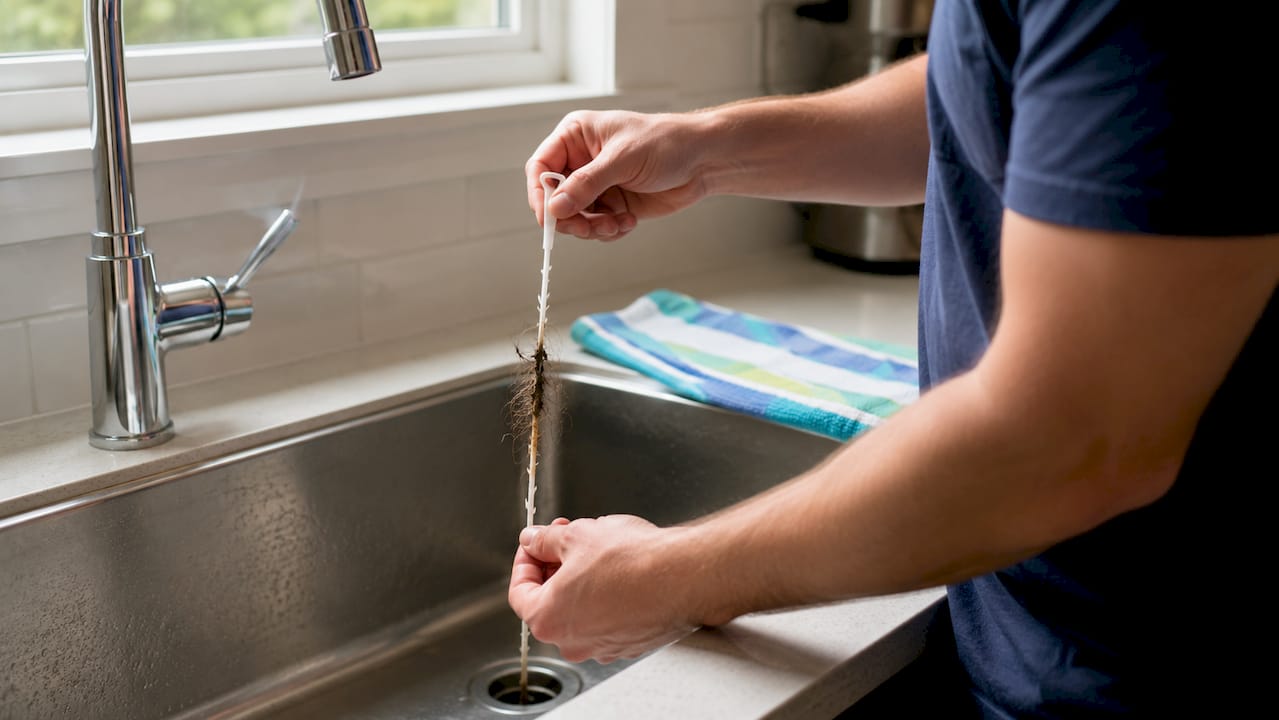
Manual hair removal with a Zip-It tool
Hair clogs require mechanical removal because no chemical or fizzing treatment dissolves tangled hair masses. A Zip-It drain cleaning tool costs about $3 at any hardware store. Insert it into the drain, twist it slowly, and pull out the hair clog. It is unpleasant but effective. Do this monthly in bathroom sinks and shower drains to stay ahead of buildup.
Baking soda and vinegar treatment
Pour half a cup of baking soda down the drain, followed immediately by half a cup of white vinegar. Cover the drain opening and let the fizzing reaction work for 15 to 30 minutes. Flush with hot water. This method works well for light clogs and odor control. It will not dissolve a serious hair or grease blockage, but it is a solid monthly maintenance treatment for any drain in your home.
2. How do physical methods compare to chemical drain cleaners?
Physical methods outperform chemical cleaners in nearly every category for typical household clogs. Understanding the difference helps you make smarter decisions and protect your pipes.
| Method | Effectiveness | Pipe Safety | Cost | Best Use |
|---|---|---|---|---|
| Plunger | High for most clogs | Safe for all pipes | $5 to $15 | Sinks, tubs, toilets |
| Drain snake / Zip-It | Very high for hair and debris | Safe for all pipes | $3 to $30 | Bathroom drains |
| Baking soda and vinegar | Moderate for light clogs | Safe for all pipes | Under $2 | Maintenance and odor |
| Hot water and dish soap | Moderate for grease | Safe for metal pipes | Under $1 | Kitchen drains |
| Chemical drain cleaners | Variable | Can damage older pipes | $8 to $20 | Last resort only |
Chemical drain cleaners can corrode metal fittings, damage older pipe seals, and release toxic fumes when mixed with other household products. Professional plumbers treat them as a last resort, not a first response. If you do use a chemical cleaner, follow these rules without exception.
- Never mix chemical products. Mixing bleach with ammonia or vinegar produces toxic chlorine gas that causes severe lung damage.
- Wear rubber gloves and eye protection every time.
- Ventilate the area fully by opening windows and running an exhaust fan.
- Wait at least 24 hours before using a different chemical product in the same drain.
“Physical methods resolve 90% of household clogs in about 10 minutes at minimal cost. Chemical cleaners should only enter the picture when mechanical methods have genuinely failed.”
Pro Tip: If you have tried a plunger, a drain snake, and a baking soda flush without success, that is your signal to call a professional plumber. Forcing a chemical cleaner into a stubborn blockage often makes the situation worse and more expensive to fix.
When a clog resists all DIY efforts, the blockage is likely deeper in the line or caused by a structural issue. Plumbers charge $75 to $200 for simple fixture clogs, while main line clogs requiring camera inspection or hydro-jetting range from $300 to $800. Calling early saves you from the higher end of that range.
3. What preventive drain maintenance habits keep your plumbing in top shape?
Preventive drain care is the single most cost-effective habit a homeowner can build. Small, consistent actions stop clogs before they start and protect your entire plumbing system. Here is what we recommend for San Antonio homeowners.
-
Flush kitchen drains with hot water weekly. Run the hottest tap water for 60 seconds after every cooking session. This melts grease before it solidifies on pipe walls. Add a squirt of dish soap once a week for extra cleaning power.
-
Do a monthly baking soda treatment. Routine baking soda and salt or vinegar treatments prevent buildup and keep drains odor-free year-round. Pour half a cup of baking soda followed by half a cup of white vinegar into every drain in your home once a month.
-
Install drain strainers in every fixture. A mesh strainer over your kitchen sink catches food particles. A hair catcher in the shower costs $3 to $5 and prevents up to 80% of bathroom clogs caused by hair. Clean them every week so they do not become a clog themselves.
-
Never pour grease down the kitchen drain. Cooking grease solidifies inside pipes and creates a sticky layer that catches every food particle that follows. Pour cooled grease into a sealed container and throw it in the trash. Coffee grounds and fibrous vegetables like celery belong in the trash or compost, not the garbage disposal.
-
Keep wipes out of toilets. Even products labeled “flushable” do not break down fast enough and are a leading cause of sewer line blockages in San Antonio homes. Only toilet paper goes down the toilet.
-
Schedule a professional drain inspection seasonally. Plumbing professionals recommend spring or early summer for drain maintenance scheduling. Booking outside peak demand periods means faster service, better availability, and often lower costs. A winter plumbing inspection also catches issues before cold weather stresses your pipes.
Pairing these habits with a solid property maintenance checklist keeps your entire home running efficiently, not just your drains.
4. What tools and products should every homeowner keep on hand?
Having the right tools ready means you can handle most clogs before they become emergencies. You do not need a truck full of equipment. A small, targeted kit handles 90% of what your drains will ever throw at you.
The core toolkit every homeowner needs:
-
Cup plunger. This is the standard plunger most people own. It works on sinks, tubs, and shower drains. Make sure yours has a sturdy handle and a soft rubber cup that creates a tight seal.
-
Flange plunger. Designed specifically for toilets, the flange plunger has an extended rubber flap that fits into the toilet drain opening. Using a cup plunger on a toilet reduces suction significantly.
-
Drain snake or hand auger. A basic 25-foot hand auger from a hardware store handles most clogs that a plunger cannot reach. Feed the cable into the drain, turn the handle clockwise, and push through the blockage. Professional plumbers use longer, motorized versions of this same tool for deeper line clogs.
-
Zip-It hair removal tool. This plastic barbed strip costs about $3 and removes hair clogs from bathroom drains faster than any other method. Buy a pack of three and keep them under every bathroom sink.
-
Baking soda, white vinegar, and dish soap. These three pantry staples handle light clogs, routine maintenance, and grease buildup. They are safe for all pipe types and cost almost nothing.
-
Drain strainers and hair catchers. Install one in every sink, tub, and shower. Silicone hair catchers are easier to clean than metal mesh versions and last longer.
Pro Tip: Store your plunger in a dedicated holder so it stays clean and accessible. A plunger that lives in a cabinet under the sink is useless when you need it fast. Keep one in every bathroom.
Rinse your drain snake after every use and dry it before storing to prevent rust. Replace Zip-It tools after two or three uses since the barbs wear down and become less effective. Check your common clog causes page to understand what is most likely blocking your specific drains before choosing a tool.
5. When should you stop DIY and call a professional plumber?
Knowing when to stop is as important as knowing how to start. Some clogs and plumbing problems are beyond what any homeowner toolkit can safely handle.
Call a professional plumber when you notice any of these situations. Multiple drains slow down or back up at the same time, which signals a main line blockage rather than a single fixture clog. Water backs up in one fixture when you use another, such as the toilet gurgling when you run the sink. You hear gurgling sounds from drains after water has fully drained. You smell sewage odors inside the home even after cleaning visible drains. A clog returns within a few days of clearing it, which suggests a partial blockage or a structural issue deeper in the line.
These are not situations where more plunging or another bottle of chemical cleaner will help. They require camera inspection, hydro-jetting, or auger work on the main sewer line. Attempting to force a solution on a main line clog can crack older pipes or push the blockage further in, driving up repair costs significantly. Regular drain cleaning benefits extend well beyond just clearing clogs. Routine professional service catches root intrusion, pipe corrosion, and partial blockages before they become full failures.
Scheduling seasonal maintenance with a trusted local plumber is the most reliable way to stay ahead of serious plumbing problems in San Antonio.
Key takeaways
Effective drain maintenance combines physical clog removal, consistent preventive habits, and knowing when to call a professional before small problems become expensive repairs.
| Point | Details |
|---|---|
| Physical methods first | Plungers, drain snakes, and Zip-It tools resolve 90% of clogs quickly and cheaply. |
| Chemicals are a last resort | Chemical cleaners damage pipes and create toxic fumes. Use only after physical methods fail. |
| Prevention beats repair | Weekly hot water flushes and monthly baking soda treatments stop most clogs before they form. |
| Tools matter | Own a cup plunger, flange plunger, hand auger, and Zip-It tool to handle most household clogs. |
| Know when to call a pro | Multiple slow drains, sewage odors, or recurring clogs signal a professional is needed. |
What I have learned after years of watching homeowners fight their drains
After working with homeowners across San Antonio for years, the pattern is always the same. Someone ignores a slow drain for three months, pours a chemical cleaner down it, and then calls us when the pipe is corroded and the clog is worse than ever. The chemical cleaner did not fix anything. It just added a new problem on top of the original one.
The homeowners who never have plumbing emergencies are not lucky. They are consistent. They keep a Zip-It tool under every bathroom sink. They flush their kitchen drain with hot water every Sunday. They do not treat their garbage disposal like a trash can. These are not complicated habits. They take about five minutes a week total.
What surprises most people is how much the season matters. San Antonio summers push plumbing systems hard. High water usage, more cooking, more guests, and more strain on every fixture. Booking a drain inspection in spring, before the heat hits, is one of the smartest things you can do. Scheduling maintenance early keeps you ahead of the demand curve and gets you better service windows.
The other thing I tell every homeowner: do not wait for a full blockage to call a plumber. A drain that is running 50% slower than normal is already telling you something. Catching it at that stage costs a fraction of what a full emergency repair runs. Trust the early warning signs your plumbing gives you.
— Jean
When DIY is not enough: Stultz Plumbing has you covered in San Antonio
Even the most diligent homeowner hits a clog that will not budge. That is exactly where Stultz Plumbing steps in.

We provide fast, professional drain cleaning in San Antonio for both routine maintenance and stubborn blockages that DIY methods cannot reach. Our team uses camera inspection, hydro-jetting, and professional-grade augers to clear main line clogs, tree root intrusion, and deep grease buildup. We serve San Antonio, Boerne, Fair Oaks, Alamo Heights, and Leon Springs with transparent pricing and rapid response times. Whether you need a scheduled maintenance visit or an emergency plumber today, we are ready. Contact Stultz Plumbing to book your drain inspection and keep your home’s plumbing running at full strength. Explore our full range of affordable plumbing services to see everything we offer.
FAQ
What is the fastest way to clear a clogged drain at home?
A plunger is the fastest first step for most household clogs. Fill the fixture with 2 to 3 inches of water, seal the overflow hole, and use firm pumping strokes for 20 to 30 seconds.
Are chemical drain cleaners safe to use regularly?
No. Chemical cleaners damage older pipe seals and corrode metal fittings over time. Use them only as a last resort after physical methods have failed, and never mix different products.
How often should I clean my drains to prevent clogs?
Flush kitchen drains with hot water weekly and treat all drains with baking soda and vinegar monthly. Schedule a professional drain inspection once or twice a year for thorough preventive care.
Why does my drain keep clogging after I clear it?
A recurring clog usually means a partial blockage deeper in the line or a structural issue like root intrusion or pipe damage. This requires a professional camera inspection to diagnose correctly.
How much does professional drain cleaning cost in San Antonio?
Plumbers charge $75 to $200 for simple fixture clogs. Main line clogs requiring camera inspection or hydro-jetting typically range from $300 to $800 depending on severity and access.
Recommended
Jean runs growth strategy at AimSetWin, a performance marketing agency specializing in local service businesses across Texas. he's helped plumbers, HVAC companies, pest control operators, and home service brands build predictable revenue systems using data-driven advertising and conversion optimization.


