

Discover the common water heater problems homeowners face. Learn to identify issues early to avoid costly repairs. Get tips for effective maintenance!
TL;DR:
- Water heaters often show subtle signs of failure, such as leaks, unusual noises, or inconsistent temperature. Addressing these early issues, like flushing sediment or checking the thermostat, prevents costly emergencies and extends unit lifespan. Professional assistance is crucial for electrical, gas, or safety-related repairs to ensure safety and proper operation.
Your water heater works silently in the background every single day. When it starts failing, the signs are rarely dramatic at first. Common water heater problems sneak up on you as minor inconveniences: a lukewarm shower here, a strange rumbling noise there, or a small puddle near the base of the tank. Left unaddressed, these small warning signs can turn into expensive emergencies. This guide walks you through the most frequent issues San Antonio homeowners face, what to check yourself, and when to call a professional before a manageable repair becomes a full replacement.
Table of Contents
- Key Takeaways
- 1. Common water heater problems that start with no hot water
- 2. Why is my water heater leaking: causes and warning signs
- 3. Unusual noises and water discoloration from sediment buildup
- 4. Temperature control problems: too hot, too cold, or inconsistent
- 5. Energy inefficiency and rising utility bills
- 6. Pressure relief valve failure
- My take on acting early before your water heater fails completely
- Stultz Plumbing is ready to help San Antonio homeowners
- FAQ
Key Takeaways
| Point | Details |
|---|---|
| No hot water is often electrical | Check your circuit breaker before assuming your heater has failed. |
| Leaks need immediate attention | Even slow leaks can cause mold, structural damage, and tank corrosion. |
| Sediment buildup is silent but costly | Rumbling noises and rising utility bills often trace back to mineral deposits in the tank. |
| Temperature settings affect safety | Keep your thermostat at or below 120°F to prevent scalding and pressure buildup. |
| Early action saves money | Addressing minor symptoms early prevents costly emergency replacements later. |
1. Common water heater problems that start with no hot water
No hot water is the most disruptive of all hot water supply problems, and it is almost never what you think it is at first.
Before assuming your heater has failed, check your electrical panel. A tripped breaker is actually one of the most common reasons a water heater stops delivering hot water, particularly for electric units. Walk to your breaker box, find the water heater circuit, and reset it fully by switching it off and then back on.
If the breaker holds and hot water still does not come, the problem may be with the heating element or thermostat inside the unit. Electric water heaters have two heating elements: an upper one and a lower one. When either fails, you get inconsistent or completely cold water.
Here is what to check before calling a plumber:
- Circuit breaker status — Is it tripped or in the off position?
- Thermostat setting — Was it adjusted accidentally? Electric units should be set between 110°F and 120°F.
- Pilot light (gas units) — Is it lit? A blown pilot light is a straightforward fix described in your owner’s manual.
- Age of the unit — Gas heaters last 8 to 12 years and electric units 10 to 15 years. An aging unit may simply be failing.
Pro Tip: Take a photo of your water heater’s model label and write down its installation date. Keep this in your phone. When you call a plumber, having this information ready cuts diagnosis time significantly.
Water heater repairs that involve electrical components or gas supply lines are not safe DIY territory. Gas leaks and electrical faults require a professional immediately. Know that line and do not cross it.
2. Why is my water heater leaking: causes and warning signs
A leak anywhere near your water heater deserves prompt attention. The location of the leak tells you almost everything about how serious the situation is.
Leaks from the pressure relief valve or from supply line fittings are often minor. A loose connection can be tightened, and a failing valve can be replaced without replacing the entire unit. These are the best-case scenarios. Leaks from the bottom of the tank are a different story entirely.
Leaking at the tank base almost always signals internal corrosion, which is not repairable. When the tank itself has corroded through, the unit needs to be replaced, not patched.
Here is how to evaluate a water heater leak quickly:
- Pressure relief valve dripping — Could be normal pressure release or a failing valve. Monitor it closely.
- Water at inlet or outlet connections — Often a loose fitting you can carefully tighten.
- Moisture or puddles at the tank base — Likely internal tank corrosion. Plan for replacement.
- Rust streaks on the tank exterior — A sign that corrosion has been active for some time.
Water damage from a leaking heater is not just about the puddle you see. Prolonged moisture beneath or behind the unit leads to mold growth, subfloor damage, and potential structural issues. In San Antonio’s humid conditions, mold can establish itself faster than you might expect.
Pro Tip: Before calling for service, photograph the leak location, any rust or discoloration, and your unit’s model tag. This simple step helps your plumber bring the right parts on the first visit.
For a deeper look at protecting your home, the Stultz Plumbing water heater leak repair guide covers the full range of leak sources and how each one is addressed.
3. Unusual noises and water discoloration from sediment buildup
Your water heater should be nearly silent during normal operation. If you hear rumbling, popping, or cracking sounds coming from the tank, that is sediment talking.
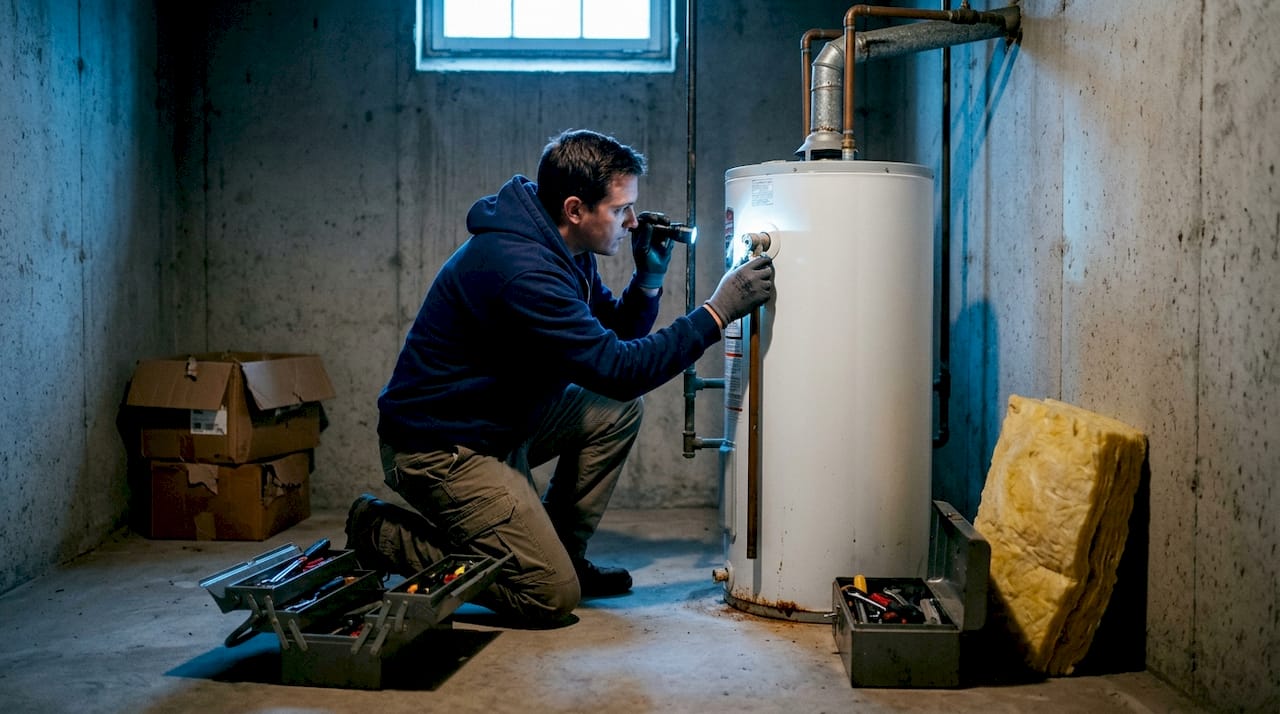
Mineral deposits, primarily calcium and magnesium, settle at the bottom of the tank over time. In San Antonio, where hard water is common, this happens faster than in regions with softer water. When the heating element fires up, it has to work through that layer of sediment, which causes the rumbling and popping sounds homeowners often describe.
Here is how sediment problems compare to other water heater noise problems:
| Symptom | Likely Cause | Urgency |
|---|---|---|
| Rumbling or popping noise | Sediment buildup at tank bottom | Moderate — flush the tank soon |
| High-pitched whining | Pressure buildup or failing valve | High — get it inspected |
| Banging (water hammer) | Pressure surge in supply lines | Moderate — consider a hammer arrestor |
| Hissing sound | Small internal leak or drip on element | High — call a plumber |
- Turn off power or gas to the unit.
- Connect a garden hose to the drain valve at the tank base.
- Run the hose to a floor drain or outside.
- Open the drain valve and let the water (and sediment) flush out completely.
- Restore the water supply briefly to stir and flush remaining deposits.
- Close the valve, refill the tank, and restore power or gas.
Annual flushing prevents sediment buildup, keeps efficiency up, and extends the life of your unit. Pair this with an anode rod inspection every two to three years. The anode rod is a sacrificial metal component that draws corrosion away from the tank wall. When it depletes completely, the tank itself begins to corrode.
Rusty or muddy water coming from your hot tap is another clear signal. Discolored water means either the anode rod has failed or the tank lining has corroded. Foul-smelling water, often described as a rotten egg odor, points to bacterial growth in a tank that has been left at a low temperature for too long.
Learn how often you should flush your water heater based on San Antonio’s specific water conditions.
4. Temperature control problems: too hot, too cold, or inconsistent
Inconsistent water temperature is one of the most frustrating water heater issues a homeowner deals with, because it tends to be unpredictable.
If your water swings between scalding and lukewarm with no apparent pattern, the thermostat is usually the first suspect. On electric heaters, there are two thermostats (one for each heating element), and if they fall out of calibration with each other, temperature consistency disappears entirely.
Lukewarm water that never quite gets hot enough often points to a failed lower heating element or a worn dip tube. The dip tube is a plastic pipe that directs cold incoming water to the bottom of the tank so it heats before rising. When the dip tube cracks or breaks, cold water mixes with the hot water at the top and you get a tepid result.
Here is a quick checklist for temperature problems:
- Water too hot — Check thermostat settings. Above 120°F increases scald risk and accelerates wear on the tank.
- Water never fully hot — Suspect a failed lower heating element or a broken dip tube.
- Inconsistent temperature — Thermostat calibration issue or competing element failure.
- Hot water runs out quickly — Tank may be undersized for your household, or sediment has reduced effective capacity.
Pro Tip: Set your thermostat to 120°F. This temperature is hot enough for all household uses, low enough to prevent scalding, and it reduces standby energy loss compared to higher settings.
Tankless water heaters have their own set of temperature issues. Inconsistent flow rates or mineral buildup on the heat exchanger can cause dramatic temperature swings. If you have a tankless unit, the troubleshooting steps differ significantly from those for a storage tank system.
5. Energy inefficiency and rising utility bills
When your utility bill climbs but your household water use has not changed, your water heater may be the culprit. This is one of those common heater malfunctions that hides in plain sight.
Sediment buildup causes the heater to work harder and run longer to deliver the same amount of hot water. Think of it like trying to boil water in a pot with an inch of sand at the bottom. The heat has to work through the insulating layer before it ever reaches the water. This translates directly into higher energy consumption.
Signs your water heater is operating inefficiently:
- Sudden increase in electricity or gas bills with no other change in usage
- Heater runs constantly or cycles on far more frequently than it used to
- Hot water runs out faster than it did when the unit was newer
- Unit is over 10 years old and has not received regular maintenance
Regular maintenance is genuinely worth the effort here. Flushing the tank annually and replacing the anode rod on schedule keeps efficiency close to original specs. An unmaintained 12-year-old heater can cost significantly more to operate than a newer unit with a higher upfront cost.
If efficiency has declined noticeably despite good maintenance, the unit may simply be at end of life. Stultz Plumbing’s guide on extending your water heater’s life can help you decide whether maintenance, repair, or full replacement makes the most financial sense for your situation.
6. Pressure relief valve failure
The temperature and pressure relief valve, or T&P valve, is one of the most important safety components on your water heater. It releases pressure if the tank gets too hot or over-pressurized. And it is one of the most commonly overlooked sources of water heater issues.
A valve that drips occasionally may simply be doing its job. But a valve that drips constantly, refuses to reseat, or shows visible corrosion needs to be replaced. Ignoring a faulty T&P valve is genuinely dangerous. If the valve cannot release pressure when needed, the tank can fail catastrophically.
Testing the valve is straightforward. Lift the test lever briefly and let it snap back. You should hear a rush of water into the drain tube and then silence when released. If it continues dripping after the test or if no water moved when you lifted the lever, the valve is either stuck open or stuck closed. Both conditions require a plumber.
Replacement is not expensive, but it is not a job to skip. A functional T&P valve is the last line of defense between a malfunctioning water heater and a serious safety incident.
My take on acting early before your water heater fails completely
I have seen the same pattern repeat itself more times than I can count. A homeowner hears a rumbling noise from the water heater closet and figures it is normal. A small puddle appears near the base, they dry it up with a towel, and move on. Six months later, they are calling for emergency service on a Saturday afternoon because the tank has let go completely and water is spreading across the utility room floor.
Ignoring early symptoms like popping noises or slow leaks almost always leads to higher costs and more disruption than addressing those same symptoms would have caused at the start. I have yet to meet a homeowner who regretted catching a water heater problem early.
The single most underrated piece of advice I give: know your unit’s age. Write it on a piece of tape and stick it to the tank. If a gas unit is past 10 years or an electric unit is past 12, start budgeting for replacement and pay close attention to any new symptoms. At that age, a repair may buy you time, but a second failure usually follows within a year.
DIY troubleshooting has its place. Checking a breaker, adjusting a thermostat, or flushing a tank is well within a homeowner’s reach. But anything involving the gas line, electrical connections, or the T&P valve belongs with a licensed plumber. The savings from a DIY repair are never worth the risk of getting it wrong.
— Jean
Stultz Plumbing is ready to help San Antonio homeowners
When water heater problems move beyond what you can address yourself, Stultz Plumbing is the team San Antonio homeowners trust. We handle everything from diagnosing a heating element failure to full tank replacements, and we respond quickly because we know hot water supply problems do not wait for a convenient time.

Whether you are dealing with a persistent leak, inconsistent temperatures, or a unit that has simply reached the end of its life, our technicians arrive prepared with the information and parts needed to get the job done right the first time. Before you call, snap a photo of the leak or damage and note the unit’s age and model number. This small step helps us serve you faster.
Explore our water heater repair services or use our comprehensive repair vs. replace guide for San Antonio homeowners to understand your options clearly before making any decisions. We offer transparent pricing, professional workmanship, and service that covers San Antonio and surrounding communities.
Not sure whether to repair or replace? Our plumbing services page covers the full range of what we offer. Call Stultz Plumbing today and get the answers you need without the runaround.
FAQ
What are the most common water heater problems?
The most frequent issues include no hot water, leaks at the tank or fittings, sediment-caused rumbling noises, inconsistent temperatures, and rising energy bills from inefficiency. Most of these problems have identifiable warning signs before they become serious failures.
Why is my water heater leaking at the bottom?
Leaking at the tank base almost always indicates internal tank corrosion, which cannot be repaired. This typically means the unit needs to be replaced rather than serviced.
How do I fix no hot water from my electric water heater?
Start by checking your circuit breaker, since a tripped breaker is the most common cause. If the breaker is fine, the issue is likely a failed heating element or thermostat, which requires a licensed plumber.
What temperature should I set my water heater to?
Set it to 120°F. Anything above 120°F increases scald risk and can accelerate wear on the tank and pressure relief valve. This setting also reduces standby energy loss.
How often should I flush my water heater?
Annual flushing is the standard recommendation for most tank water heaters. In San Antonio, where hard water accelerates sediment buildup, some households benefit from flushing every six months.
Recommended
- Essential Water Heater Basics for San Antonio Homeowners
- Signs You Need Water Heater Repair | Stultz Plumbing
- Top water heater maintenance tips for San Antonio homes
- Water Heater Repair Guide: DIY Fixes for San Antonio
Jean runs growth strategy at AimSetWin, a performance marketing agency specializing in local service businesses across Texas. he's helped plumbers, HVAC companies, pest control operators, and home service brands build predictable revenue systems using data-driven advertising and conversion optimization.


