

Discover key commercial plumbing facts San Antonio business owners need to prevent costly emergencies, stay code-compliant, and protect their properties in 2026.
TL;DR:
- Commercial plumbing systems are larger, more complex, and subject to stricter codes than residential systems.
- Preventive maintenance significantly reduces emergencies and repair costs for businesses in San Antonio.
- Timely professional service and regular inspections ensure operational reliability and protect investments.
Plumbing failures in commercial buildings don’t just cause inconvenience. They shut down operations, trigger health code violations, and generate repair bills that can reach tens of thousands of dollars before the day is over. Preventive maintenance reduces plumbing emergencies by 78% and cuts repair costs nearly in half, yet most San Antonio business owners treat their plumbing reactively. If you own or manage a commercial property here, understanding how your plumbing system works, what services it needs, and how to keep it running reliably is not optional. It is a core part of protecting your investment and your revenue.
Table of Contents
- How commercial plumbing differs from residential systems
- Essential commercial plumbing services every business needs
- Preventive maintenance: The key to reliability and cost savings
- Special challenges in San Antonio’s commercial plumbing
- Why proactive commercial plumbing is a business game changer
- San Antonio commercial plumbing: Your expert resource
- Frequently asked questions
Key Takeaways
| Point | Details |
|---|---|
| Commercial vs. residential | Commercial plumbing is more complex and must meet stricter codes than home systems. |
| Core services | Businesses depend on specialized repiping, commercial-grade water heaters, and urgent emergency response. |
| Maintenance impact | Preventive maintenance slashes emergencies by nearly 80% and cuts plumbing costs 45%. |
| Local challenges | Unique issues in San Antonio include rapid grease trap clogs, multi-floor backups, and historic building needs. |
How commercial plumbing differs from residential systems
To understand what’s at stake for your business, you first need to clarify how commercial plumbing stands apart from what you might expect in a home. Many business owners assume the systems are similar, just bigger. That assumption is a recipe for costly surprises.
The differences go far beyond pipe diameter. Commercial systems handle higher water volumes, are more complex, use heavy-duty materials, and must comply with stricter codes such as ADA and fire safety. In San Antonio, this means your commercial property must meet local amendments to the International Plumbing Code, pass backflow prevention inspections, and satisfy fire suppression requirements that simply don’t apply to homes.
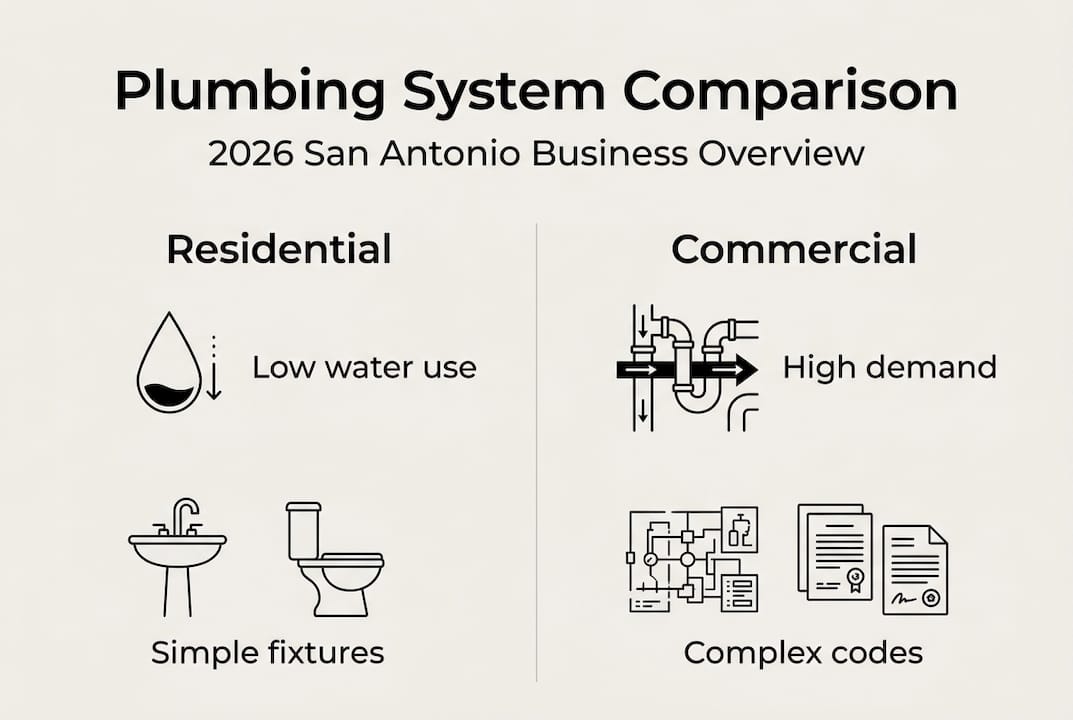
Here’s a side-by-side look at what separates the two systems:
| Feature | Residential | Commercial |
|---|---|---|
| Water volume | Low to moderate | High, constant demand |
| Pipe materials | PVC, copper | Heavy-duty copper, cast iron, CPVC |
| Code requirements | Standard local codes | ADA, fire safety, backflow prevention |
| System complexity | Single floor, simple layout | Multi-floor, multiple restrooms, kitchens |
| Maintenance frequency | Annual or as needed | Quarterly or more frequent |
| Permit requirements | Basic | Extensive, inspected |
The regulatory layer is where most business owners get caught off guard. ADA compliance affects fixture heights, accessible restroom layouts, and valve placement. Backflow prevention devices must be tested annually by a licensed plumber. Fire suppression systems tie directly into your water supply and require coordination with your plumber and fire marshal.
For a deeper look at how these systems compare in a San Antonio context, the breakdown of residential vs commercial plumbing is worth reviewing before your next service call. Understanding these distinctions protects you from code violations, unexpected shutdowns, and the kind of repair bills that come from using the wrong approach on the wrong system.
Essential commercial plumbing services every business needs
With the differences established, let’s look at the actual services commercial properties depend on and how each impacts your operations.
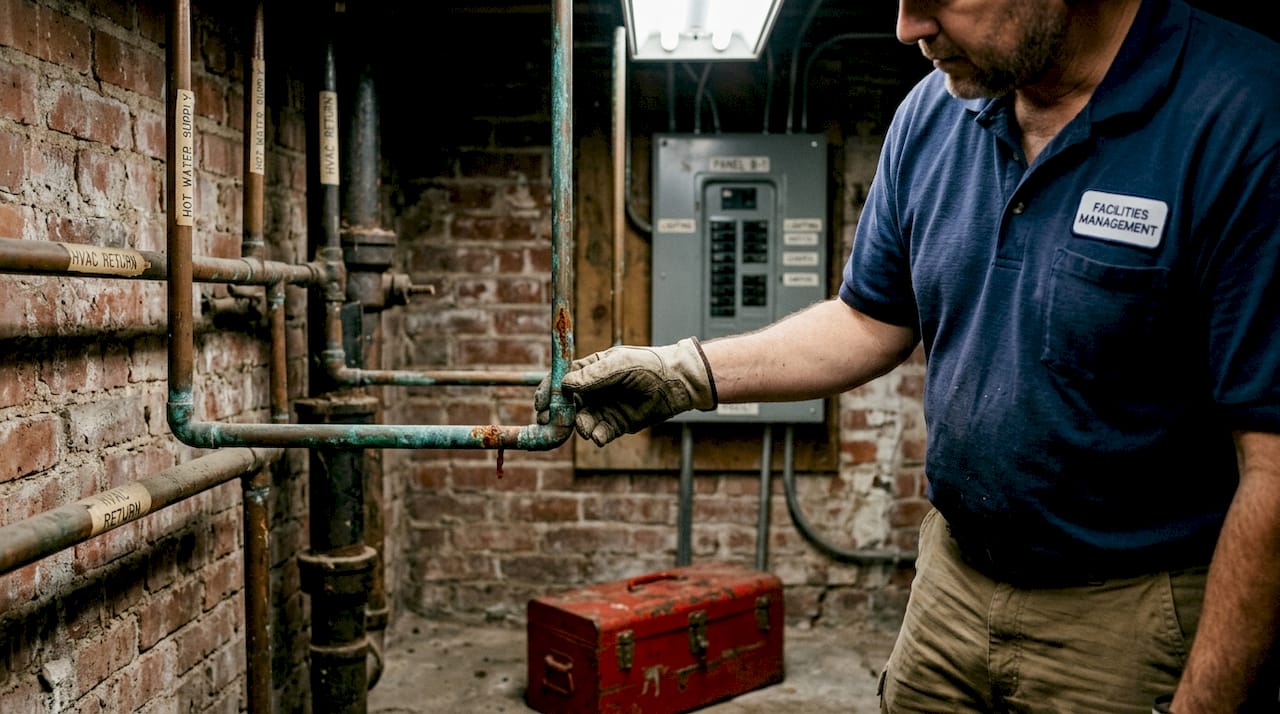
Repiping is often the most overlooked service until it becomes urgent. Older commercial buildings in San Antonio frequently have galvanized steel or aging copper pipes that corrode from the inside, reducing water pressure and contaminating water quality. Modern repiping services use copper, PEX, or CPVC depending on the application. PEX is flexible and freeze-resistant, making it practical for buildings with complex layouts. Copper remains the gold standard for durability in high-demand environments.
Commercial water heaters are a different category entirely from residential units. Sizing is based on peak demand, not just daily usage. A restaurant, hotel, or medical office needs a water heater that can recover quickly and maintain consistent temperatures. Key services include large-capacity or tankless commercial water heaters and 24/7 emergency response, along with Legionella controls that keep stored water above 140°F to prevent bacterial growth.
Emergency plumbing for commercial properties means something specific. It’s not a slow drip. It’s a burst main line, a sewage backup in a customer restroom, or a failed water heater before the morning rush. These events require immediate response and a plumber who understands commercial systems.
| Service | What it addresses | San Antonio note |
|---|---|---|
| Repiping | Corrosion, low pressure, contamination | Common in pre-1980 buildings |
| Commercial water heaters | Demand capacity, Legionella risk | Sizing critical for restaurants and hotels |
| Emergency plumbing | Burst pipes, backups, system failures | 24/7 response required |
| Drain cleaning | Grease buildup, blockages | High-frequency need in food service |
When scheduling any of these services, the process typically follows this order:
- Inspection and diagnosis to identify the root cause
- Written estimate with timeline and material specifications
- Scheduling that minimizes disruption to business hours
- Permitted work with licensed technicians
- Post-service testing and documentation
Pro Tip: Schedule major plumbing work during your lowest-traffic hours, typically early morning or overnight. A good commercial plumber will work around your schedule, not the other way around.
For a full overview of what’s available for your property, our commercial plumbing services page covers the complete range.
Preventive maintenance: The key to reliability and cost savings
Beyond one-off fixes, staying ahead with maintenance is where the major savings and operational reliability are found. Reactive plumbing is expensive. Proactive plumbing is an investment.
Preventive maintenance reduces emergencies by 78% and saves 45% on costs. Standard practices include inspections, hydro-jetting, and backflow testing. For San Antonio businesses, there are additional local considerations. Properties in historic districts often have older clay or cast-iron drain lines that require gentler cleaning methods. Buildings near the Edwards Aquifer recharge zone face stricter grease trap and chemical disposal regulations.
Here’s an actionable maintenance checklist for commercial property owners:
- Monthly: Check visible pipes for corrosion, leaks, or moisture damage
- Quarterly: Professional inspection of all fixtures, water heaters, and shut-off valves
- Semi-annually: Hydro-jetting of main drain lines, especially in food service properties
- Annually: Backflow preventer testing (required by San Antonio Water System), water heater flush and inspection, grease trap pumping documentation review
The numbers are stark. A single emergency repair for a burst commercial main line can cost $8,000 to $25,000, not counting lost revenue during closure. A quarterly maintenance contract costs a fraction of that.
For practical guidance on keeping your system in top shape, our plumbing maintenance tips cover what San Antonio businesses specifically need to monitor. And if you want to understand how regular service prevents the biggest bills, the breakdown on costly repair prevention is a useful reference.
Pro Tip: Keep a maintenance log with dates, technician names, and work performed. This documentation protects you during health inspections, insurance claims, and property sales.
Special challenges in San Antonio’s commercial plumbing
Even with regular maintenance, San Antonio businesses face unique plumbing hurdles that require expertise and vigilance. The city’s mix of historic architecture, hard water, and a booming food service industry creates conditions you won’t find in most plumbing textbooks.
Edge cases include rapid grease trap buildup at 60 to 90 day intervals, main-line issues in multi-floor buildings, Legionella risks, and the need for corrosion-resistant materials in historic districts. These are not rare exceptions. They are common realities for San Antonio commercial operators.
Here’s what local business owners need to stay ahead of:
- Grease trap overflows: Restaurants and commercial kitchens in San Antonio can see grease traps reach capacity in as little as 60 days during high-volume periods. An overflow is an immediate health code violation.
- Multi-floor backups: When a main line clogs in a multi-story building, every floor above the blockage is affected. The warning signs are slow drains on multiple floors simultaneously and gurgling sounds from lower-level fixtures.
- Legionella risk: Any commercial property with a large water heater, cooling tower, or decorative water feature must maintain water temperatures above 140°F in the tank and above 120°F at the tap to prevent bacterial colonization.
- Historic building materials: San Antonio’s older commercial districts often have clay tile sewer lines and lead-soldered copper joints. These require specialized repair techniques and materials that won’t cause further deterioration.
- Hard water scaling: San Antonio’s water is notoriously hard, with mineral content that builds up inside pipes and water heaters, reducing efficiency and shortening equipment life.
When something does go wrong despite your best efforts, fast access to emergency plumbing services is what separates a manageable incident from a business-closing disaster.
Why proactive commercial plumbing is a business game changer
Here’s something most plumbers won’t tell you directly: the business owners who call us in a panic are almost always the ones who delayed routine service to save money. The irony is that the delay cost them far more.
We’ve seen a restaurant close for three days because a grease trap that needed a $400 pump-out backed up into the kitchen. We’ve watched a landlord face a $30,000 insurance claim because corroded pipes in a historic building failed during winter. These are not edge cases. They are predictable outcomes of treating plumbing as an afterthought.
Proactive maintenance versus reactive repairs yields up to 45% savings long-term. But the real value goes beyond the repair bill. It’s the revenue you don’t lose. It’s the health inspection you pass without a citation. It’s the lease renewal you secure because your building’s systems are reliable.
We’d encourage you to reframe how you think about your plumbing budget. It’s not a cost center. It’s risk management. A well-maintained commercial plumbing system is a quiet competitive advantage, one that keeps your doors open while a competitor scrambles to find an emergency plumber on a Saturday morning.
Pro Tip: Use your maintenance records as a selling point when negotiating with commercial tenants or insurance providers. Documented service history signals a responsibly managed property.
San Antonio commercial plumbing: Your expert resource
If you’re ready to take action or need an expert for an urgent issue, local expertise is a call away. At Stultz Plumbing, we handle the full range of San Antonio commercial plumbing needs, from repiping aging systems and installing commercial water heaters to responding fast when emergencies strike. Our team knows San Antonio’s codes, its historic buildings, its hard water, and its unique demands. We offer transparent pricing and rapid response so your business stays protected. Whether you need routine maintenance or immediate help, our affordable plumbing services are built around your schedule and your bottom line. For urgent situations, our emergency plumbing help is available when you need it most.
Frequently asked questions
What is the main difference between commercial and residential plumbing?
Commercial systems are larger, more complex, and code-intensive, handling higher water volumes with heavy-duty materials and stricter safety and accessibility requirements than residential systems.
How often should San Antonio businesses schedule plumbing maintenance?
Quarterly preventive maintenance is recommended for most commercial properties. Regular maintenance saves up to 45% on costs and reduces emergencies by 78% compared to reactive-only approaches.
What are common plumbing emergencies in San Antonio businesses?
Burst pipes, main-line backups in multi-floor buildings, and rapid grease trap clogs in restaurants are the most frequent. Multi-floor backups and grease traps are top local concerns that require immediate professional response.
Why is Legionella a concern for commercial properties?
Commercial water heaters must maintain proper temperatures to prevent Legionella bacterial growth. Legionella prevention via temperature control and routine testing is essential in any commercial system with large water storage capacity.
Recommended
- Commercial Plumbing Services in San Antonio | Stultz Plumbing
- Why choose local plumbers in San Antonio in 2026
- Commercial vs. residential plumbing: make the right choice in San Antonio
- Home plumbing maintenance guide for San Antonio 2026
Jean runs growth strategy at AimSetWin, a performance marketing agency specializing in local service businesses across Texas. he's helped plumbers, HVAC companies, pest control operators, and home service brands build predictable revenue systems using data-driven advertising and conversion optimization.


