Basement water leak repair solutions for San Antonio. Learn causes, detection tips, repair methods, and prevention to limit property damage and costs.
Basement leaks can catch San Antonio homeowners off guard, threatening treasured belongings and the structure of your home. Water often enters through foundation cracks, poor grading, or failing drainage systems, creating urgent problems. Recognizing signs like damp walls, musty odors, and visible mold growth is key to protecting your investment. This guide explains the top causes of basement water leaks and offers proven solutions to stop damage fast.
Table of Contents
- What Causes Basement Water Leaks?
- Identifying Leak Types And Warning Signs
- Repair Solutions For Basement Water Leaks
- Risks Of Delay And Cost Implications
- Prevention Tips For San Antonio Homeowners
Key Takeaways
| Point | Details |
|---|---|
| Understand Causes of Leaks | Identifying issues such as foundation cracks and poor drainage is crucial for preventing basement water leaks. |
| Early Detection is Key | Look for signs of dampness, mold, and standing water to catch leaks early and avoid costly repairs. |
| Choose the Right Repair Solution | Opt for interior or exterior waterproofing methods based on the source of the leaks to effectively address the problem. |
| Regular Maintenance is Essential | Conduct routine inspections and maintain proper grading and drainage to protect your basement from water intrusion. |
What Causes Basement Water Leaks In San Antonio ?
Basement water leaks don’t happen by accident. They result from specific conditions that push water into your home, and understanding these causes helps you prevent costly damage before it starts.
Water finds its way into basements through multiple pathways. The most common culprit is foundation cracks, which allow groundwater and rain to seep directly into your basement. These cracks form due to concrete settling, foundation shifts, or age. Over time, even tiny hairline cracks expand and let water through.
Hydrostatic pressure is another major player. When heavy rain falls or groundwater levels rise around your home, water pushes against your foundation walls with significant force. This pressure can force water through even small openings and weak points in the foundation.
Poor grading around your home creates a recipe for leaks. If the soil slopes toward your foundation instead of away from it, water pools right next to your basement walls. In San Antonio’s clay-heavy soil, this drainage problem becomes even more critical.
Inadequate or failing drainage systems allow water to accumulate near your foundation. Clogged gutters, downspouts that drain too close to the house, or missing foundation drains all contribute to moisture buildup.
Moisture sources in basements include three main categories:
- Liquid water from rain or groundwater
- Interior moisture from concrete and humidifiers
- Humid air that condenses on cool basement surfaces
Soil settling or shifting beneath your foundation creates new pathways for water. San Antonio’s expansive clay soils are particularly prone to this movement, which can open cracks in previously sound foundations.
Defective or missing waterproofing on exterior foundation walls leaves your basement vulnerable. Many older San Antonio homes lack proper waterproofing, making them especially susceptible to leaks.
Most basement leaks result from a combination of factors working together. A single crack paired with poor drainage creates significantly more problems than either issue alone.
Pro tip: After heavy rain, inspect your basement walls for dampness, efflorescence (white mineral deposits), or small water stains. These early warning signs let you catch problems before they become expensive.
Identifying Leak Types and Warning Signs
Spotting a basement leak early can save you thousands in repairs. The key is knowing what to look for and acting quickly when you spot warning signs.
Basement leaks show themselves in different ways depending on where the water comes from. Active leaks are obvious: water trickling down walls, pooling on the floor, or flowing from cracks. Passive leaks are sneakier and often more dangerous because homeowners miss them until serious damage occurs.
One of the first signs you’ll notice is dampness along your basement walls, especially at the base where the wall meets the floor. This moisture may feel sticky or cold to the touch, and it’s your basement telling you water is pushing through.
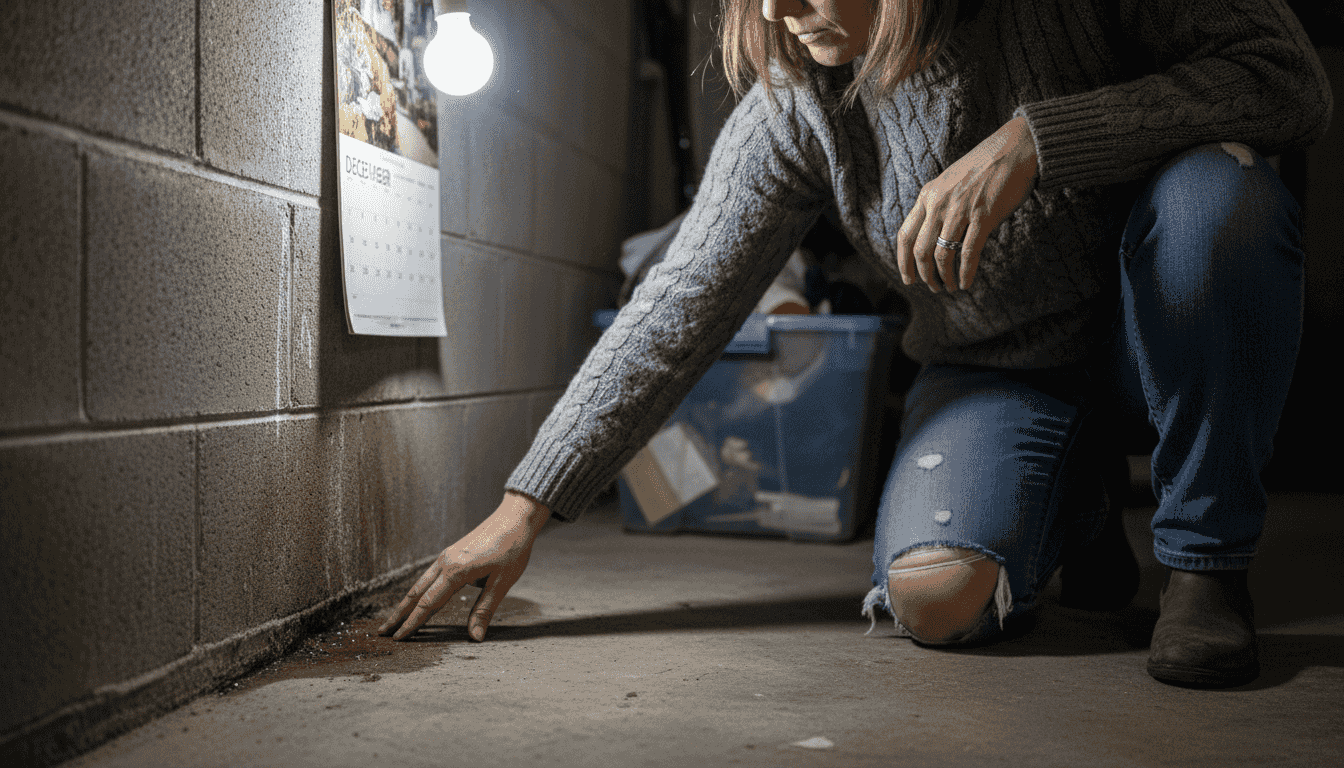
Standing water on your basement floor is a red flag. Even small puddles that appear after rain indicate a leak or poor drainage around your foundation.
Common warning signs of basement moisture include the following:
- Damp spots on walls or floors
- Water stains that leave rings or discoloration
- Musty, moldy odors in the basement
- Visible mold or mildew growth
- Condensation on cold surfaces like pipes
- White chalky deposits (efflorescence) on concrete
Mold and mildew are serious indicators of moisture problems. If you see fuzzy growth on walls, insulation, or stored items, water intrusion has been happening for a while.
A musty smell in your basement often appears before you see visible water. This odor means mold is already growing from moisture that’s been there for days or weeks.
Check your water meter for unexplained usage. A sudden spike can indicate a hidden leak somewhere in your plumbing or foundation.
Don’t wait for problems to worsen. Early detection prevents mold, structural damage, and expensive repairs down the road.
Pro tip: Walk your basement after heavy rain and look for water entry points, damp patches, or odors. Mark these spots with tape so you can show a professional plumber exactly where the problem areas are.
Repair Solutions for Basement Water Leaks
Fixing a basement leak requires the right approach for your specific situation. Some repairs are straightforward, while others need professional expertise to prevent future problems.
Interior waterproofing addresses leaks from inside your basement. This method seals cracks and prevents water from entering, making it faster and less disruptive than exterior work.
Exterior waterproofing tackles the problem at the source by stopping water before it reaches your foundation. This involves digging around your home to apply barriers and install drainage systems.
Effective repair solutions include sealing cracks with epoxy or polyurethane injections that prevent water from pushing through foundation walls. These injections fill cracks completely and create a waterproof seal that lasts for years.
Common repair methods include:
- Crack injection using epoxy or polyurethane
- Sump pump installation to remove standing water
- Interior drain tile systems that channel water away
- Waterproof coatings applied to basement walls
- French drain installation around your foundation exterior
- Grading adjustment to slope soil away from your home
Sump pumps are workhorses in San Antonio basements. These systems automatically pump water out when levels rise, protecting your basement even during heavy storms.
Drain tiles are perforated pipes installed at the basement floor level. They collect water seeping in and direct it toward your sump pump or exterior drainage system.
Proper gutter and downspout maintenance prevents water from pooling near your foundation in the first place. Downspouts should extend at least six feet away from your home’s base.
The best repair combines multiple solutions. A single fix rarely addresses all water entry points in your basement.
Pro tip: Before investing in major repairs, hire a professional to determine whether your leak comes from external groundwater, poor drainage, or interior moisture sources. The cause determines the best solution.
Here’s a quick comparison of basement waterproofing solutions and their typical impact:
| Solution Type | Main Benefit | Typical Cost Range | Disruption Level |
|---|---|---|---|
| Interior Waterproofing | Fast leak sealing for minor issues | $500-$2,000 | Low |
| Exterior Waterproofing | Stops moisture before reaching foundation | $15,000-$25,000+ | High |
| Sump Pump Systems | Removes standing water automatically | $1,500-$3,500 | Moderate |
| Drain Tile Systems | Directs water away below floor level | $5,000-$10,000 | Moderate |
| Grading Adjustment | Prevents pooling near foundation | Varies by project | Low |
Risks of Delay and Cost Implications
Waiting to fix a basement leak is like ignoring a small hole in your roof. What starts small becomes catastrophic, and your wallet pays the price.
A minor leak that costs $500 to fix today can become a $15,000 problem in two years. Water damage compounds quickly, affecting everything in its path.
Mold growth begins within 24 to 48 hours of water exposure. This fungus spreads through your basement, attacking insulation, drywall, and stored items. Mold removal alone can cost $2,000 to $6,000 depending on coverage.
Structural damage to your foundation gets worse with every passing season. Water weakens concrete, causing cracks to widen and new ones to form. Unaddressed hydrostatic pressure buildup eventually causes foundation failure, which requires extensive repairs or full replacement.
Repair costs vary dramatically based on severity:
- Simple crack sealing: $500 to $2,000
- Sump pump installation: $1,500 to $3,500
- Interior drain tile system: $5,000 to $10,000
- Exterior waterproofing: $15,000 to $25,000 or more
Health risks increase with moisture and mold. Family members with allergies, asthma, or weakened immune systems suffer most. Respiratory problems and infections become more common in homes with active mold growth.
Property value drops significantly when buyers discover water damage history. Banks may refuse to finance homes with unresolved basement leaks, making your house difficult to sell.
Your homeowner’s insurance typically does not cover water damage from poor drainage or foundation cracks. You pay out of pocket for every repair and remediation cost.
Delaying repairs multiplies costs and risks. A $1,000 fix today prevents $20,000 in damage tomorrow.
Pro tip: Act within the first month of noticing a leak. Early intervention stops water at the source and prevents mold colonization, keeping costs manageable.
Below is a summary of water leak risks and their consequences if left unaddressed:
| Risk Type | Time to Impact | Repair Cost Potential | Long-Term Effect |
|---|---|---|---|
| Mold Growth | 24-48 hours | $2,000-$6,000 | Respiratory illness, property loss |
| Structural Damage | Months to years | $15,000+ | Foundation failure, resale issues |
| Health Complications | Days to weeks | Not directly quantifiable | Asthma, allergies, infection |
| Property Value Loss | Months to years | Up to 20% decrease | Difficult sale, financing obstacles |
Prevention Tips for San Antonio Homeowners
Prevention beats repair every single time. Smart homeowners in San Antonio take action now to protect their basements from water intrusion.
San Antonio’s clay-rich soil retains water and expands when wet, creating pressure against your foundation. This soil characteristic makes prevention even more critical for local homes.
Regular foundation inspections catch problems before they become disasters. Walk your foundation quarterly, looking for new cracks, efflorescence, or damp spots. Document what you find with photos so you can track changes.
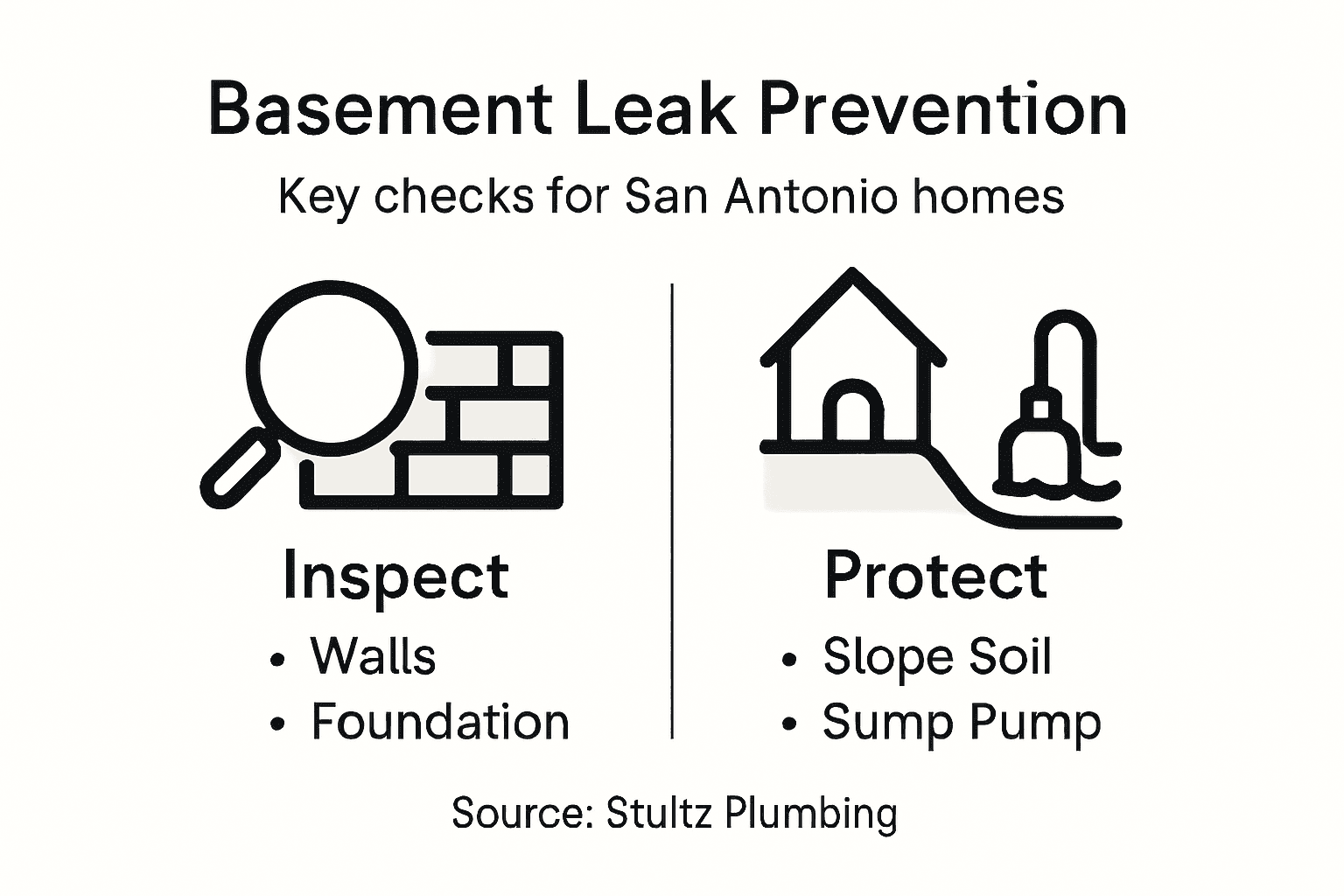
Proper grading around your home is non-negotiable. Soil should slope away from your foundation at least six inches over ten feet. If water pools near your basement walls after rain, your grading needs adjustment.
Gutter and downspout maintenance keeps water away from your foundation. Clean gutters every spring and fall, and ensure downspouts extend at least six feet from your home’s base.
Preventative measures for basement protection include several critical steps:
- Install and maintain gutters and downspouts
- Use vapor barriers in crawl spaces
- Apply waterproof membranes to exterior foundation walls
- Grade soil to slope away from the house
- Manage landscaping to reduce moisture near foundations
- Schedule annual professional foundation inspections
Landscaping choices matter more than you think. Keep plants and trees away from your foundation because their roots can damage concrete and create pathways for water. Mulch close to foundation walls traps moisture against your walls.
Humidity control inside your basement prevents condensation problems. Use dehumidifiers in damp basements and ensure proper ventilation in crawl spaces.
Know your water shut-off location. If you suspect a leak, you should be able to stop water flow in seconds. Mark your main water valve clearly so family members can find it quickly.
Small preventative actions today save thousands in repairs and health problems tomorrow.
Pro tip: Schedule a professional foundation inspection annually, especially if your home is over twenty years old or you live in an area with expansive clay soils like San Antonio.
Protect Your San Antonio Home from Costly Basement Water Leaks
Basement water leaks caused by foundation cracks, hydrostatic pressure, and poor drainage can threaten your home’s safety and value. Ignoring signs like damp walls, mold growth, or standing water leads to expensive repairs and health risks. Understanding these risks is the first step toward protecting your sanctuary.
At Stultz Plumbing, we specialize in tackling basement water problems with proven solutions like crack sealing, sump pump installation, and advanced waterproofing. Our trusted team delivers professional plumbing services throughout San Antonio to keep your home dry and secure. Don’t wait until small leaks become major disasters. Visit Stultz Plumbing today to schedule a thorough inspection or emergency service. Protect your investment and family’s health by acting now. Learn more about our Drain Cleaning San Antonio and Water Softener Installation San Antonio services that support a dry and healthy basement environment.
Frequently Asked Questions
What are the main causes of basement water leaks?
Basement water leaks are primarily caused by foundation cracks, hydrostatic pressure from groundwater, poor grading around the home, inadequate drainage systems, soil settling, and defective waterproofing on exterior foundation walls.
How can I identify signs of a basement leak?
Signs of a basement leak include dampness along the walls, standing water on the floor, water stains, musty odors, visible mold or mildew, condensation on surfaces, and a sudden increase in water meter readings.
What are the best repair solutions for basement water leaks?
Effective repair solutions include interior waterproofing, exterior waterproofing, crack injection with epoxy or polyurethane, sump pump installation, drain tile systems, and grading adjustments to slope soil away from the foundation.
How can I prevent water leaks in my basement?
Preventative measures include ensuring proper grading around your home, maintaining gutters and downspouts, conducting regular foundation inspections, using vapor barriers in crawl spaces, and controlling humidity levels inside the basement.
Recommended
- Why You Need Water Leak Detection In San Antonio?
- Slab Leak Repairs in San Antonio | Early Warning Signs Guide
- Prevent Water Damage at Home | Stultz Plumbing Experts
- Warning Signs You Need Sewer Line Repair in San Antonio TX
Jean runs growth strategy at AimSetWin, a performance marketing agency specializing in local service businesses across Texas. he's helped plumbers, HVAC companies, pest control operators, and home service brands build predictable revenue systems using data-driven advertising and conversion optimization.